
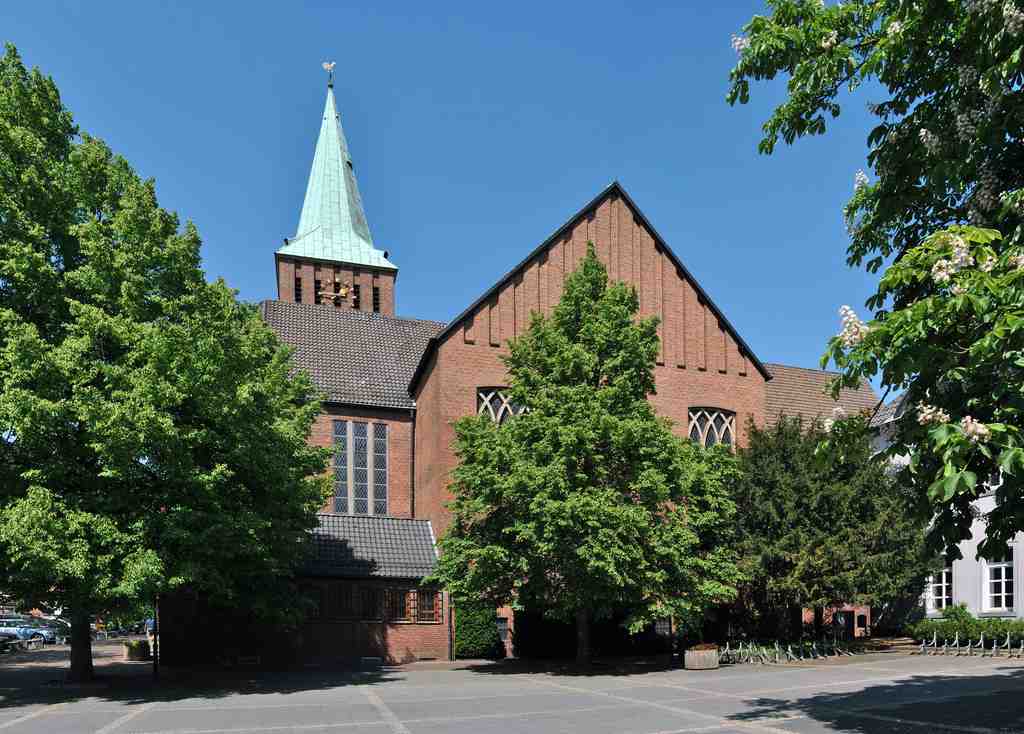
Look for a tall, reddish-brick church building with a steep greenish copper spire poking above the trees directly ahead-it stands out clearly with its pointed roofline and large gothic windows.
Ah, you made it to St. Vincentius Church! Take a moment to notice the sturdy red brick exterior-they say it’s so solid that even the wind gets tired blowing against it. Picture yourself centuries ago, when this site was just a small chapel in 1390, little more than a quiet stop on the spiritual map. Then, in 1436, excitement buzzed in the air as Dinslaken was granted its very own parish status. By the mid-1400s, a brand new church stood here, boasting gothic arches and tall halls-I'm sure the neighbors wondered if they’d need a taller ladder just to hang up laundry.
As you stand here, imagine the clatter and chatter of late medieval builders hammering away, each stone telling a story of hope and ambition. In 1492, a mighty tower sprang up and, by 1661, the choir was raised even higher-almost like the church felt compelled to reach closer to heaven for better acoustics! In its nearly 600 years, St. Vincentius has survived destruction and rebirth: war damage in 1945 left it battered, but like a stubborn old oak, the building survived. The rebuilding from 1950-1951 kept much of the original eastern gothic structure, blending new ideas with steeped tradition.
Don’t let the rather modern exterior fool you-inside, you’d encounter treasures that have weathered centuries. Take the high altar, for instance, which might win the “Best Drama” award for its detailed depiction of the Passion story. Crafted in Brussels around 1460, its carved and painted scenes unfold the story from the Last Supper right up to the Resurrection-the kind of story-telling Netflix can only envy. But here’s a bit of mystery: no one knows the artist’s name! Some believe the altar was painted by a Brussels master known for works displayed in the Louvre. The lineup of scenes even finishes with a grand medieval Calvary, so full of characters you’ll wonder if the carver ever took a lunch break.
A special mention goes to the giant Triumph Cross-more than 700 years old, it has survived journeying from the famous monastery in Kamp (where, rumor has it, monks could out-bake anyone in town)-to find its home here. Inside its wooden body rest over 30 little bundles, each containing labeled relics, the medieval version of a spiritual first-aid kit. For years, their origins remained uncertain, but detective work with relics and a wooden date placed its roots firmly in the early 1300s-so if you feel goosebumps, maybe you’re just in the company of history’s best-traveled cross.
And of course, this church enjoyed a soundtrack longer than the Beatles’ discography. The newest organ, built in 1999, features 33 registers, and with its thousands of tone possibilities, it could easily drown out even the most dedicated church gossip. Six bells swing in the tower, their history stretching from the 18th century up to modern day-so whether you hear a faint chime or a ringing chorus, know you’re hearing centuries at work.
Near the tower, you’ll also find three weathered stone crosses-migrants from Wesel-as tough as the sandstone they’re made from. Once, pilgrims would finish their long walk here, perhaps just as tired as you might feel after this tour.
From gothic stone to baroque towers and stories swapped over centuries, St. Vincentius stands as living proof that Dinslaken doesn’t just remember its history-it lets you walk right through it.


