
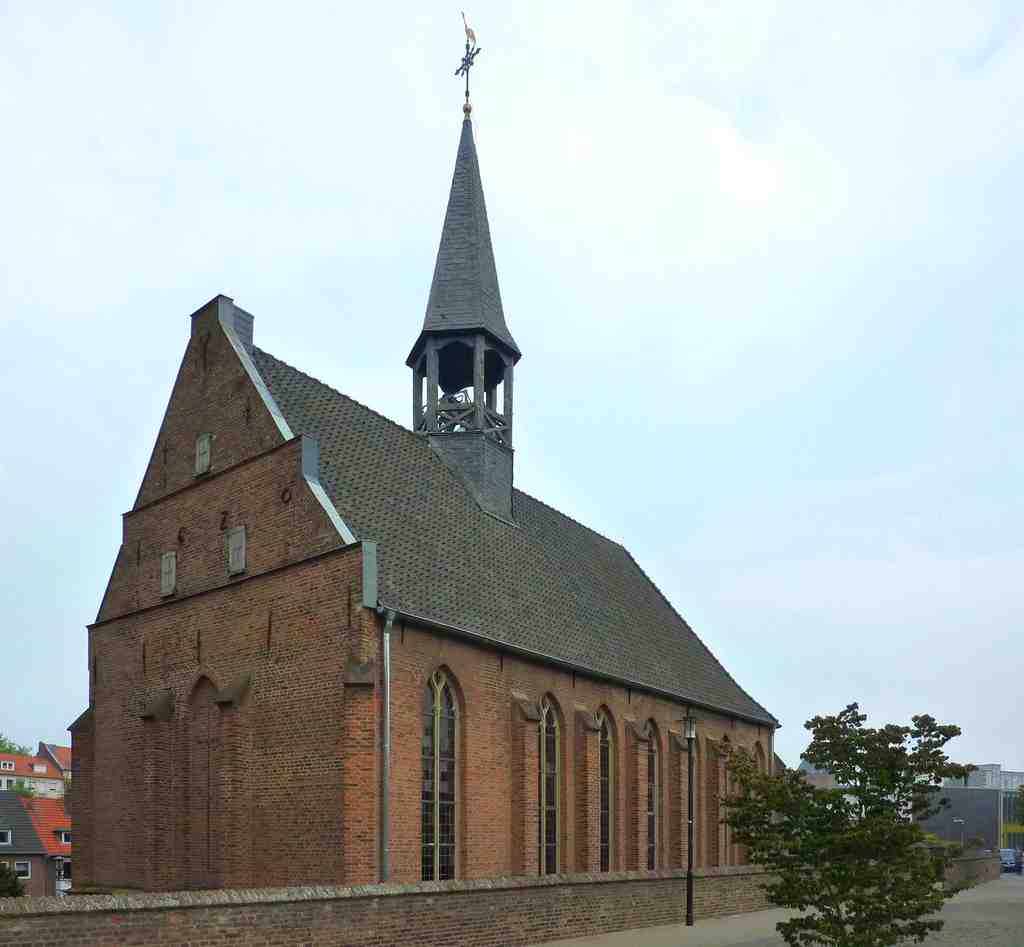
To spot the Small Evangelical Church, look for a cozy brick building with tall arched windows and a petite, pointed steeple perched right on top-you can’t miss it directly in front of you!
Alright, time for a little time-travel-welcome to the Small Evangelical Church of Kleve! Picture yourself here on a misty morning in the early 1600s, just as the city is waking up. This very spot would have been a real hive of activity, but the church itself didn’t exist yet-the local Lutheran congregation actually squeezed together in private homes or gathered inside a hall at Schwanenburg Castle. Imagine everyone balancing on wobbly stools, trying not to spill tea or start a hymn off-key!
Enter Sebastian Hornung: a young pastor from Franconia who probably didn’t expect his new job to come with quite so much fundraising! He journeyed far and wide-across Germany, the Netherlands, Denmark, and Sweden-collecting enough coins and goodwill to build not just this church, but also a school and a parsonage. When he finally returned in 1618, the townspeople cheered, and within a few short years-by 1621-the church was finished and gleaming with hope, just in time for Trinity Sunday.
Now, sneak a peek up at the top of the gable. Can you spot the number 1620 traced elegantly in metal anchors? That’s when things were moving at full speed here. By 1621, the air would have been scented with fresh mortar and whispers of relief after the chaos of the Thirty Years’ War. Peace eventually came with the Treaty of Westphalia, and in 1648, they were gifted a bell-one that would survive wars, disappearances, and heroic recoveries. Believe it or not, during World War II, the bell was confiscated for metal, but thanks to a clever Catholic priest, it found its way home!
This church didn’t always have it easy. Picture it stuffed with hay as a straw warehouse while Napoleon’s troops stomped around in 1794; imagine it badly bombed during World War II, then slowly being put back together by 1955-albeit with a few upgrades. By the time you step inside today, the space feels bright and calm, with white walls, sleek black chairs, and a red altar wall adding a pop of modern color. Overhead sparkles a chandelier from the 18th century-a glittery gift from the Great Elector himself.
Nowadays, the “Little Church” calls out as a space for peace, meetings, concerts, and exhibitions-a real slice of Kleve’s quirky, resilient history. And after all it’s survived, I can guarantee you this: if these walls could talk, they’d have some cracking good stories to tell!


