
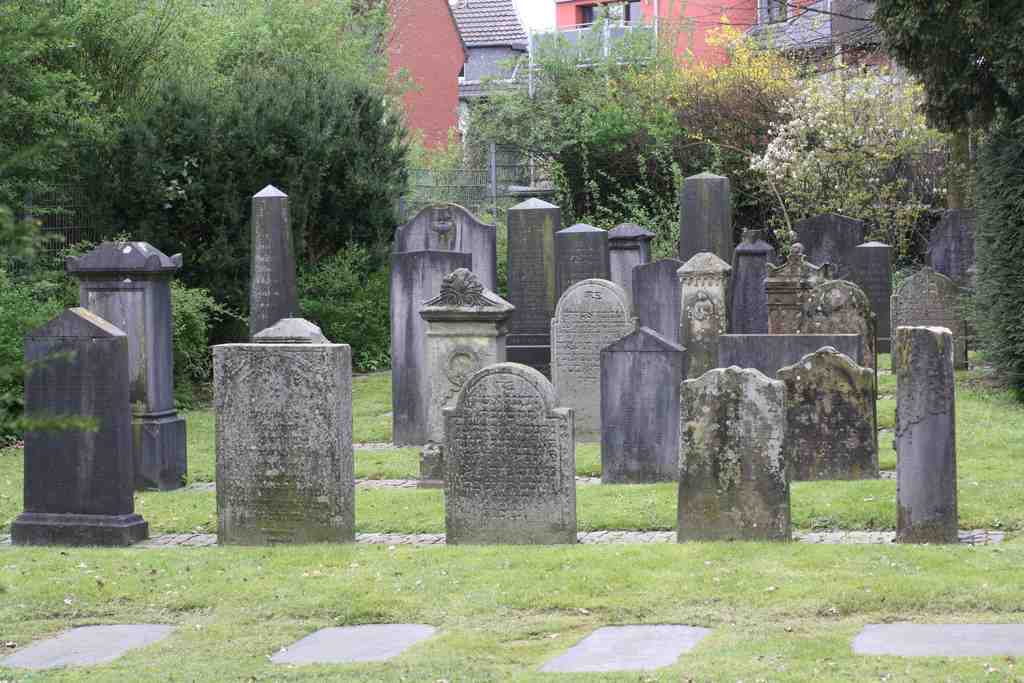
In front of you, look for a small, peaceful green space filled with old, weathered gravestones made of grey stone, some standing tall and others leaning slightly, surrounded by trees and a backdrop of red-brick buildings.
Now, take a quiet moment as you stand at the edge of the Jewish Cemetery of Kleve. This timeless patch of ground has watched the sun rise and set since the late 1600s. Back then, Kleve was no stranger to change or to stories of struggle and hope. If you listen closely, maybe you’ll sense the voices from centuries past, echoing softly between the headstones. The air holds the weight of history, and the gravestones-just seventy-five left-have witnessed triumphs and tragedies alike. These stones stretch from 1702 to 1937, each one a chapter in the life of Kleve’s Jewish community. It’s true, many stones are missing, lost in the darkness of the Nazi era. Imagine the cemetery as a kind of open book, some pages torn out, others faded but still speaking of resilience.
Despite everything, this cemetery is a protected monument today. The names are sometimes hard to read, but the feeling is unmistakable: remembrance, dignity, and a stubborn refusal to be forgotten. If you ever wondered how a quiet place could both break your heart and inspire you, you’re standing in the midst of that mystery. And hey, isn’t it wild to think that beneath this sleepy grass, history is still stirring?


