
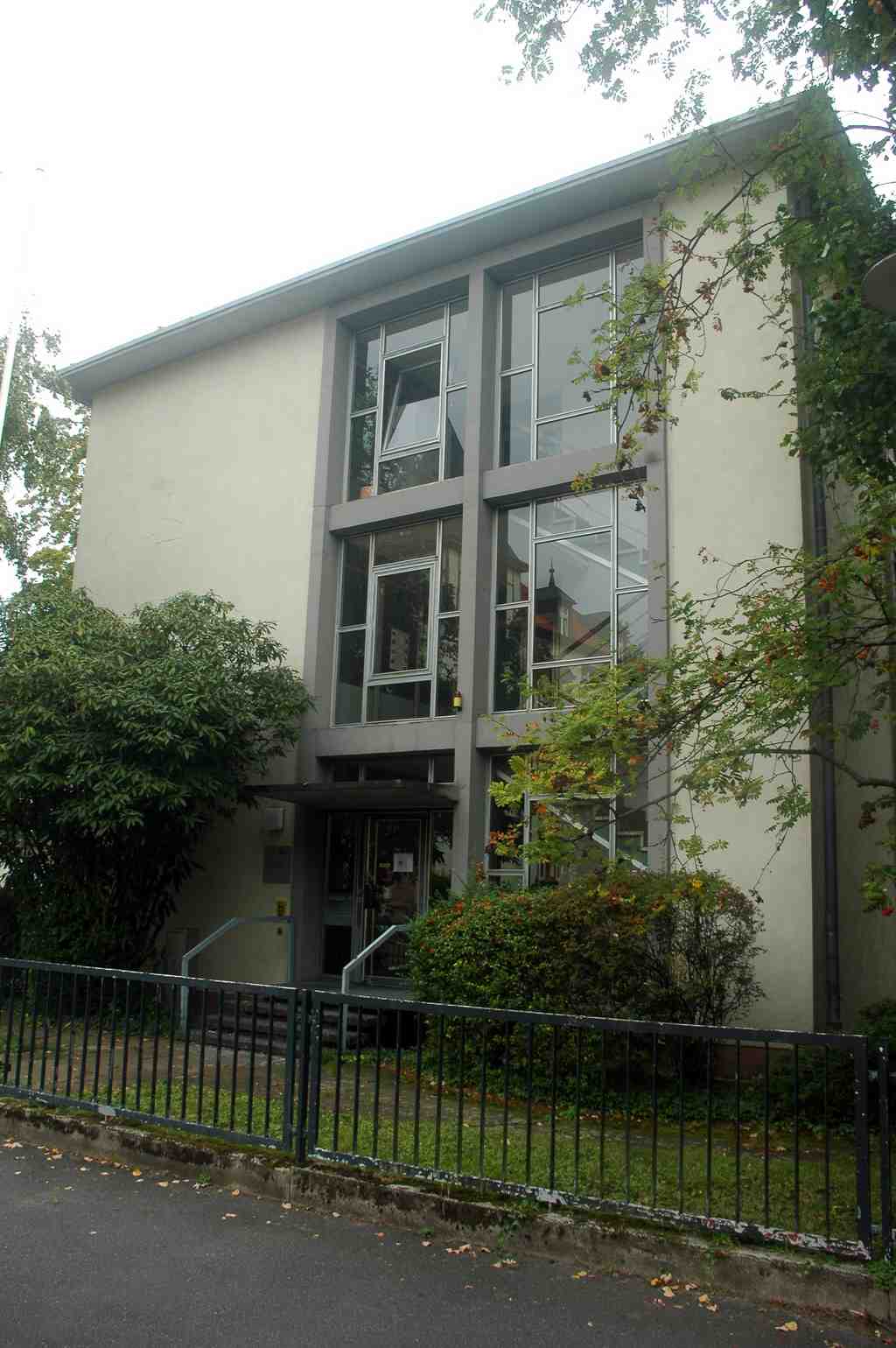
You’ll spot the Astronomical Computing Institute right ahead of you-a modern, cream-colored building with large square windows framed in grey, peeking out from behind a few trees and shrubs.
Now, imagine you’ve landed at a place where minds are so sharp they can map the stars themselves! The Astronomical Computing Institute, or ARI as the locals call it, has quite the cosmic backstory. The fun began way back in 1700-just imagine powdered wigs and twinkling candlelight-when the first astronomers, led by Gottfried Kirch, started tallying up the stars in Berlin. Fast-forward to 1874: with astronomers scrambling to keep up with the ever-growing number of calculations, Wilhelm Foerster said, “Let’s build a whole institute!” And they did, right next to the Berlin Observatory.
Here, amid the whir of pencils on paper, stargazers mapped the heavens! When Berlin became too hot to handle during wartime, the institute’s brains (and their precious calculations) were whisked away to the quiet countryside and, finally, to peaceful Heidelberg after World War II.
Since then, ARI has become the international headquarters for figuring out exactly where the stars and planets will be-down to the tiniest fraction of a second. Their calculations fill entire yearbooks, calendars, and even guide stargazers across the world. They’re also the masterminds behind stellar catalogues, so precise that if an alien needed directions to Earth, ARI could probably help.
Oh, and a fun tidbit: there’s even an asteroid named after ARI-and after a hundred years, they threw a “star-studded” 300th birthday bash right here! So while the building may look calm and quiet, inside, cosmic mysteries are being worked out every single day.


