
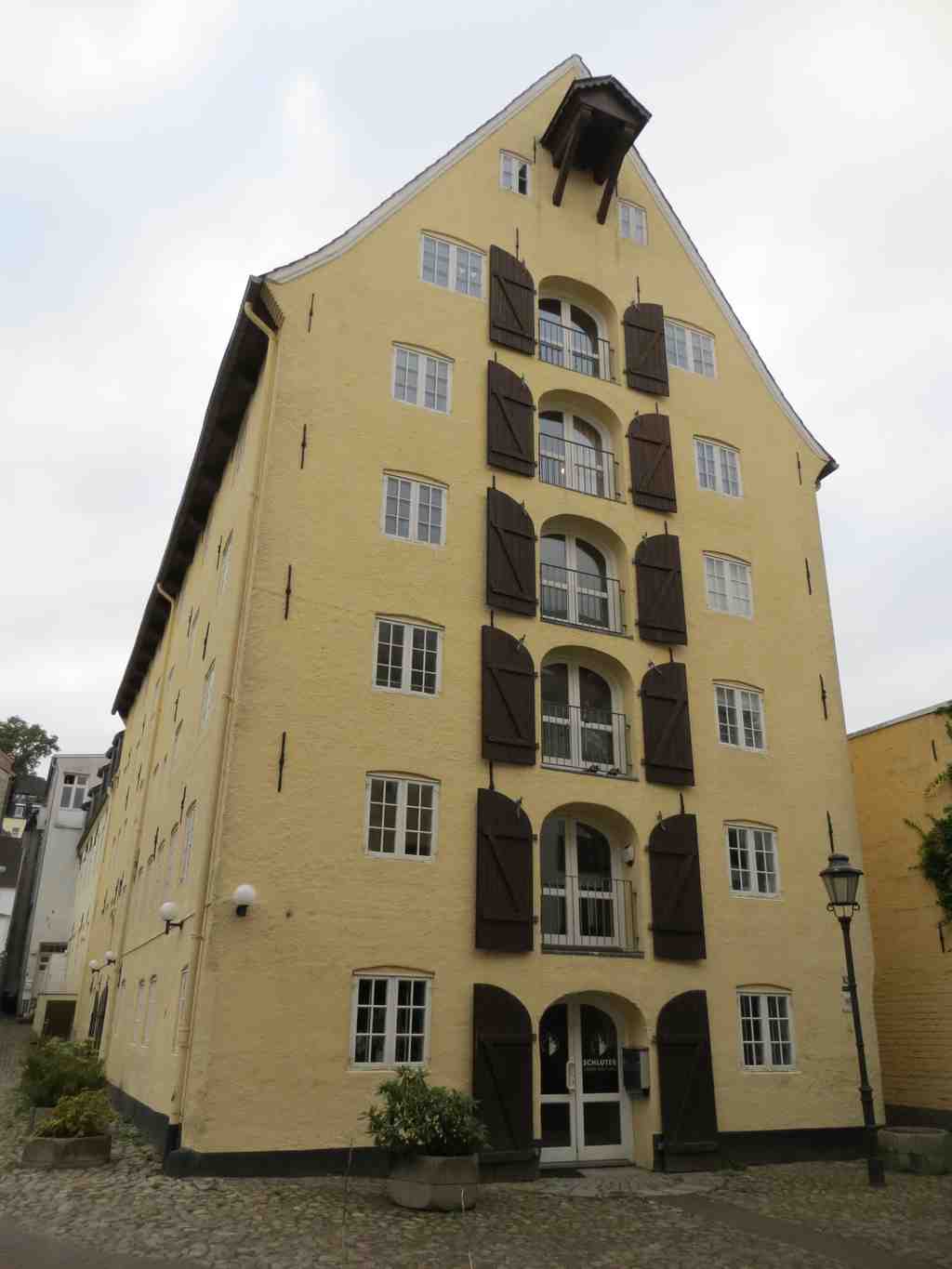
To spot the West India Warehouse, look for a tall, pale yellow building with a steep roof and rows of brown wooden shutters running up its face, standing proudly by the cobbled street.
Now, just imagine the busy port of Flensburg in 1789-sailors shouting, barrels thumping, the scent of rum and exotic spices wafting through the air. This building, the West India Warehouse, was the ultimate storage fortress of its day. It wasn’t just big; it was a giant, towering over its neighbors like a proper show-off. Andreas Christiansen, a daring Danish merchant and shipowner, built this place at the peak of the Enlightenment. Back then, this warehouse was a gateway to the Caribbean-and a treasure chest for rum, raw sugar, tobacco, cocoa, tea, and spices from islands like Saint Croix and Saint Thomas. Imagine the heavy oaken barrels being hoisted, creaking and groaning, up to the top floors with the help of that impressive old crane up on the gable-it’s still there today, watching like a retired dockworker.
The warehouse yard wasn’t just all rum and sugar: the nearby houses were homes and offices, and, rumor has it, there was even a sugar refinery sizzling away, producing sweet gold for the city. Christiansen’s fortune was so legendary, there’s a plaque here begging for blessings on all these works.
But nothing lasts forever. Economic crisis hit, and new owners took over, most memorably a colonial goods dealer and, later, a spirited liquor company. By the 1970s, the old warehouse was almost lost to history-until a magical transformation in the 1980s gave it new life. Today, the West India Warehouse is filled with quirky apartments and busy offices. It’s a postcard star, a celebrity stop on Flensburg’s Captain’s Walk, and a living reminder of wild tales from the age of sail-just without the sticky floors and spilled rum.




