
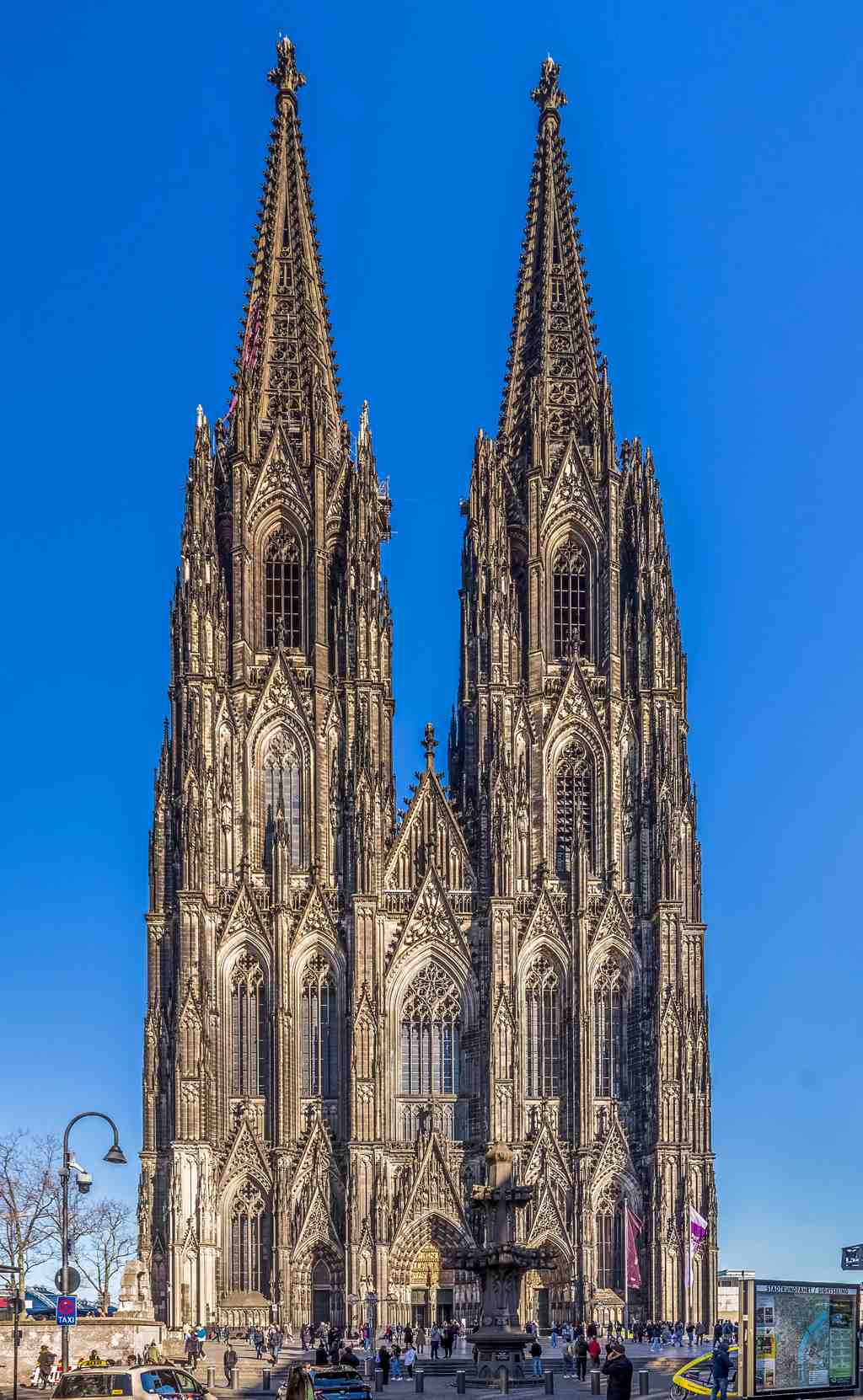
Standing before you, towering into the sky, is the Cologne Cathedral-just look straight ahead for the two enormous, spiky Gothic spires stretching high above the bustling square and you can’t miss it!
Now, get ready for a story that’s bigger than life itself-after all, you’re looking at Germany’s most visited landmark, and the tallest twin-spired church anywhere on Earth! Cologne Cathedral is so tall, at 157 meters, you could stack about fifty giraffes on top of each other and still not reach the very tips of those spires. This mighty monument became a UNESCO World Heritage site in 1996, proudly representing centuries of German Catholicism and Gothic ambition. But its journey to glory wasn’t exactly speedy. In fact, this cathedral is the original “never-ending construction project.” Construction began way, way back in 1248, fueled by a dream to build a house magnificent enough to hold the prized relics of the Three Wise Men. Medieval builders wanted something fit for emperors and saints alike-so after they laid the foundation, they kept building… and building... and building...
But after more than 300 years, with walls still unfinished and one lonely crane left perched on top, work ground to a halt. You could say the cathedral spent the next 400 years as the city’s most dramatic “work in progress” sculpture, attracting artists and pigeons alike. People from all over Europe kept flocking here, desperate to catch a glimpse of the famous Shrine of the Three Kings inside-think of it as one of the Middle Ages’ hottest tourist attractions.
Then came the 19th century, when Cologne was swept by a romantic love for the past. The good news? Someone found the original Gothic blueprints hidden away, as if the medieval architects were winking from history and saying, “Finish what we started!” Spurred by civic pride, clever fundraising, and a dose of state support (Prussia, that is), workers took up their chisels again. In 1880-632 years after it all began-the last stone was placed with a mighty celebration attended by Emperor Wilhelm I. Cologne’s cathedral finally stood as the tallest building in the world, even if just for a few years.
Almost immediately, maintenance became its own epic saga. Builders realized they’d need scaffolding forever-so much so that today you’re more likely to see a mason than a monk tending to the stones! Smoky air, acid rain, and the occasional earthquake have turned the cathedral’s sandstone from creamy beige to a moody, mysterious black, giving it an even more dramatic look.
Its spires guided bombers in World War II, and despite being hit 14 times, the great cathedral refused to crumble even as much of Cologne around it did. When the city was flattened, the cathedral-wounded but proud-stood tall as a symbol of hope. Restoration work after the war patched up brickwork, but many scars were deliberately left as reminders.
Step inside and the treasures keep coming: the high altar from 1322, gleaming black marble set with white niches; the fabled Shrine of the Three Kings, shimmering with gold and precious stones, believed to hold relics from the biblical Magi. Near the sacristy, you’ll discover the ancient Gero Crucifix-over a thousand years old, it’s the oldest free-standing crucifix north of the Alps.
But this building is more than its treasures. For centuries, all kinds of stories have found their home in these stones-from the earliest Christians who met in secret in houses beneath your feet, to the powerful bishops who shaped Holy Roman Empire politics, to modern debates about art and memory. In recent years, the cathedral’s leaders have tackled tough questions about how art inside the church depicts Christians and Jews. They’ve left old, even controversial, imagery in place, but now commission new artwork to challenge and teach-like a giant mural planned for the Chapel of St. Mary that will openly honor Jewish heritage, right where it was once hidden.
And oh, the bells! The mighty St. Petersglocke, cast from melted-down French cannons, weighs a whopping 24 tons and rings only on the grandest holidays. In 2022, it joined cathedrals across Europe, tolling in solidarity for Ukraine-a reminder that these walls have witnessed peace, war, and everything in between.
And if you’re feeling energetic, climb the 533 spiral stone steps to the viewing platform-just think of it as your exercise for the month! Up there, the whole city and the silvery Rhine will stretch out before you.
So, as you look up at the soaring spires and maybe catch a glimpse of a cheeky stonemason, remember: Cologne Cathedral isn’t just a building. It’s a living time machine, an architectural saga, and the work of countless dreamers, priests, workers, and believers from the mists of the Middle Ages to today. And lucky you-now you’re part of its story, too.
Yearning to grasp further insights on the predecessor buildings, ongoing renovation or the architecture? Dive into the chat section below and ask away.




