
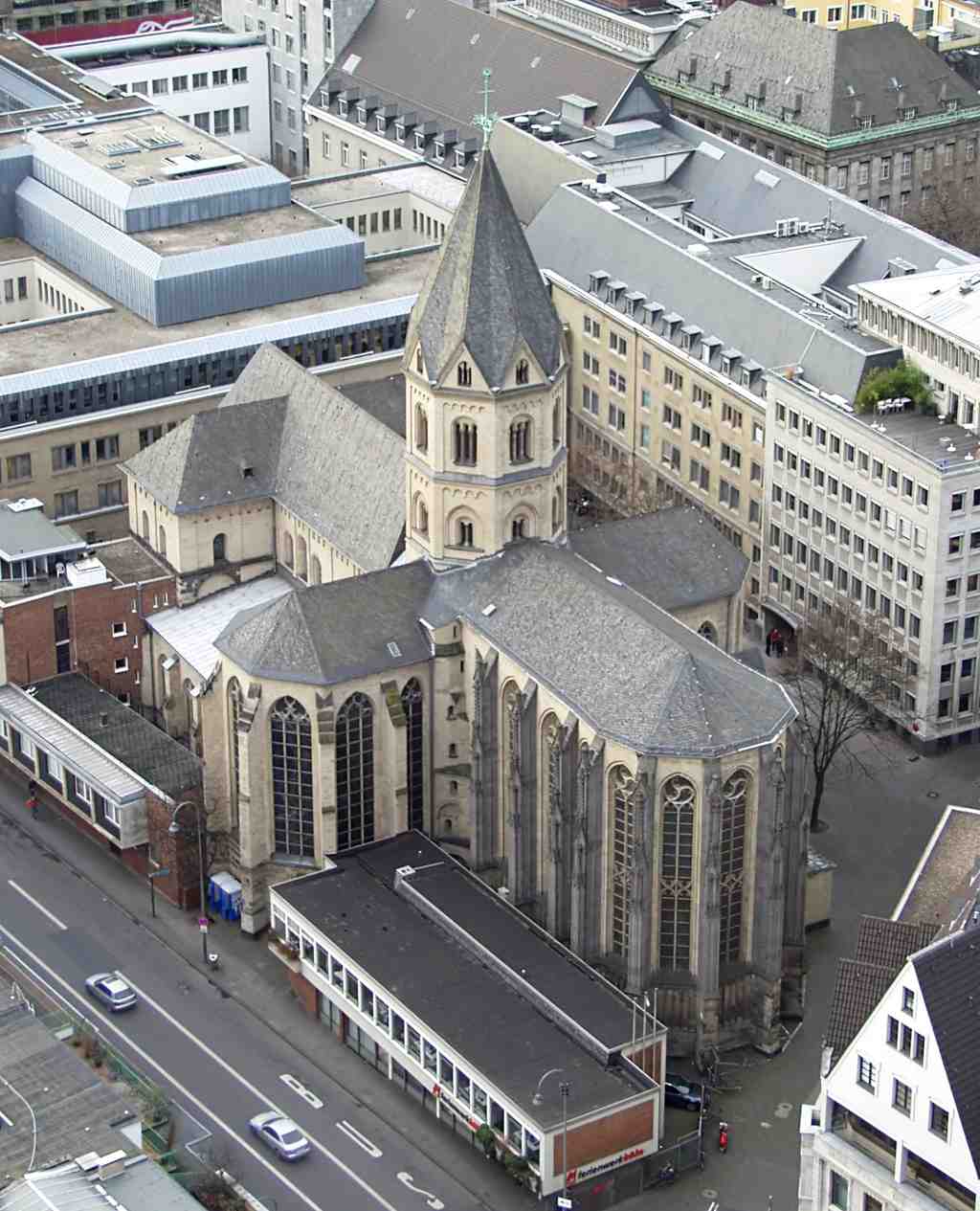
To spot St. Andreas, look for the impressive Romanesque church with a tall, pointed central tower and a combination of round Romanesque arches and large Gothic-style windows-just ahead of you, surrounded by a sea of modern city buildings.
Now, step a little closer, take in the scent of old stones and history, and let me whisk you back through centuries of stories. Imagine you’re standing outside one of Cologne’s twelve grand Romanesque churches, right among the hum of city life, yet suddenly the noise fades and, for a moment, the clock spins backwards. The air thickens with centuries of devotion and tales both heroic and, well, slightly peculiar-after all, if these walls could talk, they’d surely have a dramatic flair.
St. Andreas was built where there may once have been a humble chapel called St. Matthaeus in fossa-think “St. Matthew by the moat.” Around the year 974, right here, Archbishop Gero dedicated a new Romanesque church, with a crypt tucked beneath, to its namesake, Saint Andrew. This was no simple country chapel though; imagine bustling canons in long robes, setting up a prestigious church right in the heart of medieval Cologne. Of course, if you time-travel back to the 12th or 13th century, you’ll notice the west side you see today actually survived from that era-late Romanesque, impressively sturdy, built under the watchful gaze of the mighty Staufer dynasty.
But time didn’t stand still here-oh no! In the 14th and 15th centuries, Cologne was all about keeping up with the fashion. So, out went the plain, old, Romanesque bits, and in came intricate Gothic chapels and soaring windows. They even chopped out the Romanesque eastern choir and crypt to make way for a choir hall inspired by the grandeur of Aachen, giving the east side of the building its dramatic, dazzling character.
Walking around the outside, let your gaze wander up to the distinctive main crossing tower-with its neat “folding roof”-and don’t miss the two original staircase towers nestled deeper inside. The church was always evolving; it’s been trimmed, extended, and carefully patched back together after bomb damage in World War II, when, as if by a miracle, many masterful medieval paintings in the side chapels were left intact. Talk about a lucky break-maybe St. Andrew himself was watching over his church.
As you step inside, below your feet lies a crypt that holds an amazing secret: the bones of Albertus Magnus, a 13th-century genius who wasn’t just a saint but a philosopher, scientist, and all-around medieval celebrity. His remains were moved here in 1954-fitting, since he was known as “the Universal Doctor.” You might even feel a shiver of scholarly energy, especially on November 15, when pilgrims and even Pope John Paul II himself have stood where you are now.
Ah, but St. Andreas is a regular magnet for relics: here you’ll find the Maccabees Shrine, brought here in 1803, sparkling and golden, crammed with the bones of seven Jewish martyrs and their mother, saints all. The shrine-crafted with intricate copper plates and nearly forty tiny scenes-turns their harrowing Old Testament martyrdom into an epic, glittering saga for the ages. No wonder that part of the church is called the “Maccabee Choir” today.
The inside bursts with treasures-statues of saints, knights, and archangels, altarpieces brimming with color and drama. There’s even a Madonna with a cloak so large it could give any mother goose cape a run for its money. During quiet moments, your footsteps might echo, mingling with the distant strains of the mighty organ-where, if you’re lucky, you might catch a piece played on one of St. Andreas’ three organs, the main one boasting 45 impressively boisterous registers.
And, if you happen to be here on a Friday dedicated to the Sacred Heart, catch the knights of the Holy Sepulchre in their formal attire gathering for mass-a living tradition since 1933. Every century, St. Andreas reinvents its stories: battered by war, lovingly restored by local artists and the famous Markus Lüpertz, who added twelve dazzling modern stained-glass windows from 2005 to 2010-modern art joining centuries-old melody.
So take a deep breath, and let yourself be swept up by the layers of time, devotion, resilience, and artistry that swirl together in St. Andreas. In this one quiet corner of Cologne, history doesn’t just live-it sings! Now, are you ready for the next adventure?
Want to explore the equipment, younger equipment or the metrics in more depth? Join me in the chat section for a detailed discussion.




