
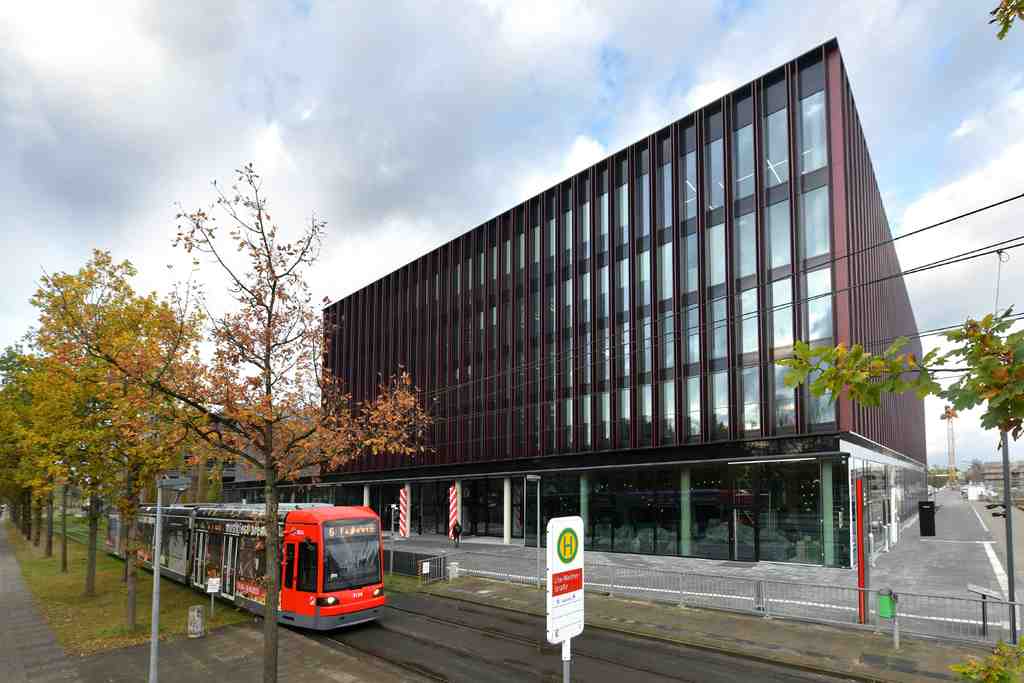
Look to your right-you’ll spot the Sparkasse Bremen as an eye-catching, modern glass-and-metal building with sleek vertical lines and large windows overlooking the tram tracks.
Let’s pause here and imagine: it’s the year 1825. Bremen is a city of bustling merchants, cramped alleys, and all the slightly anxious excitement of the Industrial Age. There’s no online banking-just a single room in the old stock exchange, open for a couple of hours every Monday, and that’s where Sparkasse Bremen’s story begins. Picture Bremen’s mayor, Simon Hermann Nonnen, rolling up his sleeves and gathering ninety-six of the city’s most influential people-three mayors, sixteen senators, top merchants, and some determined housefathers and housemothers-ready to spark a revolution in money management.
The first ever deposit? Just over 2,000 talers-handed over by none other than the famous astronomer Wilhelm Olbers! Back then, the Sparkasse was created for ordinary folks: guardians, tradespeople, and families wanting a safe place for their hard-earned coins. Mondays were busy times, with people nervously queuing, clutching their savings books, hoping for a little bit of security in a rapidly changing world.
Fast-forward to 1848 and the Sparkasse is facing its first real crisis: revolution sweeps across Europe; people rush in, desperate to pull out their savings, and for a moment, it looked like the great experiment might collapse. But, with a bit of Bremen grit and a lot of number crunching, the Sparkasse survived-and thrived. Imagine the growth: by 1900, the population triples, new businesses pop up everywhere, and Sparkasse adapts, opening daily, expanding into new neighborhoods, and even financing wind turbines in the 1990s-decades before it was cool to go green!
But the Sparkasse wasn’t just about numbers. No, it was a bit of a local hero, helping build affordable homes, donating to parks, libraries, and hospitals, and even providing the first savings clubs for kids-imagine a world where your piggy bank could win you prizes! When the times got tough-world wars, inflation, wild economic swings-the Sparkasse simply rolled up its sleeves again, restored bombed-out buildings, and even ran mobile branches so people could still save, even when their neighborhoods were in ruins.
And here’s a fun twist: right around this spot, from the 19th century to the 1980s, the Sparkasse kept changing shape-relocating, rebuilding, and once even borrowing a fancy rococo façade from another building that had been destroyed. Over the centuries, as Bremen grew into a modern city, so did the bank, finally moving its headquarters here in 2020-now an innovative hub for over 1,200 employees, with digital advice, 60 branches, and a financial network reaching into every corner of local life.
Of course, it hasn’t all been smooth sailing. Between financial crises, wars, and technology advances that bewildered some of the older staff ("Why do I need a computer if my abacus never fails?" someone probably grumbled in 1970), the Sparkasse always adapted. It’s even remained independent-owned by a local foundation, with its own board and, these days, a rather impressive CEO lineup.
So, as you stand here, gazing at the shimmering glass and steel, remember: this is more than a building. It’s nearly 200 years of Bremen’s hopes, crises, innovations, and dreams in one place-the people’s bank, brimming with stories. It’s seen it all: from talers and groats to Euro and online banking, from Monday morning worry lines to today’s click-of-a-button convenience. And just think-when you next walk by a child with a piggy bank in Bremen, you’ll know this bank helped inspire that savings habit. Now, are you ready for the next chapter of Bremen’s story? Let’s head to the next stop-there’s plenty more history around each corner!




