
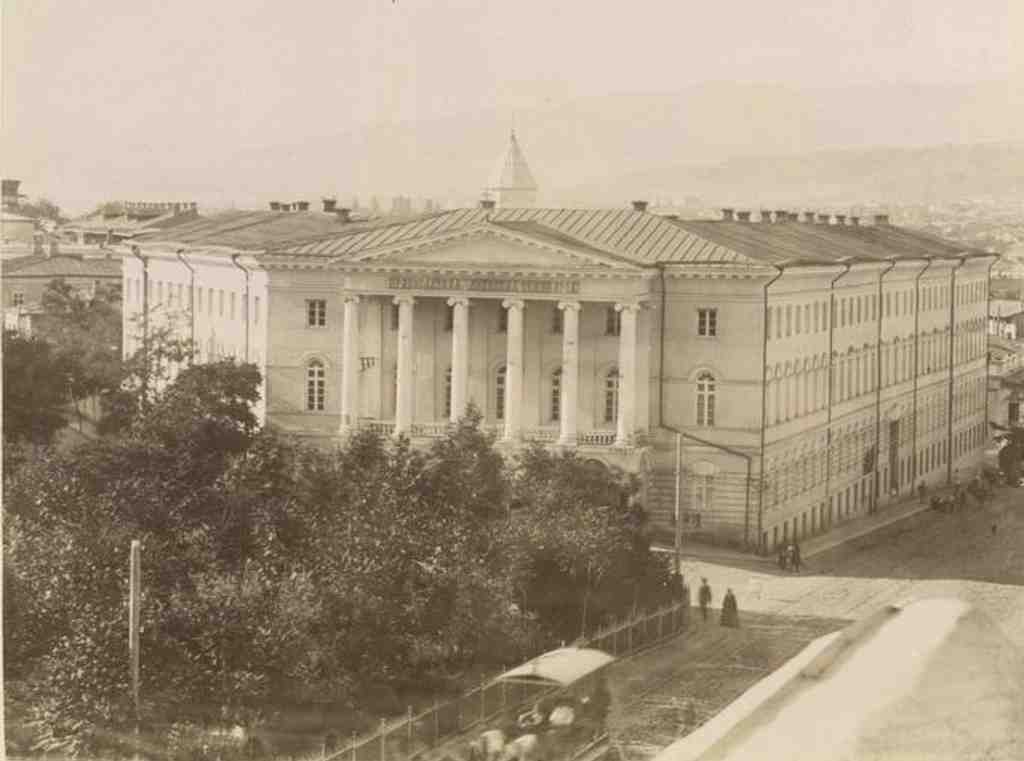
As you approach stop number 3, the Tbilisi Theological Seminary, look to your left. You'll notice a grand, stately building characterized by its classical architectural style. The building has a prominent façade with a row of large columns supporting a pediment above, giving it a very distinguished, almost temple-like appearance. The structure’s historical essence is palpable, making it easy to spot among modern surroundings.
Now, let me fill you in on the backstory in a fun way. The Tbilisi Theological Academy and Seminary, also known by its Georgian and Russian names (bonus points if you can pronounce them!) originally opened way back in 1817, under the name Tiflis Theological Seminary. It operated under the watchful eye of the Russian Orthodox Church until 1919. The Russian Revolution and the subsequent invasion of Georgia caused it to close. The beautiful building you’re looking at was eventually repurposed in 1950 to become the Art Museum of Georgia.
But here's the juicy part: one of the seminary’s most famous students was none other than Joseph Stalin - yes, *that* Stalin! He was admitted on a scholarship at the tender age of fourteen. The seminary's language of instruction was Russian, despite Stalin’s Georgian roots. He was a voracious reader, and though his academic performance was solid, he was expelled in 1899.
The history of this seminary is sprinkled with interesting snippets like the poetry published anonymously by young Stalin in the local newspaper and the strict policy changes in the 1870s that frowned upon the use of the Georgian language in teaching. Even though this seminary saw the birth of some major Georgian nationalism, it was quite the melting pot of ideas and characters!
So there you have it! A place rich in history and remarkable in architecture, and now, a precious part of Georgia’s storied past. As you continue your tour, remember: even the walls here have stories. Let's move on to our next stop!




