
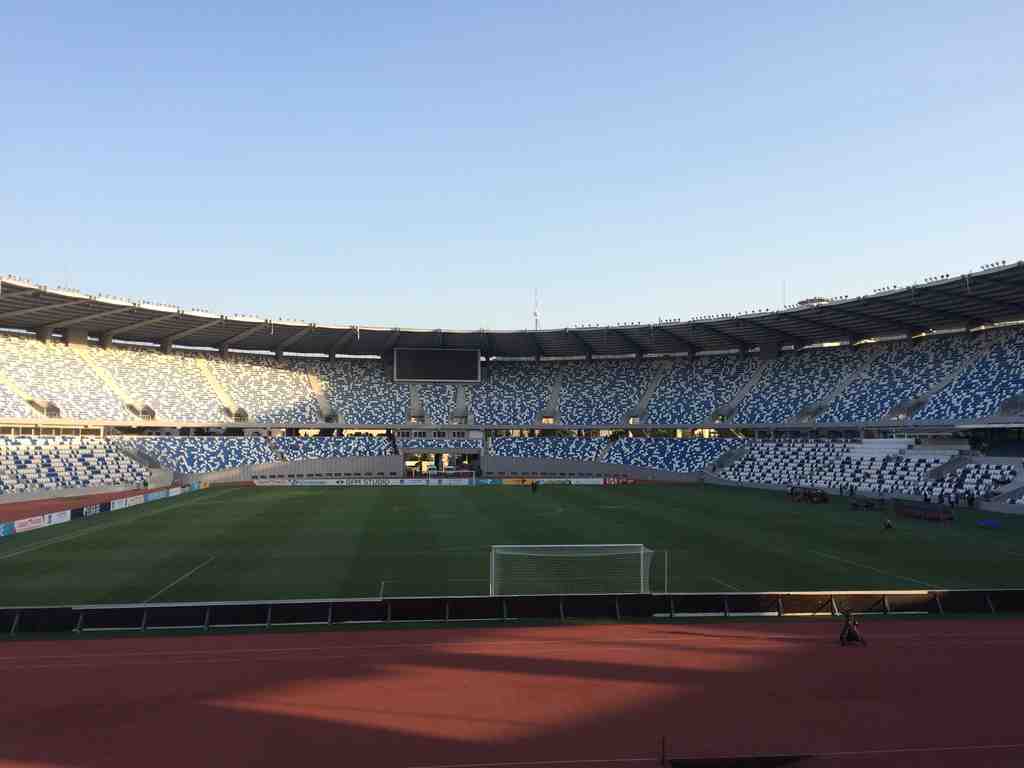
You are now standing before the Boris Paichadze Dinamo Arena. This landmark, known in Georgian as ბორის პაიჭაძის ეროვნული სტადიონი, is one of the hallmark locations in Tbilisi. Initially constructed in 1976 by Georgian architect Gia Kurdiani, this stadium has solidified its place as the largest in Georgia with a capacity of 54,202 seats.
The stadium's original name was Vladimir Ilyich Lenin Dinamo Stadium, paying homage to the Russian Communist leader. However, in 1995, it was renamed to honor Boris Paichadze, a renowned Georgian football player. Before its construction, Dinamo Tbilisi's home ground was the Central Stadium, which could accommodate approximately 35,000 spectators. The necessity for a larger venue arose due to Dinamo Tbilisi's impressive performances during the mid-1970s.
Upon its inauguration, this stadium was among the largest in the Soviet Union, boasting an initial capacity of 74,354. The first match held here was on September 29, 1976, between Dinamo Tbilisi and Cardiff City, resulting in a 3-0 win for Dinamo. The stadium has witnessed many significant events, including Dinamo Tbilisi's triumphs in 1978 and 1979, and hosted 80,000 fans in 1981 to celebrate the team's victory in the European Cup Winners' Cup.
The Dinamo Arena has consistently been used for important national and international matches. The record attendance was in 1979 when 110,000 spectators watched Dinamo defeat Liverpool 3-0 in the European Champion Clubs' Cup quarter-finals. The venue was also pivotal for the USSR national football team and hosted memorable matches for clubs like Spartak Moscow and Dynamo Kiev.
In 2006, the Dinamo Arena underwent refurbishment, transitioning to an all-seater stadium which adjusted the capacity to its current 54,549 seats. Notably, on August 11, 2015, the stadium hosted the UEFA Super Cup match between FC Barcelona and Sevilla FC.
The architectural design has evolved significantly over time. The original 1936 stadium designed by Archil Kurdiani included additions in 1956 that expanded capacity. The current structure, inaugurated in 1976, retained elements from the initial design but enhanced its capacity to accommodate over 74,000 spectators thanks to a complex architectural solution involving a console system supported by 58 pylons. These innovations have allowed the Dinamo Arena to stand as an enduring symbol of Georgian sports and architectural prowess.


