
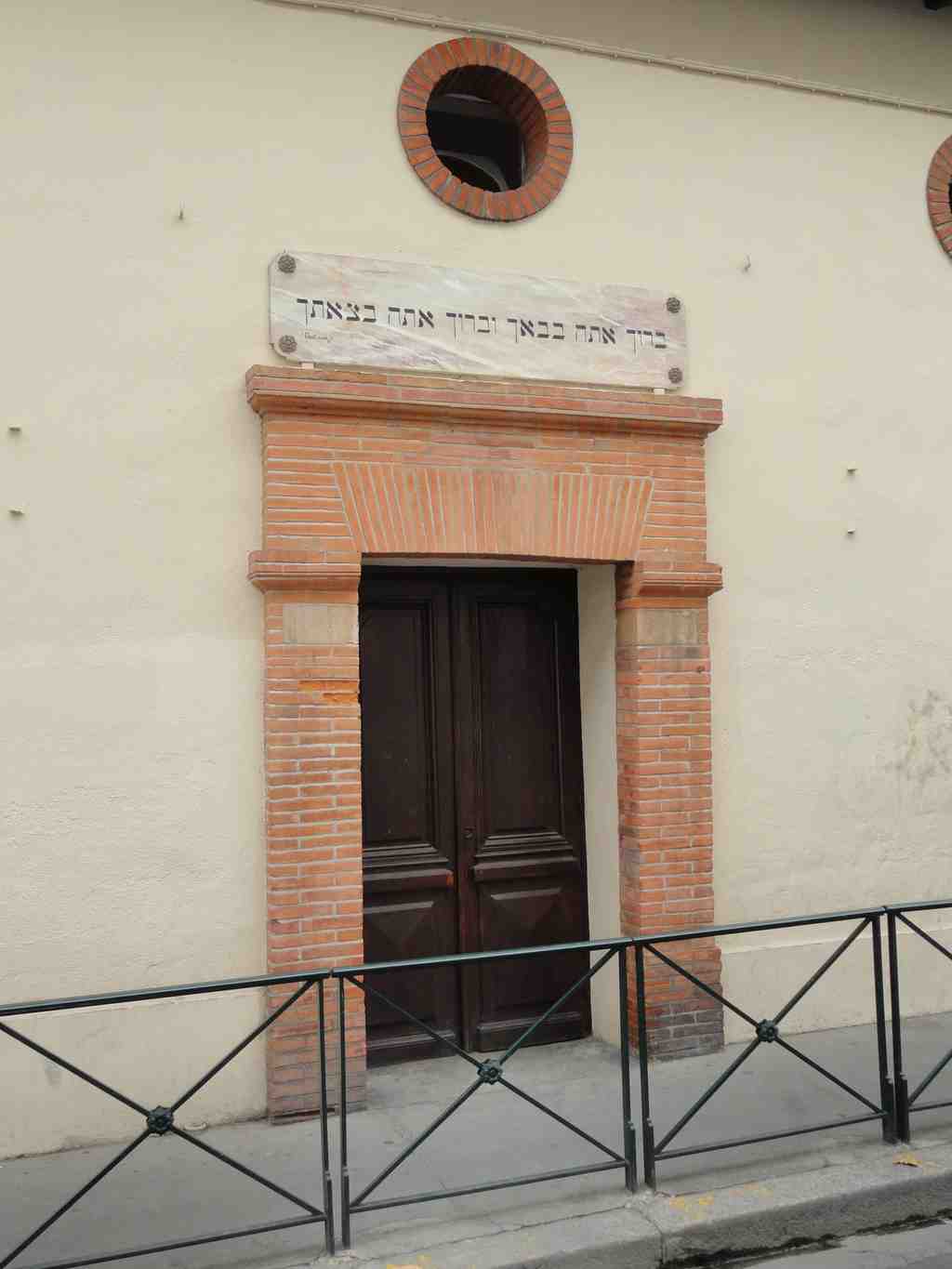
Look for a simple cream-colored building with pink brick framing the doorway, dark wooden double doors, and a Hebrew inscription above; the Palaprat Synagogue sits quietly right at the intersection, its modest face easy to miss if you blink!
Now, as you stand here in front of this very unassuming entrance, let me bring you into a story that stretches nearly two centuries-filled with whispers of faith, echoes of hope, and the everlasting humor of Toulouse weather always trying to rain on every parade. This is the Palaprat Synagogue, Toulouse’s oldest, still bustling quietly with spirit since 1837. Imagine the air in those early days, streets filled with the scent of horses and fresh-baked bread, and just eighty-seven Jewish souls calling Toulouse home-fewer than the number of croissants you’ll see eaten on any given Sunday.
Back then, the Jewish community here was almost more of a rumor than a crowd. Lacking a grand temple, they gathered in a small house right here, rented from a local named Mr. Gleyzes, basically at the edge of what was then the fast-growing faubourg Saint-Aubin. Picture a time when this intersection was all rough cobblestones and the only skyline was made of laundry flapping between homes. Over the years, more families arrived, carried here by the tides of history-escaping annexations, fleeing the storms of war in Alsace-Lorraine, running from pogroms in the Russian Empire. By the time brick met mortar for this building, it was with the faint hope that this would be a safe anchor in a restless world.
Inside, this synagogue was not designed to impress; instead, it greeted worshippers with modest whitewashed walls, sunlight peeking in through round windows, and a wooden bimah in the center-a reminder that sometimes the heart of a community beats loudest in the simplest settings. Above the entrance, in Hebrew, reads the blessing: "You shall be blessed when you come in, and you shall be blessed when you go out." Sounds like a pretty solid guarantee to me, don't you think?
But what this place lacks in grandeur, it makes up for in resilience. Fast forward to the 20th century-this quiet house of worship transformed into the secret pulse of Jewish resistance. During World War II, while fear stalked the streets and German troops shadowed every corner, the synagogue remained open as long as it possibly could. Picture those tense nights: all the curtains drawn, the brave and the desperate huddled together in prayer and determination. This was a hiding place, a planning room for the Jewish Resistance, a birthplace for the Jewish Army in Toulouse. Imagine the tension when, in August 1943, the French militia surrounded the building, threatening those inside, only retreating thanks to last-minute intervention-moments when every breath seemed loud enough to betray a secret.
It wasn’t just Jewish heroes who left their mark here. Monseigneur Saliège, the archbishop of Toulouse, played his own daring part-publicly denouncing antisemitic persecution and commanding his flock to help however possible. His courage earned him a plaque within these walls, honoring the day when conscience defeated silence. Sometimes even the most unlikely allies pop up in life and in history-like a squirrel at a picnic.
As time rolled on, the synagogue’s story grew richer. Different Jewish communities wove their own traditions here: Sephardic from Turkey and Egypt, Ashkenazi from Poland, North Africans arriving in waves in the ‘60s. Life wasn’t always harmonious-a little drama over rituals and leadership (because, honestly, what’s a family without a bit of squabbling?)-but every hand, every accent, and every prayer echoed inside these walls. In the later 20th century, new synagogues opened, and the big Jewish center on Place Riquet became the new main stage, but Palaprat kept its role as Toulouse’s spiritual living room.
Today, it’s still active, tended by attentive rabbis and faithful caretakers, one of Toulouse’s last living links to generations of struggle, courage, and hope-a precious little chapter in the big, wonderful story of this city. So, next time you pass this quiet brick-framed doorway, remember: inside, history is always whispering, and every blessing counted here has been hard won, fiercely kept, and as warmly offered as a smile on a rainy Toulouse afternoon.




