
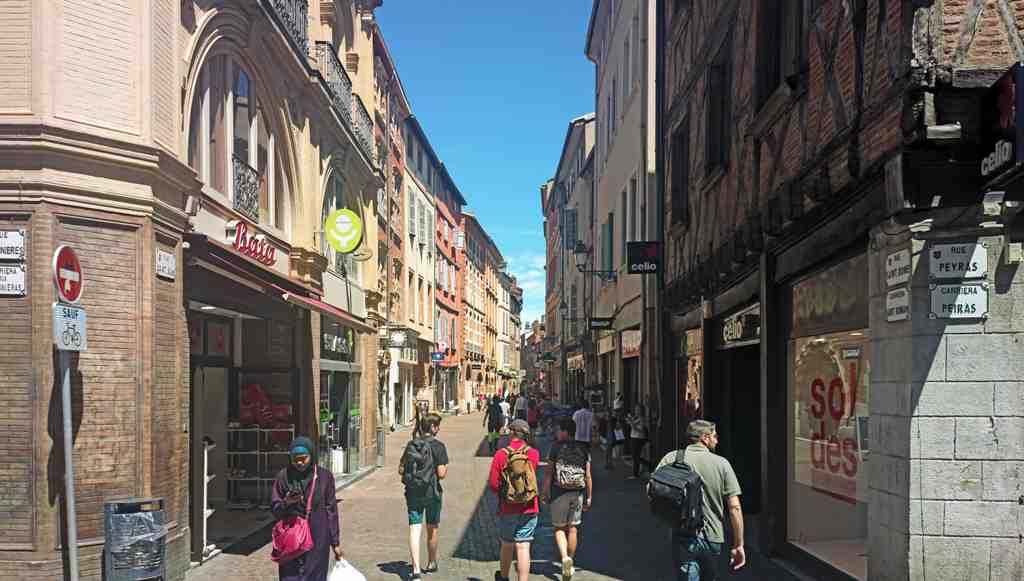
As you step onto Rue Saint-Rome, look straight ahead at the narrow, lively street lined with elegant shopfronts, ornate balconies, and a mix of brick and half-timbered facades-it’s bustling with activity, so let your eyes follow the flow of pedestrians between beautiful old buildings that almost seem to press in close above you.
Imagine yourself walking through this bustling artery of Toulouse, feet tapping against ancient stones worn smooth by centuries of traffic. The air smells faintly of coffee and fresh bread; shop doors open and close, their bells chiming faintly in the background. But while Rue Saint-Rome might feel effortlessly modern in its pace and style, the layers of history here run deep-so deep you can almost hear the echo of medieval market cries between the shop displays.
Long before the glittering boutiques and trendy café windows, this street was at the very heart of Roman Tolosa, running directly along the cardo maximus-the main north-south route through the ancient city. Imagine the clatter of wagon wheels and resounding calls of merchants hawking their wares as you pass. In the Middle Ages, Rue Saint-Rome was divided into separate sections, each with its own distinct character and industry: from butchers displaying their meats on heavy wooden benches-giving rise to the name “rue des Bancs-Majous,” or street of the big benches-to leather workers tanning deer skins, filling the air with the sharp, earthy scent of chamois.
Step by step, every stone tells a story. At number 2, you’ll find the Maison et Tour de Serta, its façade still boasting the crisscross pattern of timber and brick that was once typical before fire and wealth replaced so many of these houses with grander, safer brick mansions. Back in the fifteenth century, this corner was alive with construction, as Pierre de Serta, an ambitious merchant-turned-city-councilor, erected his grand staircase tower that still looms over “the four corners of the Changes.” Imagine climbing those narrow, twisting stairs-seventy steps in all-where every footfall tells a tale of the merchant families who once jockeyed for power and prestige.
Keep walking and you’ll see the splendor of Toulouse’s merchant class on full display. At number 21 stands the Hôtel Comynihan, a masterpiece of baroque drama with its ornate stone faces-symbols of day and night-gazing down from above, and hay-wagons rumbling by as the city’s most influential families entered through grand archways. Look up at the classic façades, see the intricate wrought-iron balconies, and picture silk-clad city councillors exchanging rumors of revolution and royal edicts in salons lit by flickering candlelight.
But Rue Saint-Rome hasn’t always been so stately. Over the centuries, it’s been repeatedly ravaged by fire-the great blazes of 1463 and 1523 left entire blocks smoldering as neighbors rushed to save what little they could. Then the rebuilding began: wooden houses gave way to the brick that defines old Toulouse today, but glimpses of the street’s earlier, humbler past can still be found above doorways or in the fanciful carvings that decorate shop beams.
Commerce is truly woven into the DNA of Rue Saint-Rome. In the sixteenth century, book printers and sellers gave the central section the nickname “rue des Libraires,” and later, in the age of revolutions, the whole street was rebranded as “Rue de la Liberté,” echoing with the cries of revolutionaries as churches were closed, priests swore new oaths, and even the wealthy Poulhariès family faced the guillotine far from their beloved city. Each era left its mark: from haberdashers and milliners, to tailors for the grand dames of Toulouse, to quirky shops like the Fouillis Américain, where jeans and pop culture ushered in a new, youthful energy during the twentieth century.
Look for the subtle scars and transformations: modern storefronts mixed with remnants of Renaissance carving, doors where students once entered the Collège Saint-Rome, founded in a converted Benedictine convent. And don’t miss the sudden burst of cosmopolitanism that colored the postwar decades, as Jewish and Asian shopkeepers brought in new wares, and crowds flocked for sales and sweets, making Rue Saint-Rome the city’s favorite promenade. By the 1970s, it became one of Toulouse’s first pedestrian streets, and to this day, crowds surge on weekends, breathing new life into stones that have seen everything from medieval trade to modern fashion, and even the collapse of a centuries-old building in 2024, a poignant reminder that this living street is always changing.
So, as you stand in the middle of all this, surrounded by laughter, footsteps, and the gentle hum of city life, take a moment to let the centuries swirl around you. You’re not just in a shopping street-you’re walking through layers of drama, resilience, reinvention, and delight.
Want to explore the location and access, odonymy or the heritage and places of interest in more depth? Join me in the chat section for a detailed discussion.




