
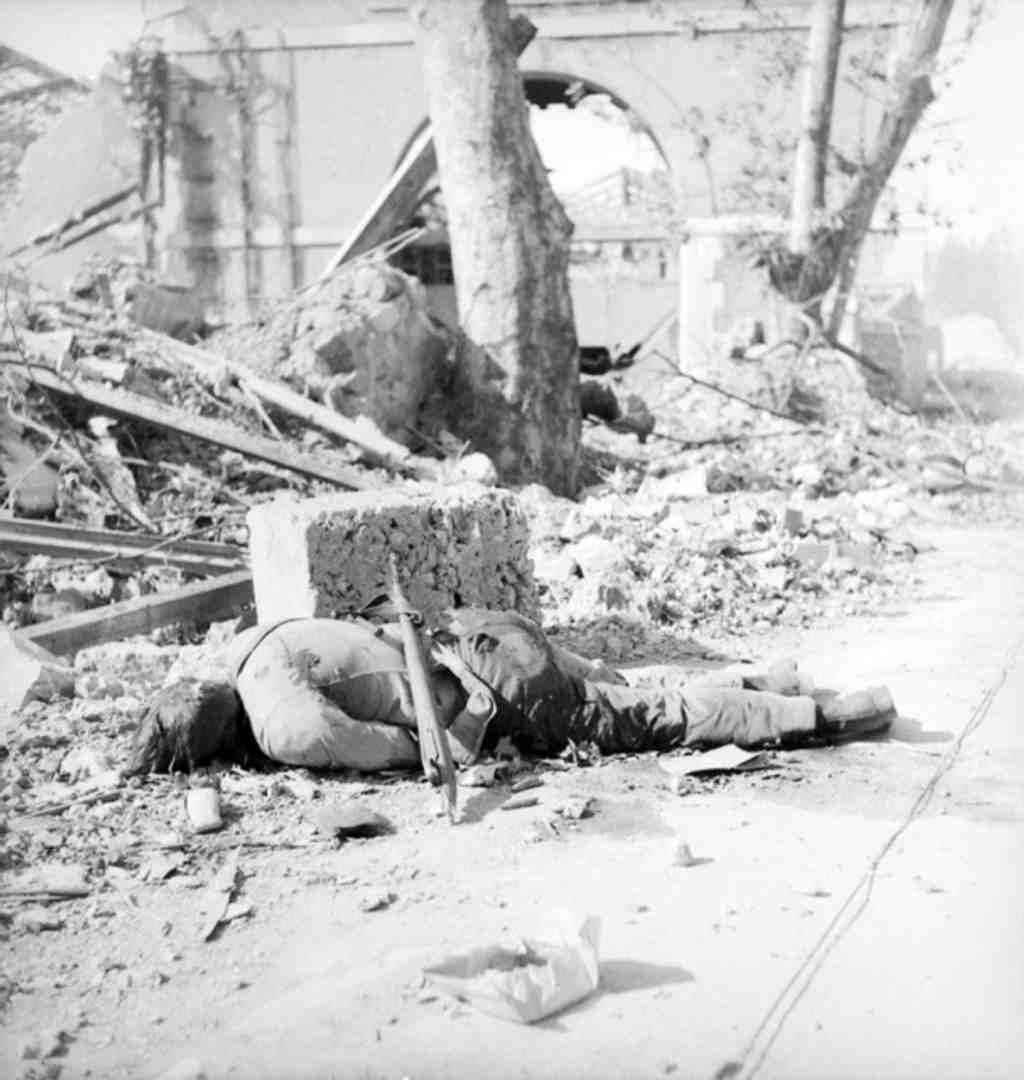
To spot Toulon at this stop, look ahead for the area marked by heavy ruins and shattered buildings-the remains of a violent struggle are easy to notice here, and the archways and fractured walls mark this place as a crucial point in the city’s dramatic history.
Alright, let’s imagine you’re standing right here in the middle of Toulon, on a sunny August day-but it’s not peaceful. The air is thick with the smell of dust and the sound of distant gunfire. The ground beneath your feet is still trembling from the recent battle, and everywhere you look, you see battered stone, broken glass, and the echoes of desperate, heroic struggle.
Back in August 1944, this was no quiet port city. Toulon was the beating heart of the French Navy-the pride and powerhouse port, a place the locals called, “La Royale.” But during World War II, this pride became both a prize and a battleground. In 1942, German troops stormed the port, greedy for the massive French fleet. The French, refusing to let their ships fall into enemy hands, made a tough call: they scuttled seventy-five warships, sending their own pride to the bottom of the harbor in a defiant splash.
Now, fast forward to the summer of 1944. The Allies had landed far up north at Normandy and needed major ports to flood France with troops and hope. Marseille and Toulon became the obvious next targets. The Germans, and before them the Vichy French, had turned the city into a fortress-every hill bristling with artillery, massive cannons, and even gun turrets salvaged from the sunken ships.
Imagine the tension in the air! The Allied bombers, the famous Martin B-26 Marauders, launched strike after strike on the defenses. The sky above Toulon was alive with anti-aircraft fire, the thunder of engines, and the sharp crack of shrapnel. These bombers faced a gauntlet of flak that made even the bravest crews sweat bullets-sometimes, quite literally!
The battle on the ground was just as fierce and chaotic. On August 15th, the Allied invasion of southern France-called Operation Dragoon-kicked off. Orders flashed through the ranks: Toulon and Marseille must fall. General Patch, the American, pointed at Toulon, and French General de Lattre de Tassigny passed the order to superstar General Edgard de Larminat. Larminat didn’t waste time-there was no poetic waiting here-just a furious push toward the city with what troops they had.
Toulon was ringed with soldiers: 16,000 French fighters, their tanks barely more than steel shells, up against the 242nd German Infantry Division clinging to Hitler’s orders to fight to the last man. The Germans even tried to block Toulon’s harbor themselves by scuttling ships, but the Americans saw through the plot and sent the remains of those proud vessels to the sea floor. At one point, German troops turned old French tanks against their former owners, turning streets into mazes of smoke and steel.
By August 21, Toulon was surrounded. The city’s narrow lanes became battlegrounds. The French forces crept street by street, sometimes advancing, sometimes ducking as shells tore the rooftops. Imagine bright red, white, and blue flags suddenly appearing over battered buildings, the crowd’s cheers mixing with the distant echo of gunshots. On August 24th, resistance collapsed. Prisoners marched out, dazed and empty-handed.
Now, picture the city after the last German strongholds fell: The air thick with the dust of collapsed forts, victorious but weary French soldiers dusting themselves off, and a victory parade threading its way down a battered avenue-while, from afar, stubborn German artillery still barked its last few angry replies. Admiral Ruhfus, the German commander, finally threw in the towel late at night. The next day, his garrison marched out. Toulon, battered but unbeaten, was free once again.
Nine days of hell had bought freedom: 2,700 casualties, but over 17,000 prisoners and the recovery of a city whose story stretches far beyond these battered stones. General de Gaulle himself called Toulon’s battle a fight not just for France, but by Frenchmen for France. Today, what was once the battle-scarred home of the fleet is still the heart of the French Navy-now home to modern ships, including the mighty aircraft carrier Charles de Gaulle.
So take a moment: listen to the city around you. If these stones could talk, they’d tell you a story of courage, sacrifice, and the wild, unbreakable spirit of Toulon.
Wondering about the background, 15 august-13 september 1944 or the aftermath? Feel free to discuss it further in the chat section below.


