
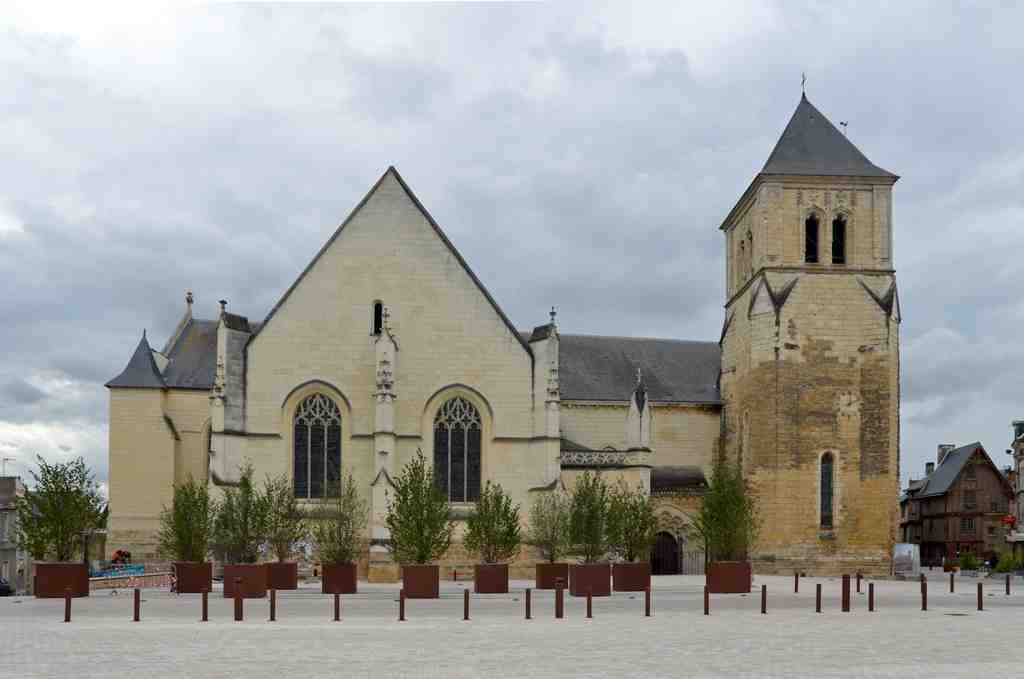
Right in front of you is the Church of Saint-Médard, an impressive stone building with a tall square bell tower and pointed Gothic windows-just look across the open square for its pale yellow and weathered walls rising above the trees.
Imagine you’re standing here on Place Saint-Médard, the year is 988, and this very spot has just received its first recorded mention-thanks to a generous donation from Countess Aldegarde of Angoulême. But even before that, treasure hunters unearthed coins from the reign of Louis the Pious, buried in ancient stone coffins beneath these grounds. Just don’t go digging-those mysteries have already been uncovered! Now, picture local villagers from tiny rural hamlets trudging through wildflower-filled fields on a misty morning, seeking sanctuary at Saint-Médard-des-Champs, as it was nicknamed because it stood beyond the city’s earliest walls. Life must have been lively, with priests like Pereginus and Thibaut sharing news and stories under the care of the distant Abbey of Saint-Jean de Bonneval.
But here’s where things get truly dramatic-in 1158, the city was swept up in fierce battles and the church all but crumbled when Henry II Plantagenet’s forces stormed through. The English king, whether out of guilt or generosity, actually helped rebuild it! Imagine scaffolding, the smell of fresh mortar, and builders arguing about the placement of the carved apostles over the decorated west portal.
Fast forward a few centuries, and Saint-Médard gets a bit of a makeover in the late Middle Ages: the three naves become one enormous open space, rose windows bloom in the stone, and chapels appear along the north side. By the 1500s, new shops-yes, actual butcher and fishmonger stalls-hug the porch. If you’d been here, you could have bought fish, said a quick prayer, and maybe got splashed by an overexcited vendor. These stalls stuck around until 1866, though their less-than-holy activities left some damage.
Through wars, neglect, and even bombings in 1944 that shattered its stained glass, the church survived. Its main arms were restored in the 1800s, and no, the planned spire never made it-so the bell tower looks just a bit squarish, like it’s perpetually ready for a game of architectural Tetris. Today, shining contemporary stained glass from Limoges brightens the southern wall, a nod to the future layered right onto those thousand years of stories.


