
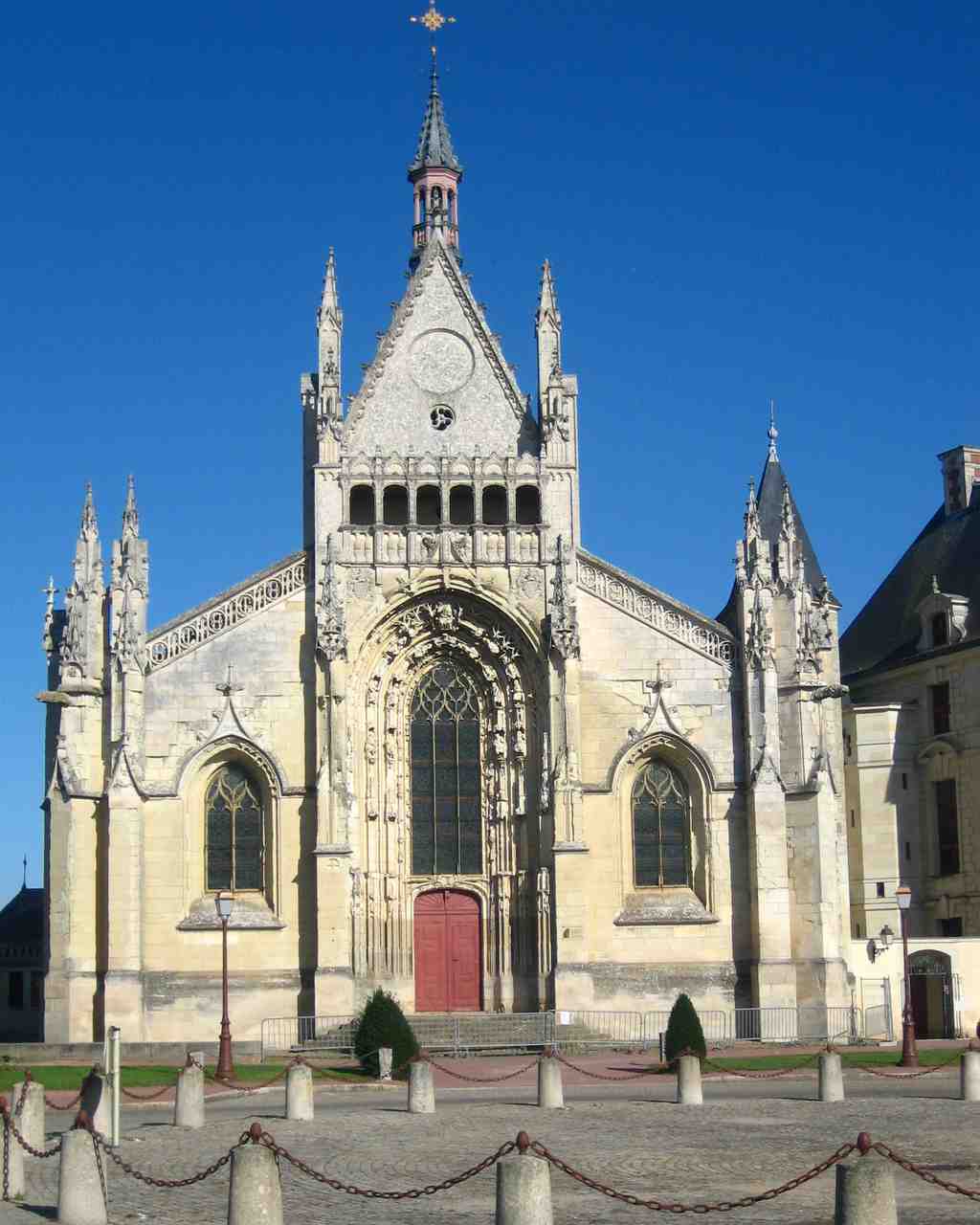
To spot the Collegiate Church of Our Lady of Thouars, look right ahead for a tall, pale stone church with an ornate pointed facade, grand arched doorway, and a delicate spire reaching into the sky-like the local castle’s fancy neighbor that just had a glow-up.
Now, step closer and let’s take a journey back in time-no time machines required, only a little imagination. Picture the year 1500. The Lords and Ladies of Thouars, the impressive house of La Trémoille, have just returned from Paris, maybe with some fresh fashion and a dream... not for a new wardrobe, but for a brand-new chapel. Sounds simple, right? Except the old parish church standing here was so run-down that even the pope (well, a few years later) declared it needed a serious makeover. So, the La Trémoille family, especially the formidable Gabrielle de Bourbon, decided to build not just any chapel, but one that would make the neighbors' porches pale in comparison.
Imagine the whirl of hammers and shouts of masons as stone after stone was lifted, the walls growing taller by the day. Payments flew around, debates with the local clergy filled the air-some thought, “Patch the old church!” but Gabrielle insisted, “No way, let’s go big!” And big they went. The finishing touches weren’t done until 1515, but by 1512, locals could already step inside, marveling at the bright colored windows-installed in 1509-and the sheer scale of this three-level marvel.
It wasn’t just a simple church. The upper chapel linked straight into the castle-imagine the local lords sneaking in for midnight prayers without getting their feet muddy! There was even a “seigneur’s door,” which I imagine was perfect for a dramatic entrance. Below, parishioners found their place in the lower chapel, and deep underneath, a crypt held members of the La Trémoille family. Their tombs would later be lost to the chaos of the French Revolution, when the chapel’s windows were shattered and treasures stolen.
Through the centuries, this building saw many makeovers-it was a war hospital, a prison camp shelter, and even a student bike garage (you heard that right-if those ancient walls could talk, they might complain about all the flat tires). Yet time and history couldn’t wipe away its beauty. In 1840, facing the wrecking ball, it was saved by its new title: a listed historic monument. And let’s be honest, French paperwork has saved quite a few beautiful places!
But what you’re standing before is a masterpiece of late Gothic style with Renaissance flair. Notice how the grand facade pulls your eyes straight up to that pointy gable-no transept here, just three vast naves and a truly unique window-portal combination that soars toward the sky. And hey, behind that beautiful window is a loggia-think of it as Thouars’ fanciest balcony-looking out over the valley below.
Stone from nearby quarries was carved into every detail, from soaring arches to statues gazing down at centuries of visitors just like you. The stained glass you see up high is a relatively recent addition, completed in 1957 after two previous sets were destroyed-one by revolutionaries, another by bombing in 1944. The two southern bays? They stay dark because the castle wall hugs close, as if trying to keep the church’s secrets safe.
Today, it’s a private chapel, yet open for visits, echoing with both old stories and new footsteps. So, whether you’re marveling at the architectural genius, tracing the lords and ladies’ intrigue, or just picturing a hundred bicycles squeezed inside, this church has a story for everyone. Now, take in that view-imagine the bells ringing high above and let yourself drift for just a moment across six centuries of history.
Eager to learn more about the historical, architecture and organization or the historiography? Simply drop your inquiries in the chat section and I'll provide the details you need.


