
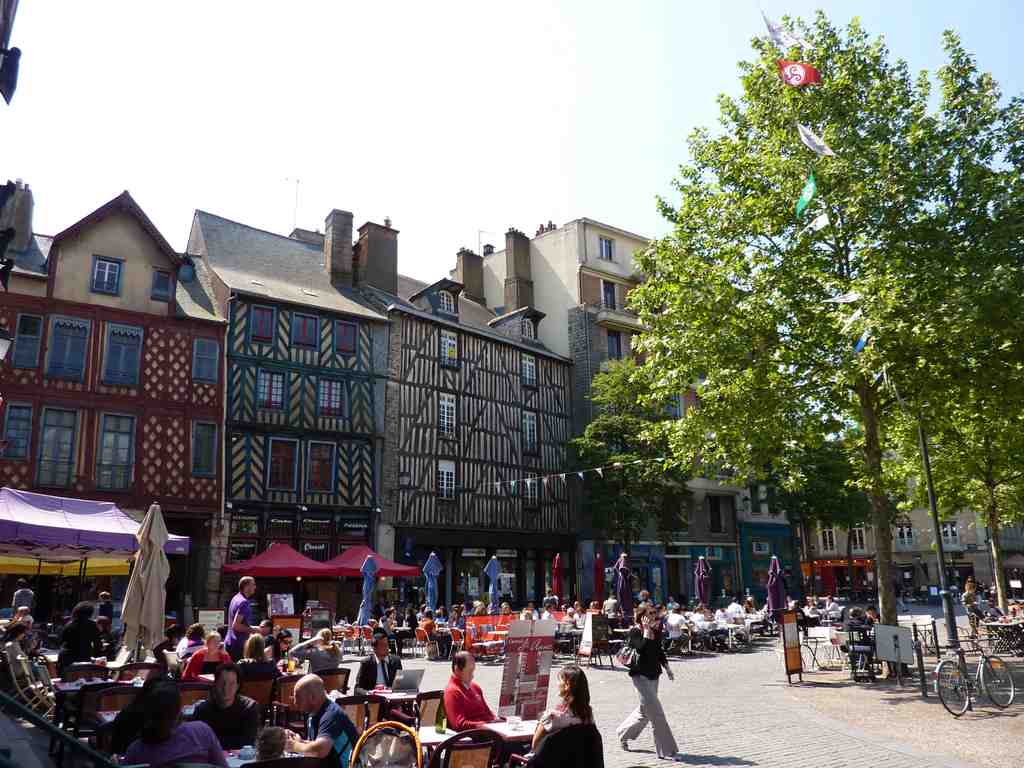
Just ahead, you'll spot Place Sainte-Anne by the colorful half-timbered houses clustered together along one side and packed terraces buzzing with chatter-look for the lively square with a flurry of umbrellas and people in every direction.
Now, imagine the cobblestones beneath your feet humming with stories going back almost two thousand years. This square is like Rennes’ memory box, each building a chapter, every stone echoing the energy of centuries. If you take a moment and listen, you might even hear the faint jingle of the old market bells and the lively laughter of locals.
Let’s rewind to the very beginning: in Roman times, this area wasn’t just any patch of land-it was a hub where ancient roads met, within sight of a grand temple to Mercury and a proud Roman arch. Picture togas instead of tourists, the air thick with the whiff of spices and bread from the market. Centuries later, the Romans had faded, but life pulsed on; Rennes grew, and this spot became the edge of the city, just outside the protective sweep of the medieval walls.
During the Middle Ages, Place Sainte-Anne had a totally different mood-a maze of bustling streets, homes squeezed close together, even a cemetery and a hospital. Grim, maybe, but crucial for the town’s survival. The hospital was St. Anne’s, and most agree that’s how the square got its name-at least, according to one local historian who couldn’t resist a bit of dramatic flair. But mystery swirls here, too! Some whisper it might be named for Anne of Brittany, who perhaps even celebrated her royal engagement nearby-can you imagine the fancy gowns, the gossip, and those medieval party tunes drifting out into the night?
The square continually reinvented itself. By the 19th century, its colorful half-timbered houses became meeting spots for revolutionaries and townsfolk. Just across, the Benedictine nuns at Saint-Aubin’s church would ring the bells-sometimes drowning out the tavern laughter-while the smell of fresh bread from the old faubourg bakeries wove through the air.
Fast-forward to recent times-until 2002, this bustling promenade was... just a parking lot. Yes, really! Rows of cars instead of cafes, and instead of clinking coffee cups, you’d have heard the beeping of car remotes and the sighs of people searching for a space. But when the metro arrived, engineers dug deep and brushed off layers of history: ancient foundations, bits of the Roman city, more than enough for a few archaeologists to break into a happy dance.
Today, Place Sainte-Anne is all about life: it buzzes morning to midnight, with the metro station spitting out students, musicians, and book lovers for the famous open-air book market. At night, the nearby Rue Saint-Michel’s bars overflow, their music and laughter blending with the clinking of glasses under those quirky purple umbrellas. Order a galette, sip your cider, and glance at the houses around you-some date back to the 1400s, each one leaning a little, as if listening in on your conversation.
The square is ringed with spots of legend. There’s the striking façade of the Notre-Dame-de-Bonne-Nouvelle basilica, incomplete yet majestic; the stately Couvent des Jacobins, once a monastery, now a hotspot for international congresses. Every corner tells a tale: at number 19, Jean Leperdit drew his last breath, once the mayor, now a hero immortalized among the timbers and memories. And let’s not forget the brief revolution: in 1792, the square was named Place des Jeunes Malouins, honoring the brash youth of nearby Saint-Malo who rushed to help defend the city during hard times.
So whether you come for the crêpes, the history, or just a sun-soaked seat among friends, Place Sainte-Anne is the heart of Rennes-never the same for long, but always full of stories.
Curious about the location and access, origin of the name or the historical? Don't hesitate to reach out in the chat section for additional details.




