
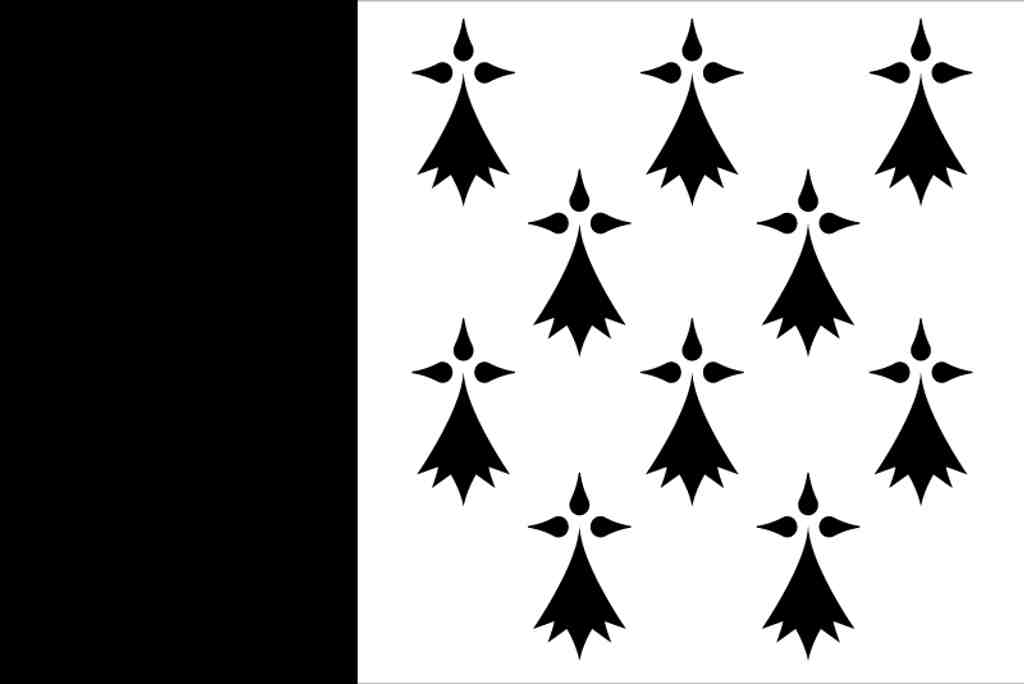
Ahead of you, look for a bold flag: its left side is solid black, and the rest is white, adorned with several rows of little black teardrop and arrow shapes-classic symbols of Breton pride.
Welcome to the land with a name almost as proud as its people-the Pays rennais! Ah, but this isn’t just any patch of territory; you’re standing in what was, and in many ways still is, the heart of Brittany. If you take a deep breath, you can almost smell the ancient woodlands and hear the faint echoes of a language quite unlike French: the regional gallo, along with a whisper of Breton. The Pays rennais stretches far beyond the city itself, out to hidden micro-regions like Coglais and the mysterious Désert of Fougères. It’s a place that’s felt at the edge of Brittany-close enough to the rest of France to swap a few stories, but just stubborn enough to keep its own.
Now, imagine centuries ago, when this land was alive with the footsteps of the Riedones, a Celtic tribe, crafting their own legends in the mists. Turf wars? Absolutely. Plot twists? Plenty. And if you think modern France is complicated, try keeping track of all the sénéchaussées and little bishoprics fighting for a slice of the pie. That pie, by the way, eventually became most of the Ille-et-Vilaine department after 1790.
But, here’s the punchline: don’t mix up the Pays rennais you see on old history maps with today’s busy “pays de Rennes”-one's a patchwork of tiny villages and warring knights, the other’s a tightly knit bunch of modern communities organizing who gets the best roundabouts. Through it all, one thing endures: the twisty, lively gallo dialect, the beloved Rennes fashion, and that age-old Breton stubbornness to hold onto heritage.
So, as you look out at the landscape, picture a land that’s always danced to its own tune-a place where the past is never quite done telling its tale, and where every cobblestone has a story itching to be told. Don’t worry, the tour continues-no gallo required!




