
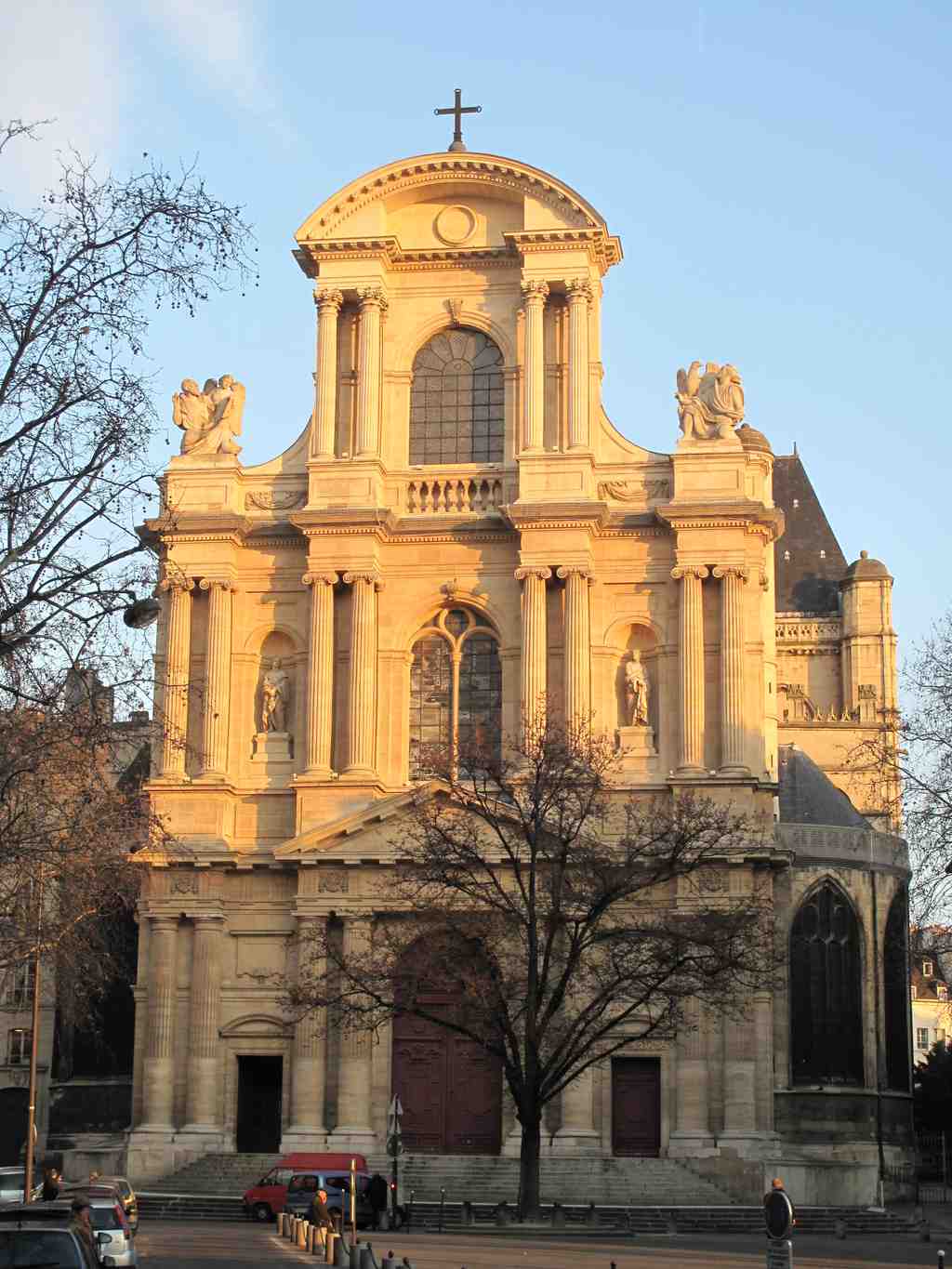
To spot Saint-Gervais-Saint-Protais, just look ahead for an impressive, creamy stone church with three layers of columns stacked grandly on top of each other, crowned by a cross and two angel statues-its facade glows in the sunlight and towers above the square.
Welcome! Pause for a moment in front of this magnificent church-Saint-Gervais-Saint-Protais-and imagine that you’re standing where Parisians have gathered for nearly 1,400 years. The morning sun flickers off its creamy baroque facade, which rises like a three-tiered wedding cake dressed with columns and angels. Not bad for a building that started its journey in the dark, flooding days of early medieval Paris! Let’s rewind time and step into the shoes of the fishermen and boatmen who first used this spot in the 7th century. Many came off the nearby river, soaking wet and probably hoping the church would pray their socks dry. It was built up on a low hill to stay dry when the Seine turned into Paris’ biggest swimming pool.
The first churches here were humble, but with the growing Marais neighborhood and more money from wine merchants-cheers to them!-a grander building rose in the 1200s. Not content to stop there, the Parisians spent over a century building this very church starting in 1494. Between wars, shortages, and what I suspect were some very long lunch breaks, it slowly took shape. What began as a gothic vision was joined by a dazzling new facade in the 1600s-given its first stone by none other than a young Louis XIII. The style? The first French Baroque in Paris! Here’s a secret: at one point, people couldn’t even see the gorgeous front because it was blocked by other buildings. Famous writer Voltaire once complained, “It is a masterpiece which is lacking nothing except a place from which to see it.” Paris finally cleared the view in 1854, and I bet the building has been showing off ever since!
Now, if you go inside, you’ll be struck by the jaw-dropping height of the nave, soaring over you like a gothic ribcage, and lit by windows full of shimmering colors, both centuries-old and strikingly modern. This is a church with serious musical credentials: Saint-Gervais-Saint-Protais was practically the clubhouse for the Couperin family-famous baroque composers and organists. Their house is just next door, and you can still see and hear their beloved organ, an instrument so grand it’s a registered historic monument. Not just anyone can say their family organ is protected by the French government!
Let’s not forget the drama. In March 1918, as the people here gathered on Good Friday, a terrible shell crashed through the roof, killing many. It was the worst single loss of civilian life in Paris during World War I bombings. Even with that tragedy, the church’s walls stood strong, holding memories amidst the music and prayers.
Walk toward the carved wooden choir stalls-some are centuries old and more than a little cheeky, showing scenes from daily life, wild animals, even a man and a woman bathing together! Apparently, later churchgoers were a bit shocked and tried to cover up the naughty bits. And don’t miss the Chapel of the Virgin at the back, where a huge stone crown floats in midair like it’s waiting for a royal to walk in. The glass here is truly Paris’ story told in color: Renaissance scenes meet windows painted just a few decades ago by artists Sylvie Gaudin and Claude Courageux.
Throughout the 17th and 18th centuries, the Marais’ aristocratic families filled these pews, their footsteps mingling with the fishermen’s ghosts. During the French Revolution, however, Saint-Gervais was emptied and transformed into the very serious-sounding "Temple of Reason and Youth." Luckily, it was returned to the church in 1802, and today, it’s the headquarters for the Monastic Fraternities of Jerusalem-a unique order keeping monastic life alive in the very heart of the city.
So whether you feel a little grand, a bit musical, or even slightly mischievous, Saint-Gervais-Saint-Protais has something for everyone. Take a deep breath-you’re standing in a living timeline of Paris itself. Let's move on!
Wondering about the facade, nave or the choir stalls? Feel free to discuss it further in the chat section below.




