
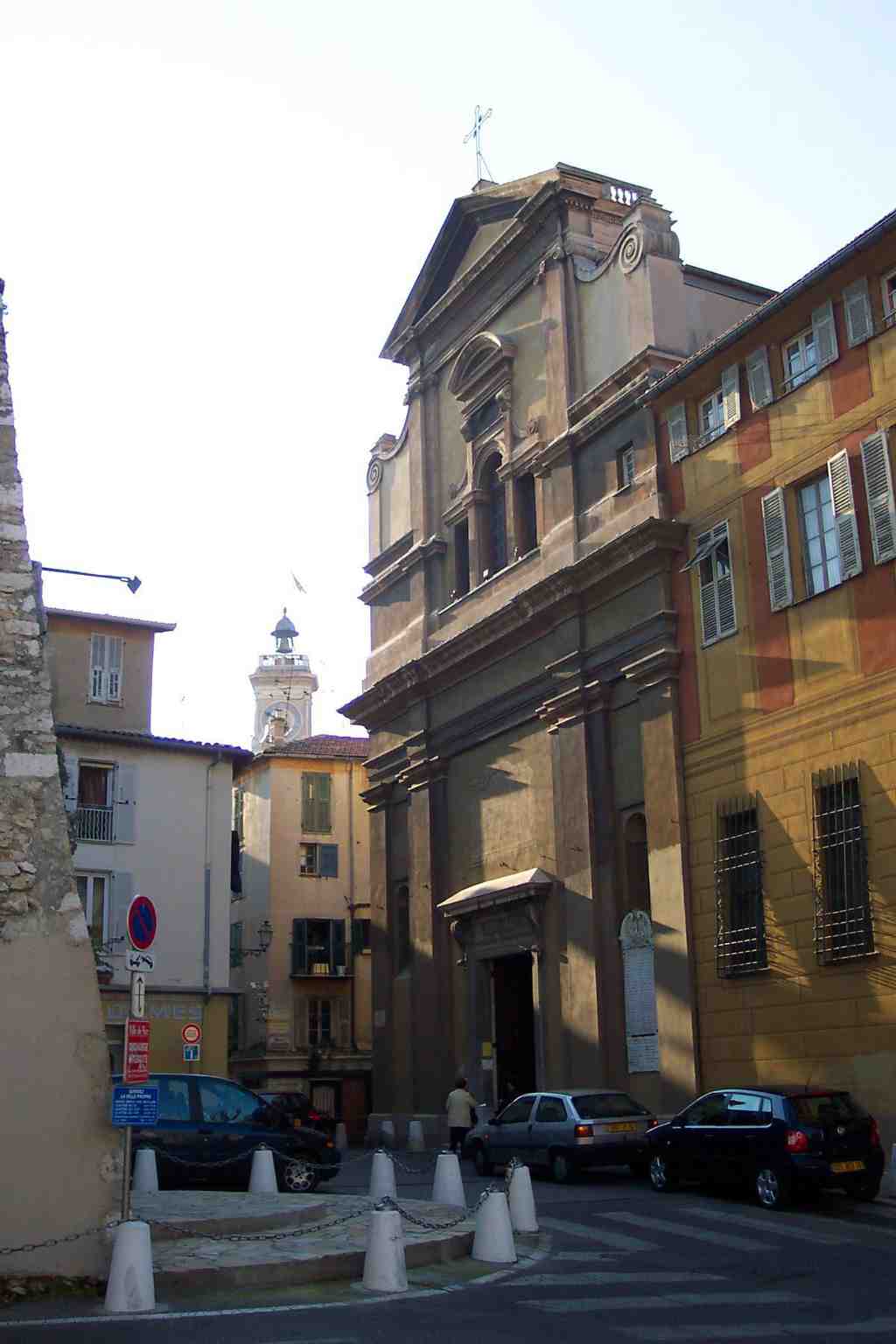
You’re standing in front of the Saint-Martin-Saint-Augustin Church, right here on the lively Place Saint-Augustin. To spot it, just look for the tall, brownish facade squeezed between the yellow-orange buildings, with its triangular pediment and classic, low bell tower rising above. The entrance is framed by pillars and an arch, with a simple cross perched up high. Its weathered colors, thick stone details, and the shadowy doorway give it a stately yet slightly secretive air, like an old guardian peering into the bustling old town.
Now, take a moment and imagine it is the early morning in the 1600s. The air is filled with the distant clatter of hooves on cobblestones and the shouts of merchants opening shop. This church was once outside the city walls, surrounded by fields and the watchful eyes of Augustinian monks. Back then, it witnessed wars and ruins-a monastery here destroyed, then rebuilt by sheer stubborn hope.
If you walk inside, pause to your left: you'll see a beautiful statue of Saint Rita, her delicate plaster features quietly witness to centuries of prayers, lit by flickering candles. But did you know that in 1510, a certain monk named Martin Luther-yes, that Martin Luther-actually passed through here and celebrated a mass, long before he became a famous rebel?
The current building is all baroque drama, commissioned by the Augustinians starting in 1636. Picture the dust and chatter of stonemasons, part of a guild who struck a deal with the monks, ringing their hammers well into the 1700s. For a twist of fate, an earthquake in 1887 toppled one of the church’s twin bell towers; today, only one remains.
And among the many who passed through these doors, imagine the young Joseph Garibaldi-father of Italy’s famous hero-cradled at the baptismal font. Through war, earthquakes, and endless change, this church kept its secrets and stories safe.
If you listen closely, you might almost hear the echo of ancient chants above the noise of the street, connecting you to centuries of hope, loss, and renewal right here at Saint-Martin-Saint-Augustin.




