
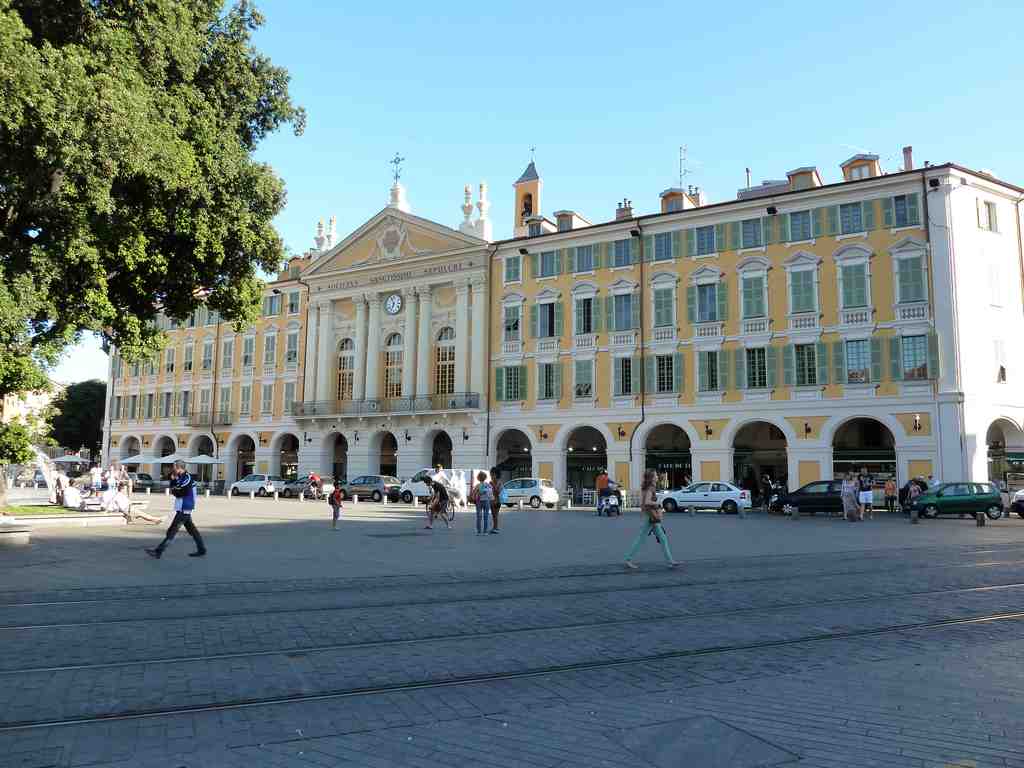
As you come onto Place Garibaldi, look up to your left. The Chapel of the Holy Sepulchre sits almost hidden above the arches, its pale stone façade interrupted by three giant columns that stand out from the arcades below. These columns, thick and timeworn, make the chapel easy to spot-especially with the elegant white balcony above, and the small triangular bell tower peeking up behind. You might notice, if you step closer to the pillars, some rougher stones mixed in-they’re older, the only survivors from the chapel that stood here centuries before.
Standing in front of the chapel now, let your imagination drift back to 1782. The architect, Antoine Spinelli, was busy giving this building its shape, adding a little drama and solemnity to the square. The sound of chisels would echo through the dusty air.
Try to picture this place at the end of the 18th century. It wasn’t just a chapel-it was a statement, placed here to make everyone pause and notice the importance of the city’s front door. The chapel’s façade rises in three levels: below, the columns and weathered stones from the old Notre-Dame du Sincaïre; above, a balcony of white limestone. You can even spot the iron railings with a royal crown, surrounded by curling Savoy symbols-a reminder that this was once the royal family’s vantage point when they’d wave to the crowd.
And here’s a dramatic detail: fixed right in the center, above the arches, hang three real cannonballs. These weren’t just decorations. In 1543, during the siege of Nice, cannonballs like these crashed through the city as the Turkish fleet raged outside. It’s almost as if they’re still lodged there, sending us a warning across the centuries.
Move closer to the heavy chapel door. On your right, you’ll see a stone plaque-its old letters tell the story of that distant siege, and how the city placed itself under the protection of the Virgin Mary when all seemed lost. To your left, a carved marble alms box, half-angel, half-grieving Christ, collected coins that would be sent all the way to the Holy Land.
If you managed to step inside, the first vestibule once gleamed with paintings of the Holy Cross and city emblems, flashes of red and blue light licking the dark stone walls.
And up above, the bell tower-triangular, unusual, almost secretive-marks this as the home of the Blue Penitents, a mysterious brotherhood with deep roots in Nice. They walked these arcades in hooded blue robes, lights flickering, carrying out acts of charity and penance. Imagine hearing their voices at dusk, a somber chant as they climbed the double staircase to their hidden chapel, high above the bustling square.
This is more than just a building. It’s a tapestry of memory, conflict, hope, and celebration-woven right into the heart of Nice. Before you move on, take a last glance at those cannonballs and imagine the storm and courage of those who stood beneath them.




