
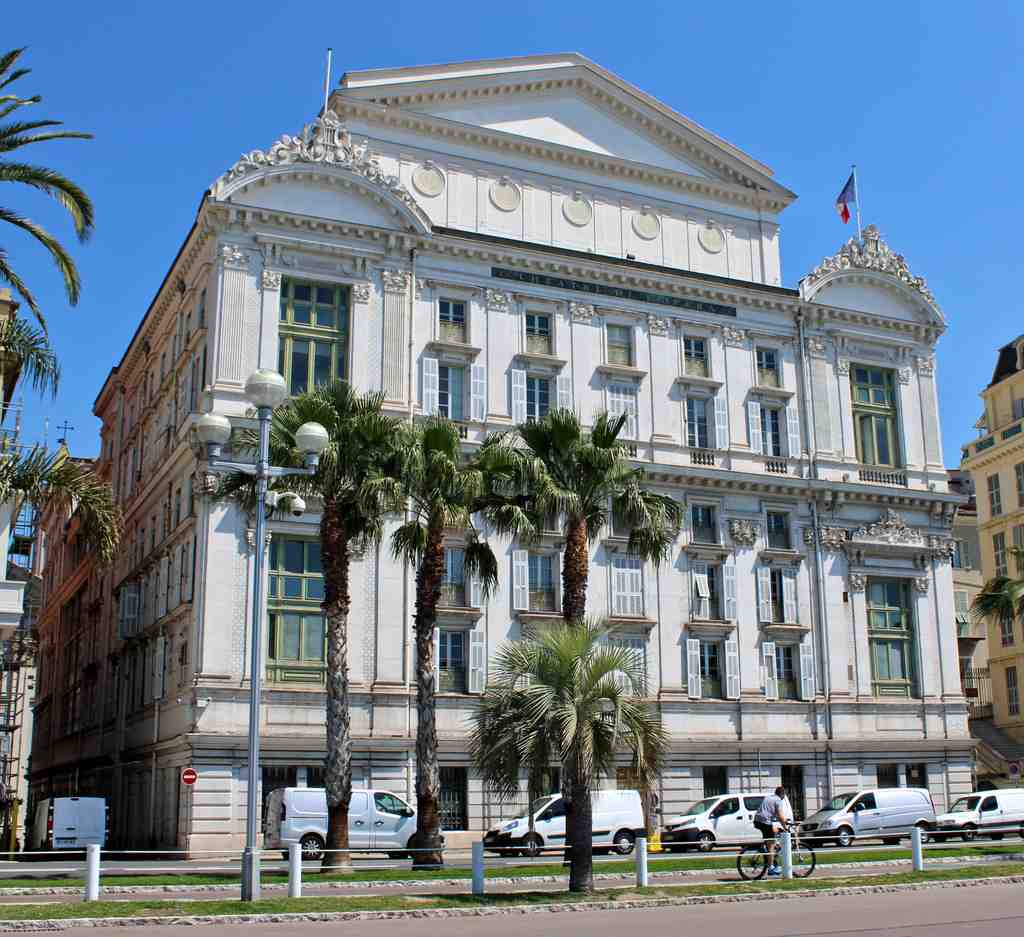
Look straight ahead for a stately white building that rises above the palm trees-a grand, elegant structure with a French flag at its tip and rows of tall windows staring back at you. The top of the façade features ornate decorative flourishes, hinting at a world of stories behind its classic walls. Imagine sunlight bouncing off the pale stone and listen for the city’s gentle sounds as you near the Opéra de Nice.
Now, while you stand here, close your eyes for a moment and picture the buzz of 18th-century Nice, when all that stood here was a wooden theater, the “petit théâtre en bois,” built in 1776. The people of Nice, hungry for music and drama, would slip through its doors in silk and velvet, waiting to be transported by tales of love and danger. The Marquess Alli-Maccarani himself was behind its creation, and its stage soon attracted everyone who was anyone-gentry, royalty, even emperors and tsars.
History echoes through these stones! Imagine 1856, the city aglow as King Victor Emmanuel II is honored with a grand ball. A few years later, picture the excitement rippling through the crowd as Napoleon III and Tsar Alexander II glide into the theater, Johann Strauss himself ready to conduct the orchestra, his baton glinting under the chandeliers.
But as in every opera, tragedy strikes. One quiet night in 1881, as the beautiful notes of Lucia di Lammermoor fill the air, a gasp ripples through the audience-fire! A gas leak sparks a blaze. When the sun rises, the theater is gone; only ashes remain, and heartbreak lingers for those lost, including three gifted siblings, each a different voice on the stage-soprano, contralto, and baritone-gone forever.
Yet, like any good drama, the curtain is lifted again. The city decides to rebuild-a new theater, grander than before, rises from the ashes, designed with the approval of Charles Garnier, the architect behind the Paris Opera. On opening night in 1885, Verdi’s Aida launches the next act of this remarkable venue.
Over the years, the opera house hosts the French debuts of masterpieces, under the guidance of famous artistic and musical directors. It’s renamed again and again, becoming the Opéra de Nice we see today-a stage for great voices, swirling costumes, and majestic music. Even now, behind its grand façade, you might hear echoes of the Ballet Nice Méditerrannée rehearsing, or glimpses of costumes being stitched and sets crafted in the secret world called the Diacosmie.
The real magic is this: every time someone steps through those doors-whether in a tuxedo, a costume, or from the street-they become part of its shimmering history. So take a long look up at the Opéra’s white stone and intricate carvings. Imagine it lit up at night, the audience waiting for the overture, hearts racing, and know you are standing where emperors, artists, and dreamers have all paused, right at the very edge of the stage.




