

Nancy Audio Tour: Secrets of Golden Squares and Royal History
The golden gates of Place Stanislas shine not only with brilliance but also with secrets that have waited centuries to be discovered. This audio tour will guide you independently through the heart of Nancy, revealing events and places often overlooked by most tourists. Here await court scandals, forgotten rebellions, and secrets hidden within the cathedrals. Why did a conspiracy that shook all of Europe unfold in the shadow of the Basilique Saint-Epvre? What mystery awaits the brave in the crypts of Cathédrale Notre-Dame-de-l’Annonciation? Which window of Place Stanislas witnessed the most unexpected encounter of the century? Walk through Nancy's cobblestone streets, feel the pulsating tension of bygone eras, and discover how forgotten dramas have left their mark on the city's facades. Each step reveals new layers of stories and offers a completely different perspective on Nancy. Immerse yourself in the mysteries that await just around the corner. It's time to discover the true face of this city.
Tour preview
About this tour
- scheduleDuration 40–60 minsGo at your own pace
- straighten2.2 km walking routeFollow the guided path
- location_on
- wifi_offWorks offlineDownload once, use anywhere
- all_inclusiveLifetime accessReplay anytime, forever
- location_onStarts at Archives départementales de Meurthe-et-Moselle
Stops on this tour
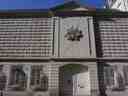
Before you stands a massive, light-gray building with a characteristic, austere facade featuring large, rectangular blocks and a striking symbol centered above the white entrance…Read moreShow less
Before you stands a massive, light-gray building with a characteristic, austere facade featuring large, rectangular blocks and a striking symbol centered above the white entrance doors - this is the Archives départementales de Meurthe-et-Moselle, unmistakable when you look towards the street with its bright facades. Imagine the rustle of old parchments and the scent of archival boxes - here, behind these walls, documents of Lorraine's colorful and turbulent history have been collected for centuries. In these archives, formerly housed in the Hôtel de la Monnaie, an almost complete collection of documents from the Dukes of Lorraine is preserved, who for centuries made Nancy their pride and center of power. The 'Treasury of Lorraine's Charters,' as this collection was called, is a true trove of secrets, disputes, decrees, and the daily concerns of past rulers. However, the fate of these papers was often dramatic - when Duke Francis III had to leave Lorraine, he took entire volumes of documents with him to Vienna. Some of them returned here in 1923, returned by Austria, while the rest appeared much later, in the form of microfilms. The journey of these archives did not end there, however. Interestingly, a vast number of Lorraine documents ended up in Paris, at the National Library, and even more found their way to the National Archives. This scattered fate of the records is the result of various treaties, political machinations, and more than one hasty relocation. When Stanislas Leszczyński, the last Polish king of Lorraine, took over the duchy, the archives came under the care of French officials who diligently transcribed, cataloged, and - somewhat quietly - took the more valuable pieces for the royal collections in Paris. Among the directors of this place, you'll find the names of people who dedicated their lives to saving, organizing, and disseminating knowledge about Lorraine - from François Eloy during the Revolution to contemporary curators. On these shelves, where time is measured by the scent of paper and the dust of centuries, rests the history not only of Nancy but of the entire region, within reach for patient seekers and researchers. These walls, peaceful today, hold echoes of frantic document revisions, political intrigues, and the quiet satisfaction of those who, at all costs, wished to preserve the memory of Lorraine for future generations. The Archives départementales de Meurthe-et-Moselle, though unassuming from the outside, actually houses an extraordinary labyrinth of memories, where each page is a gateway to a different era.
Open dedicated page →Before you, you see a wide, elegant building with tall windows and a symmetrical front - it is here, on the rectangular Place du Colonel-Fabien, that you should stop and look…Read moreShow less
Before you, you see a wide, elegant building with tall windows and a symmetrical front - it is here, on the rectangular Place du Colonel-Fabien, that you should stop and look straight ahead towards the main entrance. This place beats with Nancy's oldest heart. Standing here, surrounded by cobblestones and historic buildings, immerse yourself in the atmosphere that prevailed here as early as the 12th century, when Nancy was just beginning as a rural castle - the Vieil Chastel. From this modest, medieval space, the entire urbanization of the old city began. In the past, laughter echoed here during festivals, the shouts of merchants from the bustling market, or the cheers for knights clashing in tournaments and races. Imagine Joan of Arc, who walked through this very square to meet Duke Charles II of Lorraine before setting off to save France. For centuries, the square bore various names - from Place du Chastel, through Place des Dames, to the one we know today, commemorating the heroism of the French resistance fighter, Colonel Fabien. Also, look around: here stands the famous Wallace Fountain - the only one of its kind in Nancy - and some buildings, like the Hôtel de Ludre, bear on their walls evidence of their listing as historical monuments, remembering every era of the city.
Open dedicated page →Before you rises a slender, bright basilica with a tall Neo-Gothic tower, adorned with delicate carvings and a richly decorated facade - look straight ahead, and you'll see the…Read moreShow less
Before you rises a slender, bright basilica with a tall Neo-Gothic tower, adorned with delicate carvings and a richly decorated facade - look straight ahead, and you'll see the monumental portal and characteristic pointed arches above the doors. Imagine the year 1080 - that's when the parish of Saint-Epvre was born, and the first temple was built on this very spot. Many generations have passed since then, and around you, this place has constantly changed its appearance. Once, the church served not only for prayer - its tower in the 15th century was the highest point of medieval Nancy, and guards watched from it for dangers threatening the city. However, its history goes much further back. The current building was erected in the 19th century after a turbulent rivalry among architects and profound disputes over style. Imagine the heated atmosphere of the 1862 competition, when Prosper Morey, despite criticism and a wave of plagiarism accusations, was tasked with reconstructing the church, presenting a project of Neo-Gothic grace that immediately divided the residents of Nancy. The church's new orientation was changed - Morey's entrance was directed north, and the monumental stairs you are now passing were donated by Emperor Franz Joseph I himself. At the end of 1867, after three years of challenging groundwork, a court delegation from Eastern Europe passed through the center of Nancy to personally admire the new masterpiece. Thanks to the generosity of donors - the Emperor of Austria, Napoleon III, and local nobility - hundreds of meters of glass were transformed into luminous stained-glass windows, many of which were unfortunately destroyed by wartime bombings. On the night of September 25, 1914, a German airship dropped bombs on the Old Town, destroying the roof and valuable stained-glass windows. Despite its dramatic fate, the basilica survived the worst. In 1874, Pope Pius IX granted it the rank of minor basilica, and in 1999, it was listed as a national monument. The interior is adorned not only by incredible frescoes but also by Neo-Gothic organs, funded by master Merklin, which captivated Parisian composers as early as the 1867 World Exhibition. The sounds of ancient organs were once heard here, and their new mechanism became the pride of Nancy. Interestingly, during archaeological work, sandstone tombs with Hebrew inscriptions and ancient sculptures of Adam and Eve were discovered in the foundations, now transferred to the Musée Lorrain. The legend of the 'king of beggars' - Father Trouillet, who managed to convince powerful figures from various countries to finance the reconstruction - survives to this day. Also note that the entrance was once adorned with a stained-glass imperial couple, replaced after the war with symbols of Lorraine and Alsace in a shared embrace. This place knows no boredom - from aristocratic weddings, through memorable wartime night raids, to contemporary ceremonies or painstaking renovation work after the storms of the century. Saint-Epvre stands here, majestic, soaring, rich in extraordinary stories whose echoes can still be felt standing in this square. Are you fascinated by the origin of the name, its history, or the reconstruction of the building by Prosper Morey? Let's talk about it
Open dedicated page →
Show 10 more stopsShow fewer stopsexpand_moreexpand_less
We are now standing at the site where one of the most dramatic events in Nancy's history unfolded - the Battle of Nancy, on January 5, 1477. The silence of that winter morning…Read moreShow less
We are now standing at the site where one of the most dramatic events in Nancy's history unfolded - the Battle of Nancy, on January 5, 1477. The silence of that winter morning concealed a tension that was about to erupt. Imagine the whistling wind over snow-covered fields, the muffled shouts of soldiers, the clang of armor, and the sound of horses' hooves. Charles le Téméraire, or Charles the Bold, became the last ruler of the powerful Duchy of Burgundy. For years, he sought to expand his territory, creating one of the most powerful states in Western Europe. His lineage, starting with Philip the Bold, expanded its power, acquiring successive lands in the Benelux, Flanders, Artois, and Luxembourg. Nancy was intended to become the capital of these new ambitions. When Charles captured the city in 1475, it seemed that everything was decided. But the locals did not surrender easily. René II, the young Duke of Lorraine, seemingly yielded to the demands, but secretly forged alliances with the French, Swiss, and Alsatians. As time passed, the local population became increasingly less favorable to the Burgundian garrisons. A spark ignited - uprisings broke out, diversions and acts of resistance began to appear. In 1476, Charles suffered two bitter defeats against the Swiss - at Grandson and Morat. News of these defeats spurred the Lorrainers into a new rebellion. René II recaptured successive fortresses, and the residents of Nancy both starved and fought fiercely. The Burgundians lost strength in endless skirmishes, and the winter cold began to favor the city's defenders. The second siege of Nancy began in the autumn of 1476. Charles, despite the advice of his counselors, refused to withdraw, hoping for spring reinforcements. However, the frost became a silent ally of the Lorrainers. Water in the wells froze, and for lack of food, dogs and cats were hunted. Hunger and disease plagued the military camp; soldiers began to desert. When René II returned, he gathered a relief army - tens of thousands of Swiss, Alsatian, and local soldiers. Charles had only about 3,000 exhausted men left at Nancy. On the morning of January 5, 1477, in the twilight, René II's armies advanced, encircling the Burgundian forces through the Saurupt forests. The attack surprised the enemy. The battle unfolded swiftly - the Burgundians, caught by surprise, were routed, and the fleeing soldiers were treacherously surrounded and massacred by their recent allies. Charles the Bold, abandoned and wounded, was killed in the confusion, and his body was found only two days later near the frozen Saint-Jean pond, reportedly gnawed by wolves. It was here, near today's Place de la Croix-de-Bourgogne, that a cross was erected to commemorate the site of his death. At the house at Grand-Rue 30, the number '1477' is still visible in the cobblestones, where Charles's body was laid before being displayed in the collegiate church of Saint-Georges. Charles's fall ended the era of Burgundy: the duchy passed into the hands of his 19-year-old daughter, Mary, who married Maximilian of Habsburg. This event ignited the fuse of a centuries-long conflict between France and the Habsburg dynasty. For years, January 5th was celebrated in Lorraine as a national holiday; René II commemorated the victory by building the church of Notre-Dame-de-Bonsecours and expanding the cult of Saint Nicholas. The battle became an inspiration for artists and poets: Eugène Delacroix painted the famous 'Battle of Nancy,' and Pierre de Blarru published the poem 'Nancéide.' To this day, you'll find symbols here - the thistle (chardon), the motto 'non inultus premor,' and the monument at Place de la Croix-de-Bourgogne - a reminder that whoever seeks to break the spirit of this city will easily prick themselves. Are you wondering about the expansion of the Burgundian house, the conflict between Lorraine and Burgundy (1475-1476), or the siege of Nancy? We encourage you to discuss this further in the chat section below.
Open dedicated page →Before you is a square with a neoclassical facade featuring rich embellishments, a fountain, and a green statue standing upon it - look to the right of the arcade to spot…Read moreShow less
Before you is a square with a neoclassical facade featuring rich embellishments, a fountain, and a green statue standing upon it - look to the right of the arcade to spot it. Imagine the rustle of leaves, the gentle murmur of conversations, and echoes of bygone times among the tall townhouses of old Nancy. It was here, west of the monumental Arc Héré, that a place was born that changed its face over centuries. Previously, the area was confined by city walls and lacked this open space until the 19th century. When the old walls fell, a new road and square were created here. Initially, it was called 'Camel Square,' because it was here, in 1698, that Duke Leopold brought exotic animals to the astonishment of the residents. Today, however, the name was given in honor of the Counts of Vaudémont - one of the oldest and most famous families in the entire Duchy of Lorraine. In 1877, architect Prosper Morey transformed the shape of the square, and a fountain with a neoclassical facade, adorned with flaming vases, dominated the whole. The main spot is occupied by a monument to Jacques Callot, master engraver, and on the sides, you can spot busts of two other famous artists. The square combines the nobility of history with the daily life of the city and continues to be a witness to human emotions and encounters.
Open dedicated page →Before you, you see a wide square surrounded by classical townhouses, with ornate golden gates and an impressive palace with a colonnade - look straight ahead, beyond the golden…Read moreShow less
Before you, you see a wide square surrounded by classical townhouses, with ornate golden gates and an impressive palace with a colonnade - look straight ahead, beyond the golden gate, to see the central point of Place de la Carrière. Imagine that the place where you are standing, five hundred years ago, echoed with galloping horses and the shouts of a crowd. It was here, as early as the 16th century, that Nancy's nobles competed in tournaments and displays of skill. This space was formerly called 'Carrière' because it gave free rein to those who wished to show off their courage and knightly artistry. Originally, it was 'rue Neuve,' then 'rue de la Carrière,' until it finally appeared on the map as 'Place de la Carrière.' The square was created when Nancy expanded its medieval fortifications - aristocrats built their residences here, showcasing their wealth and status. The northern end was once closed by a monumental, never fully realized vision of a new Louvre for Duke Leopold, of which only ruins remained, later replaced by today's Government Palace. Walking along the eastern and western sides, you'll notice the repetitive rhythm of classical facades. It was Emmanuel Héré, court architect to Stanislas Leszczyński, who ensured that the windows and columns here presented themselves with such harmony, as if all the elegance of the French classical era had solidified right here on the Carrière. On one side, you'll see the powerful Government Palace, encircled by semicircular colonnades and adorned with stone Olympian deities; on the other - two historic hotels: Héré and Morvilliers, with facades reflecting the majesty of original Renaissance buildings. Note the southern gate; it's the Porte Royale - now a magnificent triumphal arch, a symbol of the old city's connection with the new, a dreamed-of link by Stanislas Leszczyński, who undertook the task of unifying Nancy, creating the famous Stanislas Axis. Today, this urban concept is a 'masterpiece of human genius' according to UNESCO - in 1983, Place de la Carrière, along with Place Stanislas and Place d’Alliance, was inscribed on the World Heritage List. Beneath your feet, modernity intertwines with past splendor - once, fanfares echoed here during tournaments, and later, military parades and civic celebrations. On the southwest side, you'll see the former merchant exchange, now the seat of the administrative court, almost a mirror image of the Beauvau-Craon palace, where the court of appeal now sits. Place Carrière has also become a meeting point for residents of Nancy and visitors: since 2004, the legendary Book Fair - Livre sur la place - has been held here; every two years, crowds of students gather for the spectacular '24h de Stan' chariot race, when for a full day the entire city lives and breathes this unusual competition. It's no wonder that the facades of almost all buildings on the square are protected as historical monuments - each of them, from the Hôtel Héré, through the government palace, to the historic fountains and gate finials, recalls centuries of transformations, ambitions, and the imagination of the powerful of this land. Look once more at the horizon - here is a place where past and present meet in the daily rhythm of a city whose heart has remained Place de la Carrière for centuries. For a fuller understanding of the location and access, its history, or its representation, please contact me in the chat section below.
Open dedicated page →Before you rises an impressive triumphal arch of light stone, adorned with numerous sculptures and golden details - look to the northern side of Place Stanislas, where the main,…Read moreShow less
Before you rises an impressive triumphal arch of light stone, adorned with numerous sculptures and golden details - look to the northern side of Place Stanislas, where the main, wide arcade opens up a view to the city's other squares. Imagine a bustling 18th-century Nancy, when an old, sturdy Porte Royale, built by order of Louis XIV himself, stood where the current arch is. These were times of great change: in 1752, Duke Stanislas Leszczyński decided to demolish the old gate and build something that would captivate generations. Work on the arch, designed by Emmanuel Héré, began in 1753 and lasted two years. As workers carved marble bas-reliefs and erected columns, the entire Place Stanislas echoed with the sounds of hammers and tools. The new gate was not only meant to impress - for a time, it served as a fortification and was connected to the city walls by galleries, right next to a cobbled patrol road for soldiers. This explains its unusual width. Only when the walls disappeared did the arch become a freestanding monument of glory. The Roman Arch of Septimius Severus and the Parisian Saint-Antoine gate served as inspiration. Interestingly, the highest part of the structure, towering over passersby, was adorned with sculptures of four ancient deities: Ceres, Minerva, Mars, and the mighty Hercules, all sculpted by Guibal. However, the most striking feature is a group of gilded lead figures - in the center, on the acroterion, there is a medallion with a portrait of Louis XV, supported by Minerva and an allegory of peace, while above, Fama, the goddess of fame, hovers, holding a laurel and a trumpet, as if sounding a victorious note. Three marble bas-reliefs preserve ancient stories: Apollo aiming an arrow at a winged dragon, Minerva and Mercury under palm trees, Apollo playing the lyre with the Muses - here, every detail recalls those who sought to combine the rule of the sword with culture and art. Interestingly, the figure of Apollo then symbolized the king himself! Above your heads, you also see Latin inscriptions proclaiming glory - during the French Revolution, they were painted over with the slogans 'Liberty, Equality, Fraternity,' only to have the original sentences about the victorious duke and peace restored in 1876. The triumphal arch, though it seems merely a beautiful monument today, witnessed revolutionary events - during the turbulent 19th century, the medallion of Louis XV was removed and restored, as if the gate lived the political life of the city. Since 1923, it has been listed as a historical monument, and in 1983, along with Place Stanislas, it was added to the prestigious UNESCO list. Stand for a moment in silence and let your imagination see marching soldiers, artists working on sculptures, and townspeople who daily passed this monumental symbol of times of war and peace.
Open dedicated page →Before you, you see a wide square paved with light cobblestones, surrounded by elegant, bright buildings with ornate wrought-iron, gilded balustrades and lanterns; note the…Read moreShow less
Before you, you see a wide square paved with light cobblestones, surrounded by elegant, bright buildings with ornate wrought-iron, gilded balustrades and lanterns; note the monumental city hall building with flags and the dark statue standing before it. Imagine the slow murmur of passersby, the rustle of footsteps on the stones, and the distant sound of conversations, as Place Stanislas unfolds around you - the heart of Nancy and a jewel of European urban planning, which has continuously captivated residents and visitors since the 18th century. This square did not appear overnight; it is the result of the great ambition of Stanislas Leszczyński, King of Poland, father-in-law of Louis XV himself, and Duke of Lorraine and Bar. What you see today began here between 1751 and 1755, when architect Emmanuel Héré, utilizing the talent of local and imported artists, decided to prove to the world that Nancy could rival great capitals. The square does not impress with its size, for its uniqueness lies in the harmonious combination of elegant architecture with thoughtful urban planning; it is a square that physically and symbolically connected two previously distinct areas of the city - old and 'new' Nancy. Beneath your feet is pavement that once gleamed red, intersected by black lines around the former and current central statue. And in the center today stands Stanislas - a grand, solemn bronze figure that, since 1831, reminds us to whom we owe this square. Previously, a monument to Louis XV stood here for decades, but the times of revolution were merciless to 'royal' monuments - it was dismantled to be melted down for cannons. The history of Place Stanislas is not just about politics and architecture; it's also a place of emotions - here, people demonstrated, cheered, and even… celebrated with free wine poured during the square's opening in 1755. Lavish balls were held in the halls of the Hôtel de Ville, and during the official unveiling of the first statue, a piece of the cornice fell, causing brief panic and nervous shouts in the crowd. Note the surrounding buildings: the majestic city hall with Stanislas's coat of arms and the thistle symbol - Nancy's emblem, the Grand Hôtel de la Reine, the Opéra national de Lorraine, and the Musée des Beaux-Arts. Each of them holds its own story, from palace balls, through offices and cafes, to the former demonstrations of Cossacks who harmlessly camped in the square in 1813. At the corners, you see monumental golden gates, forged by Jean Lamour, which gleam in the sun like a promise of wealth. The square itself has been rebuilt many times - from the days when cars were allowed to park here to a thorough renovation for its 250th anniversary, when the asphalt was removed and the original sharp, light cobblestones were restored, and a time capsule for future generations was hidden in the center under a designated stone with a star pattern. It is from here that you can look towards the Triumphal Arch, enter one of the cafes that buzz with life every day, or simply sit and let yourself be surrounded by history, art, and majesty. No other place in France has received so many accolades - in 2021, Place Stanislas was voted the favorite monument of the French, and Lonely Planet listed it among the most beautiful squares in the world. Place Stanislas is not only an architectural triumph but also a stage for human daily life, where the past meets the present, and history continues to unfold. To delve deeper into the location and access, its history, or its remarkable buildings and memorial sites, simply drop your query in the chat section, and I will provide more information.
Open dedicated page →You are now standing in front of the Musée des Beaux-Arts de Nancy, in the very heart of the city, alongside Place Stanislas. Look at the classical facade of this pavilion,…Read moreShow less
You are now standing in front of the Musée des Beaux-Arts de Nancy, in the very heart of the city, alongside Place Stanislas. Look at the classical facade of this pavilion, designed by Emmanuel Héré for King Stanislas Leszczyński. Imagine a bustling 18th-century city: the clatter of horses' hooves echoing on the cobblestones, the sounds of conversations, the cries of street vendors carried among elegant townhouses. It's hard to believe that beneath your feet lie Nancy's former fortifications, and in the museum's basement - remnants of the 15th-century Haussonville bastion. The museum you see was born in times of great turmoil. Its origins date back to the turbulent French Revolution, when an angry crowd stormed churches and palaces, and ecclesiastical property and the estates of the aristocracy, fleeing the guillotine, passed into state hands. From these acquisitions, the museum's first collections were formed. Among the works that inaugurated Nancy's collections were masterpieces - including Caravaggio's 'Annunciation' and a copy of 'The Wedding at Cana' by Claude Charles for a local monastery. During Napoleon's reign, when the sound of cannon fire had not yet faded after the peace treaty with Austria, priceless treasures arrived in Nancy: 30 paintings from the Louvre itself, including works by old French masters from the 17th and 18th centuries. As if it were a matter of life and death, the museum repeatedly changed locations: from university basements, through abandoned chapels, until it finally settled permanently in the pavilion on Place Stanislas in 1936. The architecture of this place is a story of constant transformation. The original 18th-century pavilion gained a new wing, erected by the duo Jacques and Michel André; a cool, milky, geometric Art Deco concrete staircase leads visitors towards modern art. In the contemporary wing, opened in 1999, the echo of archaeologists' hammers resonates, as they unearthed secrets hidden beneath the building, and pure light streams through the large gallery windows. Walking through the museum, you will touch almost every era. From dramatic Renaissance and Mannerist paintings depicting the martyrdom of saints, through the portrait of a stern-faced cardinal by Corneille de Lyon, to Rubens' monumental 'Transfiguration' and Monet's shimmering landscapes. Here are works by painters from Lorraine, including those by Émile Friant, in which one can feel the rough daily life of ordinary people. There is also a place for the unexpected: a vast collection of Daum glass, shimmering with colors like pirate treasure in the museum's dungeons. One cannot overlook the gallery dedicated to Jean Prouvé, a pioneer of modern design, whose exhibition of furniture, models, and original projects could easily appear in a science fiction film - introducing an atmosphere of slight wonder and delight. The Graphic Arts Cabinet here is a true labyrinth of paper: almost 15,000 engravings and drawings, from small caricatures and portraits created in cafes by vibrant artists, to works by Old Masters like Delacroix, Watteau, or Ingres. Interestingly, for a long time, graphics were viewed with indulgence; part of the collection was sold to expand more valued oil painting collections! There are also mysterious threads: an extraordinary collection of Japanese art, donated by the wife of Charles Cartier-Bresson, was hidden from public view for decades, until 2011, when it finally saw the light of day. Here are screens, samurai armor, ceramic kimonos - each object whispers stories of distant lands. The Musée des Beaux-Arts de Nancy is a place where time does not stand still. The collections are constantly evolving, and successive generations of custodians and art patrons add their own bricks to this never-ending edifice of memory and imagination. If you feel the delicate scent of paper, paint, and glass in the air, it's a sign that the history of this place lives on - thanks to people for whom art is always a current affair. To delve deeper into architecture and museology, collections, or cultural management and policy, simply drop your query in the chat section, and I will provide more information.
Open dedicated page →Before you stands a magnificent, bright building with a classical facade, large arched windows, ornate balustrades, and sculptures placed on the cornice - look towards the…Read moreShow less
Before you stands a magnificent, bright building with a classical facade, large arched windows, ornate balustrades, and sculptures placed on the cornice - look towards the southern corner of Place Stanislas. You are now in front of the Opéra national de Lorraine, a place that has pulsed with Nancy's artistic life for over a hundred years. The first opera theater was built here during the time of the King of Poland and Duke of Lorraine, Stanislas Leszczyński, in 1758 - behind the walls of this historic seat, echoes of applause and constant excitement before premieres pulsed, until a tragic fire in 1906. The fire consumed everything - from rich chandeliers to heavy velvet curtains. However, the city did not plunge into silence. The project for the new opera was undertaken by Joseph Hornecker from the Nancy School, who combined classical lines with a touch of Art Nouveau - one only needs to look at the architectural details to find a subtle interplay of light and ornamentation. In 1919, after years of waiting, the first sounds resonated in the new, over-thousand-seat auditorium, rebuilding the legend of this place. In 2006, the opera received national status; this was a reward for the determination of the city and its art lovers. On this stage, diverse artists such as Noël Lancien and Sebastian Lang-Lessing have conducted. In recent years, it was here, in 2021, that Marta Gardolińska became the first woman in history to hold the position of music director, which evoked emotion and pride among residents. Today, as successive opera arias resonate here, it's hard not to feel that history, art, and courage create the unique atmosphere of this place.
Open dedicated page →Before you stands the impressive facade of Cathédrale Notre-Dame-de-l’Annonciation with two distinctive, symmetrical towers on square bases, adorned with domes and lanterns - to…Read moreShow less
Before you stands the impressive facade of Cathédrale Notre-Dame-de-l’Annonciation with two distinctive, symmetrical towers on square bases, adorned with domes and lanterns - to see it, look towards the massive light-gray stone structure with three large portals and a central clock just below the cross. Imagine immersing yourself in the morning silence of Place Monseigneur-Ruch, and right before you, the cathedral rises - a place that has attracted the gaze of pilgrims, residents, and tourists for over three centuries. If you had stood here in the Middle Ages, Nancy would still not have had its own cathedral. For many years, the city depended on the bishopric in Toul, which residents felt was a serious deficiency, because nearby Metz, Toul, and Verdun, though not politically part of Lorraine, already had their own cathedrals. When Toul came under French control in the 16th century, the Dukes of Lorraine began a diplomatic struggle for their own episcopal throne in Nancy. Finally, in 1602, the rank of primatial church was successfully petitioned from the Pope for the temple in Nancy. The first buildings were provisional and were located where the Saint-Sébastien church is today, or in the current cathedral district. However, the monumental structure visible before you only began to be built in 1703, at the initiative of Duke Leopold I, and then under the watchful eye of the King of Poland, Stanislas Leszczyński. Imagine a decade of work by stonemasons and architects, during which visions and plans changed - initially inspired by Giovan Betto, then Jules Hardouin-Mansart. However, instead of the former dome plans, double towers were decided upon, which Victor Hugo mockingly called 'poivrières Pompadour' - reportedly resembling old pepper mills. The cathedral witnessed many dramas and events; during the French Revolution, its relics suffered greatly, including the remains of St. Sigisbert, patron saint of Lorraine. Only one bone remained undamaged, now preserved in a gilded reliquary and admired by the faithful, while the former niche was occupied by a statue of Mary with Child created by a local artist. While the cathedral's interior dazzles with classical columns, a marble altar from 1763, and many chapels, the enormous, historic organ particularly draws attention. Built in the 18th century by Nicolas Dupont, and subsequently rebuilt many times, it has recently undergone a thorough renovation. Imagine how the powerful sounds of 4200 pipes resonate beneath the vault, and the echo carries throughout the entire church. Although the cathedral has been listed as a historical monument since 1906, it does not hold the title of basilica, but enjoys the privileges of indulgences, like Roman basilicas - a large marble plaque at the entrance reminds us of this. Crowds visit it - over 187,000 people in 2024 - making it one of the most important landmarks in all of Nancy. It's also impossible not to notice the entire array of sacred art: classical paintings, a fresco in the dome dedicated to 'celestial glory,' gates and balustrades forged by the famous Jean Lamour, creator of the wrought-iron fences of Place Stanislas, and even ancient liturgical objects dating back to the 10th century associated with St. Gauzelin, Bishop of Toul. Each chapel and every detail hides a separate story - such as the chapel of St. Joseph with Claude Deruet's 'Crucifixion' painting, or the Apse with scenes from the life of St. Sigisbert, king and saint. Before you stands a monumental testament to faith, ambition, and challenging times - a place full of silence, prayer, and great moments in Nancy's history. Are you wondering about the architecture, paintings, or the cult of St. Joseph or Sigismund? We encourage you to discuss this further in the chat section below.
Open dedicated page →In front, you will see a small, rectangular square surrounded by neatly trimmed rows of old lime trees, and precisely in the center, a magnificent Baroque fountain with an obelisk…Read moreShow less
In front, you will see a small, rectangular square surrounded by neatly trimmed rows of old lime trees, and precisely in the center, a magnificent Baroque fountain with an obelisk topped by a figure playing a trumpet - this is Place d’Alliance, which you can easily recognize by its serene, harmonious facades and central water feature. You are in an exceptionally peaceful place, almost isolated from the city bustle. In the 18th century, a completely different life pulsed here - there was neither a fountain nor elegant townhouses. Imagine the roar of city walls being dismantled in 1698 - the last bastion of Saint-Jacques disappeared under the workers' hammers, revealing the area where Duke Leopold I later established a vegetable garden. This garden, full of the scent of earth and the whispers of gardeners, witnessed many changes before Stanislas Leszczyński, the former King of Poland and a unique patron, ordered the construction of a new city square here in 1751. Standing here, you are looking at the work of architect Emmanuel Héré, who meticulously designed the square according to Stanislas's vision. Originally, it was meant to bear the name of St. Stanislas and even appeared as such on the first sketches. However, the tranquility of this space hides interesting twists. Swiftly, in 1756, the square was renamed Place d’Alliance in honor of the alliance treaty between France and Austria. This historical document brought together the monarchy of Louis XV and Empress Maria Theresa - and for Stanislas, it was a source of pride, as Austria was ruled by a former Duke of Lorraine, from whose hands Leszczyński himself held his Lorraine duchies. The central point of the square is a fountain by Cyfflé, which was intended for Place de la Carrière but ultimately beautified this very spot. See how three bearded old men, symbolizing the Scheldt, Meuse, and Rhine, pour water from allegorical jugs into a stone basin. Their curved figures and the splendor of the sculpture are a clear nod to Bernini's Roman fountains. At the top of the obelisk with the trumpeter, note the decorated medallion with the motto 'Perennæ Concordiæ Fœdus Anno 1756' - a memento of the perpetual alliance. On the fountain, you can also read concise Latin maxims that celebrate unity and the triumph of accord over discord. The square has harmonious, ordered proportions: barely 80 by 60 meters, which makes it feel intimate despite its classical layout. To this day, it is surrounded by two rows of old lime trees, some planted in 1763. However, even among these quiet trees, tranquility did not always prevail - during protests in 2012, several lime trees fell victim to axes, but they were later carefully restored. Around the square stand almost identical hotel facades - understated and elegant, designed by Héré himself according to a single pattern. Most of the interiors were at the discretion of the merchants and aristocrats who inhabited them, but the front walls themselves - and the richly decorated balustrades by Jean Lamour - were financed by Stanislas. One of these buildings housed a local branch of the Bank of France from the mid-19th century. Another, the Hôtel d’Alsace, was consumed by fire during a dramatic blaze in 1782 - imagine the panic, the shouts of the crowd, and the clanging of water buckets as workers on the roof helplessly tried to extinguish the flames. Place d’Alliance, along with Place Stanislas and Place de la Carrière, forms a unique urban ensemble inscribed on the UNESCO World Heritage list. It is not only an architectural masterpiece but also a testament to the ambitions of Lorraine's enlightened rulers. Look around: there is no pompous extravagance here, rather a stark elegance, harmonious silence, and the fleeting memory of events that changed Nancy's fate - from political alliances to night fires and the hard work of artisans.
Open dedicated page →Before you stands the Musée-Aquarium de Nancy - distinguished by its massive, cream-pink facade without windows, adorned with geometric, repetitive patterns, while from the garden…Read moreShow less
Before you stands the Musée-Aquarium de Nancy - distinguished by its massive, cream-pink facade without windows, adorned with geometric, repetitive patterns, while from the garden side, a metal staircase and wide glazing emerge in the lower parts of the building. Imagine standing in the heart of Nancy, on Rue Sainte-Catherine, opposite a place that for years has harbored curiosity, science, and a touch of magic within its walls. This monumental building, constructed in 1933 by Jacques and Michel André, was inspired by the visionary American designs of Frank Lloyd Wright. Its austere, enormous wall without a single window was built to safely house precious natural collections. In this silence, just behind the massive wall, lies a world where life meets history. But before this place began to buzz with children's laughter, scientists' whispers, and the hum of water filters, the history of the museum and its collections began over 250 years ago. Cast your mind back to the 18th century, when Stanislas Leszczyński, Duke of Lorraine, gathered collectors, dreamers, and scientists to jointly create the Royal Medical College. It was there that the first cabinets of curiosities were created - places full of oddities: exotic fossils, old medals, preserved animals, and the world's strangest plants. These objects, seemingly inanimate, sparked imagination, enlivened conversations, and, most importantly, served science, anatomy, and botany. Over time, the collections grew, changed owners, and even storage locations. At one point, the fate of these collections hung by a thread - they were almost forgotten, locked away in warehouses, gathering dust and awaiting better times. Only the mid-19th century, thanks to the establishment of the Faculty of Science in Nancy, brought a new breath of life. It was then that these natural treasures began to radiate throughout the community, made available to students and curious residents. However, the true revolution came at the beginning of the 20th century, when Lucien Cuénot, an eminent naturalist and professor, oversaw the relocation of the museum to the new building you now see before you. The collections had multiplied so much that a new, larger home was necessary. You can imagine the bustle of the move: crates full of stuffed animals, skeletons, minerals, descriptions of exotic creatures, artifacts, and botanical specimens. The building was designed so that nothing would distract visitors - neither light nor the view from outside - allowing them to fully immerse themselves in the underwater world and the wonders of nature. Passing through the museum's doors today, you immerse yourself in a truly scientific Atlantis. On the ground floor, three large aquariums await, where fish of various species glide among reefs like living paintings. In the Nautilus and Calypso galleries, you can get lost not only in the world of water but also among fascinating exhibits that sometimes surprise and amuse. At the end of one of the galleries, you'll find the Astrolabe, a space for temporary exhibitions where contemporary art playfully interacts with science. Upstairs, a true spectacle of nature awaits: a vibrant display of species diversity, carefully recreated and arranged in a logical tree of life, according to Lucien Cuénot's idea. Looking at these exhibits, you might feel an almost detective-like fascination: where do all these different oddities come from, who collected them, what connects them? Today, the museum not only protects its collections - since 2004, it has officially received the status of 'Musée de France,' and its collections are inviolable, legally protected, and accessible to all. The interiors are constantly being renovated, and the custom-designed Lucien Cuénot lecture hall gathers science enthusiasts for various events and meetings. Passing through this modern yet historic edifice, you stand at the boundary of worlds: nature and science, past and future. Imagine the buzz of students, the quiet passion of curators, the enchantment of children gazing into the aquariums - and the awareness that it all began here, thanks to curiosity and a love for knowledge. The Musée-Aquarium de Nancy is a living story about a world that awaits new explorers every day.
Open dedicated page →
Frequently asked questions
How do I start the tour?
After purchase, download the AudaTours app and enter your redemption code. The tour will be ready to start immediately - just tap play and follow the GPS-guided route.
Do I need internet during the tour?
No! Download the tour before you start and enjoy it fully offline. Only the chat feature requires internet. We recommend downloading on WiFi to save mobile data.
Is this a guided group tour?
No - this is a self-guided audio tour. You explore independently at your own pace, with audio narration playing through your phone. No tour guide, no group, no schedule.
How long does the tour take?
Most tours take 60–90 minutes to complete, but you control the pace entirely. Pause, skip stops, or take breaks whenever you want.
What if I can't finish the tour today?
No problem! Tours have lifetime access. Pause and resume whenever you like - tomorrow, next week, or next year. Your progress is saved.
What languages are available?
All tours are available in 50+ languages. Select your preferred language when redeeming your code. Note: language cannot be changed after tour generation.
Where do I access the tour after purchase?
Download the free AudaTours app from the App Store or Google Play. Enter your redemption code (sent via email) and the tour will appear in your library, ready to download and start.
If you don't enjoy the tour, we'll refund your purchase. Contact us at [email protected]
Checkout securely with 


