
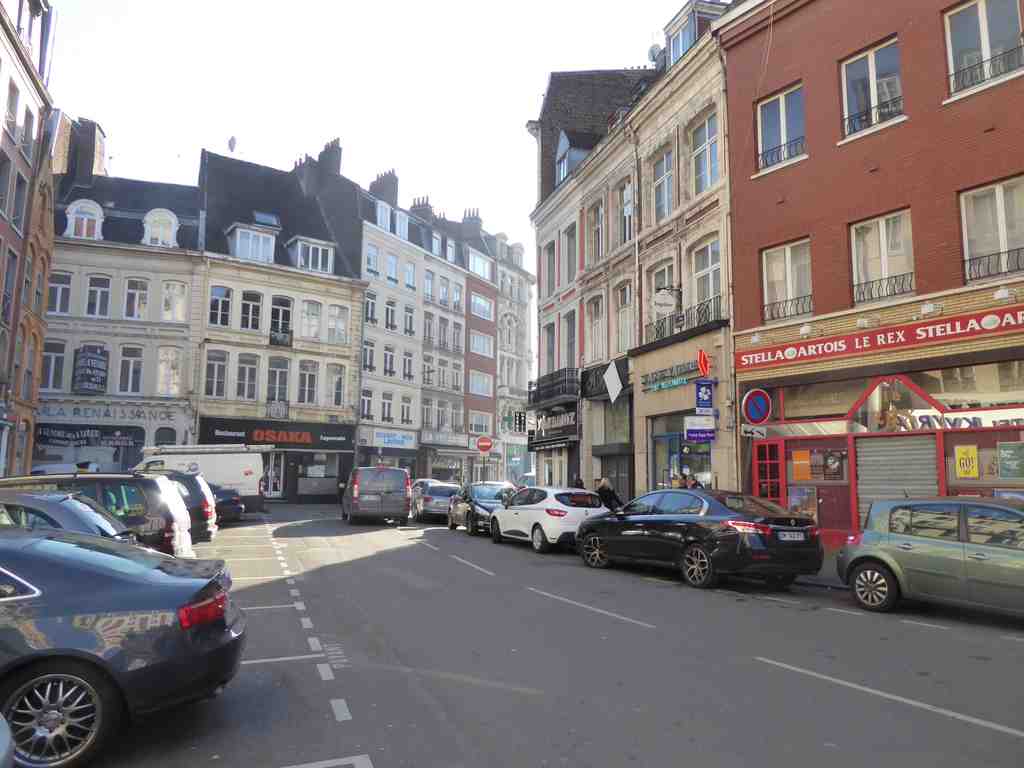
To spot Place des Reignaux, look for a lively little square surrounded by classic Lille buildings with a mix of old stone façades and red brick, as well as ground-floor cafés, bars, and restaurants - you’ll know you’re here when you see rows of cars parked in front of spots like “Stella Artois Le Rex” and the Japanese restaurant “Osaka.”
Welcome to Place des Reignaux! Now, you might glance around and think you’re at just another cozy spot in Lille, but oh boy - if these stones could talk, they’d definitely brag about their wild past. Imagine yourself standing here in medieval times, carefully dodging not cars, but horses, as soldiers bustled around a fortified house that once stood close to this very spot. It all began with a family called Dergnau, or Dérégnau, who owned a manor on the fringe of old Lille, right next to Saint-Maurice Church. Back then, it wasn’t parties and coffee shops; it was all about moats, watchmen, and strategy.
Now let’s turn up the drama! Picture June 1213: the city was under siege by Count Ferrand of Flanders. Just when things got dicey, in strolled Philippe-Auguste, King of France. He eyed that sturdy house and said, “Let’s make this a fortress!” So, right here, he turned an ordinary home into a stronghold, a mini-citadel where his men could hunker down, defend the city, and-oh yes-repel the invaders with all the gusto of action heroes. When the dust settled and the siege ended, Lille itself was set ablaze and the old citadel was reduced to ashes, just like a cake that spent too long in the oven.
But every ending’s a new beginning, isn’t it? Over time, ingenious Lille folks filled in old moats and rerouted canals, replacing medieval ramparts with a thriving community. In fact, the very shape of the land-arc-like and tight, like the wings of a windmill-hints at this neighborhood’s distant, fortified past. Later, during the 1600s, this square marked the spot for the Reignaux Gate, Lille’s front door before it was swapped out for the grand Saint-Maurice gate.
Centuries rolled on, stories layered upon these streets, and the neighborhood faced bombings in World War I, leaving scars that would later be patched up in elegant, late nineteenth-century style. Today, as you sip coffee or pass by a busy bistro, just think: you’re walking through layers of history, where homes became fortresses and then, eventually, irresistible café terraces. So who knows-you might just feel echoes of ancient footsteps, or maybe spot a ghostly knight sipping an espresso. Welcome to Lille’s living time capsule!


