
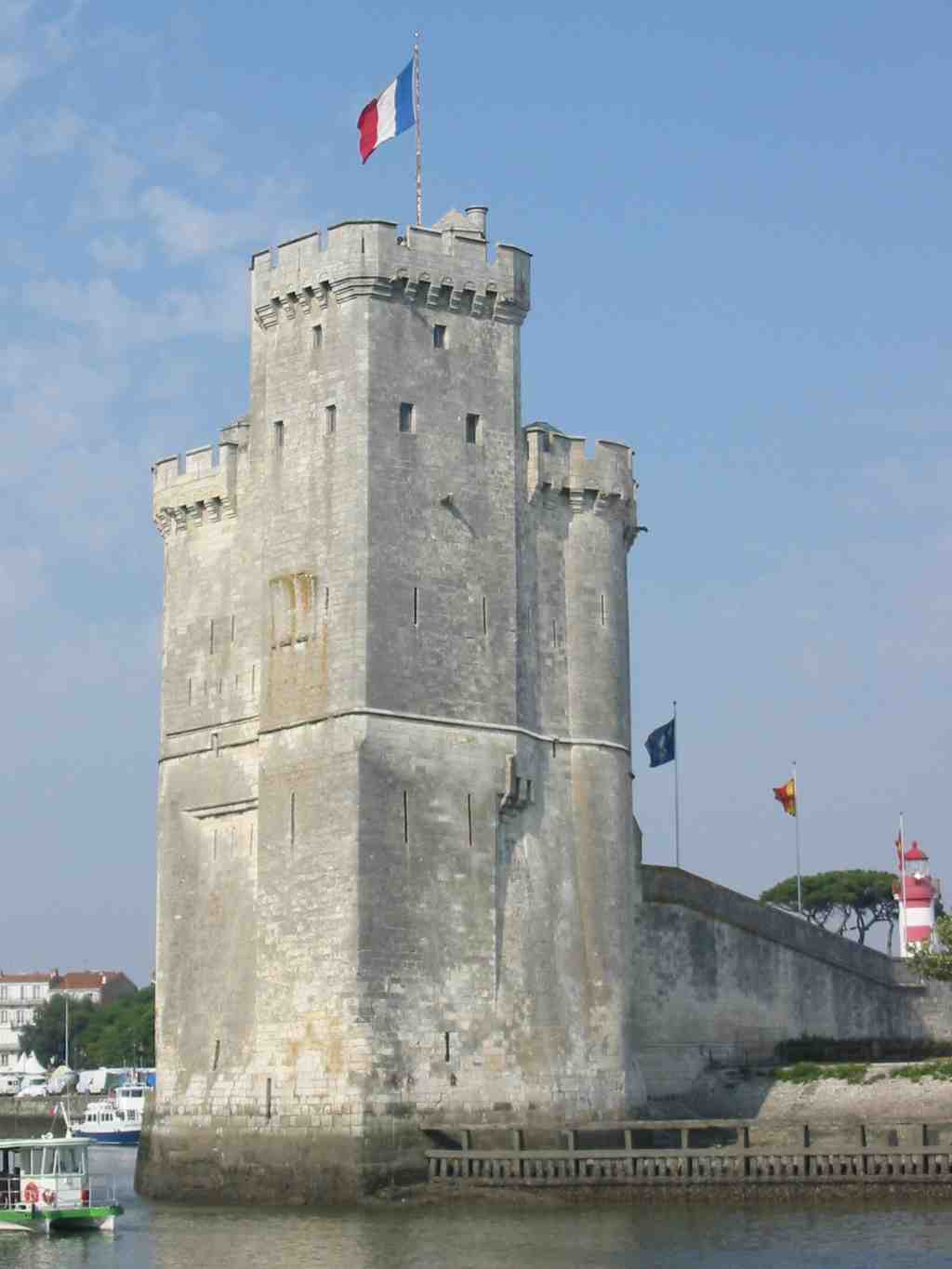
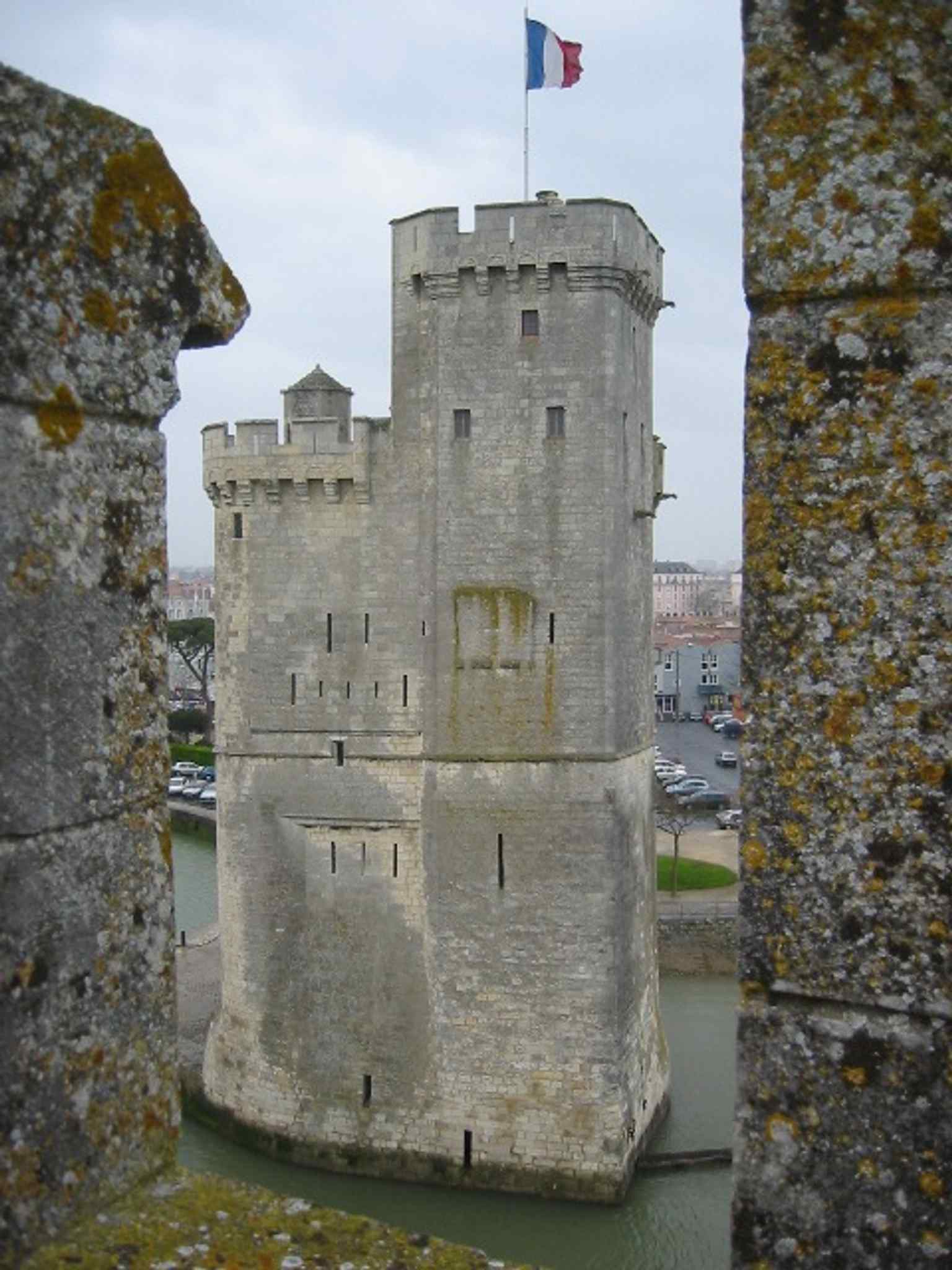
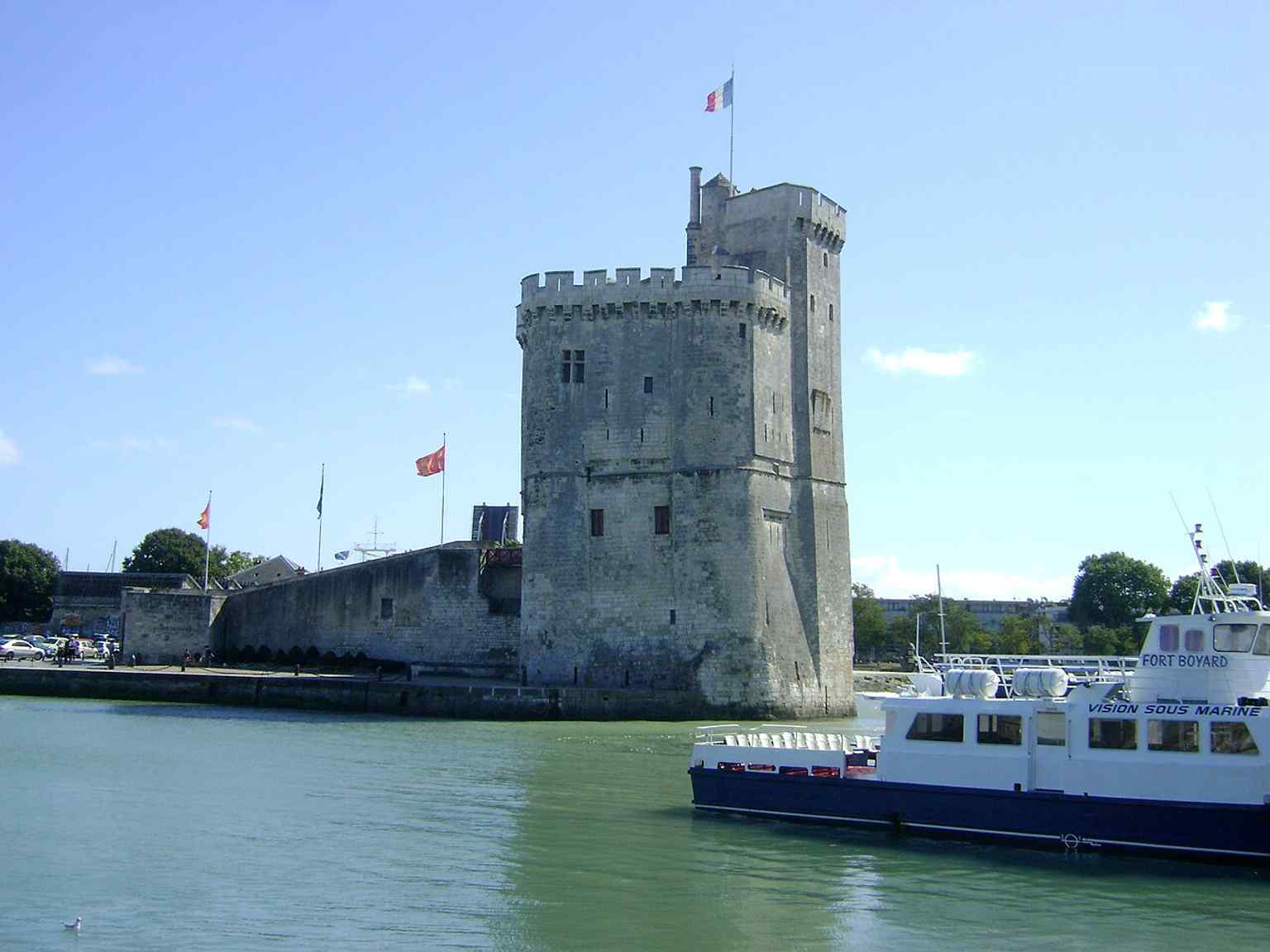
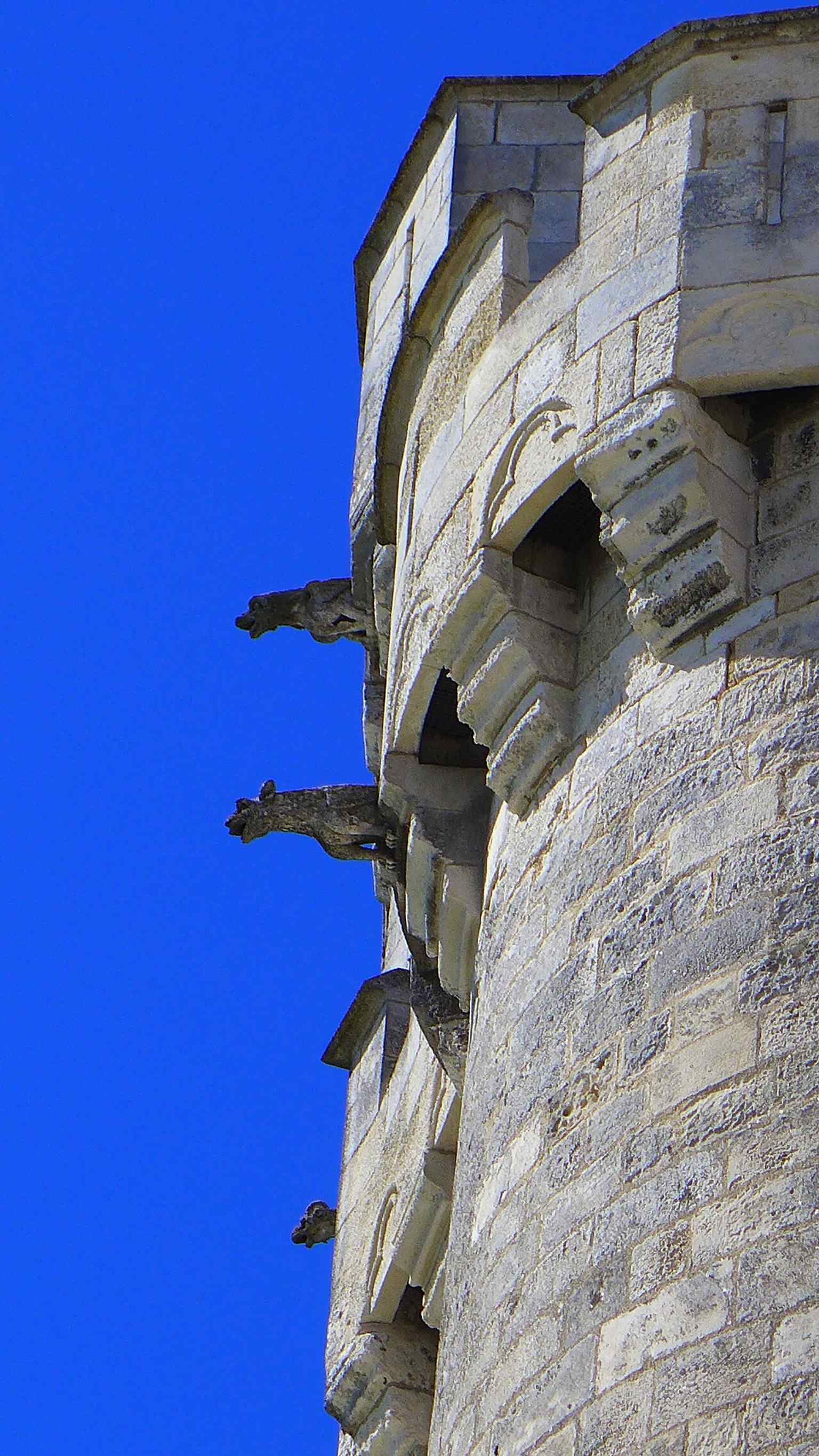
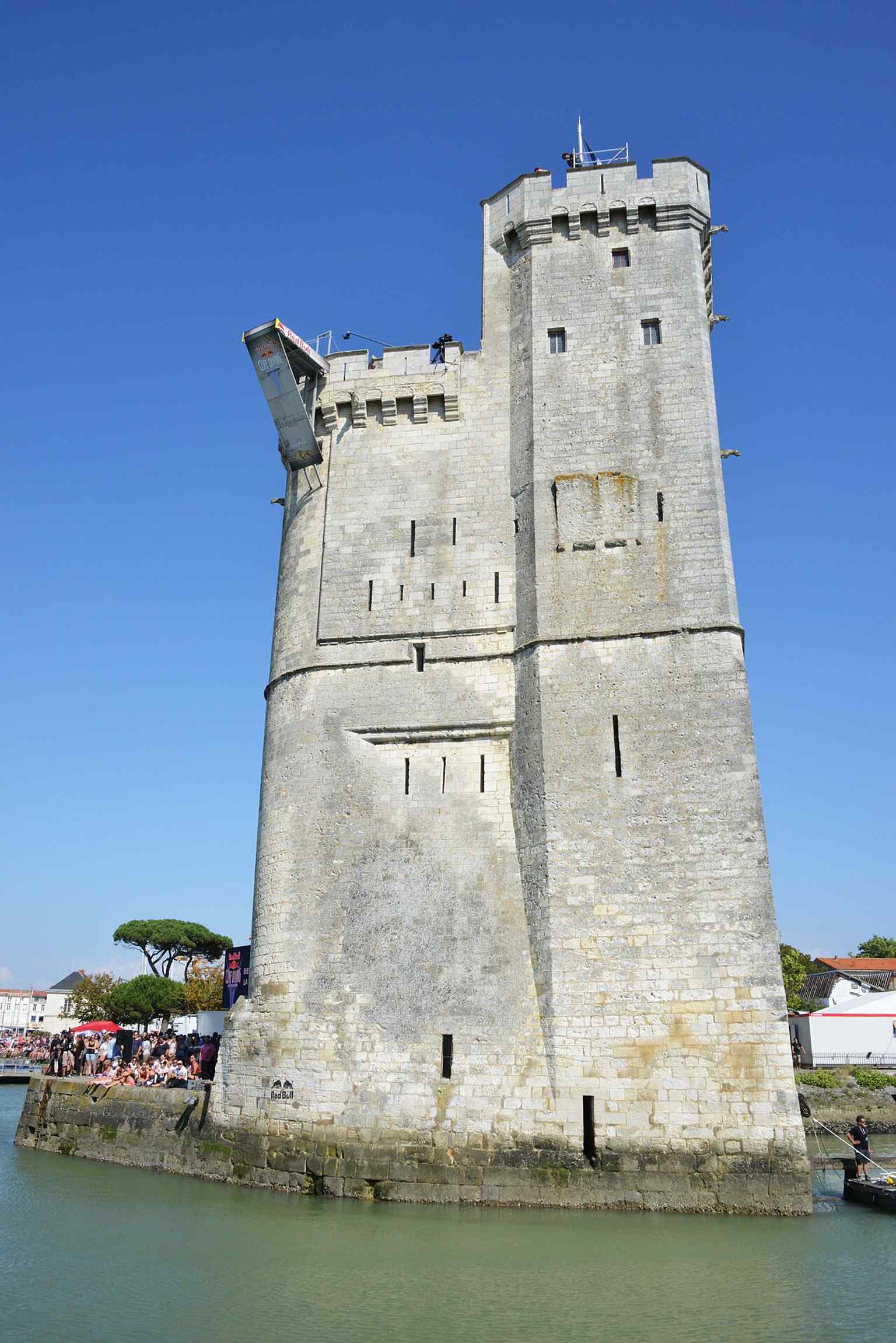
In front of you rises a pale limestone fortress, round at its core but pushed into a jagged, turreted outline, with a crown of crenellations that seems just slightly off balance.
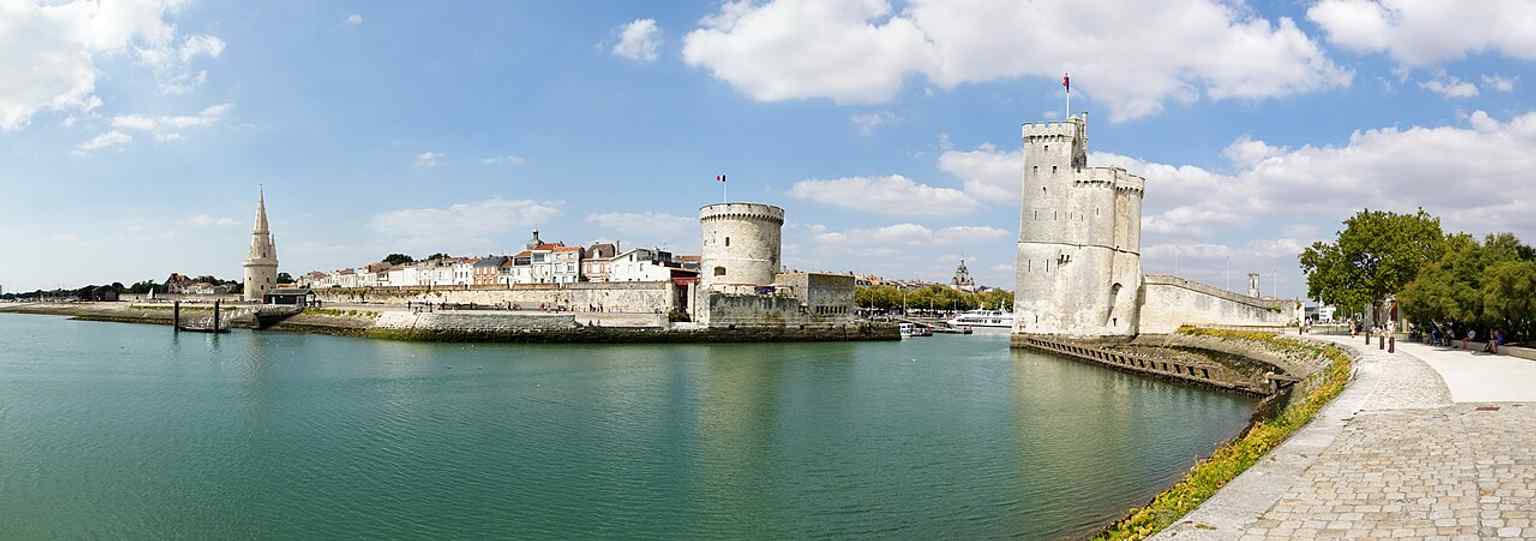
This is Saint Nicholas Tower, one of the Three Towers of La Rochelle: Saint-Nicolas here, the Chain Tower across the water, and the Lantern Tower farther along the coast. Together they became the city’s stone signature, the guardians everyone remembered when arriving by sea. You’ll keep spotting them as the harbor story unfolds, because La Rochelle liked to make its power visible.
Saint-Nicolas began in the mid-fourteenth century on awkward ground: marsh, mud, and wishful thinking. Builders drove long oak piles deep into the slime, packed them with stone, and laid a platform for the foundations. It still was not enough. The weight of the tower pushed the base off true, and the whole thing tilted more than twenty centimeters to the east. In other words, the tower started leaning almost from birth and never really quit. Most visitors miss that it still leans today... not as a romantic flourish, but because medieval engineers were wrestling with a swamp.
Local legend gave the problem a more elegant explanation. People said the fairy Mélusine dropped the stones that began the tower. That story softens the place just a little. It is easier to forgive a crooked fortress if a fairy had a hand in it.
Take a second and study its stance and weight. The mass looks steady, but there is a faint unease in it, as if the tower has been bracing itself for centuries.
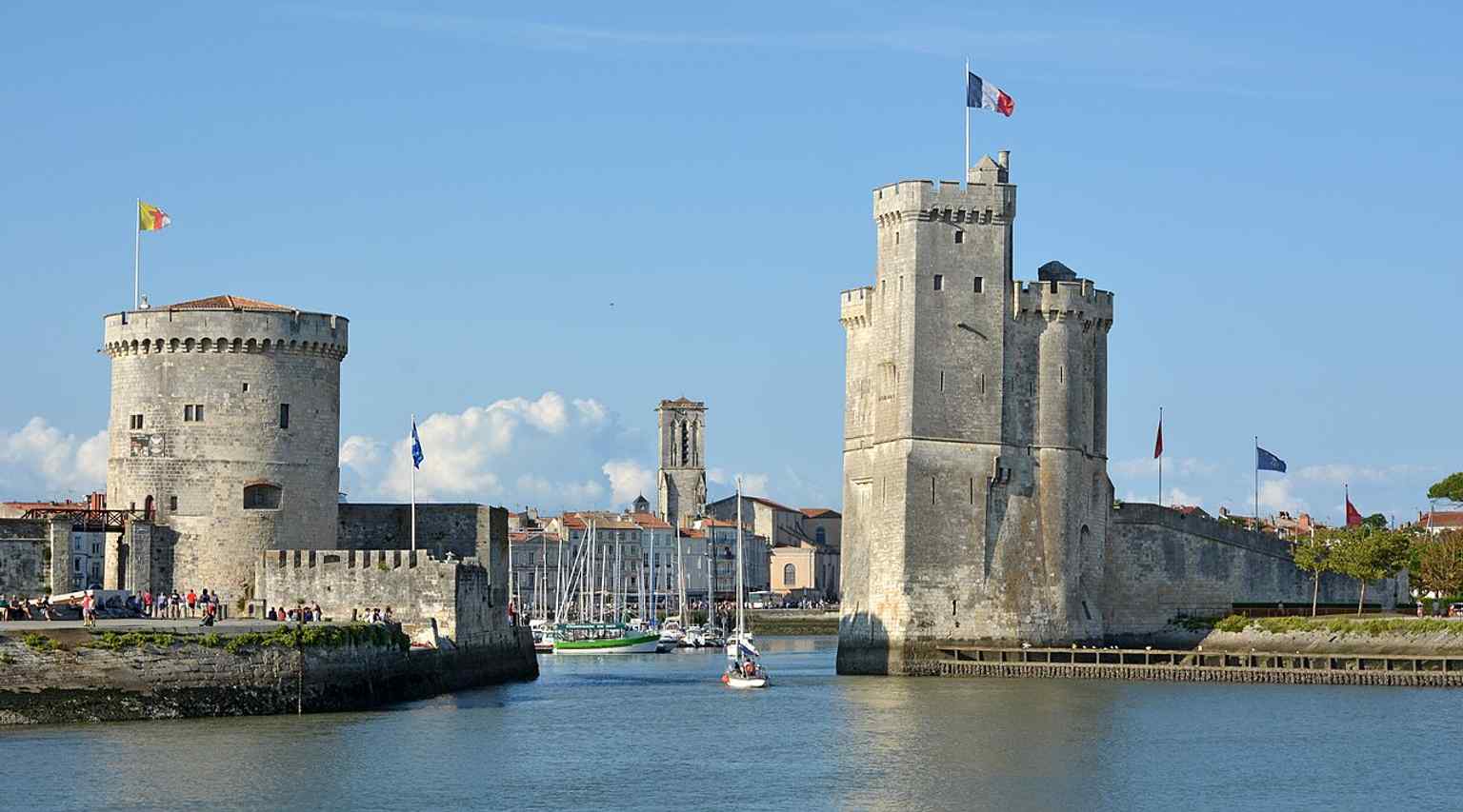
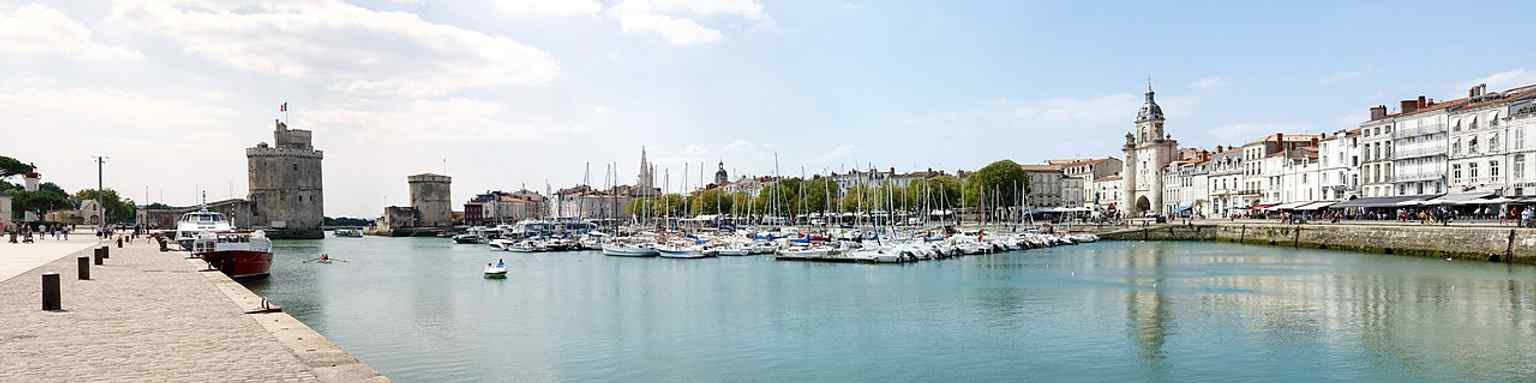
It had good reason. This tower stood isolated on the south side of the harbor mouth and controlled the narrow passage in. A chain attached here could stretch across to the tower opposite and close the port completely. If you glance at the image on your screen, you can see that harbor gateway exactly as sailors faced it, framed between the two towers. Saint-Nicolas did not just scare enemies; it checked traffic, enforced taxes, and watched who came to profit from the sea.
Its own construction followed the politics of that sea. The treaty of Brétigny in thirteen sixty handed La Rochelle to the English and halted the work. In thirteen seventy-two, after the English were beaten and forced out, King Charles the Fifth renewed the alliance with the city, and Bertrand du Guesclin’s campaign helped make La Rochelle French again. Builders finally finished the tower in thirteen seventy-six, even correcting the upper part so it stands truer than the sinking base below.
Then came the Fronde, the mid-seventeenth-century uprising against royal authority, and things got personal. The deeply unpopular Count of Daugnon turned Saint-Nicolas into a fortress against La Rochelle itself, cutting it off with a moat and fortifying it like a private sulk with cannons. When royal troops arrived in sixteen fifty-one, Daugnon fled to Bordeaux and left his lieutenant, de Besse, trapped here. After the Chain Tower exploded in the fighting, the last defenders crowded into Saint-Nicolas. De Besse refused surrender, threatened to ignite the powder, and died in the final assault, struck down as the tower became the last hard knot of resistance.
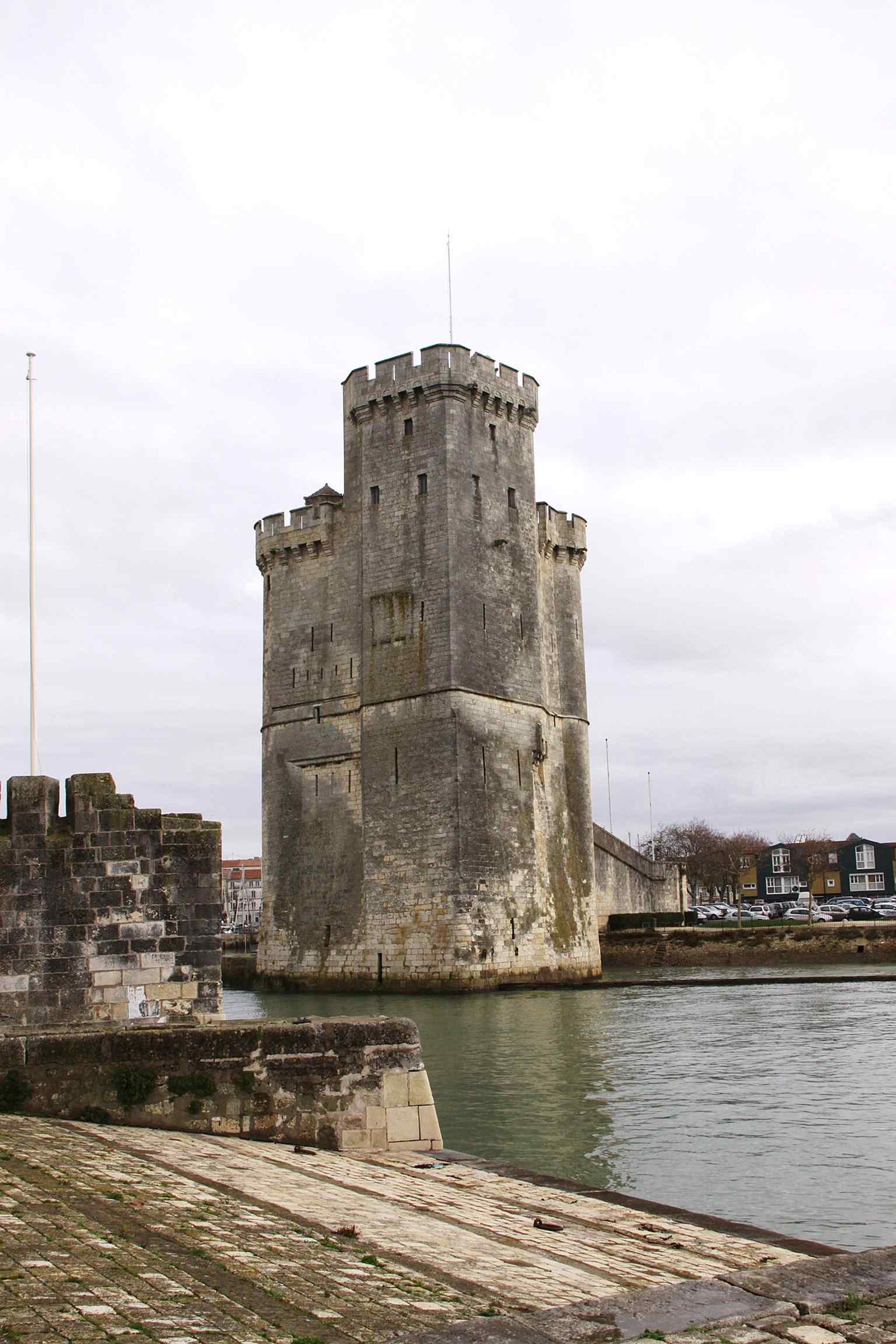
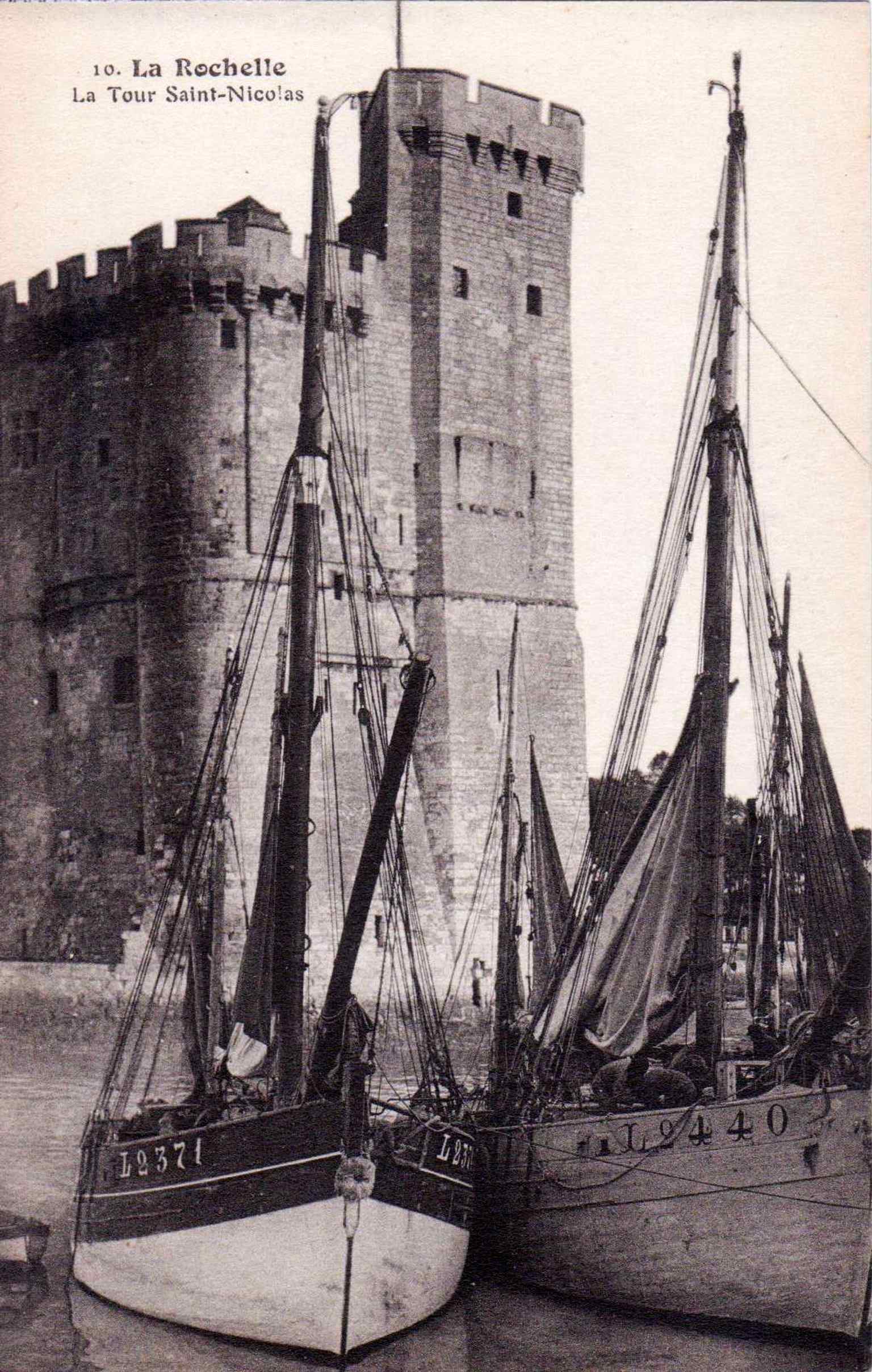
Later, the crown kept the tower, soldiers and prisoners used it, and restorers in the nineteenth and early twentieth centuries saved its battered silhouette. If you want, have a quick look at the before-and-after image; the tower barely budges, while the waterfront around it changes completely.
And yet for all this stone, chains, and gunfire, sailors still needed one simpler thing to enter safely... a light. For that, head on to the Phare du quai Valin, about a six-minute walk from here.






.JPG)


.%20Postcard%2C%20c.%201910.jpg)


.JPG)
.JPG)