

Dunkirk Audio Tour: Echoes of Heroes, Art, and Carnival Legends
Whispers of retreat and riot echo through Dunkirk’s windswept streets, where carnival masks hide secrets and every harbor wave recalls a desperate escape. Unlock a self-guided audio tour that leads straight into the heart of Dunkirk’s contradictions—where history’s roar meets today’s creative pulse. Walk corners and corridors that most visitors miss as stories rise from beneath the everyday. What drove commanders to gamble thousands of lives in a make-or-break hour along these very sands? Which mask, paraded with feverish joy at the Dunkirk Carnival, hides a scandal even locals hesitate to name? Why does a mysterious shape haunt the halls of the Regional Contemporary Art Fund, revealed only to those who linger after hours? Stride from battlefield to festival, from striking contemporary art to age-old legends. Each step cracks open the city’s rough shell, inviting new eyes to see old streets alive with drama. Your gateway to Dunkirk’s untold stories is just ahead. Begin walking and let the city reveal its true face.
Tour preview
About this tour
- scheduleDuration 70–90 minsGo at your own pace
- straighten3.0 km walking routeFollow the guided path
- location_on
- wifi_offWorks offlineDownload once, use anywhere
- all_inclusiveLifetime accessReplay anytime, forever
- location_onStarts at Protestant Temple of Dunkirk
Stops on this tour
lock_open 3 free previews · 8 unlock with purchase
On your left, look for a modern memorial in pale stone and metal, shaped with clean angular lines and marked by engraved dedication panels to the Battle of Dunkirk. This place…Read moreShow less
Open dedicated page →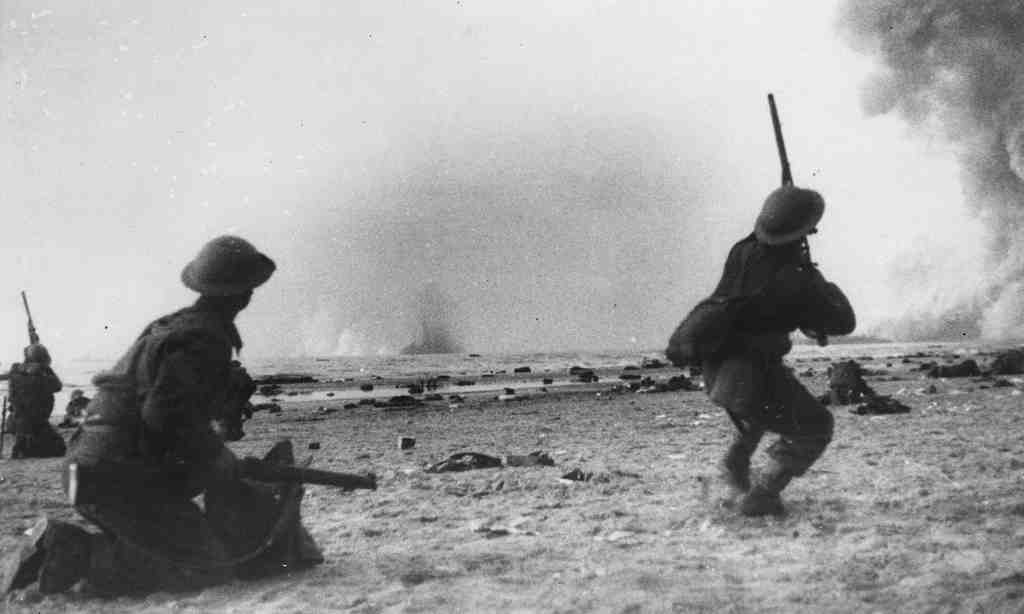
Battle of DunkirkPhoto: Unknown author, Wikimedia Commons, Public domain. Cropped & resized. On your left, look for a modern memorial in pale stone and metal, shaped with clean angular lines and marked by engraved dedication panels to the Battle of Dunkirk.
This place remembers one of the most desperate rescues of the Second World War... and one of the most complicated. The battle began on the twentieth of May, nineteen forty, after the German breakthrough at Sedan split the Allied front. German armored divisions under Heinz Guderian reached Abbeville and the sea, cutting off roughly a million French, Belgian, and British troops in the north. Dunkirk became the last open door.
Standing here, it helps to picture the map closing like a vise. By the twenty-fourth of May, German advance units had reached the Aa canal near Bourbourg. Then came the famous Haltebefehl, a German word meaning a stop order. General von Rundstedt gave it, and Adolf Hitler confirmed it. Historians still argue over why, but that pause until the morning of the twenty-seventh gave the Allies something priceless in war: time.
That time fed Operation Dynamo. Vice-Admiral Bertram Ramsay ran it from a former generator room in the castle at Dover, which is exactly why it got the name Dynamo. The plan was two operations at once: a sea evacuation, and a ground defense to hold the Dunkirk pocket open. The British Expeditionary Force, or B-E-F, pulled back toward the coast. The French army, especially units like the twelfth motorized infantry division, fought brutal delaying actions, including at Fort des Dunes, to buy the minutes and hours needed for embarkation.
If you glance at your screen, the historical photo of bombardment gives you the scale of the danger overhead. The Luftwaffe, the German air force, hammered the port and beaches. On the twenty-ninth of May alone, hundreds of bombers struck the area. Men waited in lines on the sand, or along the east mole, a long harbor jetty stretching into the sea, hoping for a place on anything that floated.
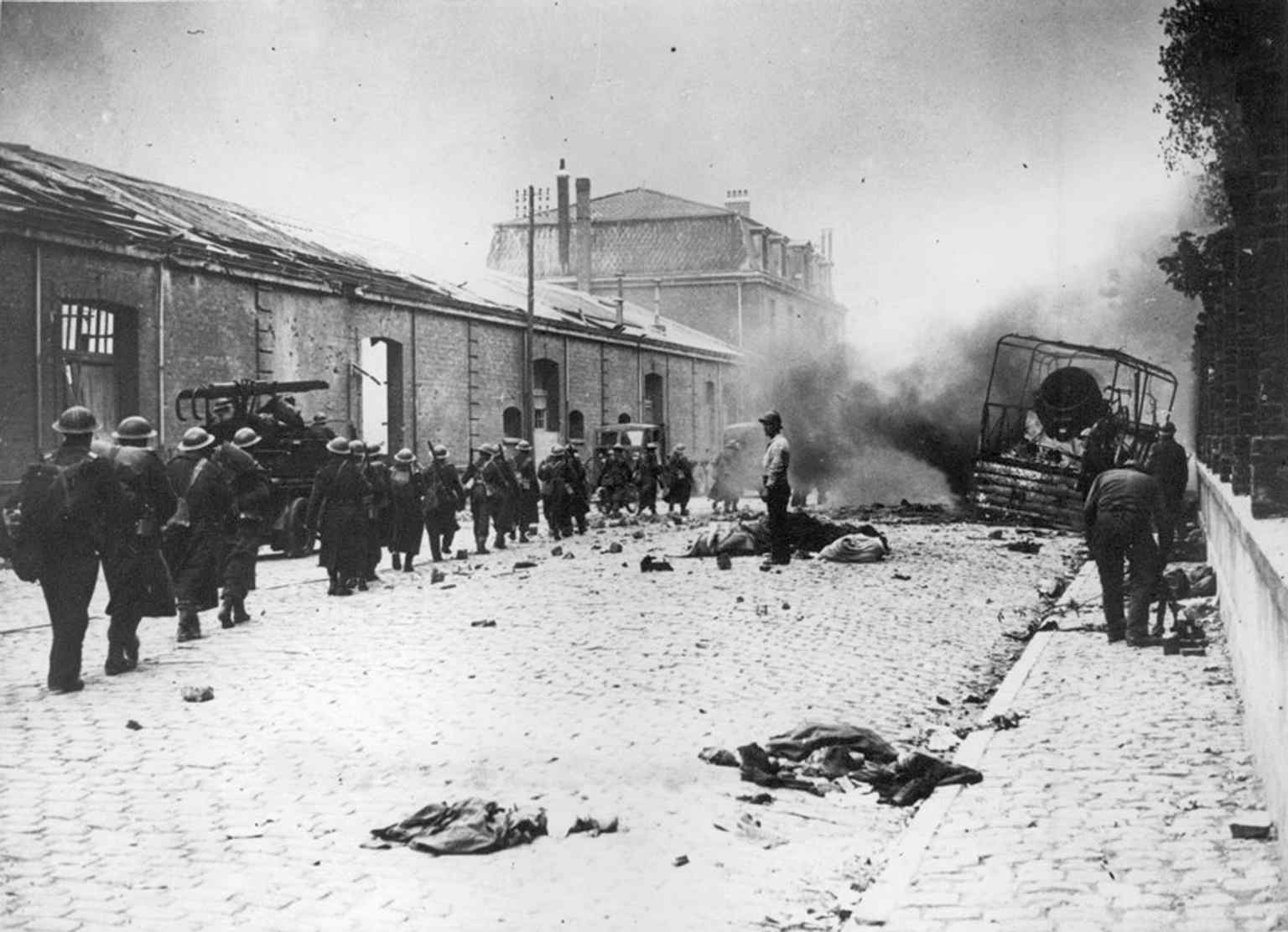
German bombardment over Dunkirk in 1940, showing the city under the Luftwaffe attacks that made the evacuation so desperate.Photo: Unknown photographer, Wikimedia Commons, Public domain. Cropped & resized. People love the story of the little ships, and fair enough, it has a good ring to it. But the fuller truth is even more interesting. Royal Navy destroyers and requisitioned merchant vessels carried most of the load. The little ships saved about twenty-six thousand five hundred men, less than a tenth of the total. Dutch coastal freighters, less famous but mighty useful, rescued about twenty-three thousand more.
By the end, from the twenty-sixth of May to the fourth of June, rescuers evacuated three hundred thirty-eight thousand two hundred twenty-six men, including more than one hundred twenty thousand French and Belgian soldiers. Churchill presented Dunkirk as a victory because about eighty-five percent of the trapped force escaped, but he also warned that wars are not won by evacuations. And there was bitterness here too: many French officers felt abandoned, and about thirty-five thousand men, mostly French, were left to captivity after covering the final departures. Another image on your phone shows abandoned anti-aircraft guns... a blunt reminder that the B-E-F escaped, but left its heavy equipment behind.
This memorial honors not only a rescue, but the fierce rearguard fight that made the rescue possible.
If you want to linger, the site is generally open daily from ten AM to six PM.
When you’re ready, continue toward Place Jean-Bart, where Dunkirk tells another chapter of its story in stone and civic pride.
Look to your right for a broad paved square centered on a bronze standing figure atop a tall stone pedestal... that is Place Jean-Bart. This square began life as Place Royale,…Read moreShow less
Open dedicated page →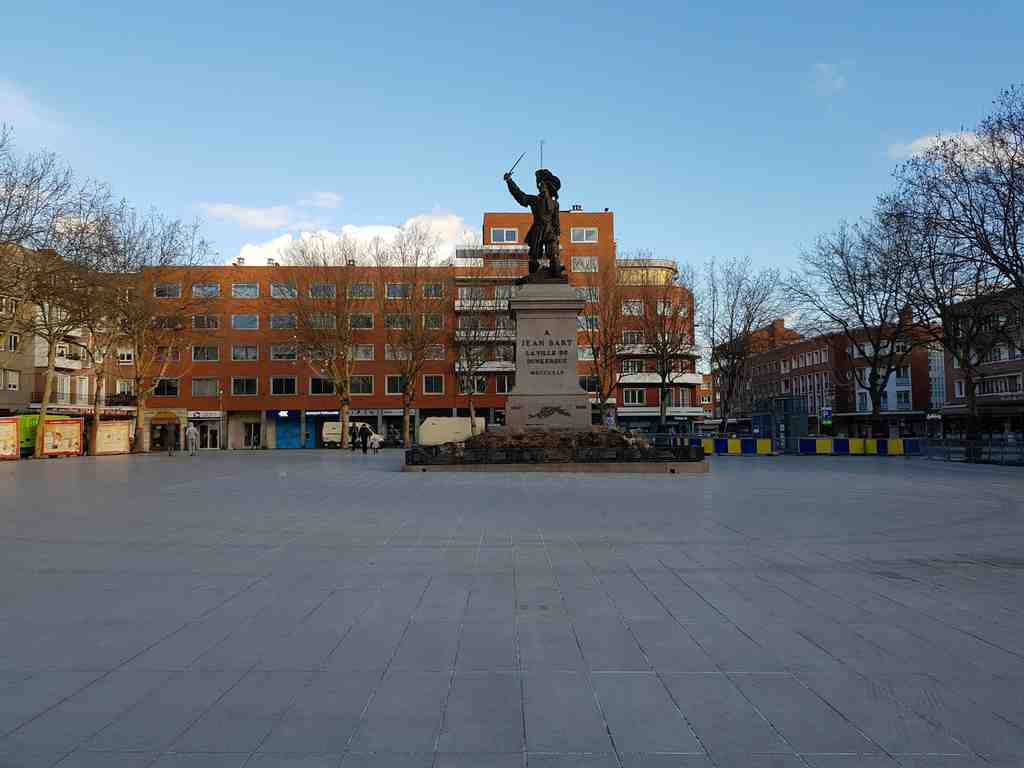
Place Jean-BartPhoto: Dunkerqueenflandre, Wikimedia Commons, CC BY-SA 4.0. Cropped & resized. Look to your right for a broad paved square centered on a bronze standing figure atop a tall stone pedestal... that is Place Jean-Bart.
This square began life as Place Royale, but Dunkirk changed its name after the statue of Jean Bart took command here in eighteen forty-five. Jean Bart, Dunkirk’s hometown corsair - meaning a sailor officially allowed by the crown to raid enemy ships - still stands like he’s about to give the harbor its marching orders.
The idea came from Benjamin Morel, a city councilor and merchant, who pushed the town to honor its sea hero in eighteen thirty-eight and then chaired the commission himself. He called on the sculptor David d’Angers. David turned him down twice... then accepted, and refused any payment, saying he was happy to devote his time to such a great historical figure. Architect Lebas joined in too, donating the pedestal drawings.
Now here’s the part I like: Dunkirk could not afford the bronze, the stone, or the labor, so the commission opened a public subscription. In two years, people raised thirty-three thousand francs - roughly the value of well over one hundred thousand euros today - including help from the national government and the department. When the statue was unveiled, the city celebrated for two full days. David missed the inauguration, but when he later arrived, Dunkirk welcomed him in procession, cheered him here, made him a citizen, and later named a street for him.
This square is open all day, every day... fitting for a local hero who never really clocks out. Stay with Jean Bart a moment, then continue when you’re ready.
Show 8 more stopsShow fewer stopsexpand_moreexpand_less
On your right, Saint-Éloi stands out as a long red-brick church with a pale white-stone façade, pointed gables, and a large rose window set high at the center. Locals call this…Read moreShow less
Open dedicated page →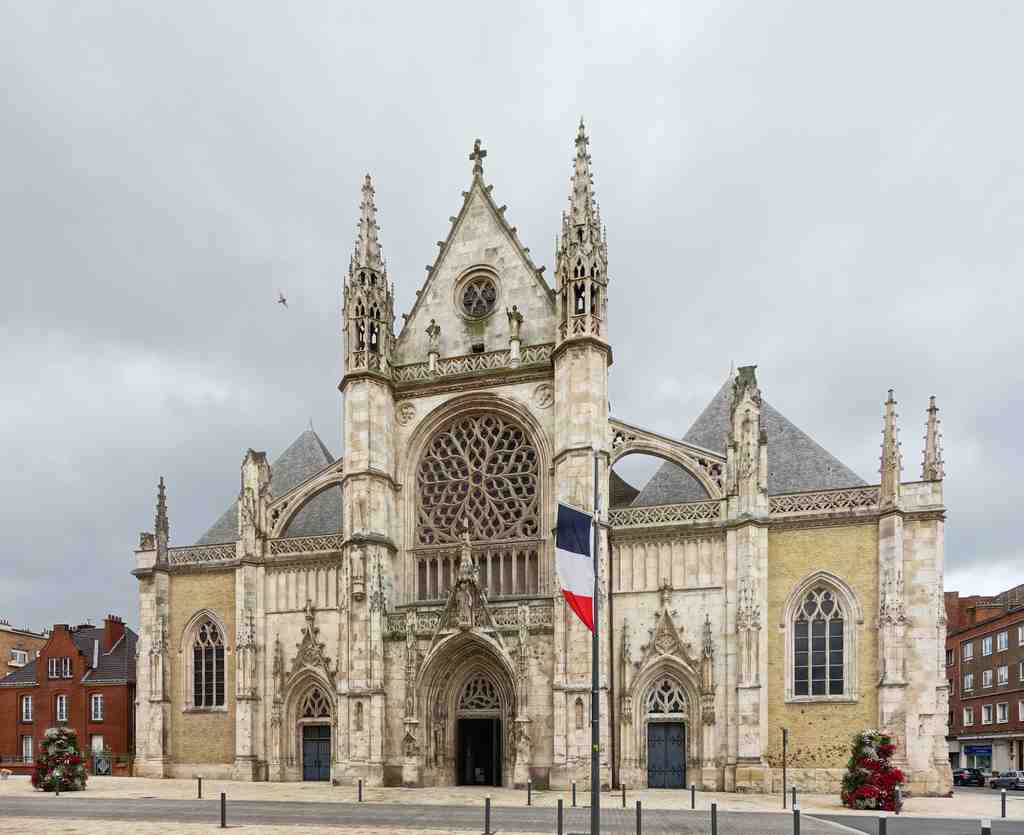
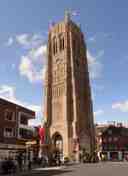
Church of Saint-Éloi, DunkirkPhoto: Velvet, Wikimedia Commons, CC BY-SA 3.0. Cropped & resized. On your right, Saint-Éloi stands out as a long red-brick church with a pale white-stone façade, pointed gables, and a large rose window set high at the center.
Locals call this the Cathedral of the Sands, and that nickname fits... handsome, stubborn, and shaped by whatever history threw at it. The first church here took form around fourteen forty-three, with the shape of a Latin cross, probably raised by master builders from Ghent on the site of Saint John’s Hospice. Then came fifteen fifty-eight: Maréchal de Thermes led French troops into Dunkirk, they burned the church, and only the tower survived.
A year later, Jean de Renneville began rebuilding. He enlarged the sanctuary to the east, lifted the main nave - that’s the tall central hall of the church - and rebuilt the side aisles with chapels. Then the money ran dry in fifteen eighty-five. Even grand churches sometimes end up on a very earthly budget. The old tower stayed stranded apart from the new church, serving as bell tower, town belfry, and even a daymark for sailors. The gap between them first became a public path, then a proper street.
In the late seventeen hundreds, architect Victor Louis widened the church again, creating five aisles in all. During the French Revolution, from seventeen ninety-three to seventeen ninety-five, people even turned it into a Temple of Reason. The façade you see now came later: the older front crumbled, so Adolphe Van Moë designed a Gothic Revival replacement, and city architect Jules Lecoq completed it in eighteen eighty-nine.
If you check your screen, the interior view makes that broad central nave and the multiple aisles easier to picture. And the separate belfry image helps explain why this church and its tower live across the street from each other. That belfry is part of UNESCO - the United Nations Educational, Scientific and Cultural Organization - and inside the sacristy rest the remains of the corsair Jean Bart.
If you plan to come back inside, it is usually closed Monday, open Tuesday through Saturday from ten to noon and three to five, and Sunday from ten to noon.
Saint-Éloi is Dunkirk in stone: rebuilt, interrupted, and still standing. When you’re ready, head on toward the Hôtel de Ville.
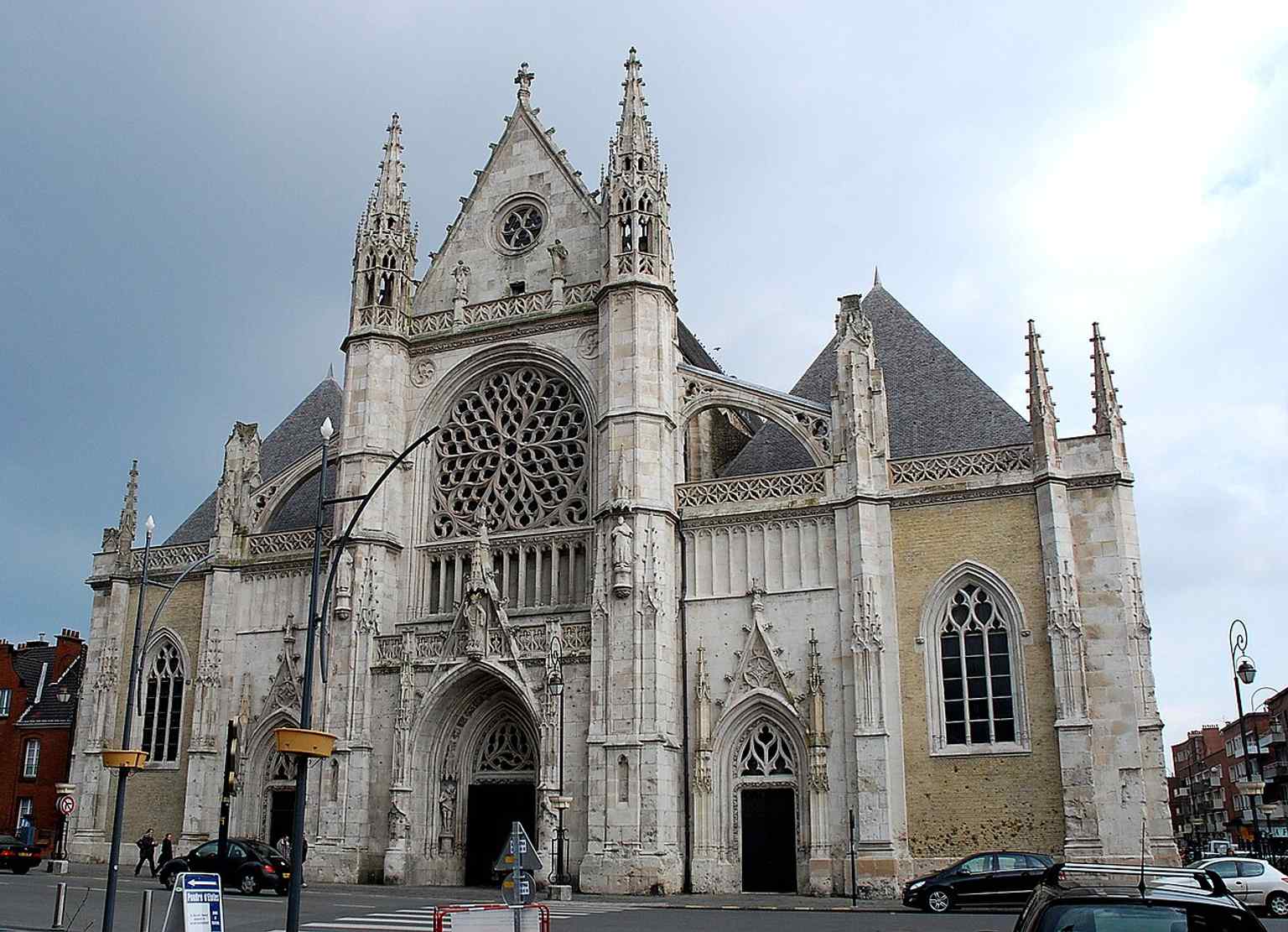
A clear modern view of Saint-Éloi Church’s brick-and-stone exterior in Dunkirk, the rebuilt church that was repeatedly damaged and restored over the centuries.Photo: Paul Hermans, Wikimedia Commons, CC BY-SA 3.0. Cropped & resized. 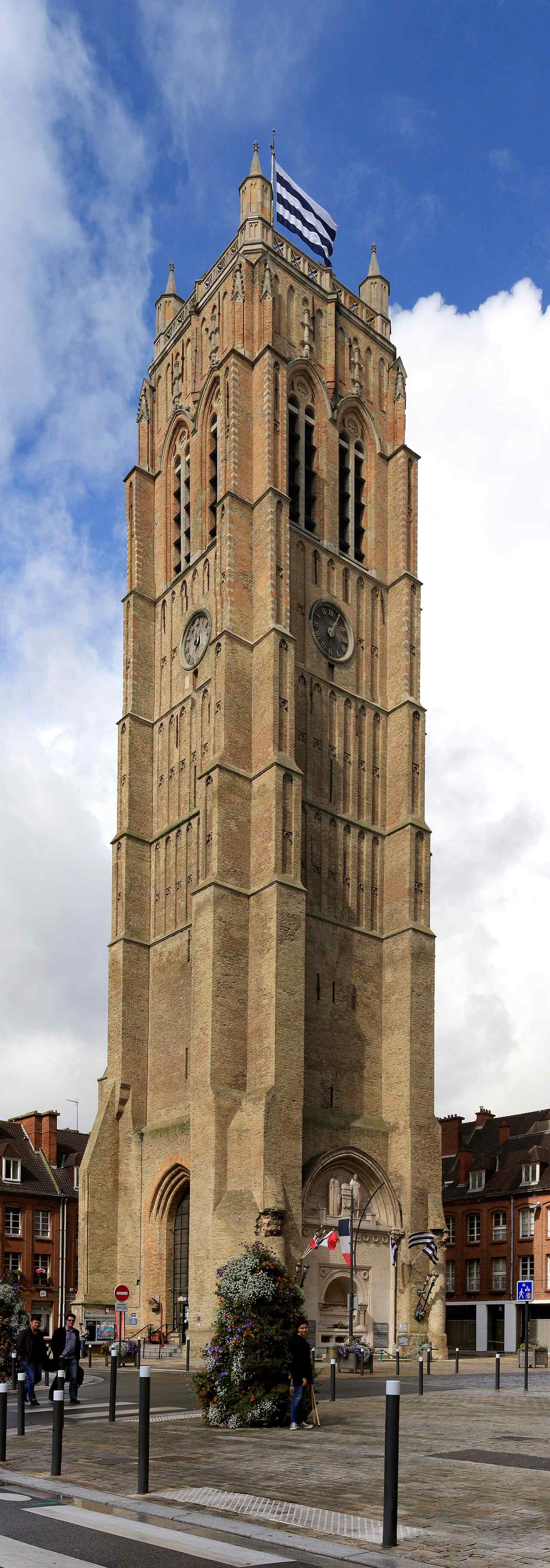
The Belfry of Saint-Éloi, the surviving tower of the original church, later separated from the church and now part of the Belfries of Belgium and France UNESCO group.Photo: Rafael Mayorga, Wikimedia Commons, CC BY-SA 4.0. Cropped & resized. 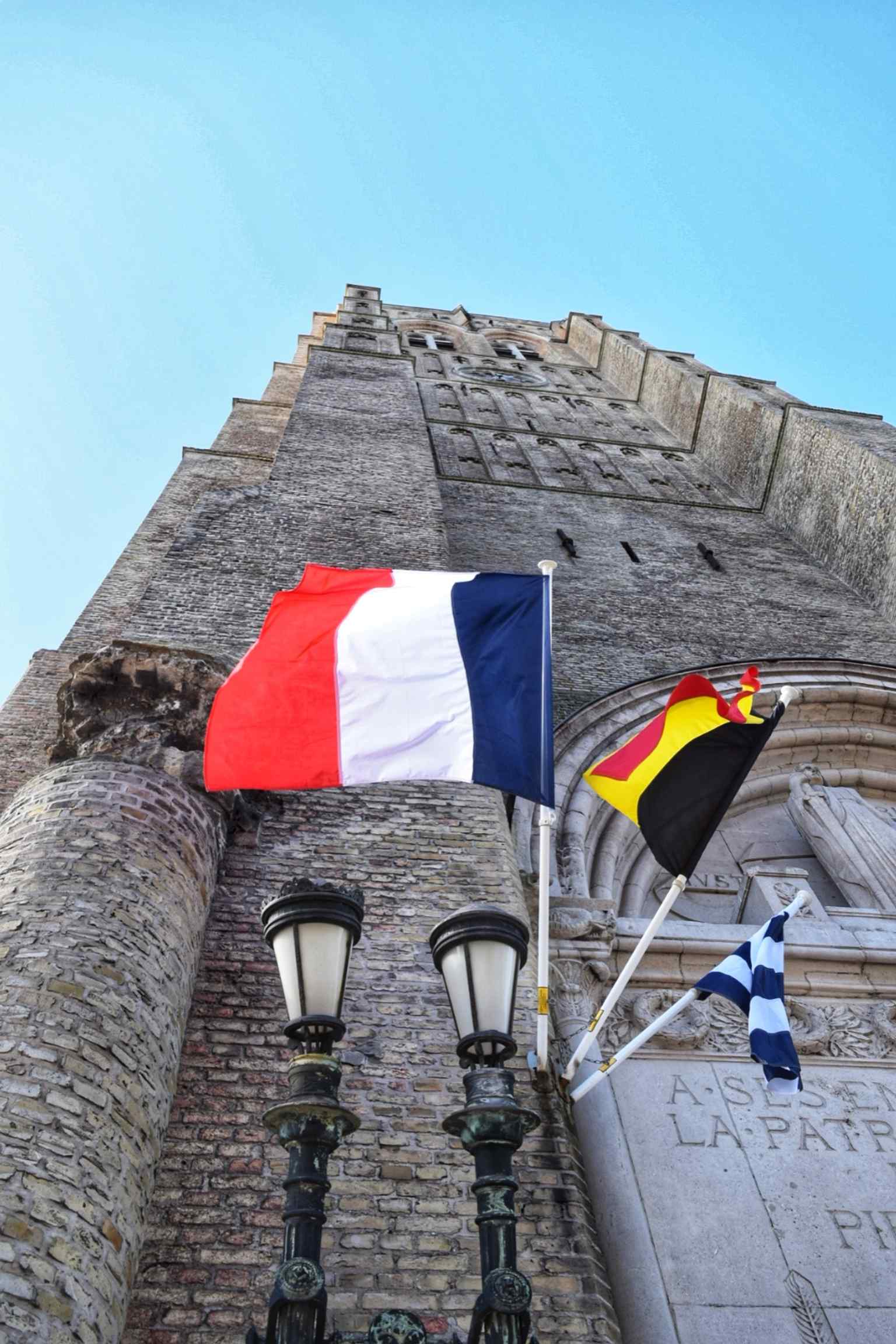
Historic belfry view of Saint-Éloi, showing the landmark listed long before the church itself and reminding us of the medieval tower that outlived the old church.Photo: Gabriel Diniz, Wikimedia Commons, CC BY-SA 4.0. Cropped & resized. 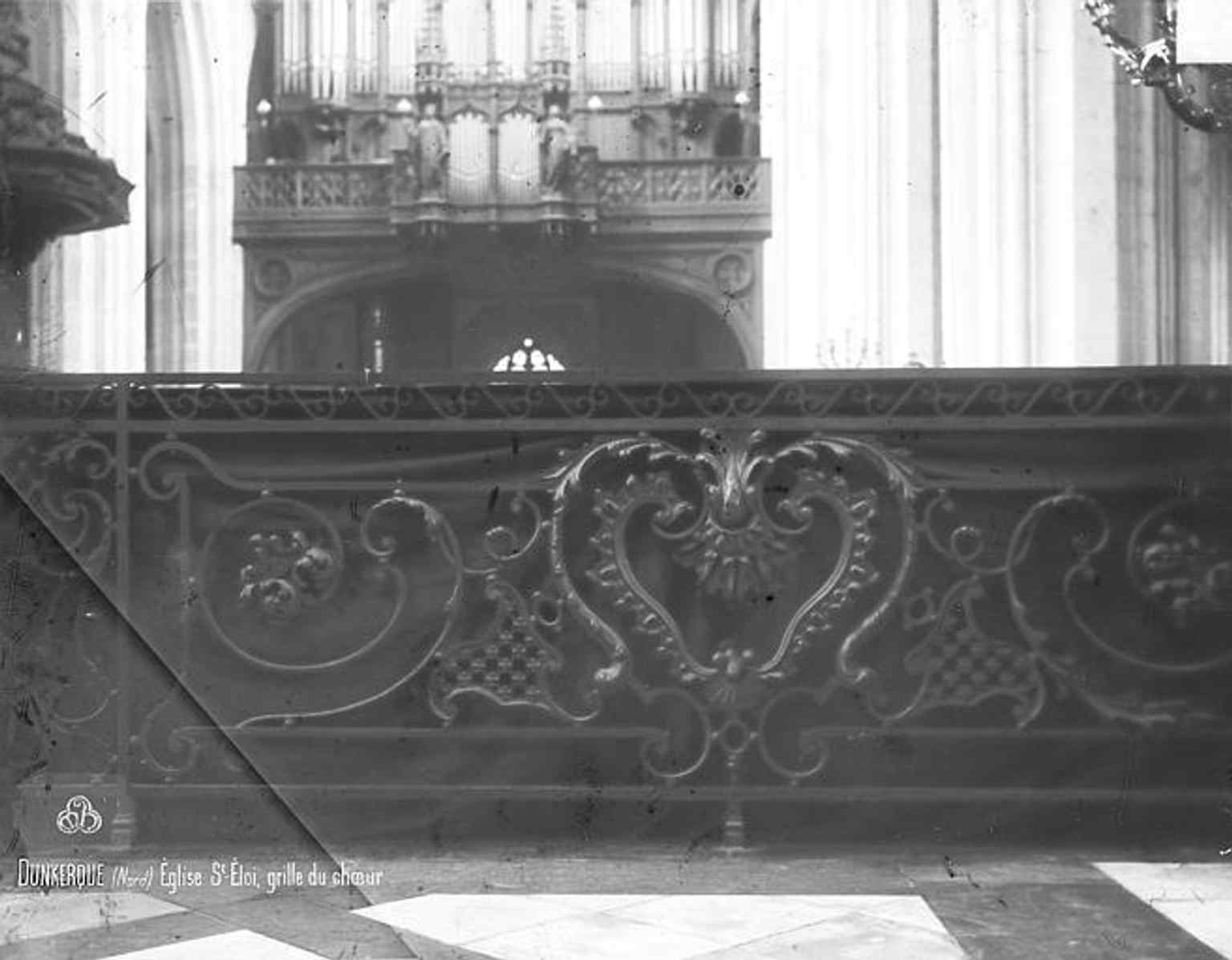
A close look at the choir grille inside Saint-Éloi, part of the church’s restored interior furnishings after most pre-1940 furniture was lost.Photo: Paul Robert, Wikimedia Commons, CC BY-SA 4.0. Cropped & resized. 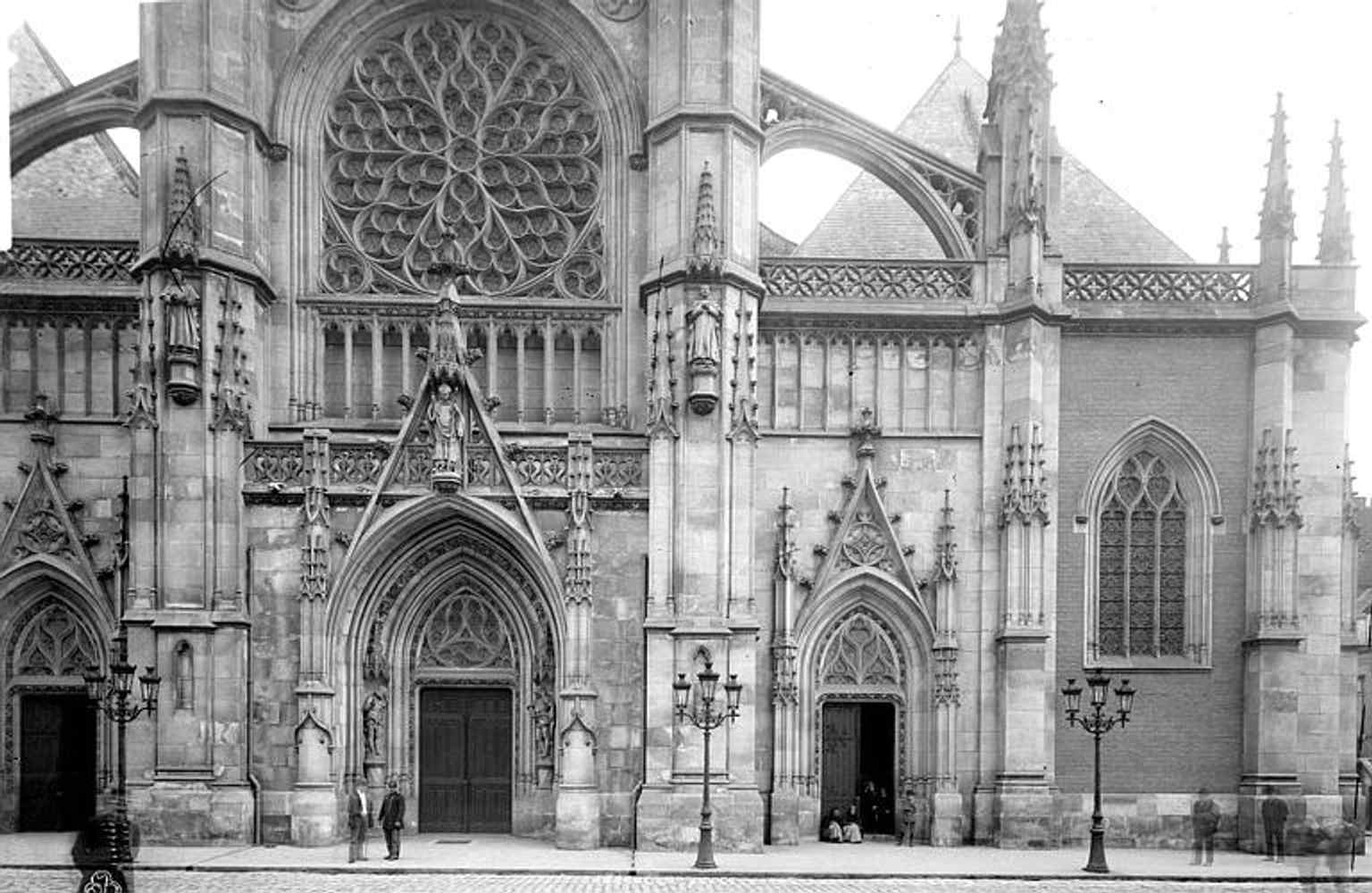
An 1892 image of the west façade before later changes, useful for the church’s 19th-century rebuilding history.Photo: Paul Robert, Wikimedia Commons, CC BY-SA 4.0. Cropped & resized. On your left, look for a long red-brick facade with pale stone trim, stepped gables, and a tall belfry tower crowned with a slender spire. This is Dunkirk’s Hôtel de Ville, the…Read moreShow less
Open dedicated page →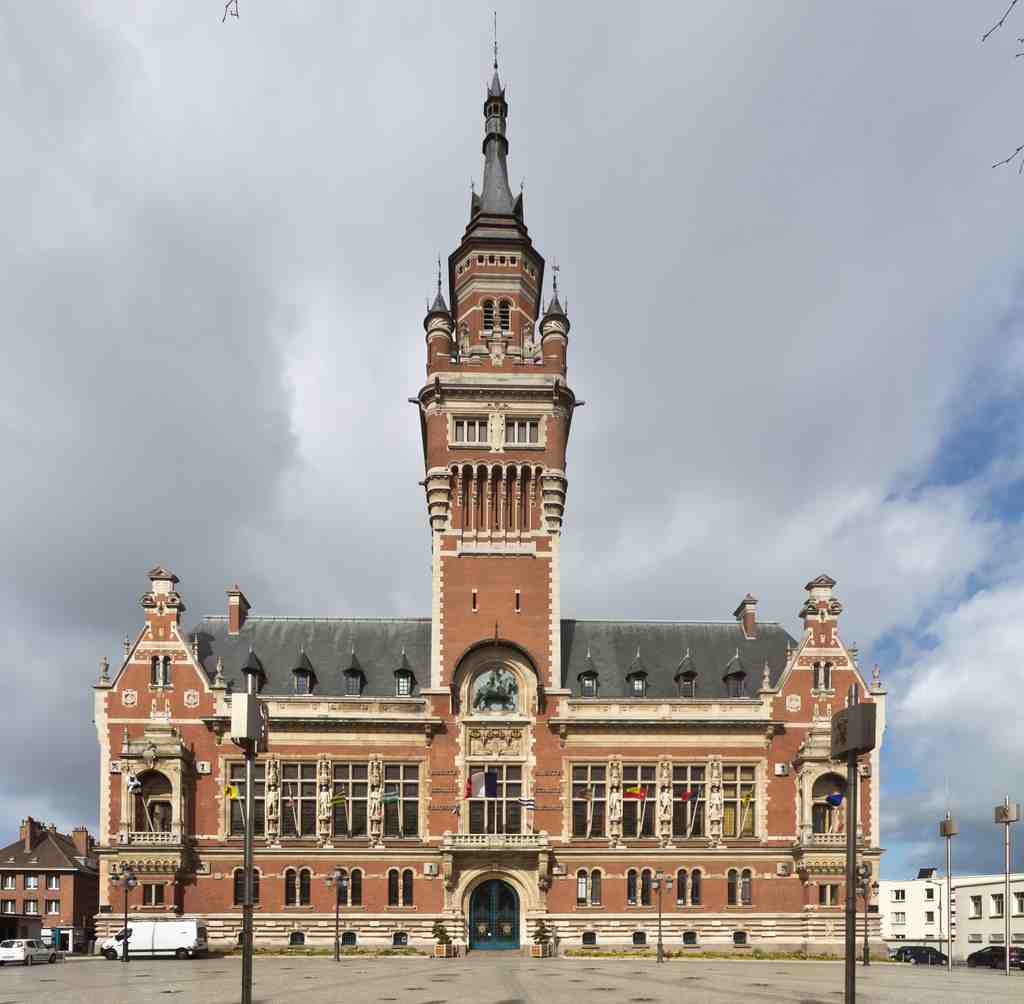
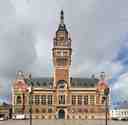
Hôtel de Ville, DunkirkPhoto: Raimond Spekking, Wikimedia Commons, CC BY-SA 4.0. Cropped & resized. On your left, look for a long red-brick facade with pale stone trim, stepped gables, and a tall belfry tower crowned with a slender spire.
This is Dunkirk’s Hôtel de Ville, the city hall, and this ground has carried civic power since twelve thirty-three... which is a pretty good run for one address. The first town hall stood here in the thirteenth century, but Dunkirk did not enjoy a quiet life. In fifteen fifty-eight, while Dunkirk and Gravelines were under English control, the French marshal Paul de Thermes attacked and completely destroyed the building. The town rebuilt it by fifteen sixty-two, then fire gutted that version in sixteen forty-two, and workers finished another reconstruction in sixteen forty-four. By eighteen twelve, they even dressed it up with a neoclassical portico... four elegant columns, the kind with curled capitals, like the building had decided to put on formal gloves.
By the late nineteenth century, though, the old hall was worn out. So the council hired Louis Marie Cordonnier, and on the thirtieth of May, eighteen ninety-seven, they laid the foundation stone for the building you see now. He gave Dunkirk a proud Flemish Renaissance Revival landmark in red brick and stone, officially opened on the seventeenth of September, nineteen oh one, by President Émile Loubet, with Nicholas the Second of Russia looking on. If you check the image on your screen, the straight-on view makes its eleven-bay symmetry especially clear.
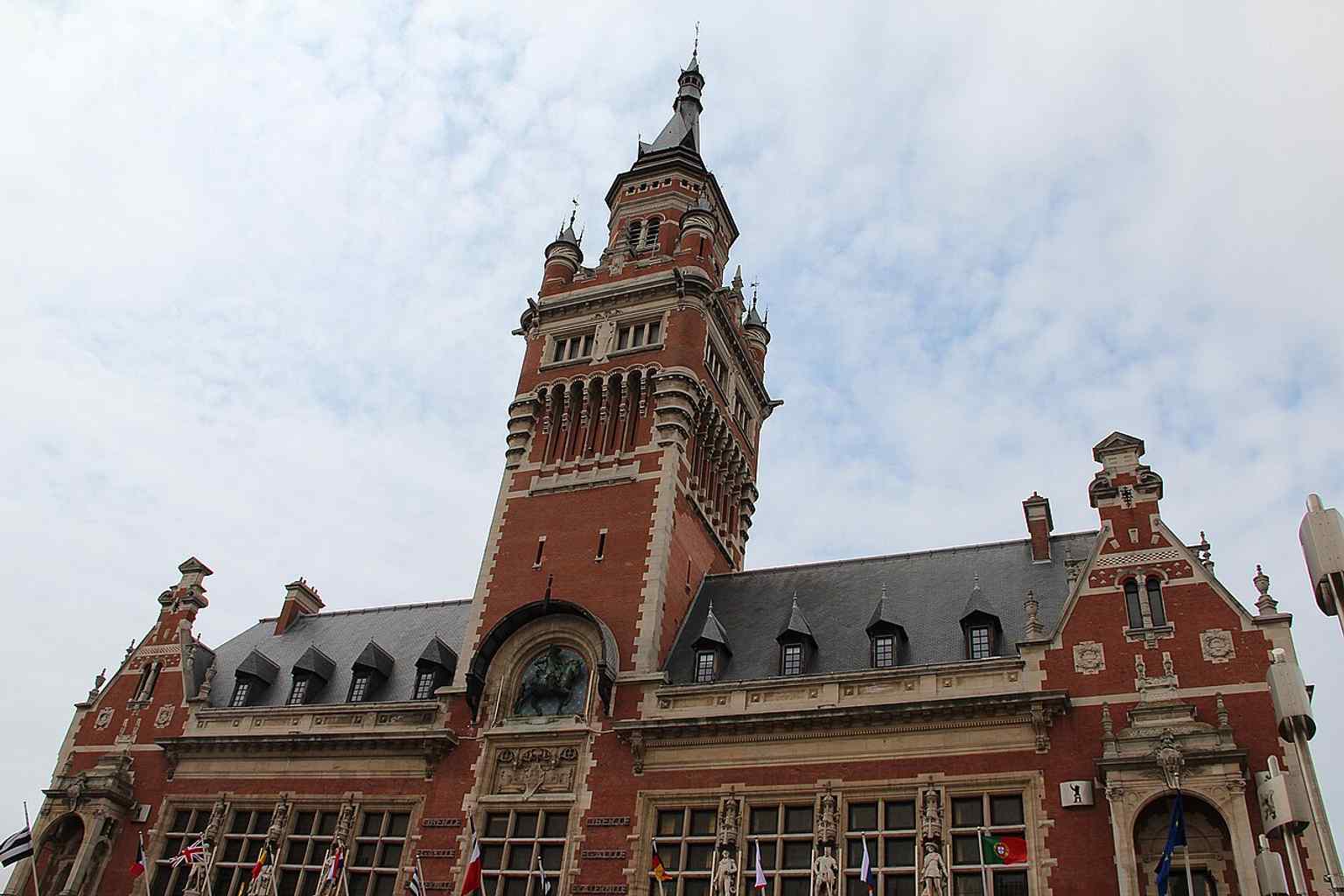
Another high-resolution exterior view that shows the symmetrical frontage and central clock tower that dominate the building’s design.Photo: Jean-Pol GRANDMONT, Wikimedia Commons, CC BY 4.0. Cropped & resized. From your angle, the star is that seventy-five-meter tower: castellated at the top, with bartizans, little corner turrets, and a hexagonal belfry rising above. In two thousand and five, that belfry joined UNESCO’s World Heritage list as part of the Belfries of Belgium and France. Between the upper windows, you may spot statues of local figures, including the privateer Michel Jacobsen and the mayor Jean-Marie Joseph Emmery. And if you peek at the interior stained glass in the app, you’ll see Jean Bart sail back into the story yet again... Dunkirk never stays far from the sea.
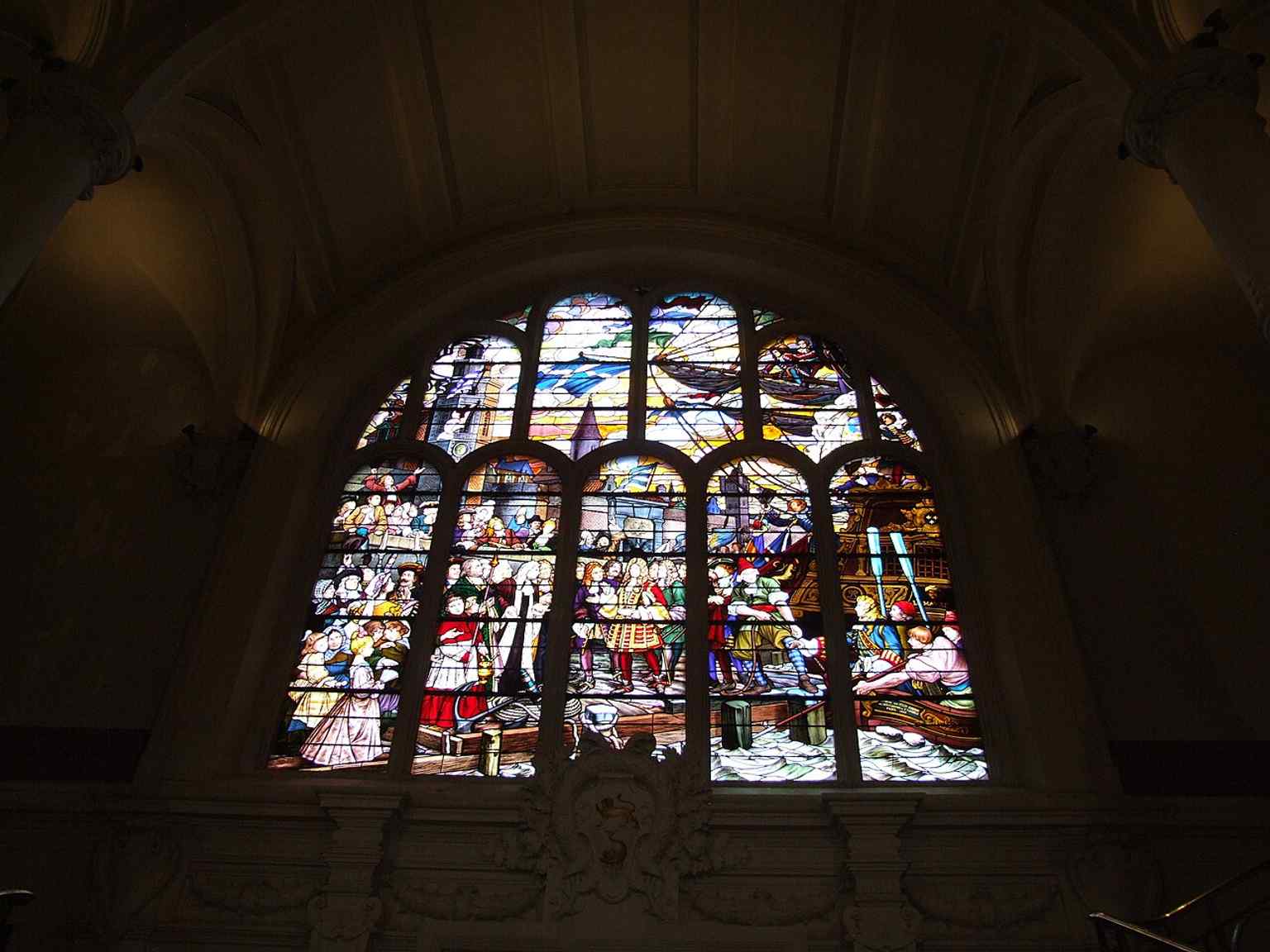
An interior stained-glass window featuring Jean Bart and his crew, echoing the building’s rich decorative tradition.Photo: Claus Ableiter, Wikimedia Commons, CC BY-SA 4.0. Cropped & resized. Then came the war. On the twenty-seventh of May, nineteen forty, German shelling during the Battle of Dunkirk blasted the interior away and left the building a shell. Cordonnier’s son, Louis-Stanislas, led the rebuilding, and President René Coty reopened it on the fifteenth of October, nineteen fifty-five; later wings followed in nineteen sixty and nineteen seventy-four, and France listed the whole building as a historic monument in nineteen eighty-nine. If you plan to pop inside, it generally opens Monday through Friday from eight thirty A-M to five thirty P-M, Saturday until twelve thirty P-M, and closes on Sunday.
This city hall tells Dunkirk’s favorite story: knocked down, rebuilt, and still standing tall.
When you’re ready, continue on and let the town lead you a little closer to the waterfront.
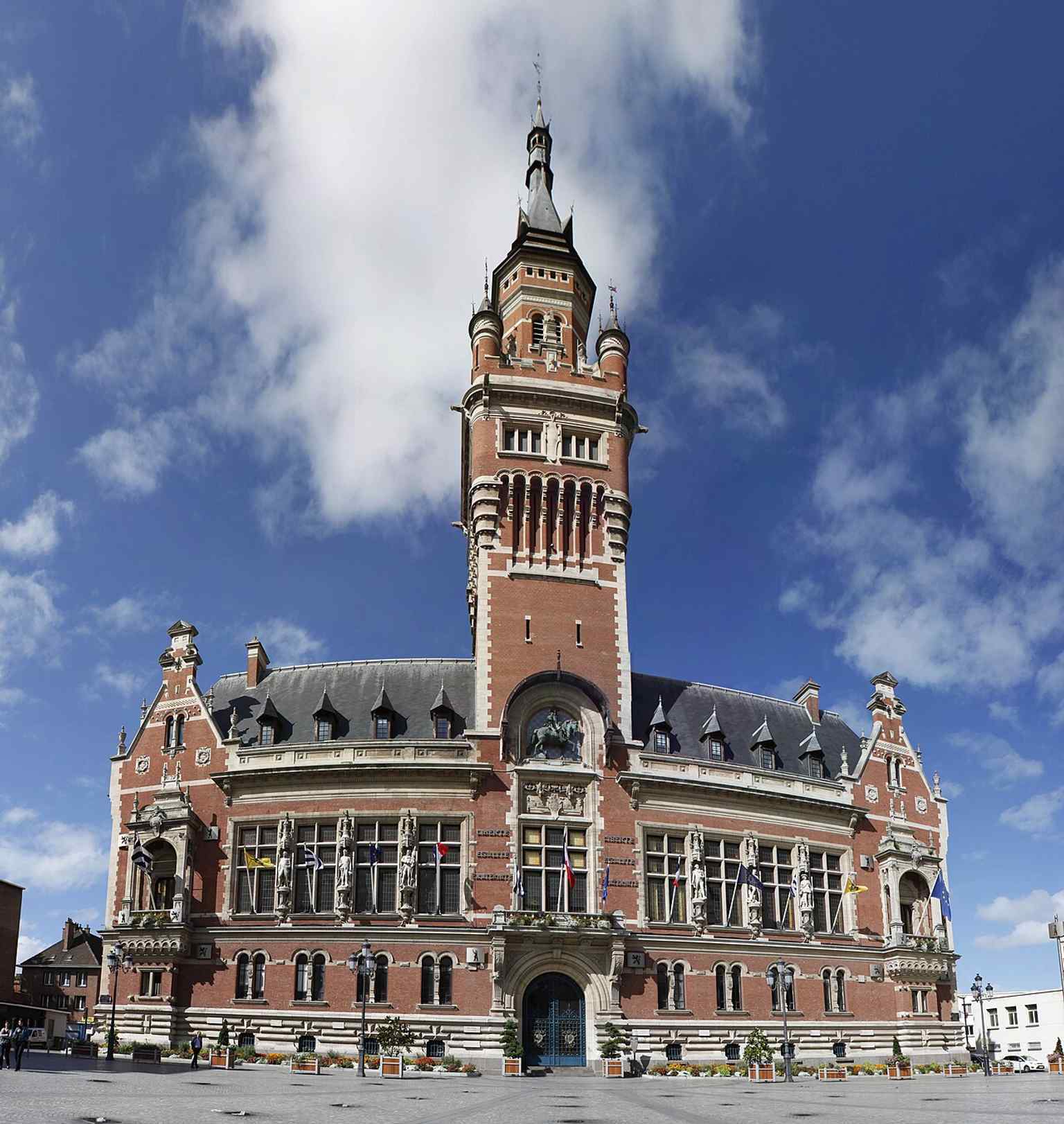
Wide panorama of Dunkirk’s City Hall, showing the grand 1901 building on Place Charles Valentin and its soaring 75-meter belfry.Photo: Nicolas Fleury-Gobert, Wikimedia Commons, CC BY-SA 3.0. Cropped & resized. 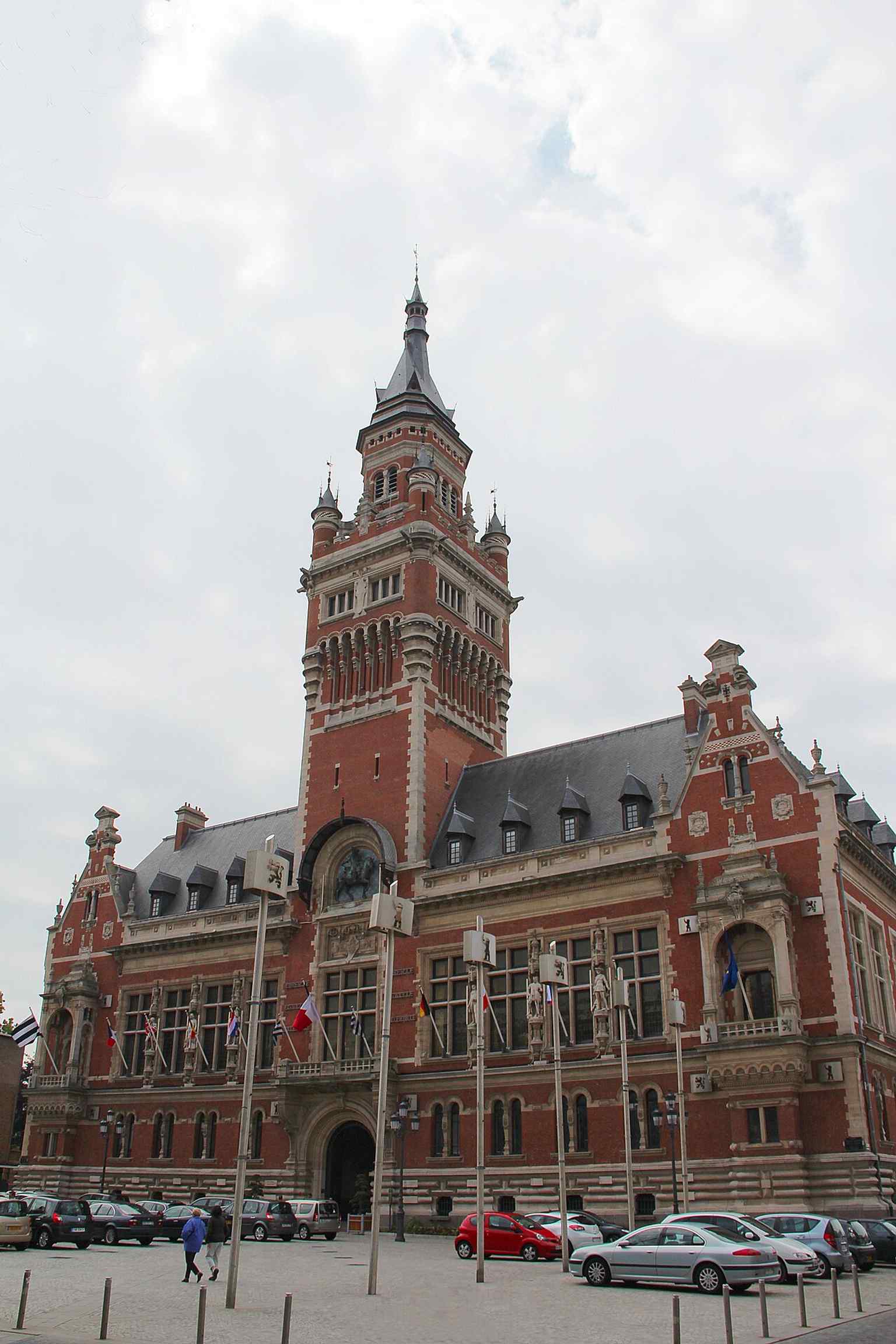
A clear frontal view of the neo-Flemish façade, built between 1897 and 1901 to replace the older town hall on this same site.Photo: Jean-Pol GRANDMONT, Wikimedia Commons, CC BY 4.0. Cropped & resized. 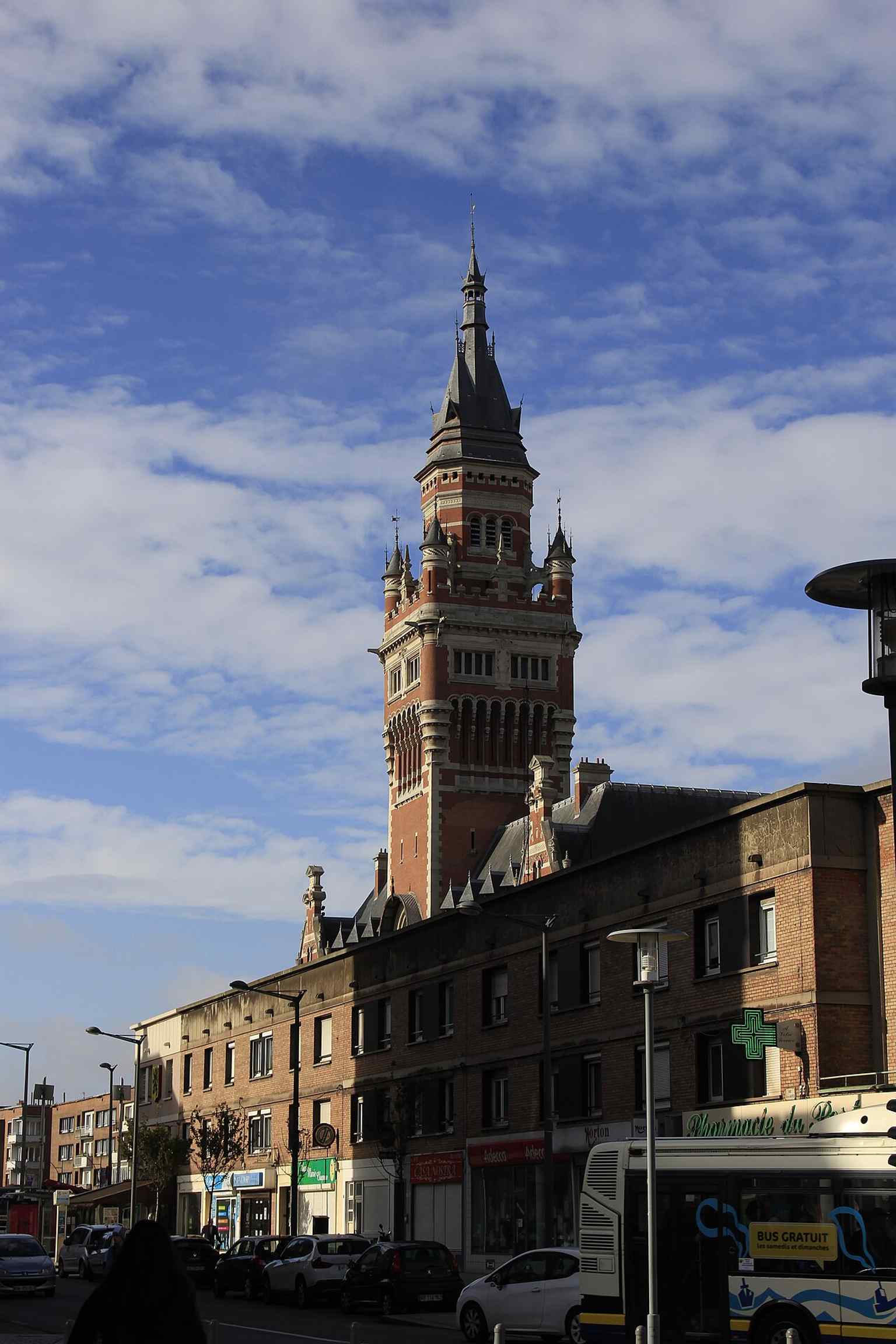
The belfry close-up, now part of the UNESCO-listed Belfries of Belgium and France since 2005.Photo: Rafael Mayorga, Wikimedia Commons, CC BY-SA 4.0. Cropped & resized. 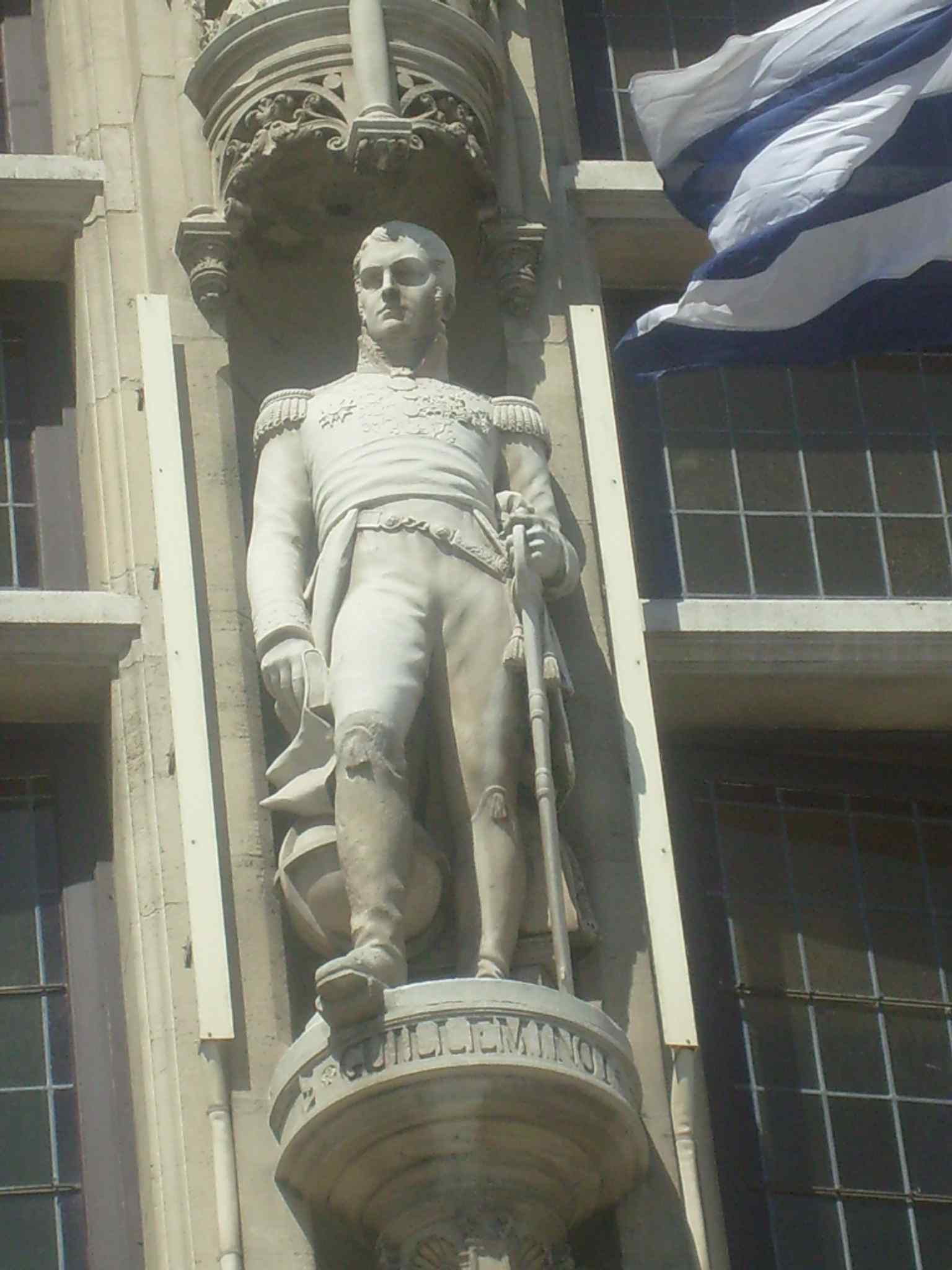
Statue of Armand Charles Guilleminot on the façade, one of the historical figures carved into the city hall’s exterior.Photo: Pichasso, Wikimedia Commons, CC BY-SA 3.0. Cropped & resized. 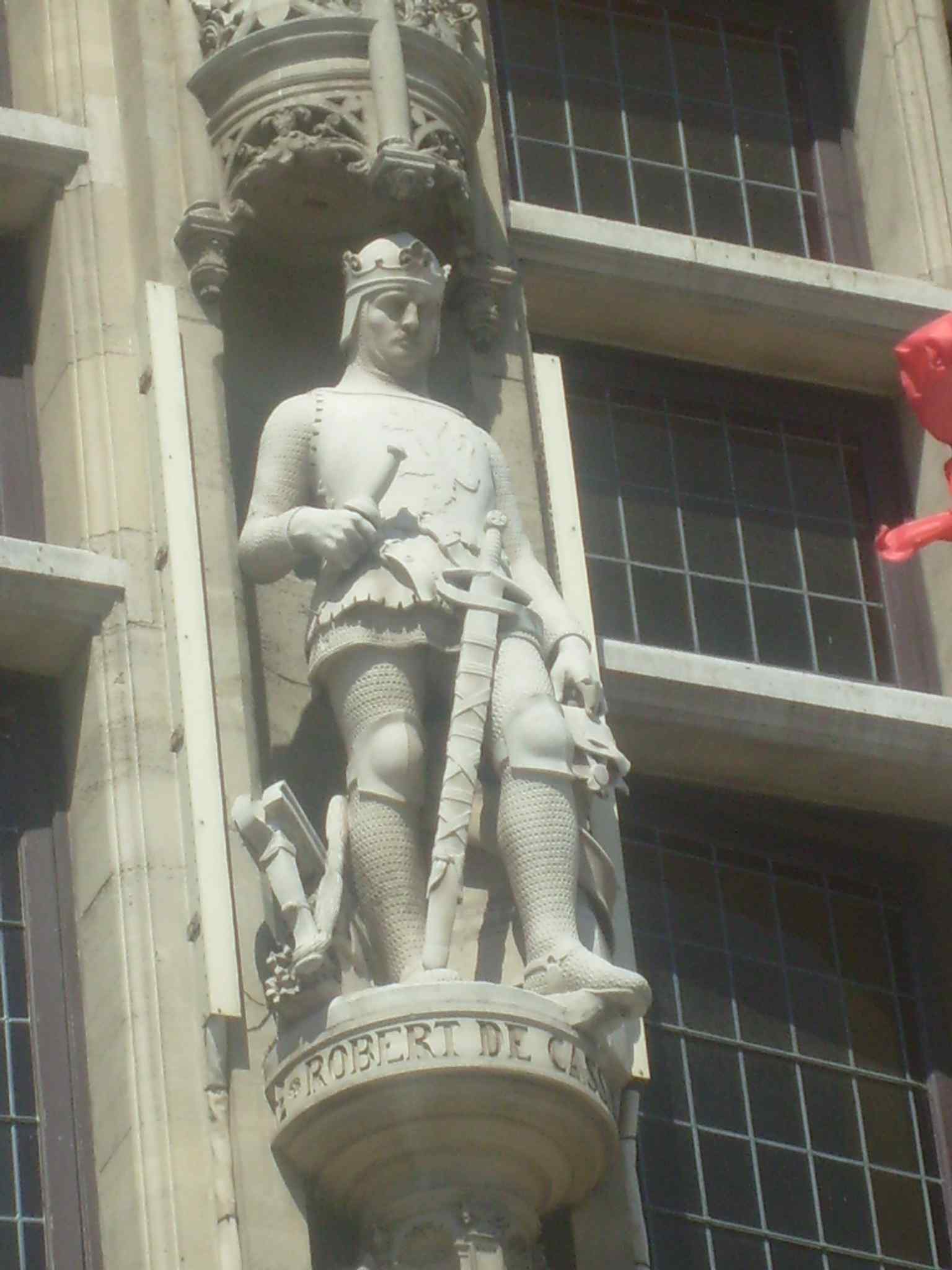
Robert de Cassel’s façade statue, part of the sculptural program that gives the building its civic-historical symbolism.Photo: Pichasso, Wikimedia Commons, CC BY-SA 3.0. Cropped & resized. 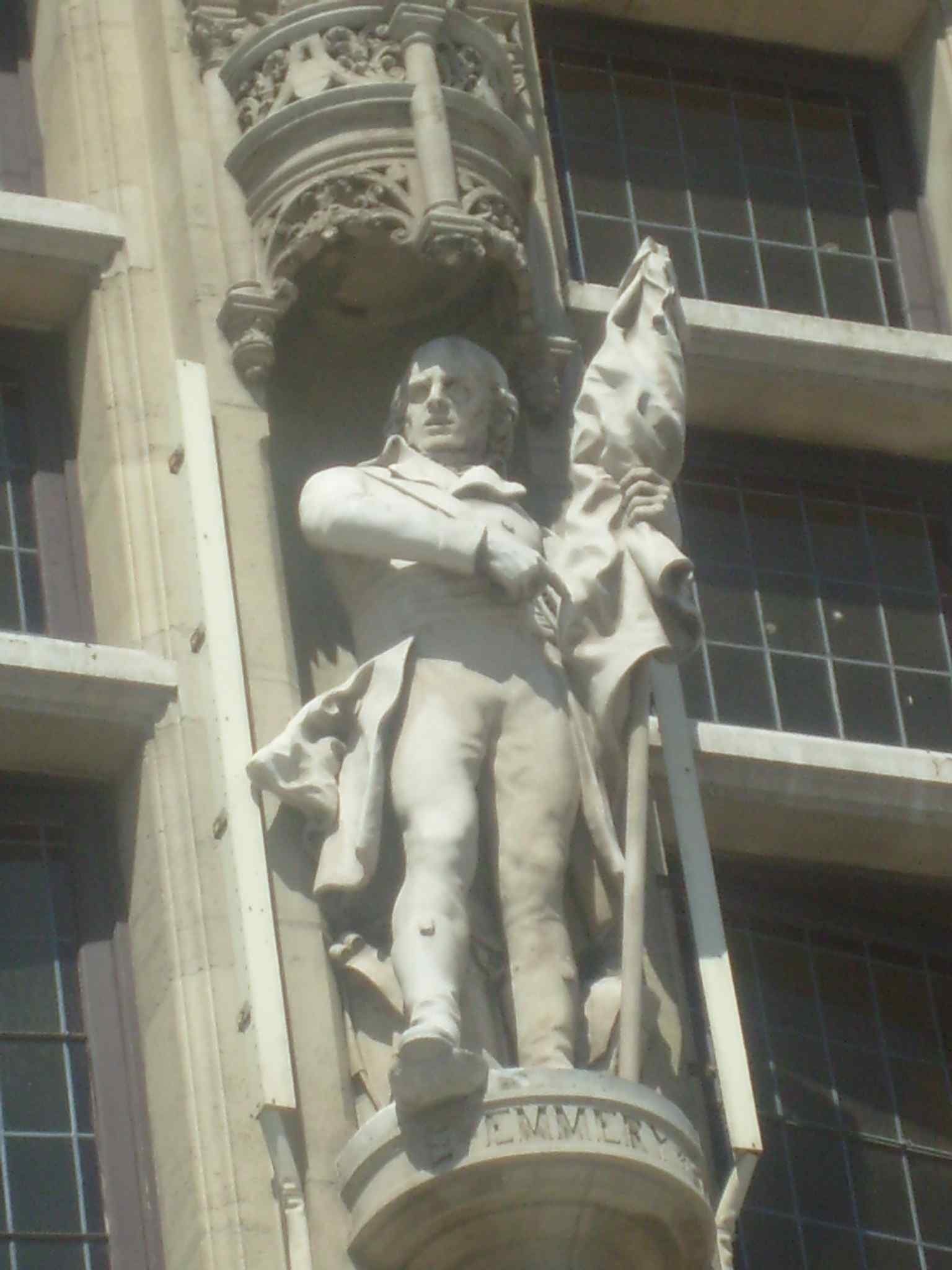
Jean-Marie Joseph Emmery appears here as a façade statue, one of six notable local and regional figures on the building.Photo: Pichasso, Wikimedia Commons, CC BY-SA 3.0. Cropped & resized. 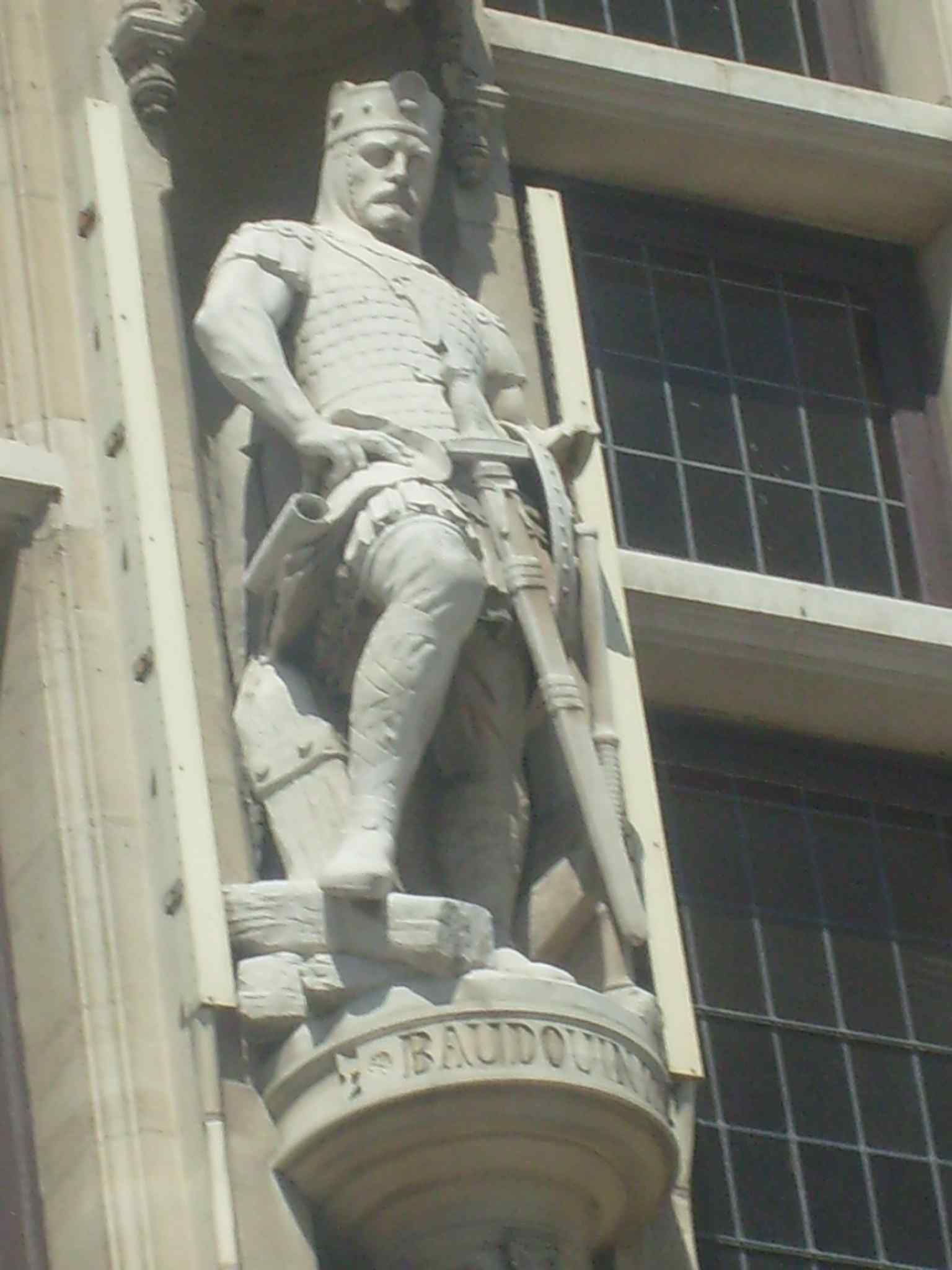
Baldwin III’s statue on the city hall façade, reflecting the building’s Flemish heritage and historical references.Photo: Pichasso, Wikimedia Commons, CC BY-SA 3.0. Cropped & resized. 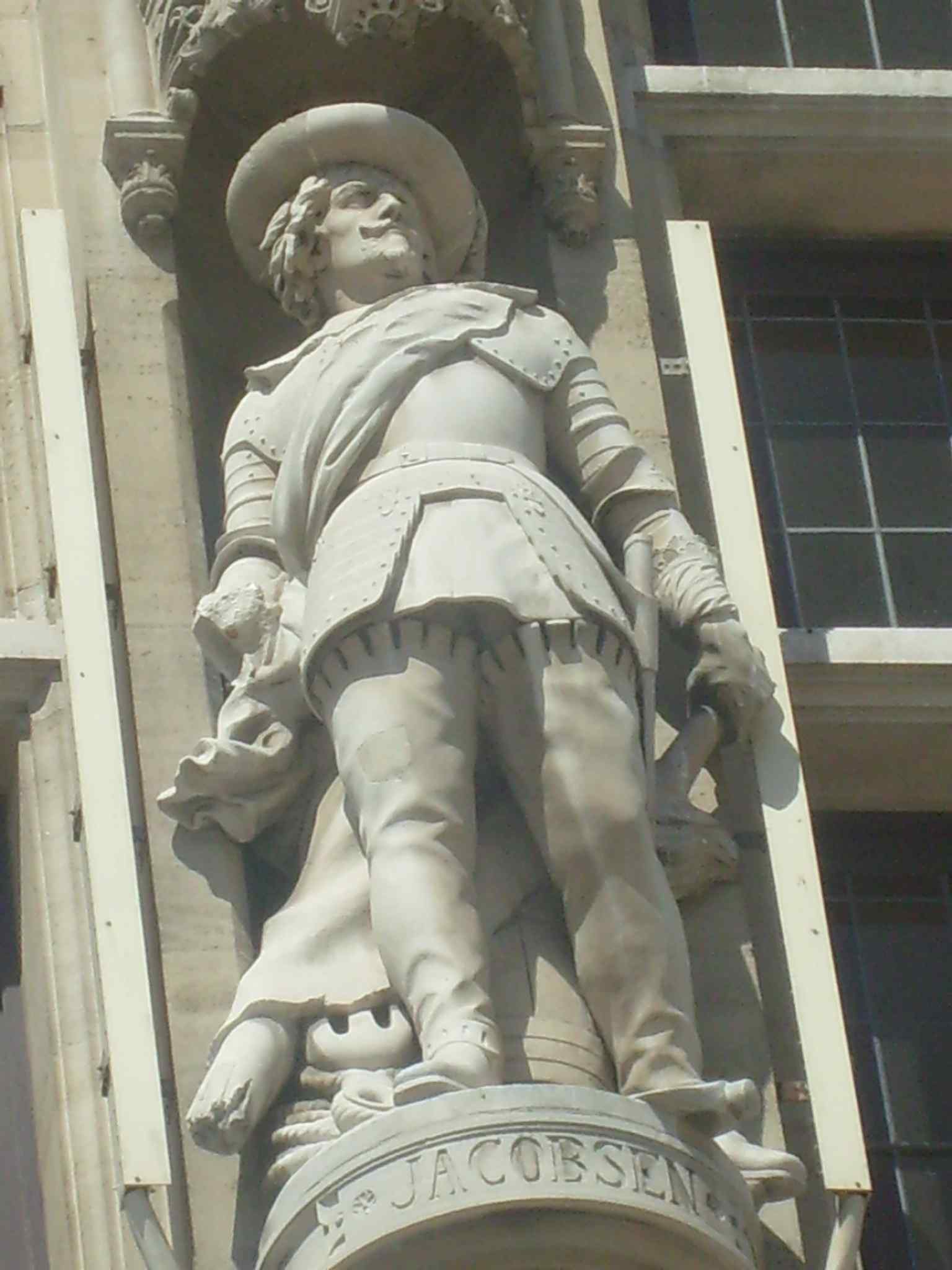
Michel Jacobsen’s statue in the façade lineup, one of the figures commemorated on the city hall’s exterior.Photo: Pichasso, Wikimedia Commons, CC BY-SA 3.0. Cropped & resized. 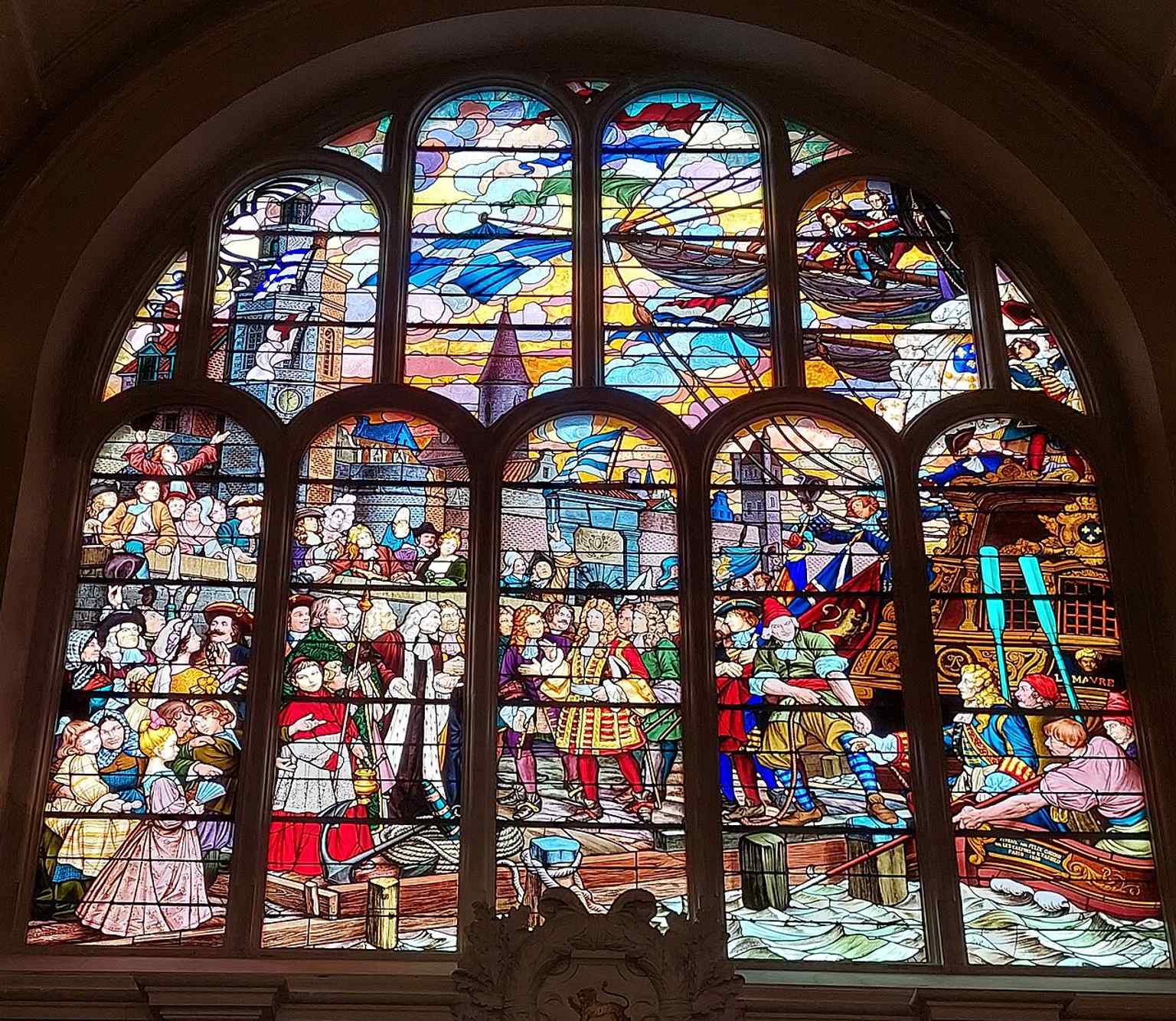
Jean Bart on a stained-glass panel by Félix Gaudin, linking the town hall interior to Dunkirk’s maritime history.Photo: Ellywa, Wikimedia Commons, CC BY-SA 4.0. Cropped & resized. 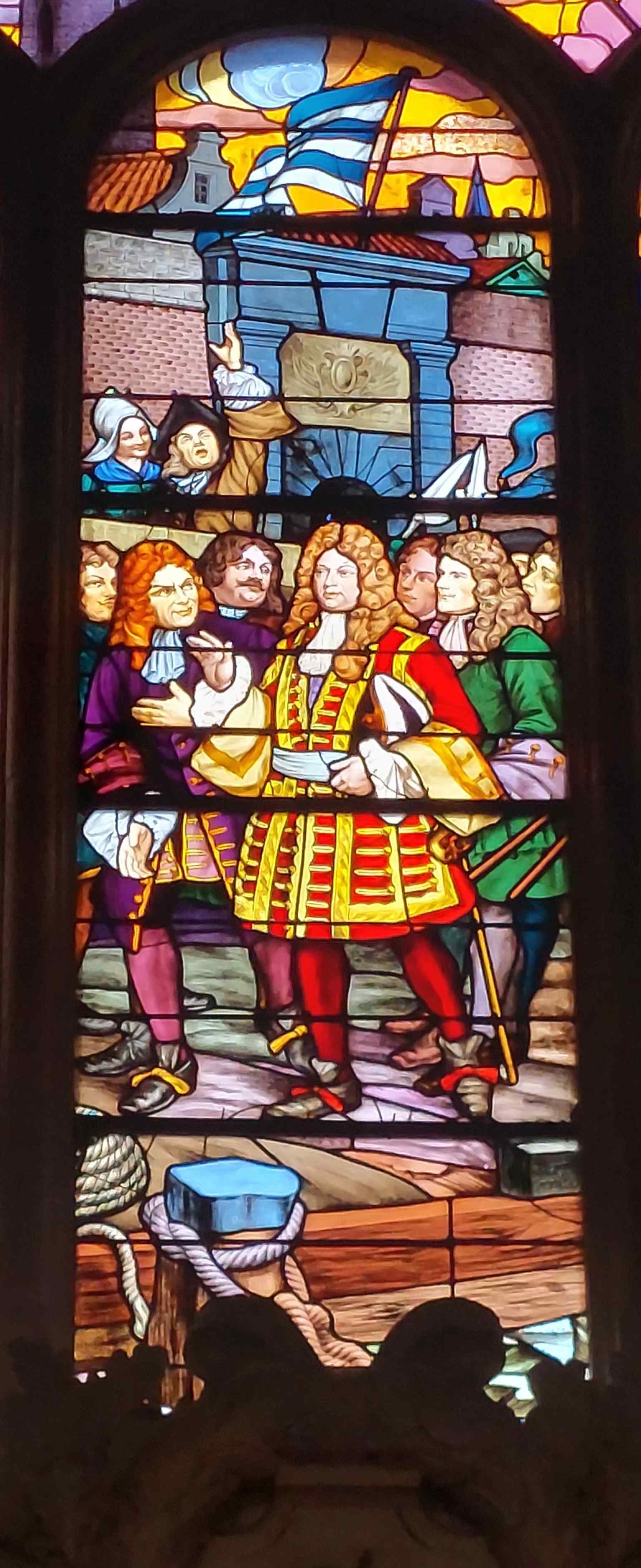
A closer view of the Jean Bart stained glass, said to depict his return after the Battle of the Texel.Photo: Ellywa, Wikimedia Commons, CC BY-SA 4.0. Cropped & resized. 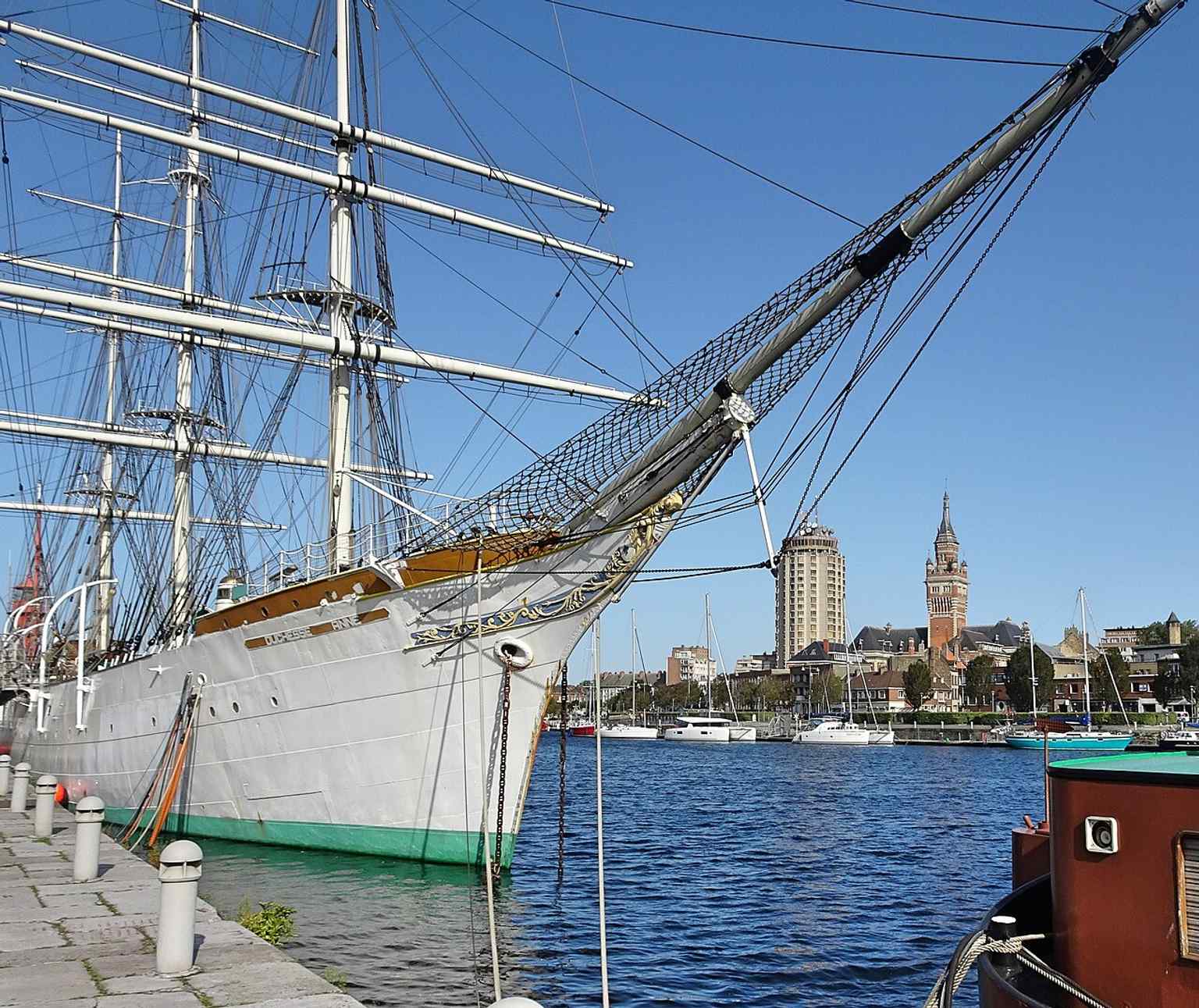
The town hall beside the three-masted Duchesse Anne, tying the building to Dunkirk’s port and seafaring identity.Photo: Pierre André Leclercq, Wikimedia Commons, CC BY-SA 4.0. Cropped & resized. 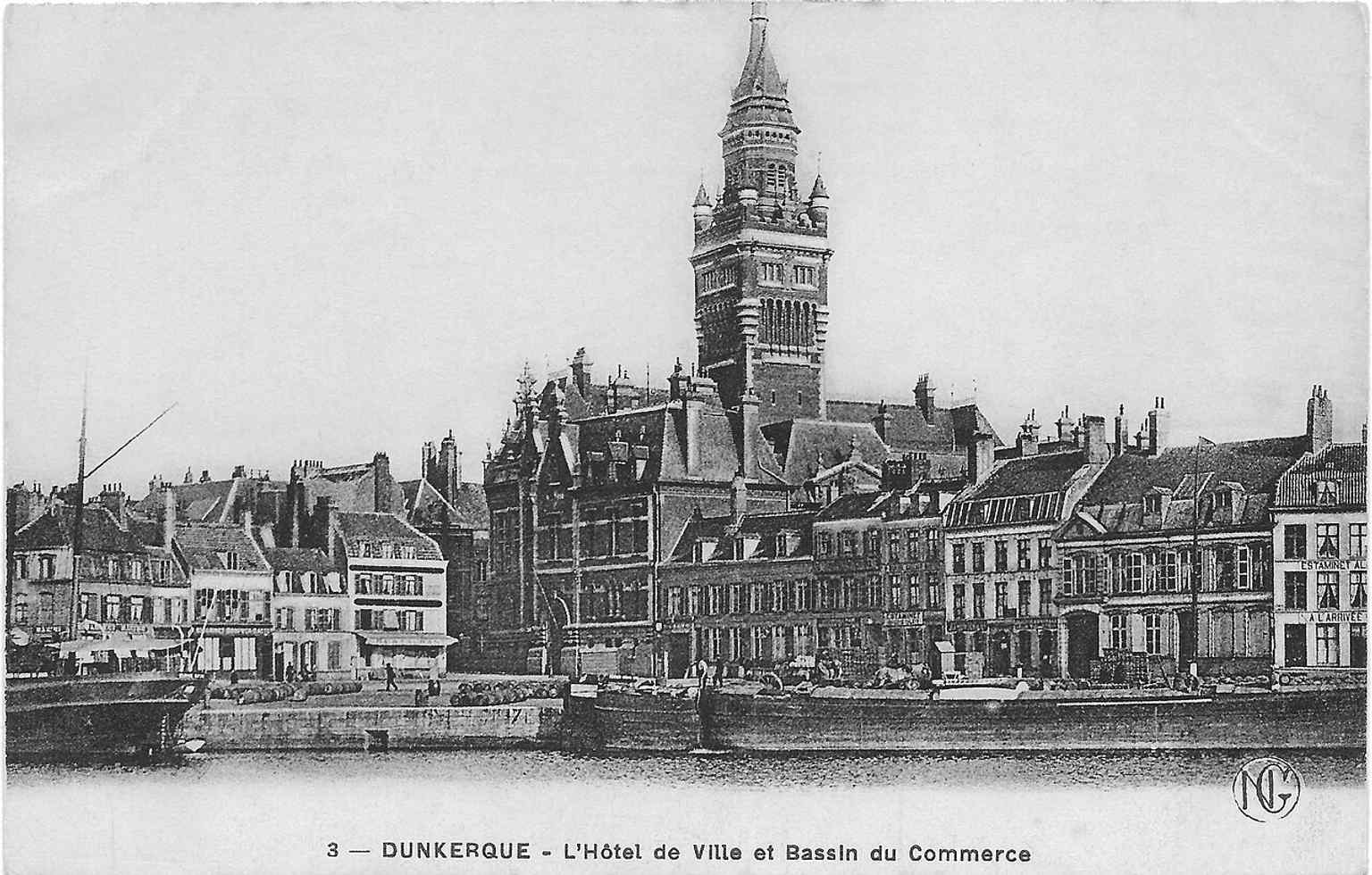
An old postcard view of Dunkirk, useful for showing the town hall in the city’s historic urban setting.Photo: Unknown authorUnknown author, Wikimedia Commons, Public domain. Cropped & resized. Look for a low brick-and-stone port city spread across very flat ground, stitched together by broad canal basins and punctuated by tall church and civic towers. Dunkerque is not…Read moreShow less
Open dedicated page →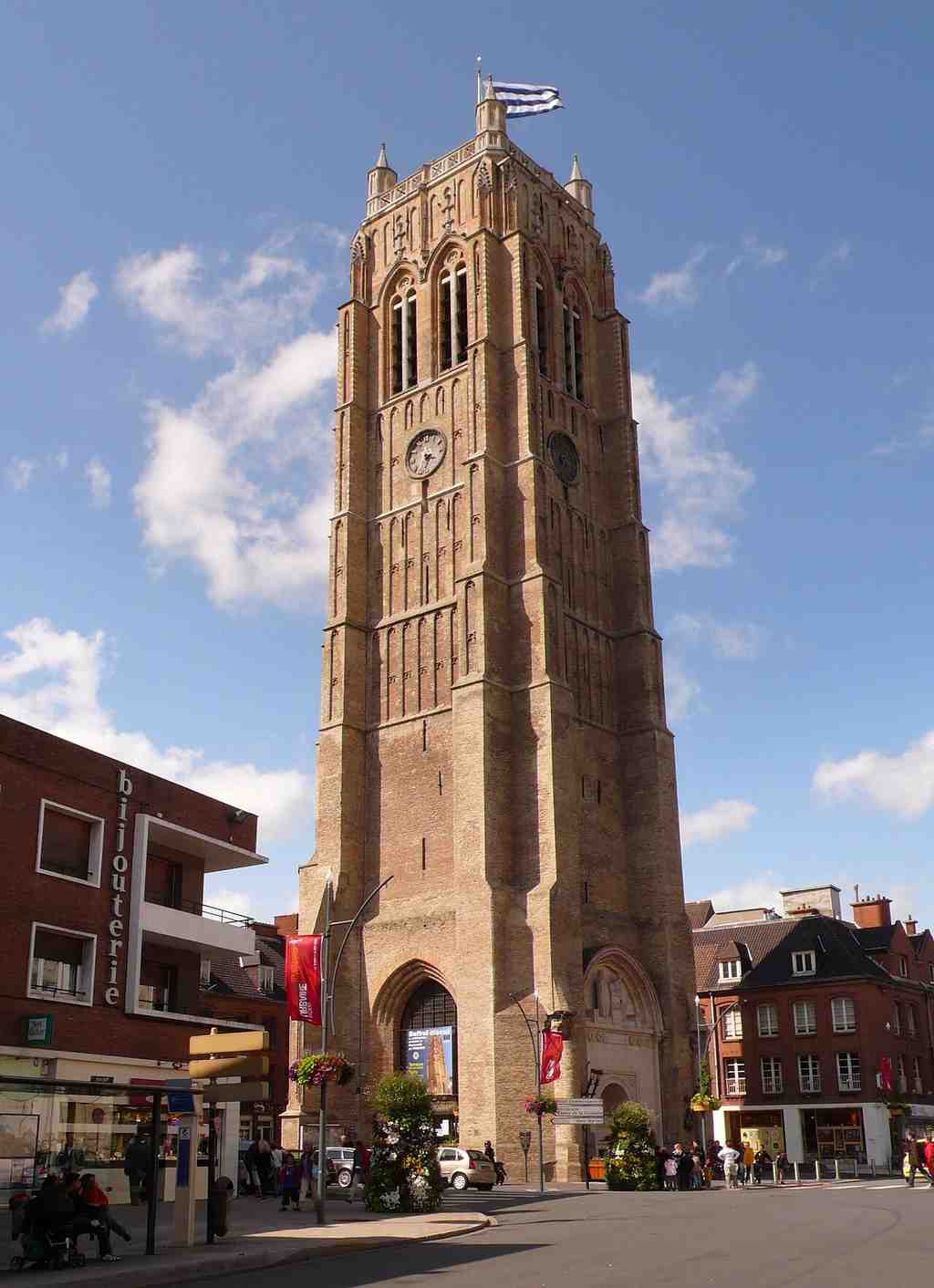
DunkerquePhoto: Welleschik, Wikimedia Commons, CC BY-SA 3.0. Cropped & resized. Look for a low brick-and-stone port city spread across very flat ground, stitched together by broad canal basins and punctuated by tall church and civic towers.
Dunkerque is not just a place beside the sea... it is a place that argued with the sea, bargained with it, and slowly pushed it back. Much of the land around you was won from water. Locals drained marshy ground into polders, which are low reclaimed lands, using channels called wateringues, a whole web of canals that carry excess water toward the North Sea. That is why Dunkerque feels so strikingly flat. In fact, the highest inhabited ground in the center sits between the town hall and Place Jean Bart... which is less a hill and more a raised eyebrow.
This city grew because of its port, and the port still explains almost everything. Dunkerque sits about sixty-five kilometers northwest of Lille and about two hundred forty-one kilometers north of Paris. It is also within three hundred kilometers of Amsterdam, Brussels, and London. That made it valuable, and valuable places rarely get left alone. Over the centuries, Dunkerque belonged at different times to Flanders, Spain, England, and France. On the twenty-fifth of June, sixteen fifty-eight, it changed nationality three times in a single day. That is not a typo; that is a city having a very stressful afternoon. France secured it for good on the twenty-seventh of October, sixteen sixty-two.
If you check the image on your screen, the view from sixteen forty-nine captures that tension beautifully: sea, defenses, and approach routes all tangled together in one strategic knot. Everybody who mattered in northwestern Europe understood the same thing... if you controlled Dunkerque, you controlled a gateway.
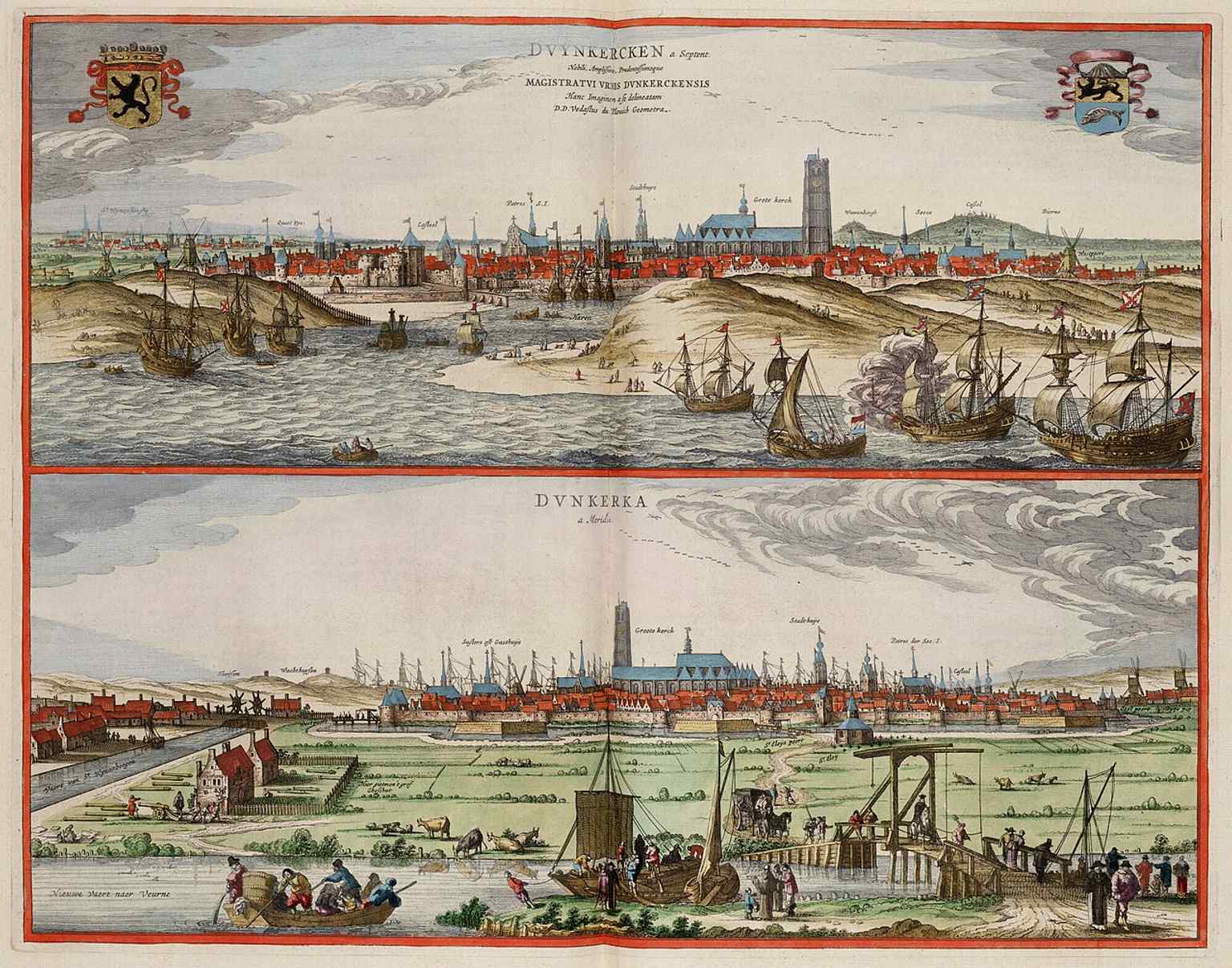
A 1649 view of Dunkirk from land and sea, illustrating how strategically coveted the city was over the centuries.Photo: AnonymousUnknown author, Wikimedia Commons, Public domain. Cropped & resized. And yet Dunkerque is more than military history. Today, around eighty-six thousand people live in the city proper, and the wider urban community is much larger. The port remains the city’s biggest source of work and the third largest port in France by cargo traffic. Steel, industrial gases, pipe manufacturing, petrochemicals, and major energy infrastructure all cluster here. In plain English: this is a working city, not a postcard pretending to be one.
Still, Dunkerque has soul as well as muscle. It is proudly called the city of Jean Bart, the famous corsair, a state-approved raider at sea, and its carnival is the best-known cultural event in town. Across France, people even use Dunkerque as shorthand for the far north, in the phrase “from Dunkerque to Perpignan,” meaning the whole country from top to bottom.
Take a glance at the old postcard in the app and notice how the town hall and harbor share the stage. That pairing says everything: civic life and maritime life have always stood shoulder to shoulder here.
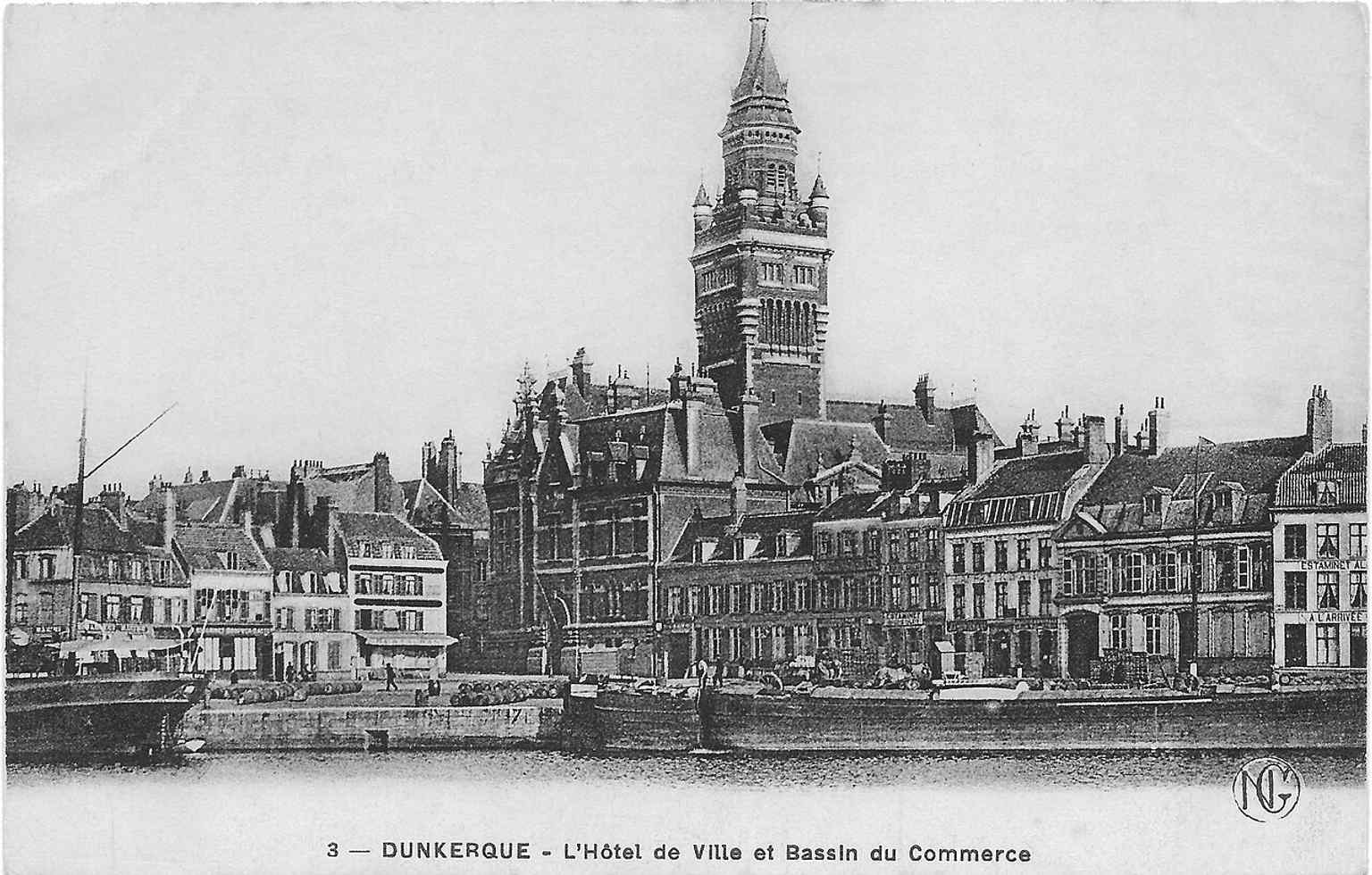
An old postcard of Dunkirk with the town hall and port, combining civic life with the harbor that shaped the city.Photo: Unknown authorUnknown author, Wikimedia Commons, Public domain. Cropped & resized. Dunkerque makes most sense when you see it as a city built by water, trade, and stubbornness.
When you are ready, continue on toward the Leughenaer Tower, where the skyline starts telling an older, sharper-edged story.
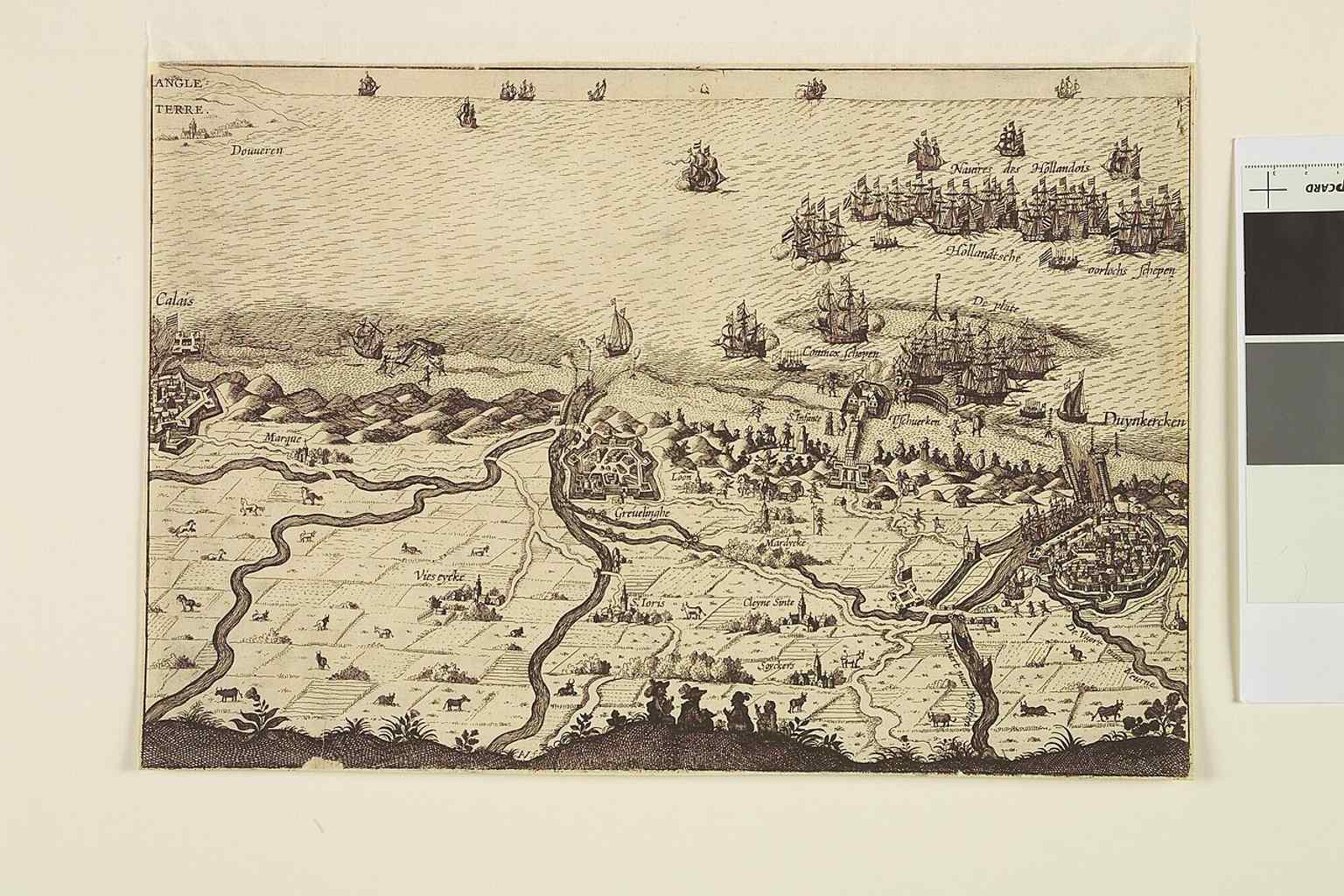
A 1628 scene of fleets off Dunkirk, reflecting the city’s contested position between major European powers.Photo: Anonymous, Wikimedia Commons, Public domain. Cropped & resized. 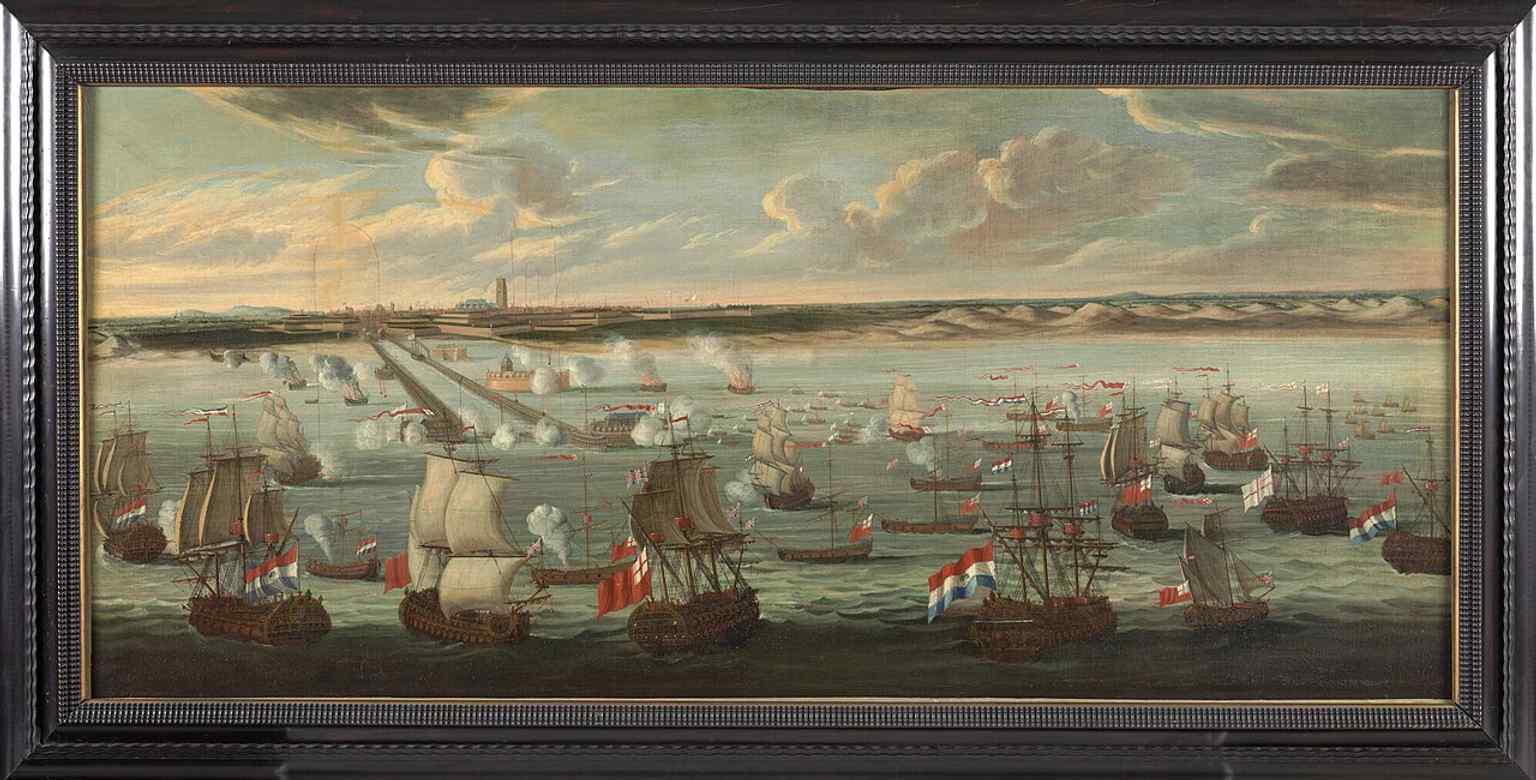
A 1695 bombardment of Dunkirk — a dramatic reminder of the city’s military importance and turbulent past.Photo: AnonymousUnknown author, Wikimedia Commons, Public domain. Cropped & resized. 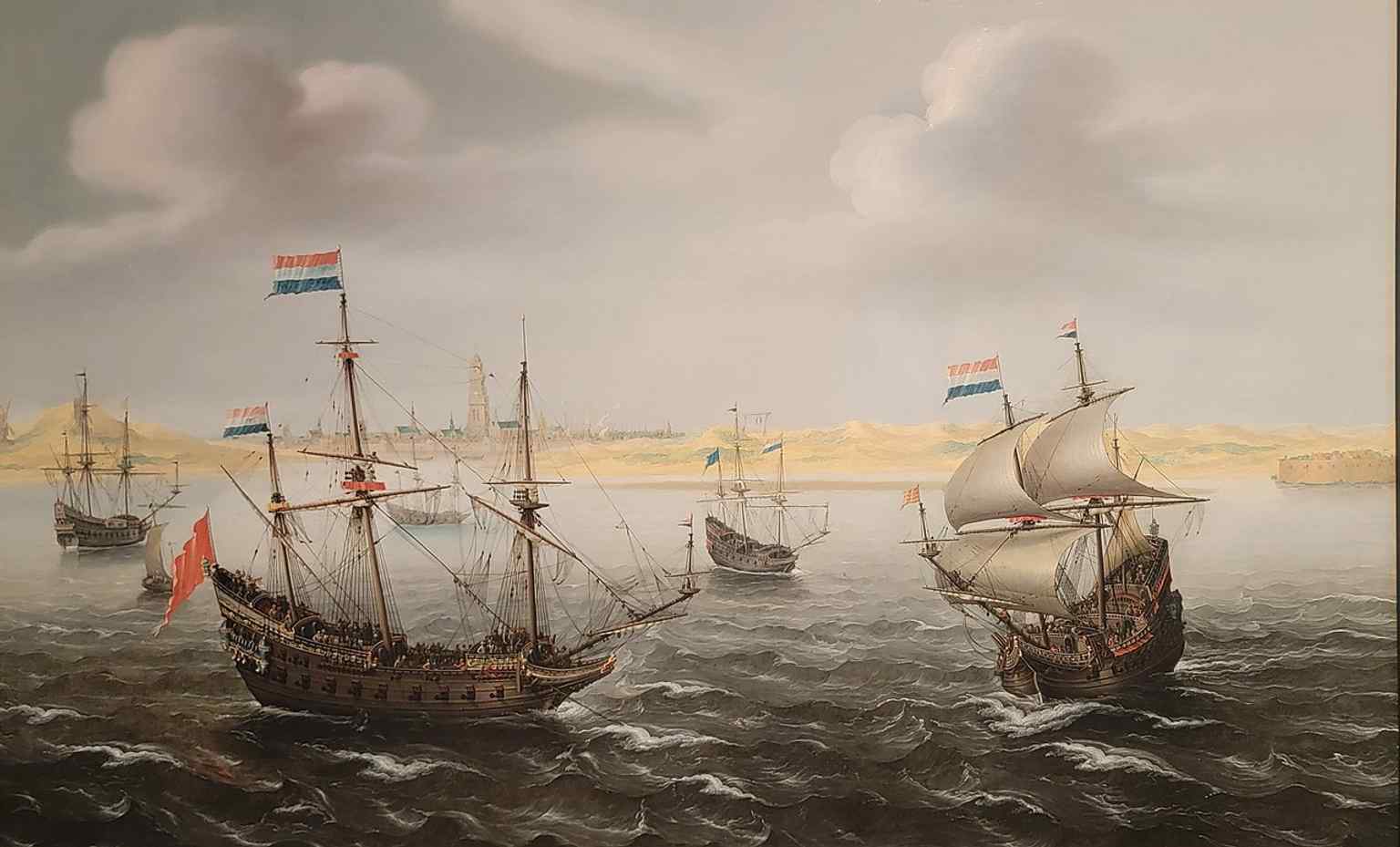
A 17th-century painting of privateers near Dunkirk, connecting the port with corsair raids and maritime conflict.Photo: Cornelis Verbeeck, Wikimedia Commons, Public domain. Cropped & resized. 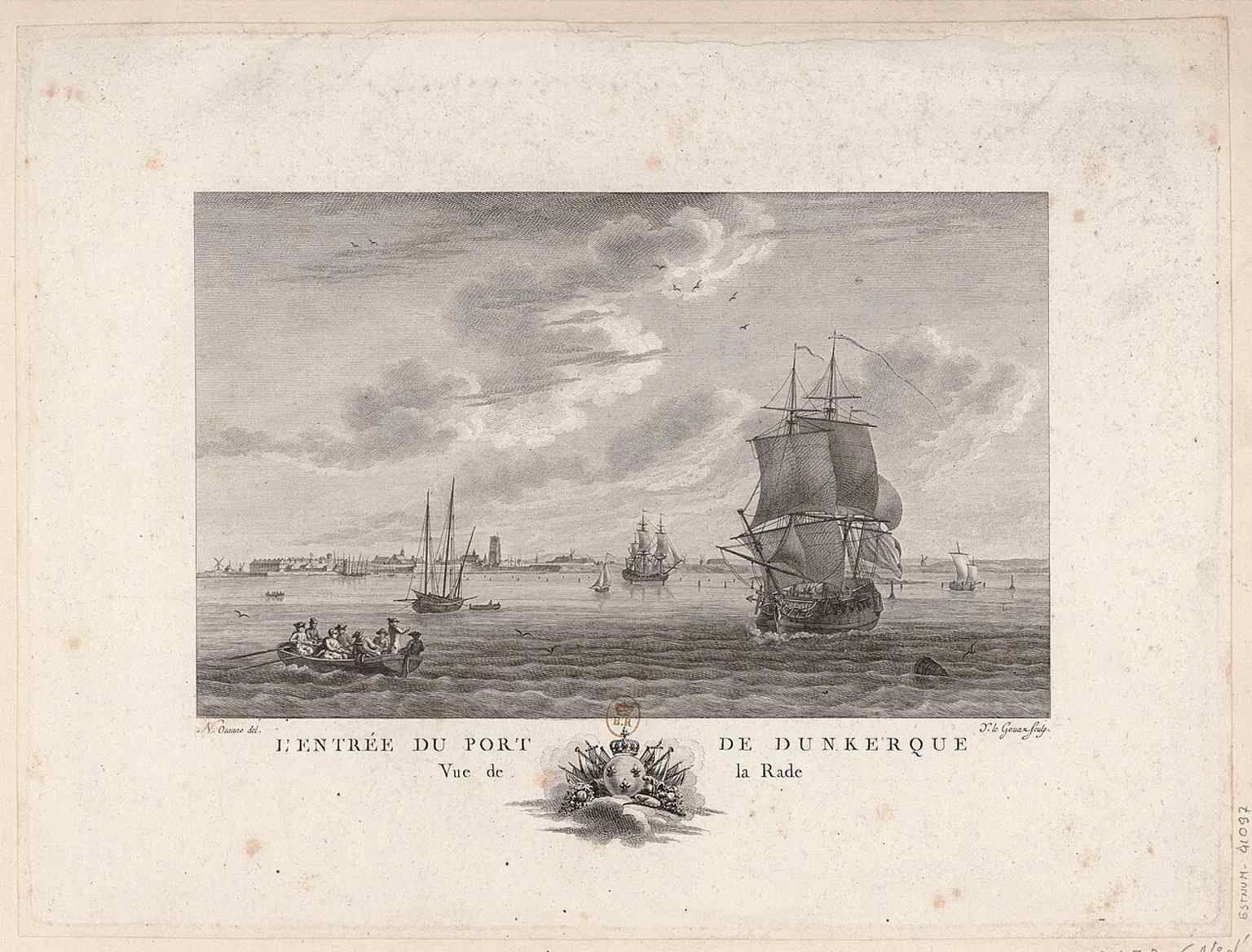
An 18th-century view of the port entrance from the roadstead, highlighting Dunkirk’s role as a gateway on the North Sea.Photo: Nicolas Ozanne, Wikimedia Commons, Public domain. Cropped & resized. 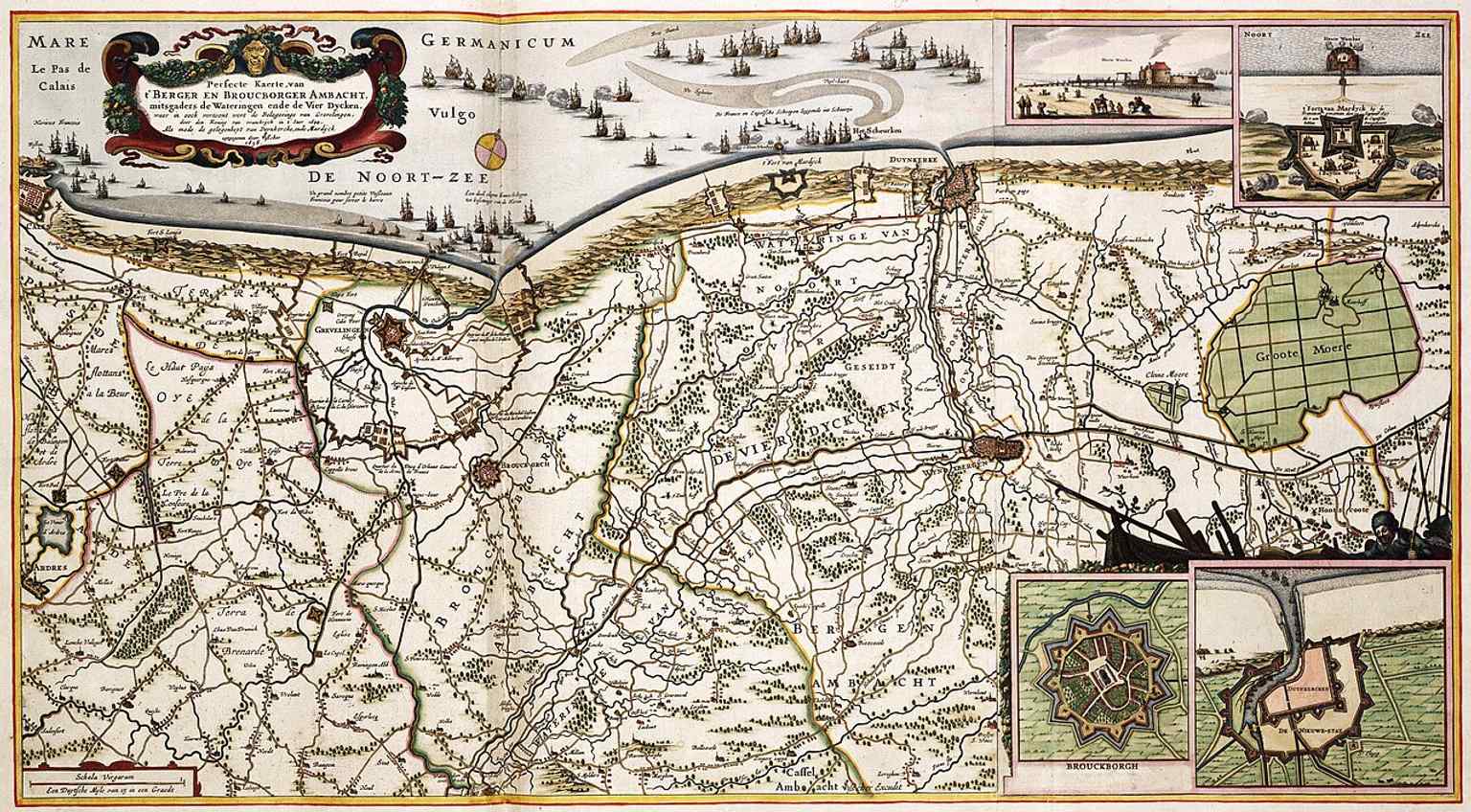
A historic map of the Flanders coast, useful for situating Dunkirk within the wider borderland that changed hands many times.Photo: Publisher: C.I. Visscher, Wikimedia Commons, Public domain. Cropped & resized. On your right, look for the sturdy brick octagonal tower, topped with a lantern-like crown that makes it feel half fortress, half lighthouse. This is the Leughenaer Tower, the…Read moreShow less
Open dedicated page →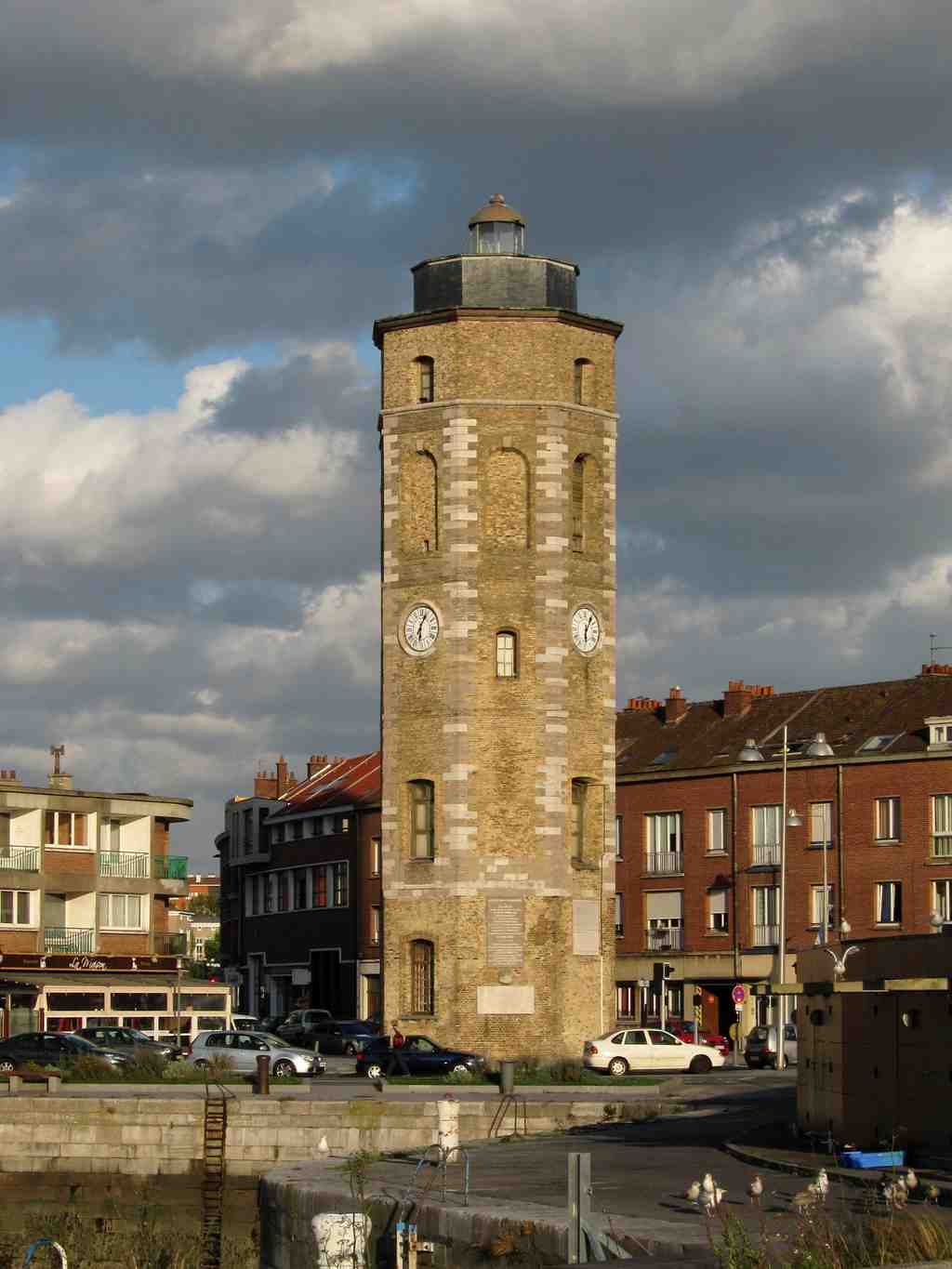
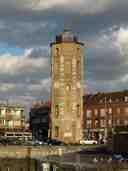
Leughenaer TowerPhoto: Velvet, Wikimedia Commons, CC BY-SA 3.0. Cropped & resized. On your right, look for the sturdy brick octagonal tower, topped with a lantern-like crown that makes it feel half fortress, half lighthouse.
This is the Leughenaer Tower, the oldest monument in Dunkirk. Around fourteen fifty, Jacques Desfontaines put it here to watch the harbor, and in the sixteenth century locals added a lookout platform around it. Then, in eighteen fourteen, they raised the tower higher so it could carry a lighthouse lantern. If you peek at the image on your screen, you can see that later lighthouse role clearly. Its name comes from an older Dutch word, leugenaar, meaning “liar”... and that nickname sparked a juicy legend. People claimed Dunkirkers sent false signals from the top, luring ships onto the sandbanks so they could plunder them. Truth is, the harbor channel twisted so much that many captains got fooled without any help. Inside, much of the nineteenth-century lighthouse equipment still survives, and France listed the tower as a historic monument in nineteen ninety-five. It stands here all day, every day.
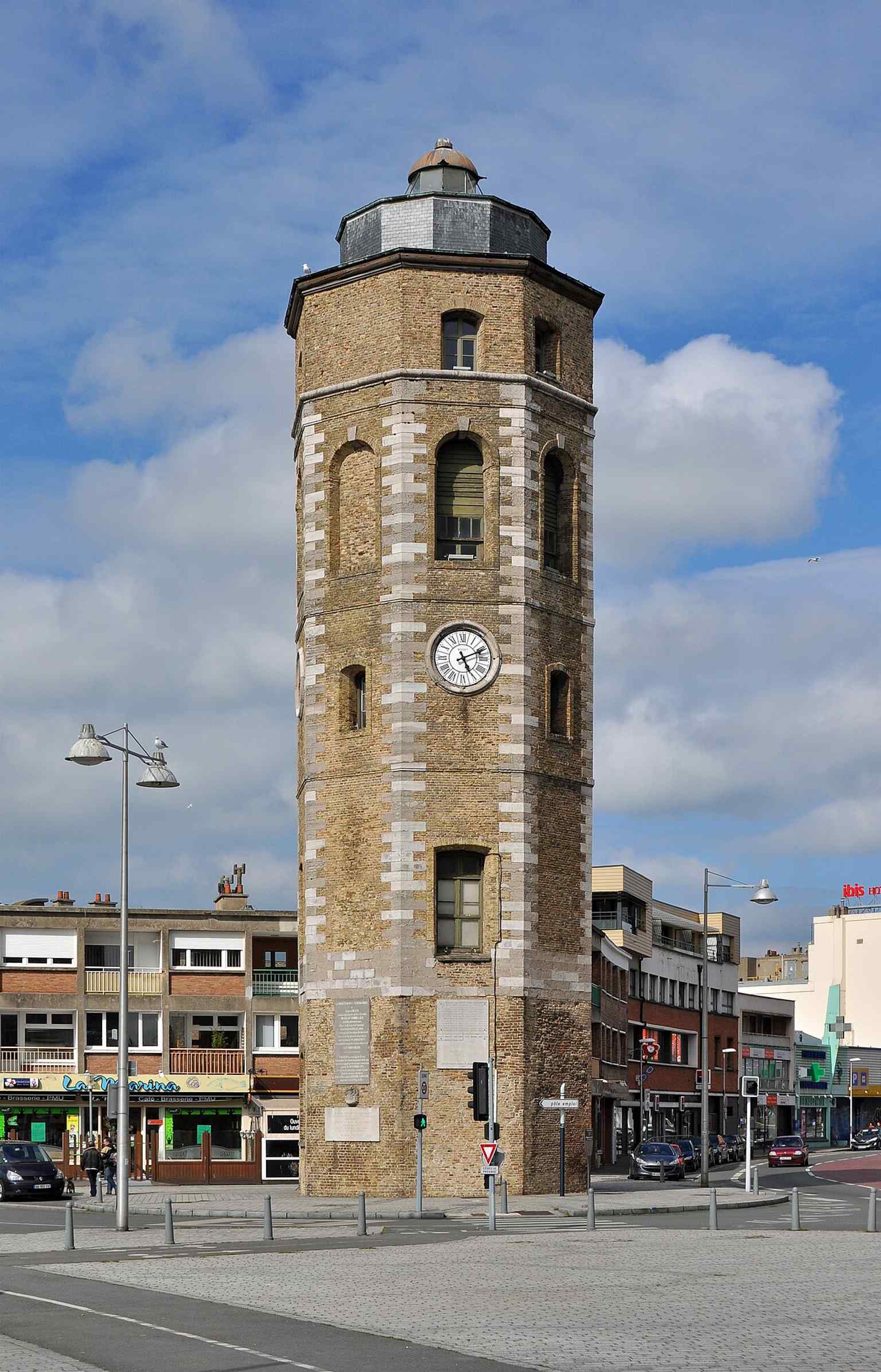
This older view shows the tower’s former role as a harbor lighthouse, matching its 19th-century use before the light was retired in 1963.Photo: Marc Ryckaert (MJJR), Wikimedia Commons, CC BY 3.0. Cropped & resized. For a so-called liar, this tower tells one of Dunkirk’s most honest stories. When you’re ready, keep going toward the contemporary art museum ahead.
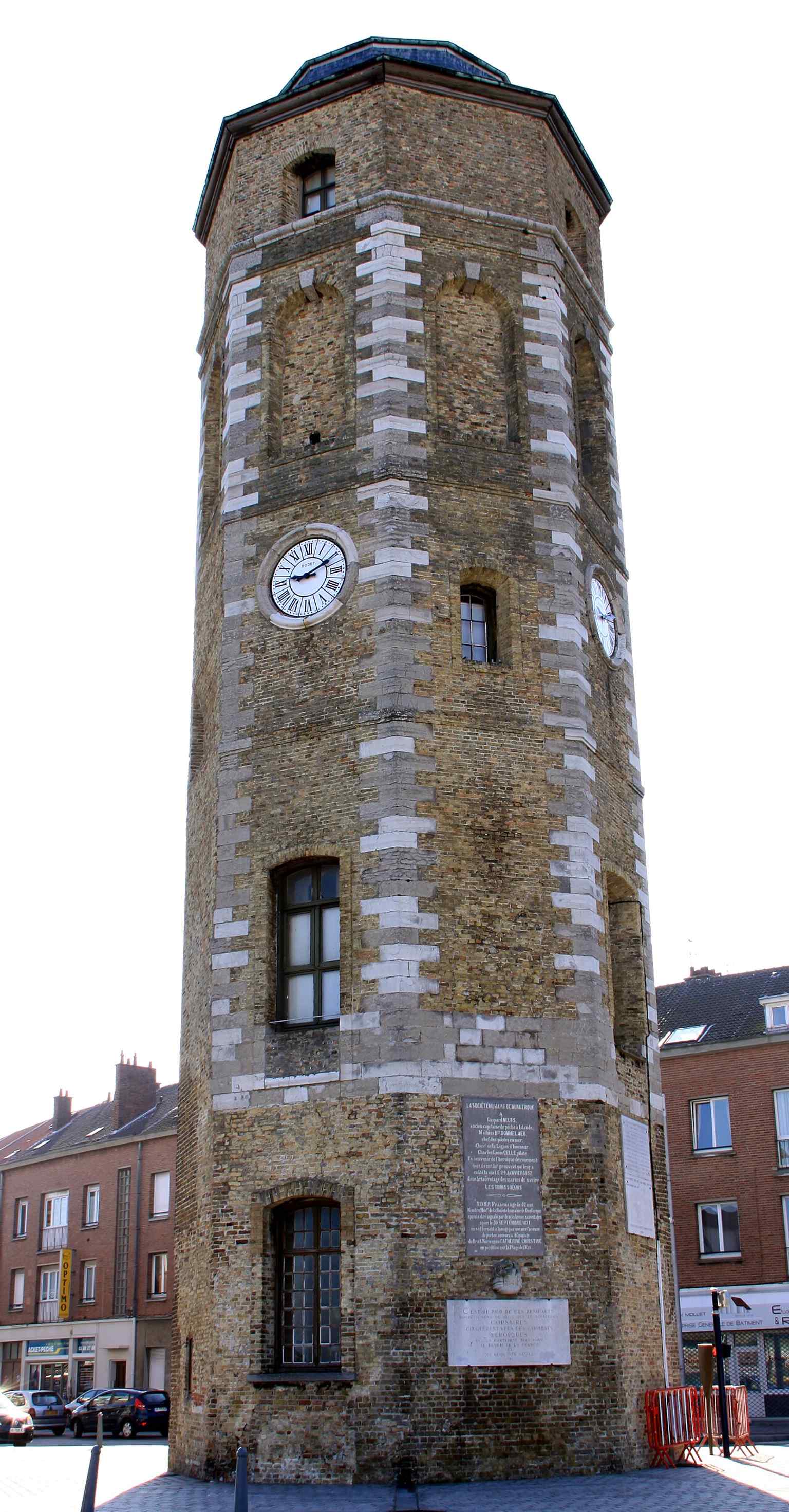
A clear view of the octagonal Leughenaer Tower, the oldest monument in Dunkirk, built around 1450 and later raised to carry a lighthouse lantern.Photo: Martinp1, Wikimedia Commons, CC BY-SA 3.0. Cropped & resized. 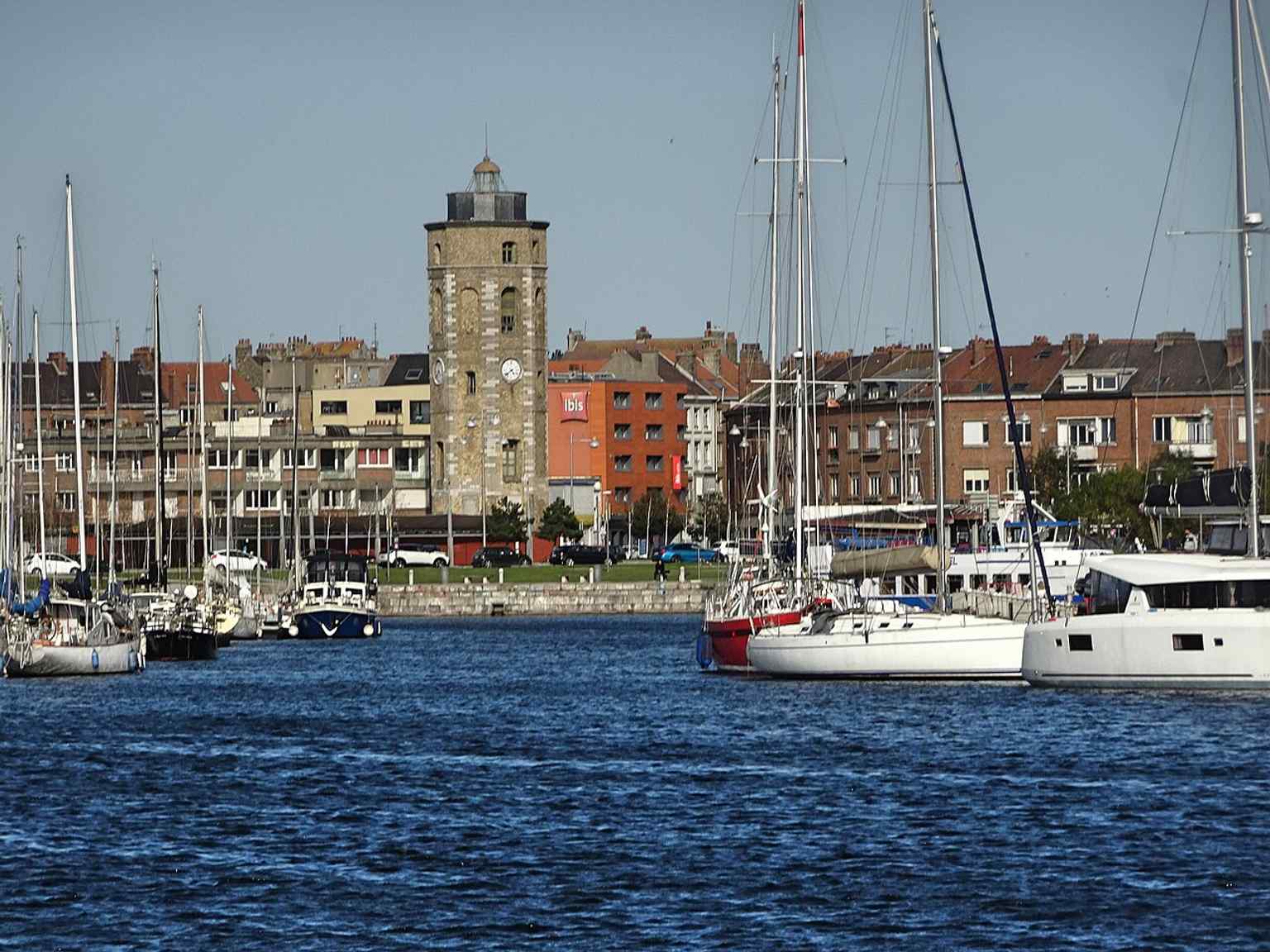
A modern full view of the Leughenaer Tower in Dunkirk, helping show the landmark’s preserved medieval silhouette and historic status.Photo: Pierre André Leclercq, Wikimedia Commons, CC BY-SA 4.0. Cropped & resized. Ahead of you is a low white ceramic-clad building, almost square but cut through with sharp bands of glass, its chunky projecting wings making it look a bit like a giant geometric…Read moreShow less
Open dedicated page →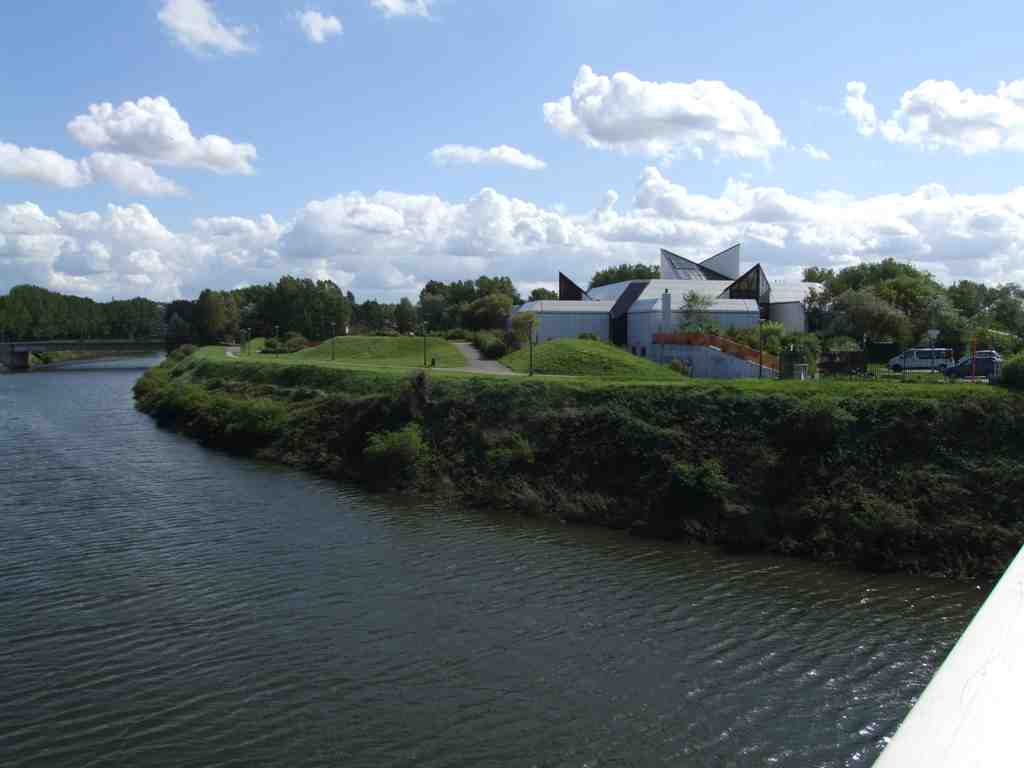
Dunkirk's contemporary art and action venuePhoto: Claus Ableiter, Wikimedia Commons, CC BY-SA 4.0. Cropped & resized. Ahead of you is a low white ceramic-clad building, almost square but cut through with sharp bands of glass, its chunky projecting wings making it look a bit like a giant geometric sculpture.
This is the Le Lieu d'art et action contemporaine, or L-A-A-C... and in true Dunkirk fashion, it began not with a grand cultural master plan, but with one person getting gloriously, stubbornly hooked. In the early nineteen seventies, Gilbert Delaine, an engineer with no formal training in contemporary art, flipped through an art magazine and fell hard for an abstract painting by Ladislas Kijno. That little lightning strike turned into a mission.
In nineteen seventy-four, Delaine created an association called L'Art contemporain to build a collection for the city. He persuaded industrial leaders, public figures, and artists to join in, helped in part by the Malraux law, a French policy that encouraged support for culture. Delaine did not collect like an investor hunting trophies. He bought what moved him. Better yet, he asked artists to donate one work for every piece the association purchased. That is a pretty charming bit of French cultural diplomacy: buy one, inspire one. By nineteen eighty-two, the collection had reached nine hundred works.
The building you are looking at opened that same year, designed by architect Jean Willerval. Even from back here, above the fence, you can feel how unusual it is. Willerval gave it a square plan, then sliced it along its middle lines and diagonals with glazed openings. He pushed out eight alcoves, little projecting rooms, in the form of a Greek cross, which simply means a cross with four equal arms. The result is symmetrical at first glance... then not quite. Light moves through those cuts and corners in shifting ways, so the building never sits still visually, even though it is solid as a dockside warehouse.
If you want the big picture, take a look at the image on your screen. You can see how the museum sits in the middle of a sculpture garden designed by landscape architect Gilbert Samel, with water, stone, and artworks arranged as part park, part open-air gallery. That garden opened in nineteen eighty, before the museum building itself, which tells you something important: here, art was never meant to stay politely indoors.
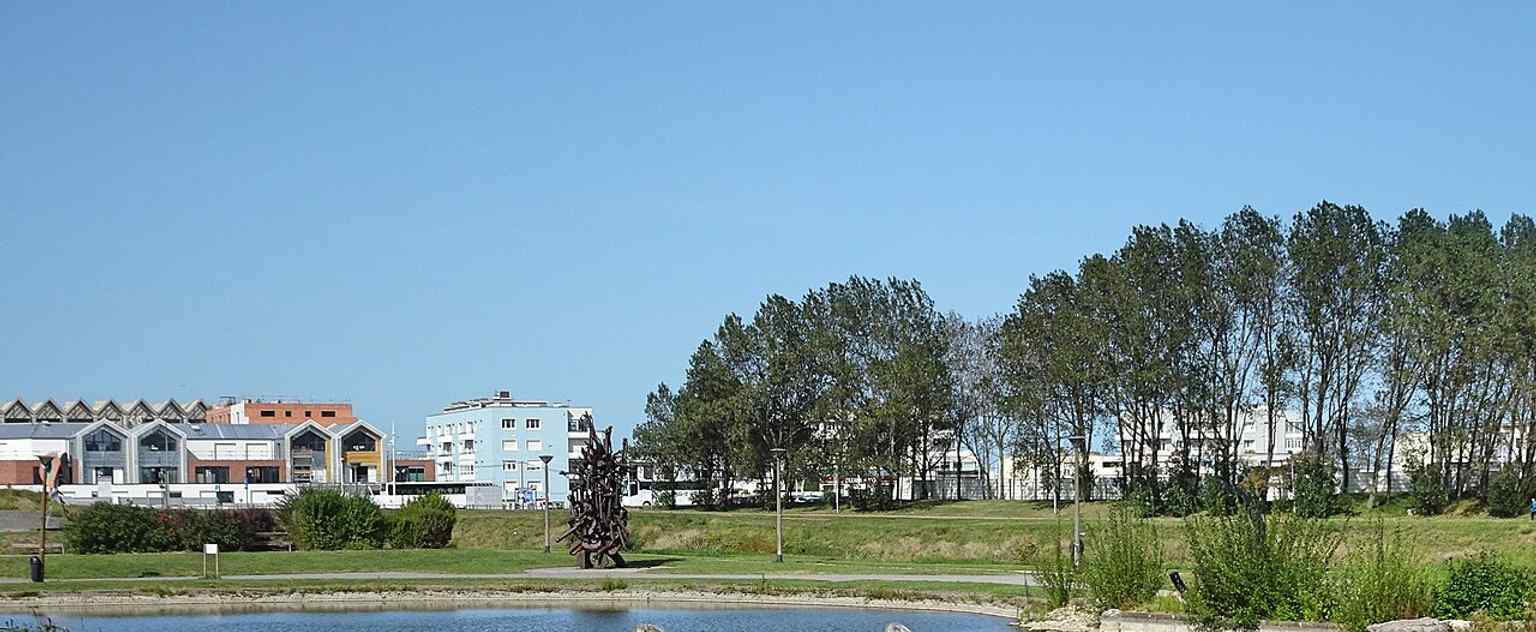
A broad view of the LAAC site in Dunkirk, showing the museum set within its sculpture garden and landscaped surroundings.Photo: Pierre André Leclercq, Wikimedia Commons, CC BY-SA 4.0. Cropped & resized. Inside, the collection ranges from nineteen forty-five to the nineteen eighties and beyond. You will find CoBrA artists like Karel Appel, lyrical abstraction painters such as Joan Mitchell and Pierre Soulages, New Realists like Arman, César, and Niki de Saint Phalle, plus a major Andy Warhol work, Car Crash. In plain English, this place is not about one tidy school or style. It is a conversation among artists arguing, experimenting, and occasionally throwing paint at the rules.
That conversation nearly stopped. In nineteen ninety-seven, local political conflict, insurance troubles, and water damage forced the museum to close. But Dunkirk did not let it fade. The collection grew, loans arrived from the F-R-A-C Nord-Pas-de-Calais, the Centre Pompidou, and the modern art museum in Lille, and the museum reopened under the name L-A-A-C. In two thousand and five, architects Benoît Grafteaux and Richard Klein reworked the lighting, acoustics, and interior furniture, and added a mezzanine cabinet for works on paper.
The second image in the app is worth a glance too, because it shows how carefully the museum, garden, water, and stone were composed as one whole piece.
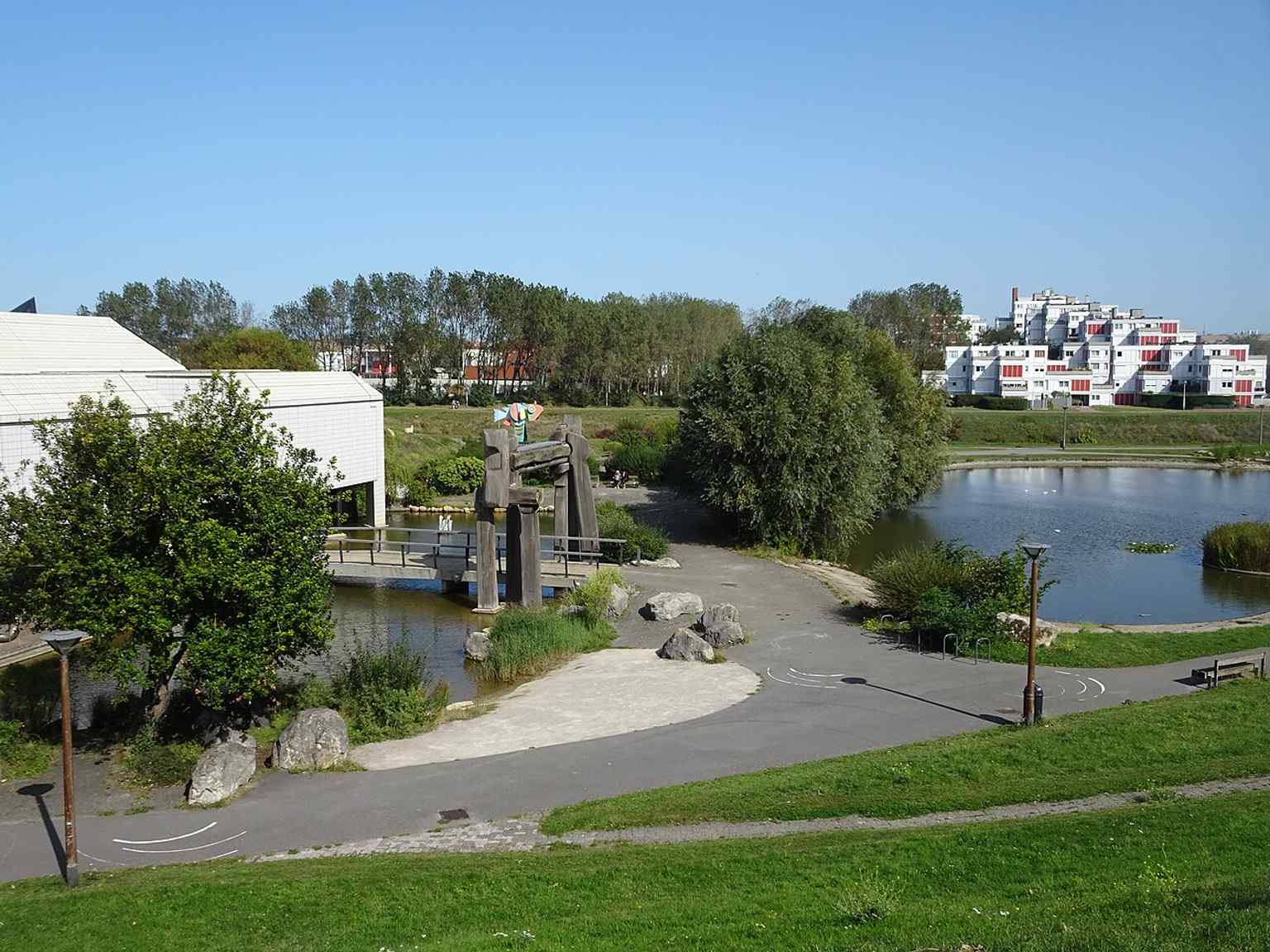
Another panoramic view of the LAAC complex, useful for seeing how the contemporary art museum sits in its garden of water, stone, and sculptures.Photo: Pierre André Leclercq, Wikimedia Commons, CC BY-SA 4.0. Cropped & resized. If you want to go in later, it is closed on Mondays and generally open from nine to six Tuesday through Friday, and from eleven to six on weekends.
This place proves that one person’s private spark can become a city’s public treasure.
When you are ready, keep heading on for the next stop, where time itself gets a rather striking shape.
Look for a squat concrete shelter shaped like a broad hourglass, with bunker-thick sides and a planted green roof on top. This is Le Sablier, The Hourglass, standing at the…Read moreShow less
Open dedicated page →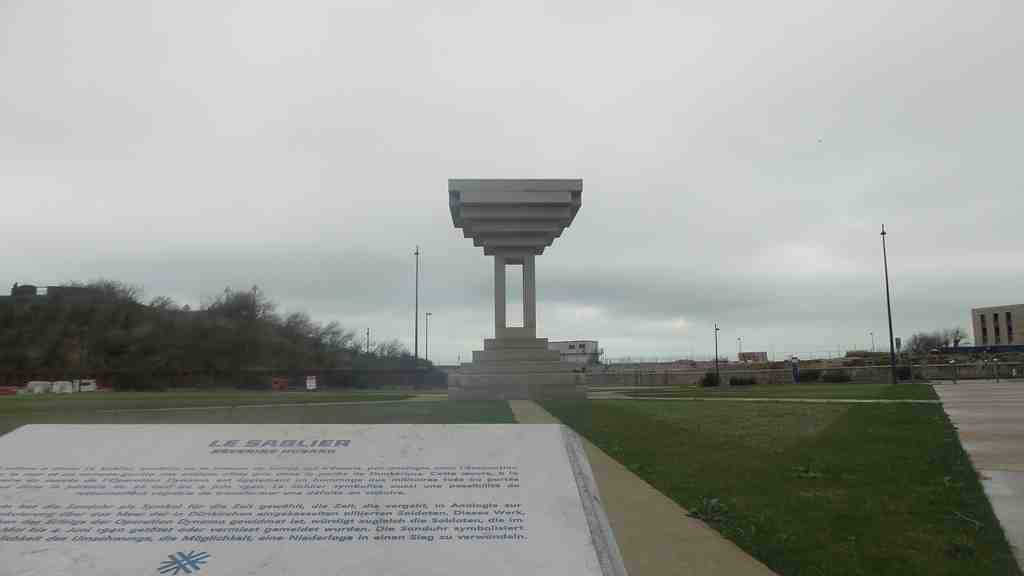
The HourglassPhoto: Oussama Djaknoun, Wikimedia Commons, CC BY-SA 4.0. Cropped & resized. Look for a squat concrete shelter shaped like a broad hourglass, with bunker-thick sides and a planted green roof on top.
This is Le Sablier, The Hourglass, standing at the north-west edge of the Grand Large art site. Artist Séverine Hubard created it in twenty seventeen after Dunkirk launched a competition to commemorate Operation Dynamo, the evacuation better known as the Battle of Dunkirk. Hubard made a smart choice: not a grand hero on a pedestal, but a landmark people can actually enter. Its concrete form borrows from the blockhouses, those heavy wartime bunkers scattered along France’s Atlantic coast, yet this one invites you in to sit, gather, and take shelter. That twist gives the monument real heart. It also appeared just as the film Dunkirk renewed attention on this history, so the piece quietly links memory, cinema, and daily life. It even includes Wi-Fi, which is not bad for something inspired by a bunker. Handy note: you can stop by here at any hour. Small, solid, and quietly humane... that is Le Sablier’s whole charm. When you’re ready, head on toward the final stop.
On your right, look for a long brick-and-metal industrial building with a broad rectangular form and a distinctive sawtooth roofline, the kind of profile that gives away a working…Read moreShow less
Open dedicated page →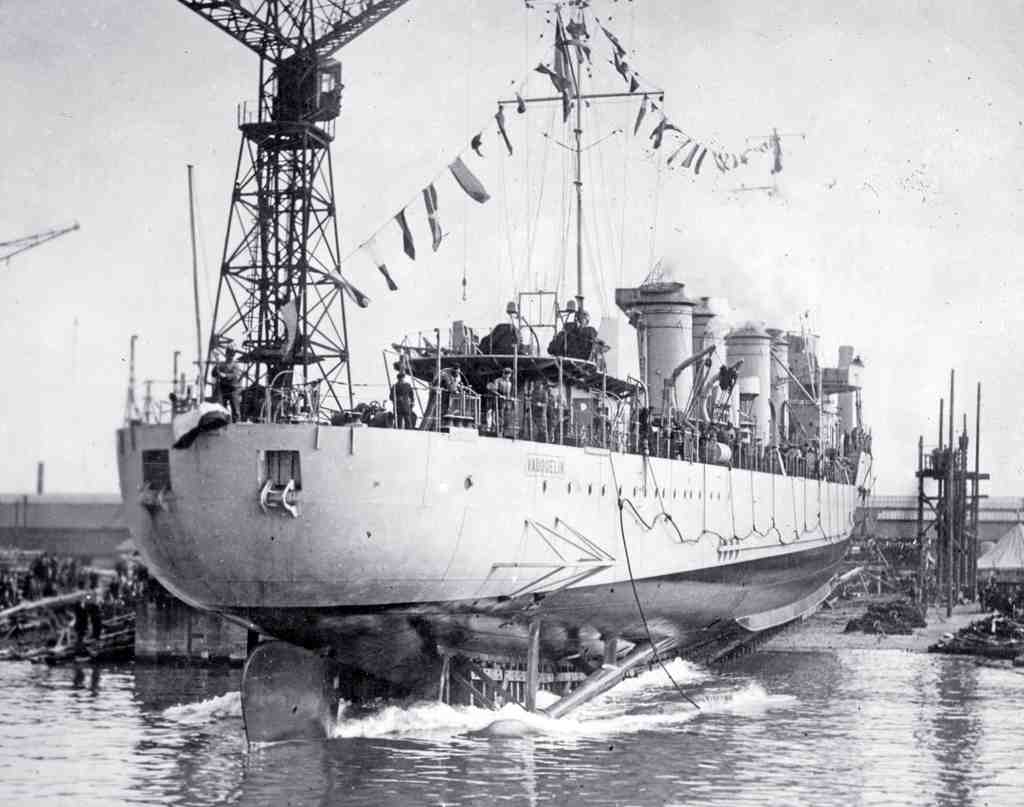
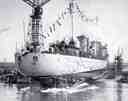
Workshops and construction sites in FrancePhoto: UnknownUnknown , the original print came from the Office of Naval Intelligence, Wikimedia Commons, Public domain. Cropped & resized. On your right, look for a long brick-and-metal industrial building with a broad rectangular form and a distinctive sawtooth roofline, the kind of profile that gives away a working shipyard at a glance.
This place tells one of Dunkirk’s biggest working stories. In eighteen ninety-nine, Léon Herbart, the president of the chamber of commerce, created the Ateliers et chantiers de France here beside the port. That may sound like a boardroom footnote, but the idea was bold and very practical: French yards were busy building warships, merchant shipbuilders needed space, and French shipowners kept taking their orders to England, where prices were lower and delivery moved faster. Dunkirk wanted that business back.
The early years were not exactly fireworks. The yard first turned out only four barques for the Bordes company, all four-masted sailing ships. Then it tried trawlers, but there was a catch... without a boiler workshop, the hulls had to be towed all the way to Le Havre just to get their machinery fitted. That is a little like baking a cake in one town and driving it somewhere else for the oven.
Then came the order that changed everything: cargo ships for the Société navale de l’Ouest. To fill it, the yard expanded its boiler shop. Under chief engineer Henry Boyd, an Irishman with a sharp eye for modern industry, Dunkirk began launching ships fully equipped and ready to sail. For the time, that was a serious achievement.
Soon this yard became the city’s industrial heavyweight, employing between two thousand and two thousand five hundred workers, plus a swarm of subcontractors. During the First World War, enemy fire, labor shortages, and scarce materials hit hard, yet the yard kept going, building not only ships but also munitions and vehicle armor.
By the nineteen twenties crisis, the company leaned on military orders and built destroyers, patrol vessels, oil carriers, and more. When Operation Dynamo unfolded, the shipyard stood right inside that storm of war we spoke about earlier. In nineteen forty, it had four building slips, each one hundred eighty meters long.
Its later chapters were just as dramatic. In nineteen thirty-seven, the yard launched L’Émile Miguet, then the largest tanker in the world. It built the ocean liner Flandre, launched in nineteen fifty-one, and then the M-S Pasteur, launched in nineteen sixty-six, the last passenger liner built in Dunkirk. After mergers and name changes in nineteen sixty and nineteen sixty-seven, the yard kept producing dredgers, tankers, bulk carriers, and methane carriers, until the Train-Ferry Nord Pas-de-Calais sailed out in nineteen eighty-eight as the last vessel to leave.
If you need the practical bit, the office keeps weekday hours from nine to twelve-thirty and from two to six, and it is closed on Saturdays and Sundays.
Frequently asked questions
How do I start the tour?
After purchase, download the AudaTours app and enter your redemption code. The tour will be ready to start immediately - just tap play and follow the GPS-guided route.
Do I need internet during the tour?
No! Download the tour before you start and enjoy it fully offline. Only the chat feature requires internet. We recommend downloading on WiFi to save mobile data.
Is this a guided group tour?
No - this is a self-guided audio tour. You explore independently at your own pace, with audio narration playing through your phone. No tour guide, no group, no schedule.
How long does the tour take?
Most tours take 60–90 minutes to complete, but you control the pace entirely. Pause, skip stops, or take breaks whenever you want.
What if I can't finish the tour today?
No problem! Tours have lifetime access. Pause and resume whenever you like - tomorrow, next week, or next year. Your progress is saved.
What languages are available?
All tours are available in 50+ languages. Select your preferred language when redeeming your code. Note: language cannot be changed after tour generation.
Where do I access the tour after purchase?
Download the free AudaTours app from the App Store or Google Play. Enter your redemption code (sent via email) and the tour will appear in your library, ready to download and start.
If you don't enjoy the tour, we'll refund your purchase. Contact us at [email protected]
Checkout securely with 






.JPG)
%20-%20Glasfenster.JPG)

.JPG)


%20(1).jpg)