
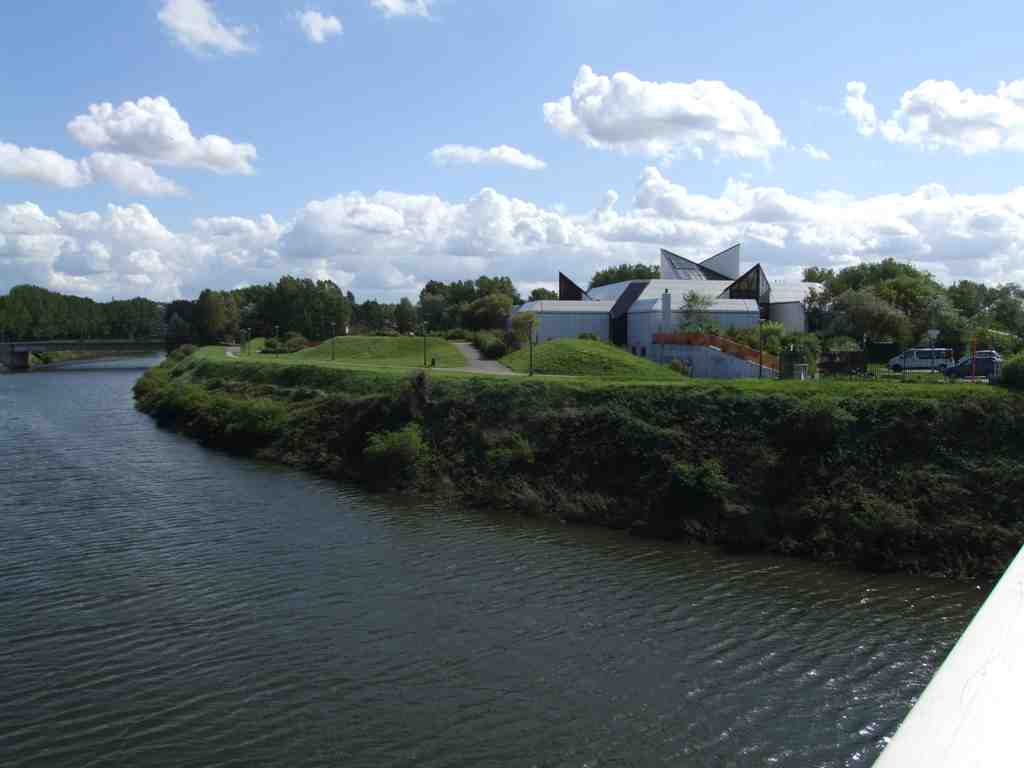
Ahead of you is a low white ceramic-clad building, almost square but cut through with sharp bands of glass, its chunky projecting wings making it look a bit like a giant geometric sculpture.
This is the Le Lieu d'art et action contemporaine, or L-A-A-C... and in true Dunkirk fashion, it began not with a grand cultural master plan, but with one person getting gloriously, stubbornly hooked. In the early nineteen seventies, Gilbert Delaine, an engineer with no formal training in contemporary art, flipped through an art magazine and fell hard for an abstract painting by Ladislas Kijno. That little lightning strike turned into a mission.
In nineteen seventy-four, Delaine created an association called L'Art contemporain to build a collection for the city. He persuaded industrial leaders, public figures, and artists to join in, helped in part by the Malraux law, a French policy that encouraged support for culture. Delaine did not collect like an investor hunting trophies. He bought what moved him. Better yet, he asked artists to donate one work for every piece the association purchased. That is a pretty charming bit of French cultural diplomacy: buy one, inspire one. By nineteen eighty-two, the collection had reached nine hundred works.
The building you are looking at opened that same year, designed by architect Jean Willerval. Even from back here, above the fence, you can feel how unusual it is. Willerval gave it a square plan, then sliced it along its middle lines and diagonals with glazed openings. He pushed out eight alcoves, little projecting rooms, in the form of a Greek cross, which simply means a cross with four equal arms. The result is symmetrical at first glance... then not quite. Light moves through those cuts and corners in shifting ways, so the building never sits still visually, even though it is solid as a dockside warehouse.
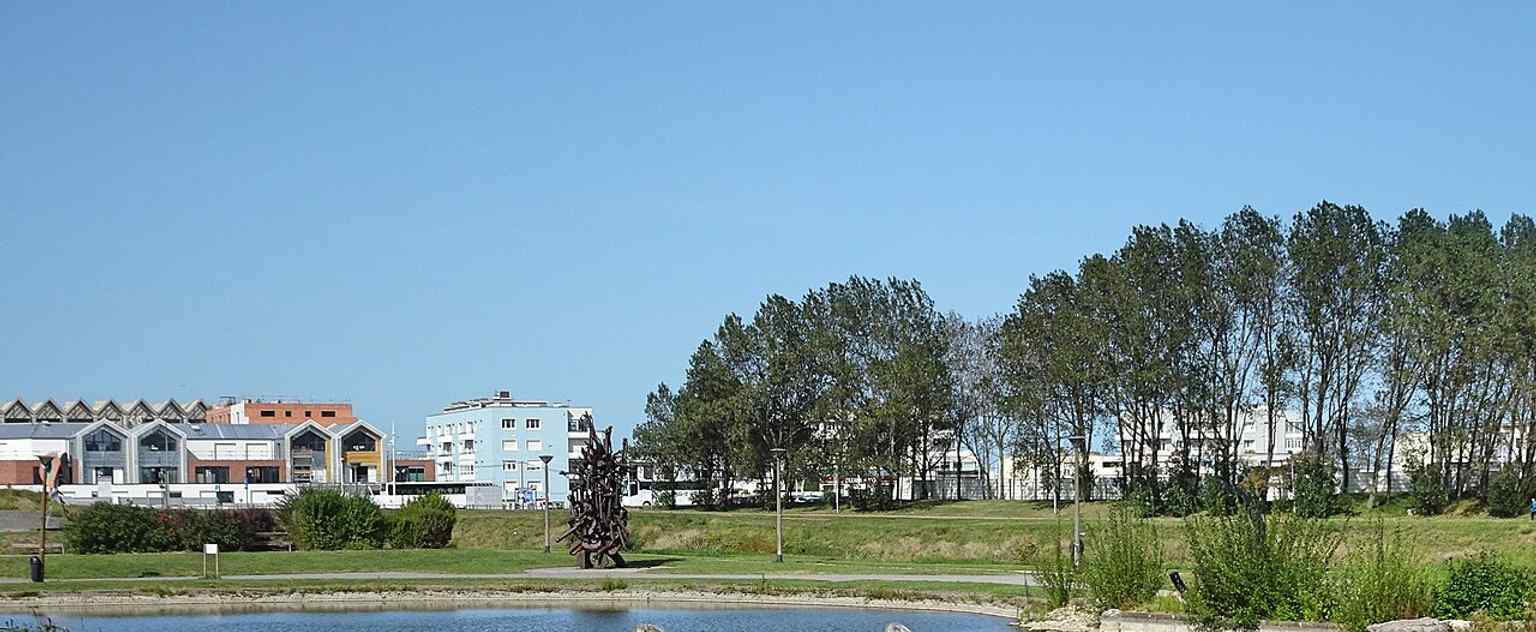
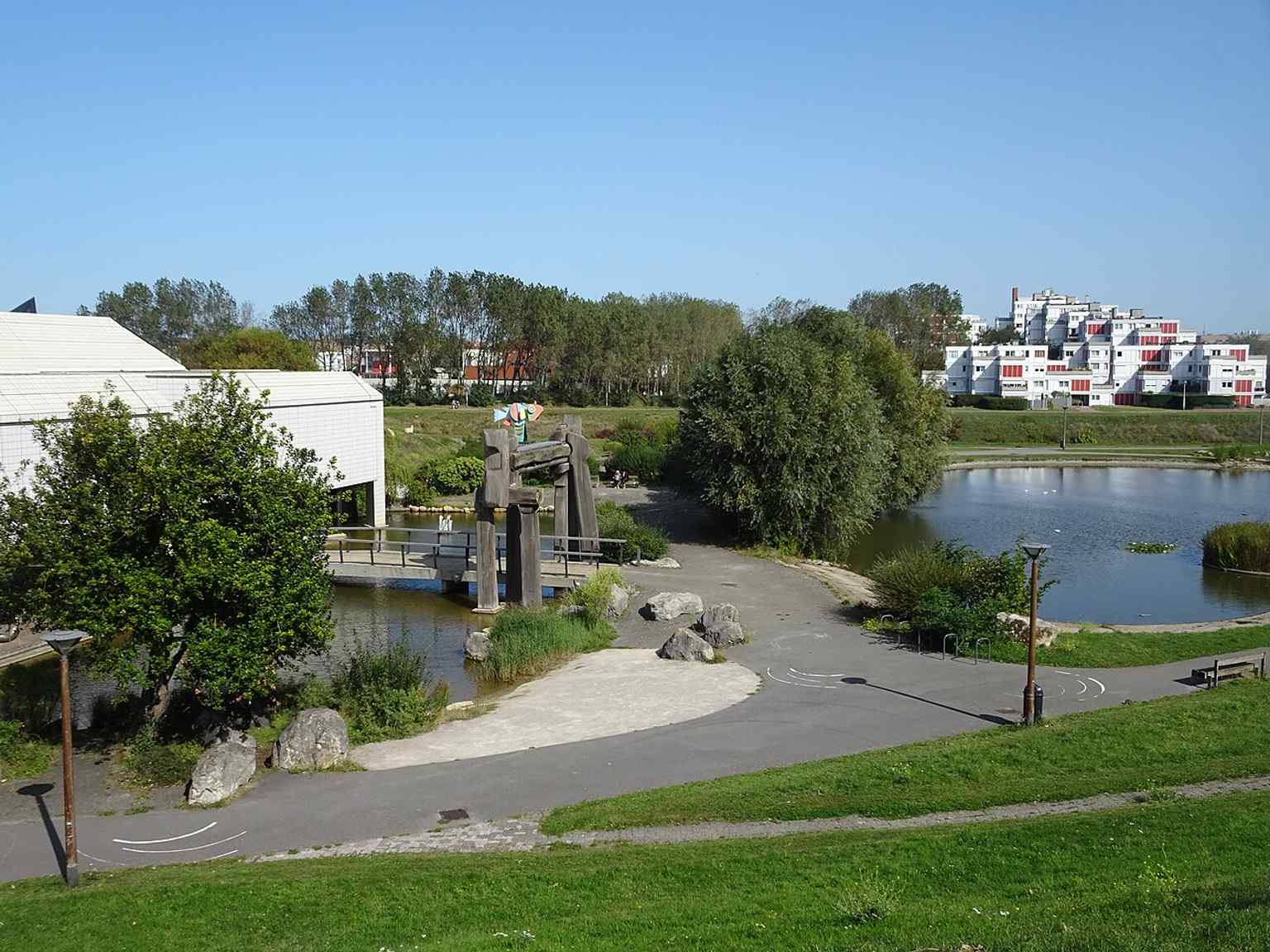
If you want the big picture, take a look at the image on your screen. You can see how the museum sits in the middle of a sculpture garden designed by landscape architect Gilbert Samel, with water, stone, and artworks arranged as part park, part open-air gallery. That garden opened in nineteen eighty, before the museum building itself, which tells you something important: here, art was never meant to stay politely indoors.
Inside, the collection ranges from nineteen forty-five to the nineteen eighties and beyond. You will find CoBrA artists like Karel Appel, lyrical abstraction painters such as Joan Mitchell and Pierre Soulages, New Realists like Arman, César, and Niki de Saint Phalle, plus a major Andy Warhol work, Car Crash. In plain English, this place is not about one tidy school or style. It is a conversation among artists arguing, experimenting, and occasionally throwing paint at the rules.
That conversation nearly stopped. In nineteen ninety-seven, local political conflict, insurance troubles, and water damage forced the museum to close. But Dunkirk did not let it fade. The collection grew, loans arrived from the F-R-A-C Nord-Pas-de-Calais, the Centre Pompidou, and the modern art museum in Lille, and the museum reopened under the name L-A-A-C. In two thousand and five, architects Benoît Grafteaux and Richard Klein reworked the lighting, acoustics, and interior furniture, and added a mezzanine cabinet for works on paper.
The second image in the app is worth a glance too, because it shows how carefully the museum, garden, water, and stone were composed as one whole piece.
If you want to go in later, it is closed on Mondays and generally open from nine to six Tuesday through Friday, and from eleven to six on weekends.
This place proves that one person’s private spark can become a city’s public treasure.
When you are ready, keep heading on for the next stop, where time itself gets a rather striking shape.






%20(1).jpg)