AudaTours logoAudaTours

Stop 10 of 17

Church of Our Lady

headphones 03:10 Buy tour to unlock all 17 tracks
Church of Our Lady
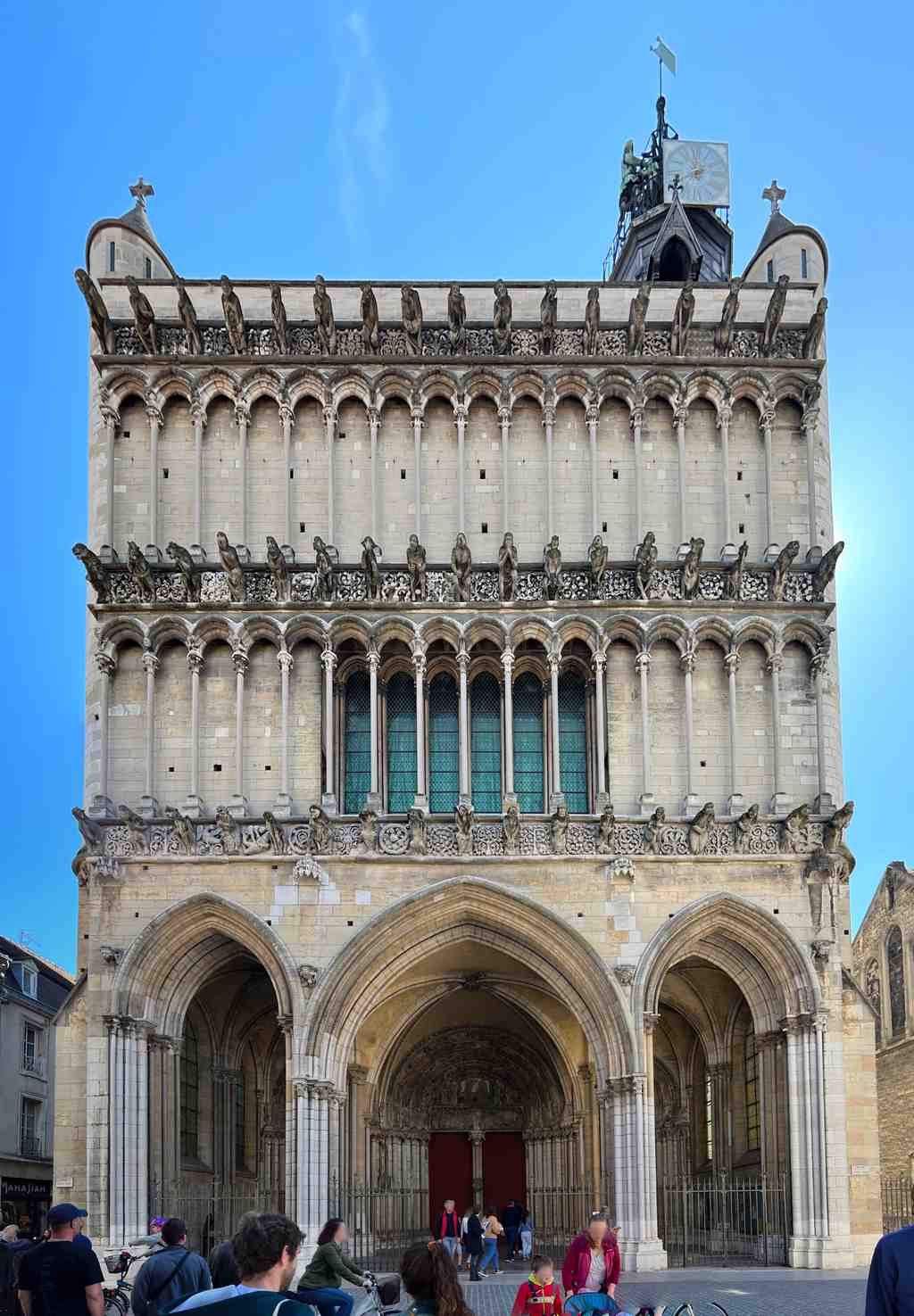
Notre-Dame Church of Dijon
Notre-Dame Church of DijonPhoto: Chabe01, Wikimedia Commons, CC BY-SA 4.0. Cropped & resized.

Look to your left for a towering flat stone facade, defined by three massive arched doorways at the base and rows of slender columns topped with projecting stone creatures. This is the Notre Dame Church of Dijon.

Now, Gothic architecture usually loves to show off its flying buttresses and sweeping curves, but the unknown architect who designed this in the twelve twenties did something completely different. Because space was tight in this crowded neighborhood, they built a flat screen facade that completely hides the shape of the church behind it.

Take a close look at those fifty-one stone creatures jutting out from the upper galleries. Check out your screen to see a closer view of these fascinating carvings... You might call them gargoyles, but technically they are chimeras, purely decorative statues that do not actually drain rainwater. And the ones you see today are not the originals.
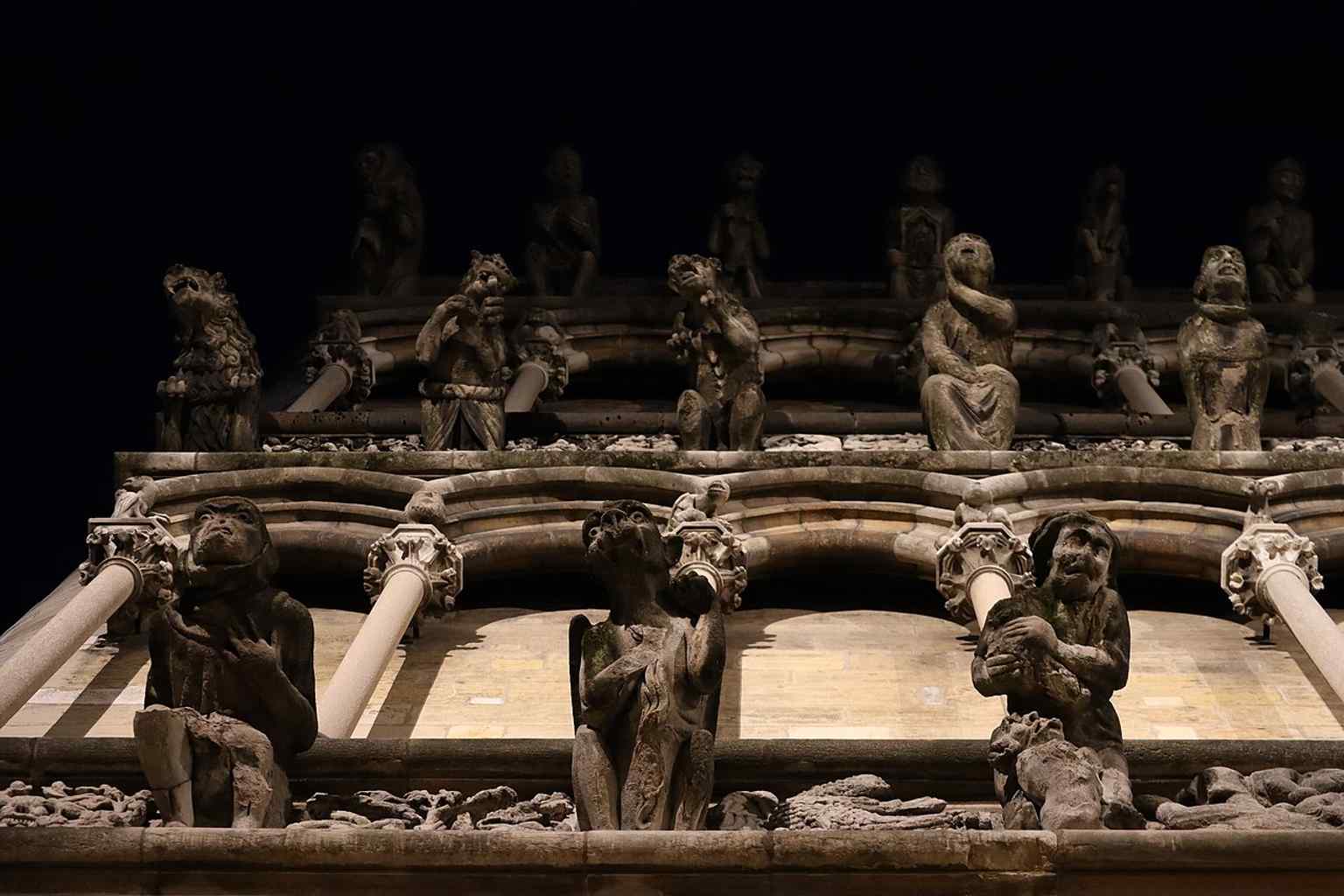
These decorative "gargoyles" or chimères adorning the facade were sculpted between 1880 and 1882 during major restorations, replacing older ones. They are purely decorative, not functional.
These decorative "gargoyles" or chimères adorning the facade were sculpted between 1880 and 1882 during major restorations, replacing older ones. They are purely decorative, not functional.Photo: GO69, Wikimedia Commons, CC BY-SA 4.0. Cropped & resized.

The story of the first statues is a bit of a dark comedy. In the year twelve forty, a wealthy usurer, a moneylender who charged high interest, was walking across this very square to get married. Right as he passed below the church, a stone figure depicting a usurer suddenly broke loose and fell, killing him on the spot. His furious colleagues demanded the church remove all the decorative figures from the front. For over six hundred years, the facade was bare, until Parisian sculptors added the current monsters during restorations in the eighteen eighties.

Now, look up at the stump of the right tower. You will see a mechanical clock with iron figures. That is the Jacquemart. If you look at your app, you can see the whole mechanical family up close... In thirteen eighty-two, the Duke of Burgundy, Philip the Bold, helped crush a rebellion in the Belgian city of Courtrai. To rub salt in the wound, he dismantled their prized mechanical clock, which featured an automaton, a mechanical figure that strikes a bell, and hauled it all the way back to Dijon as a trophy. Over the centuries, the city thoughtfully gave Jacquemart a mechanical wife, Jacqueline, and two mechanical children, so he would not have to strike the bells all alone.
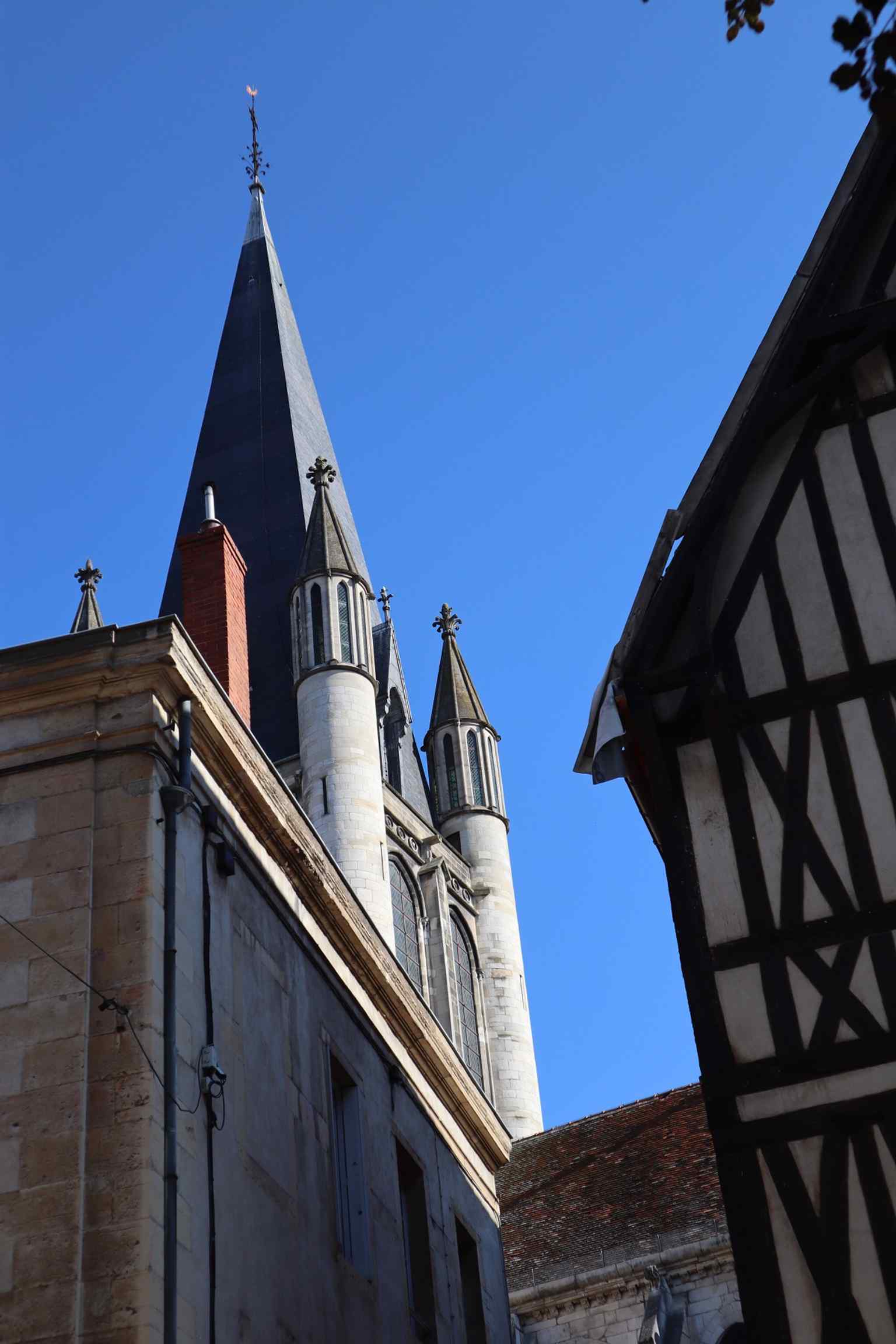
The famous Jacquemart clock and its family of automata, Jacquemart, Jacqueline, Jacquelinet, and Jacquelinette, captured from Courtrai in 1382 by Philippe the Bold and gifted to Dijon.
The famous Jacquemart clock and its family of automata, Jacquemart, Jacqueline, Jacquelinet, and Jacquelinette, captured from Courtrai in 1382 by Philippe the Bold and gifted to Dijon.Photo: GO69, Wikimedia Commons, CC BY-SA 4.0. Cropped & resized.

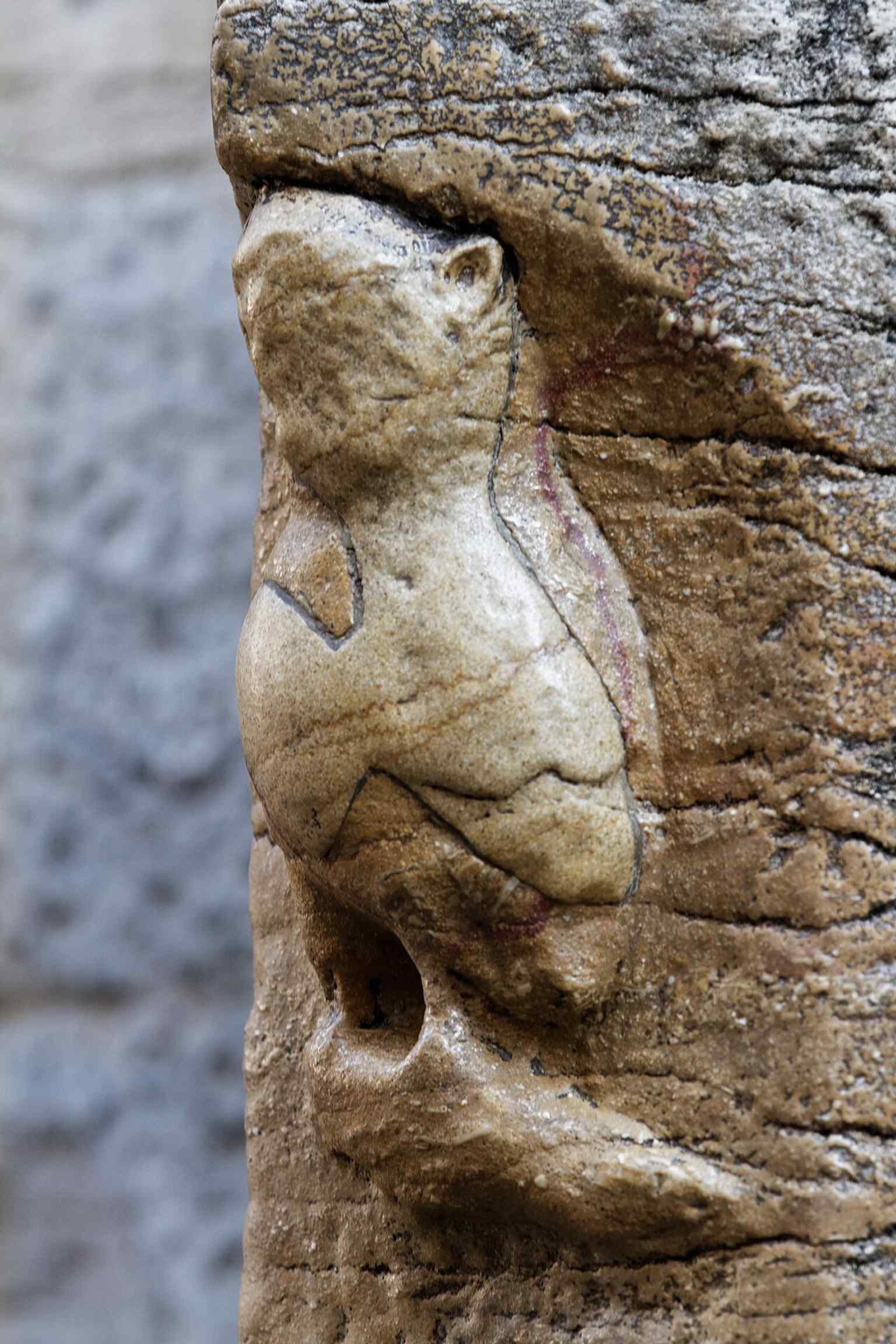
If you walk around the north side of the building later, you will find a small stone owl carved into a chapel wall. For centuries, visitors have rubbed it with their left hand, the hand closest to the heart, to make a wish. Just make sure you do not look at the carved salamander nearby, or your wish will be canceled.

The church is open to visitors from eight in the morning to six in the evening Monday through Saturday, and from nine to six on Sundays.

Take all the time you need to admire this incredible facade. When you are ready to keep walking, we can move on to the next stop.
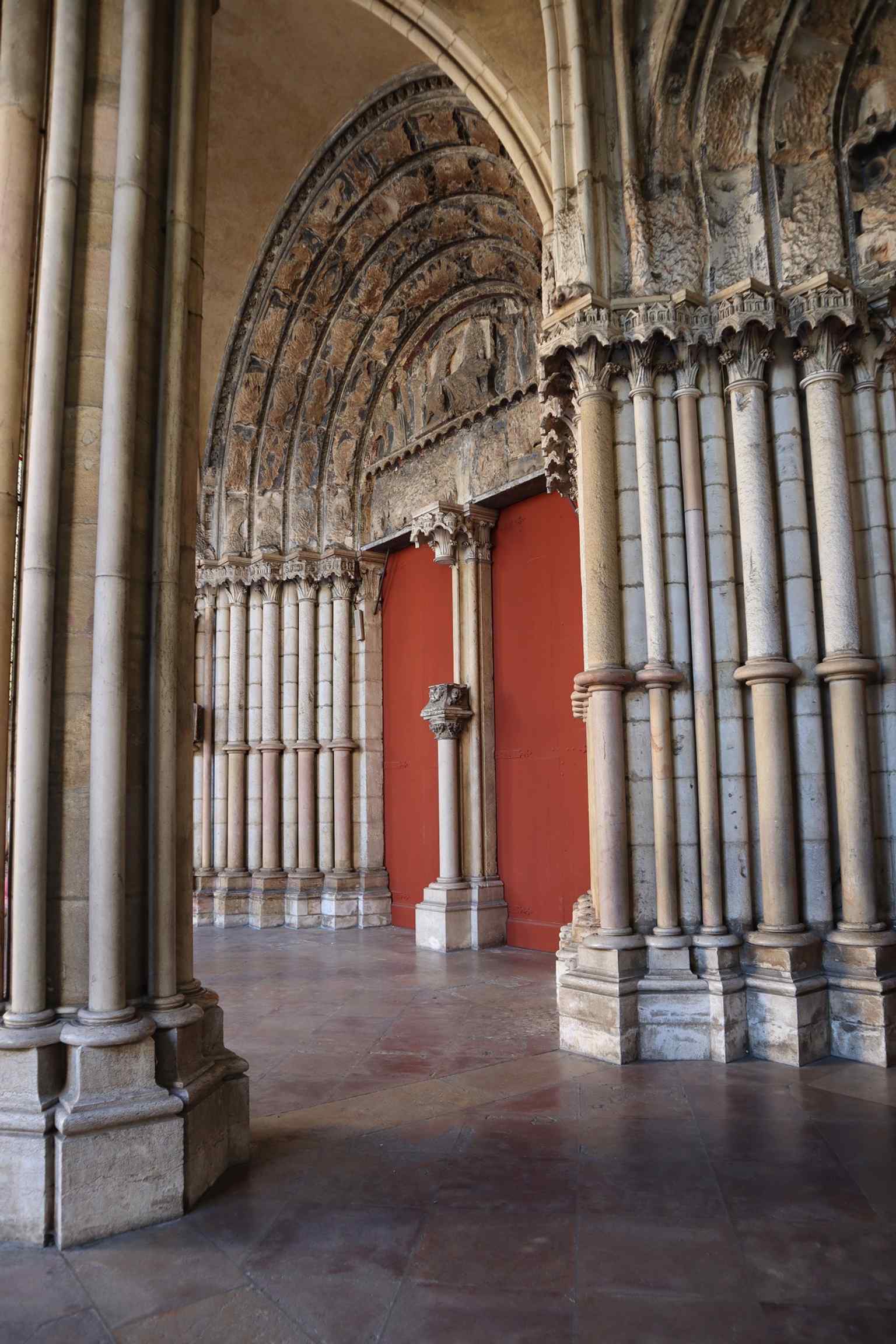
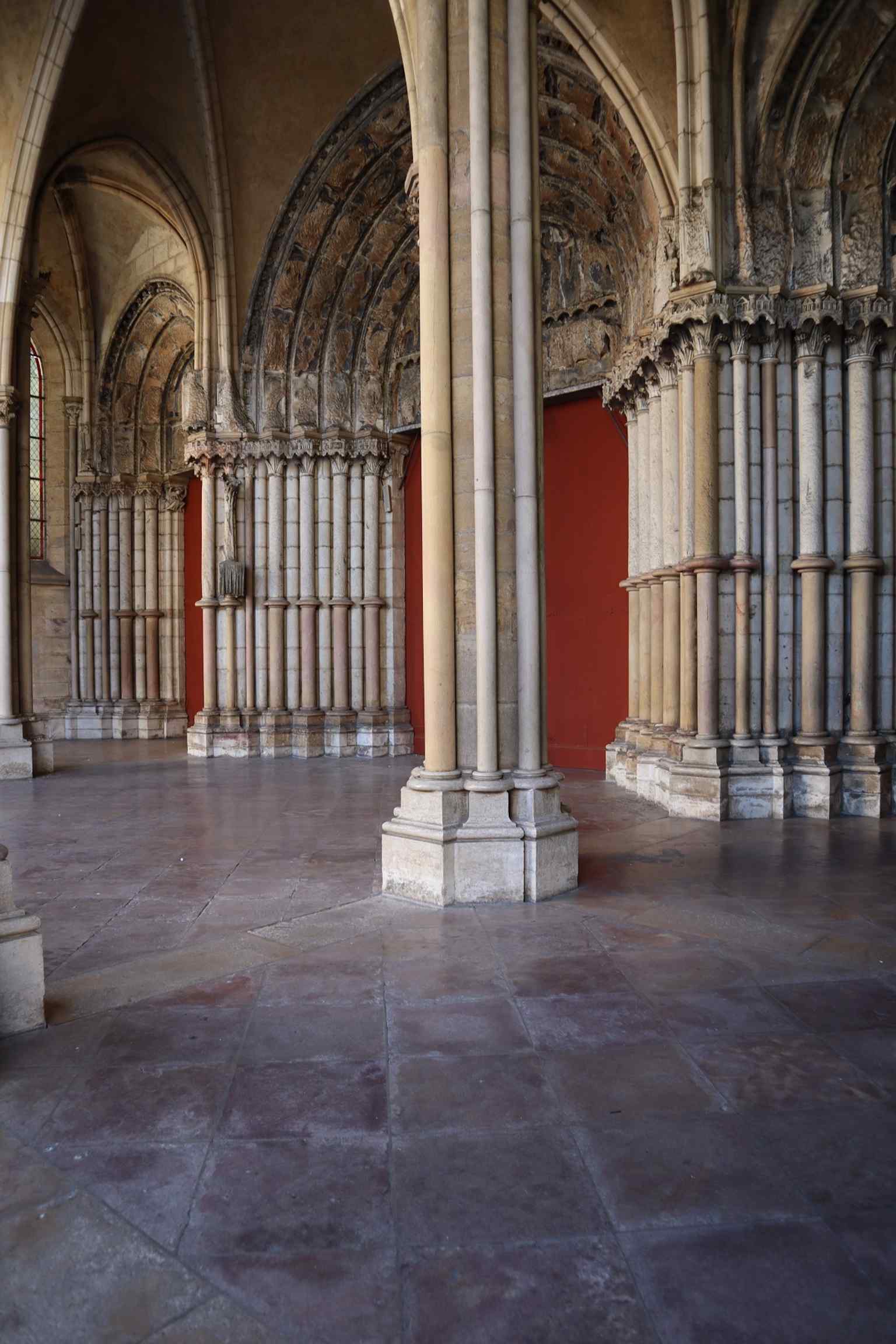
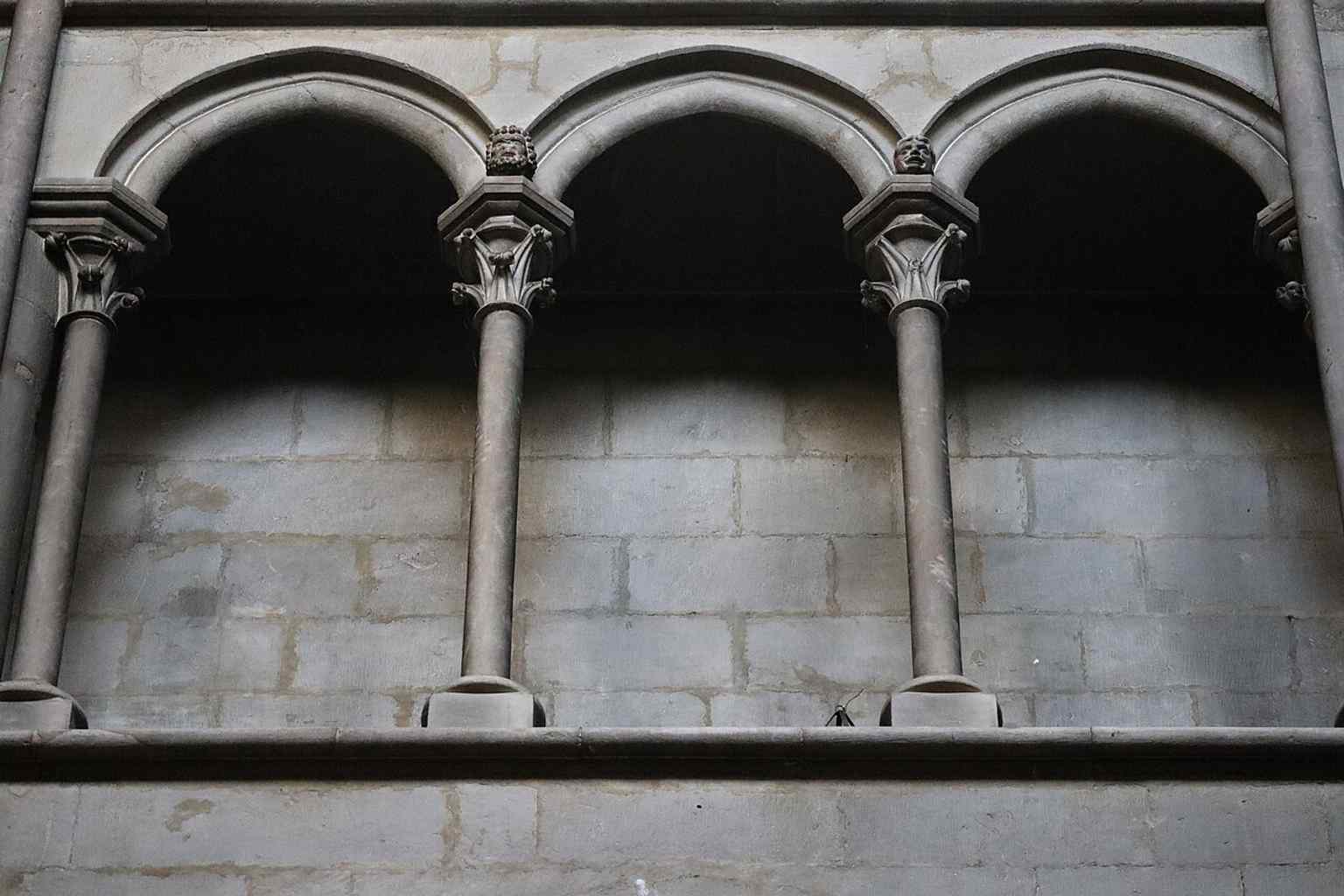
The three grand arcades forming the entrance to the western porch, which once housed communal archives and witnessed mayoral oath-takings.
The three grand arcades forming the entrance to the western porch, which once housed communal archives and witnessed mayoral oath-takings.Photo: GO69, Wikimedia Commons, CC BY-SA 4.0. Cropped & resized.
The beloved owl sculpture on the north side of the church, worn smooth by centuries of visitors touching it for good luck and wishes.
The beloved owl sculpture on the north side of the church, worn smooth by centuries of visitors touching it for good luck and wishes.Photo: Thesupermat, Wikimedia Commons, CC BY-SA 3.0. Cropped & resized.
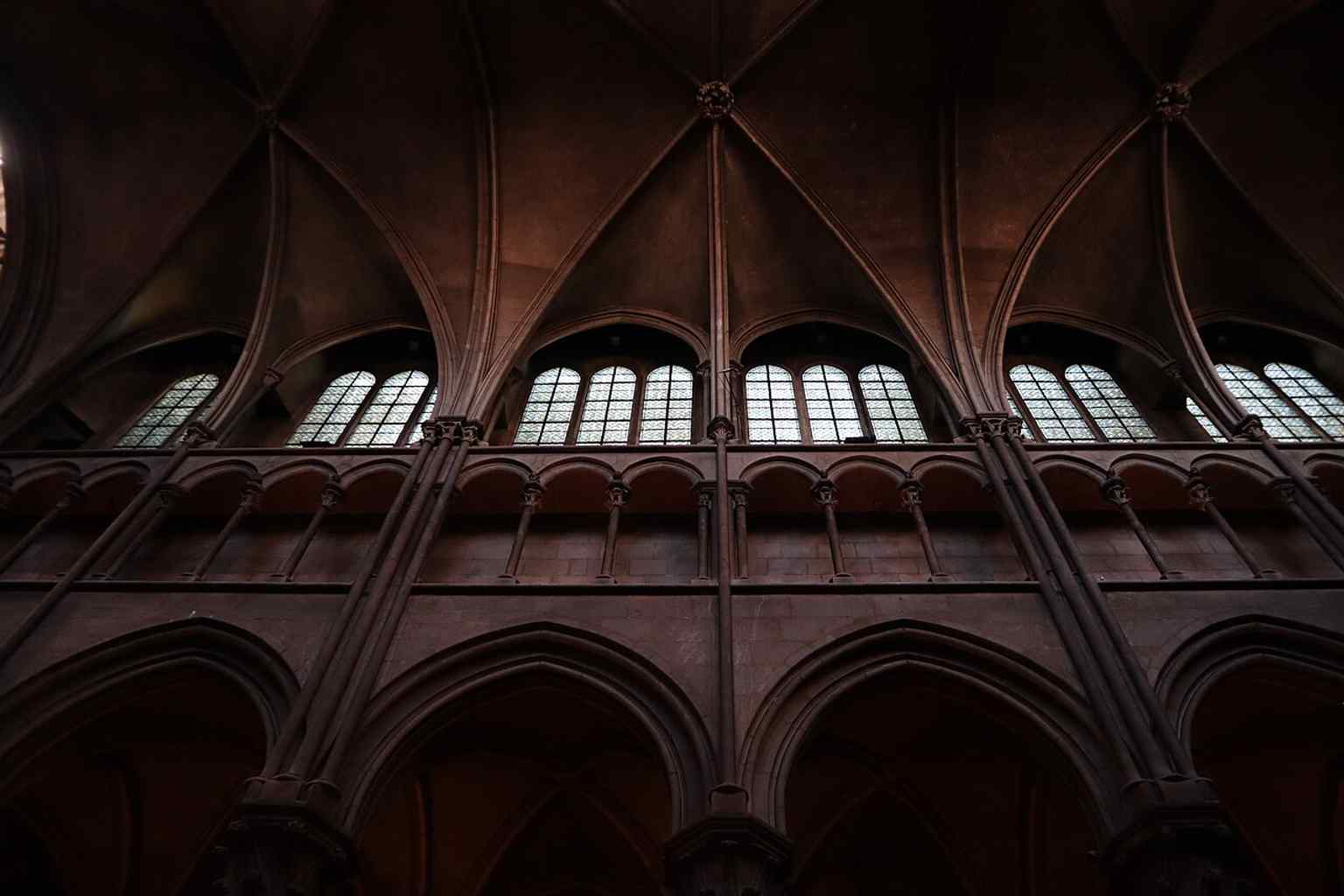
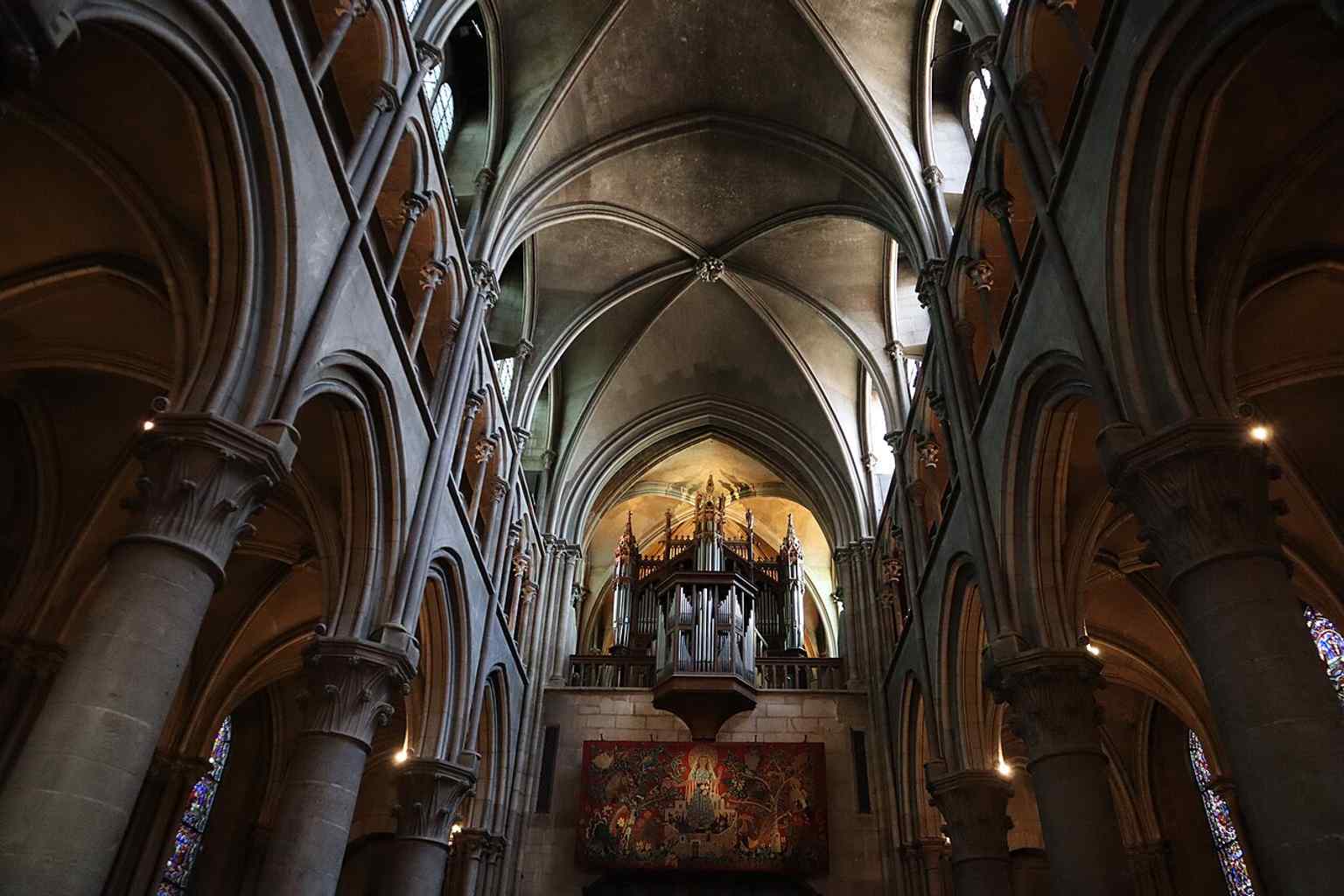
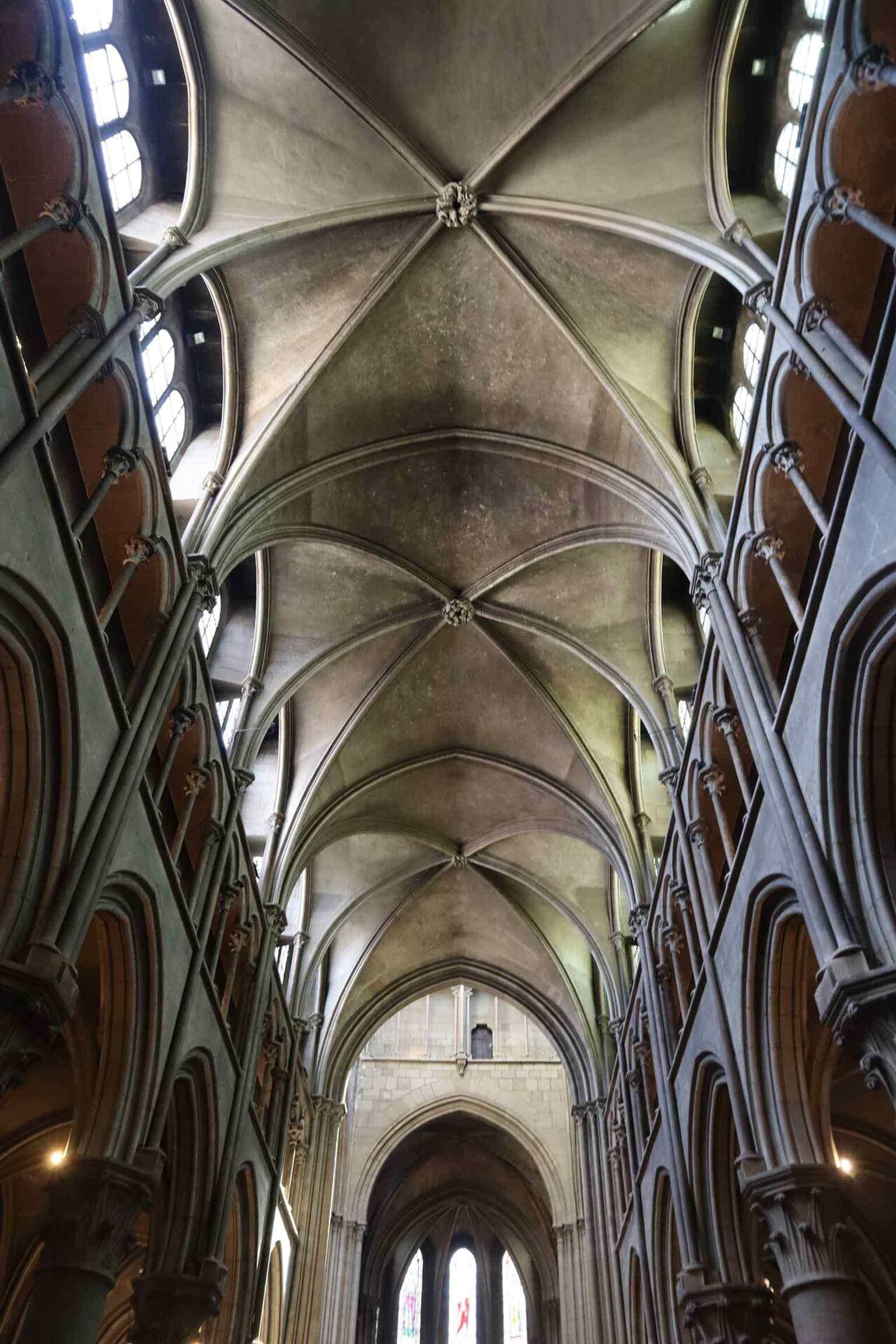
The impressive nave, featuring three stories of elevation and sexpartite vaults, designed to create a monumental impression within the church's relatively modest space.
The impressive nave, featuring three stories of elevation and sexpartite vaults, designed to create a monumental impression within the church's relatively modest space.Photo: GO69, Wikimedia Commons, CC BY-SA 4.0. Cropped & resized.
The grand Neo-Gothic organ, with its mechanical and sound elements crafted by Jean-Baptiste Ghys in 1893, resting on the tribune where Jean-Philippe Rameau once played.
The grand Neo-Gothic organ, with its mechanical and sound elements crafted by Jean-Baptiste Ghys in 1893, resting on the tribune where Jean-Philippe Rameau once played.Photo: GO69, Wikimedia Commons, CC BY-SA 4.0. Cropped & resized.
One of the many vibrant stained-glass windows, some of which were created by Édouard Didron from 1874 onwards, inspired by the church's original 13th-century designs.
One of the many vibrant stained-glass windows, some of which were created by Édouard Didron from 1874 onwards, inspired by the church's original 13th-century designs.Photo: GO69, Wikimedia Commons, CC BY-SA 4.0. Cropped & resized.
The intricately vaulted interior of the western porch, an area historically important for housing communal archives and for civic ceremonies.
The intricately vaulted interior of the western porch, an area historically important for housing communal archives and for civic ceremonies.Photo: GO69, Wikimedia Commons, CC BY-SA 4.0. Cropped & resized.
A view into the choir or transept, revealing the subtle play of "vides et pleins" (openings and solid parts) that gives the interior its monumental feel.
A view into the choir or transept, revealing the subtle play of "vides et pleins" (openings and solid parts) that gives the interior its monumental feel.Photo: GO69, Wikimedia Commons, CC BY 4.0. Cropped & resized.
arrow_back Back to Dijon Highlights Audio Tour: Architectural and Cultural Treasures
Loved by travellers

Thousands of tours started.
Plenty of opinions.

4.8 across the App Store and Google Play. Here's a few we keep coming back to.

starstarstarstarstar
This was a solid way to get to know Brighton without feeling like a tourist. The narration had depth and context, but didn't overdo it.
Christoph
Christoph
Brighton Tour
starstarstarstarstar
Started this tour with a croissant in one hand and zero expectations. The app just vibes with you, no pressure, just you, your headphones, and some cool stories.
download Get the app

Pop your headphones in.
Step outside.

Free to download. Tours in every city. Start in 60 seconds — no account, no card.

Download on the App StoreGet it on Google Play
starstarstarstarstar_half
4.8
AudaTours app icon
headphones
~ 4 min until your first tour starts
public
1,000+ cities worldwide
all_inclusive
AudaTours
Unlimited

Every tour. Every city. One subscription.

3101 tours2271 cities138 countries50+ languages