
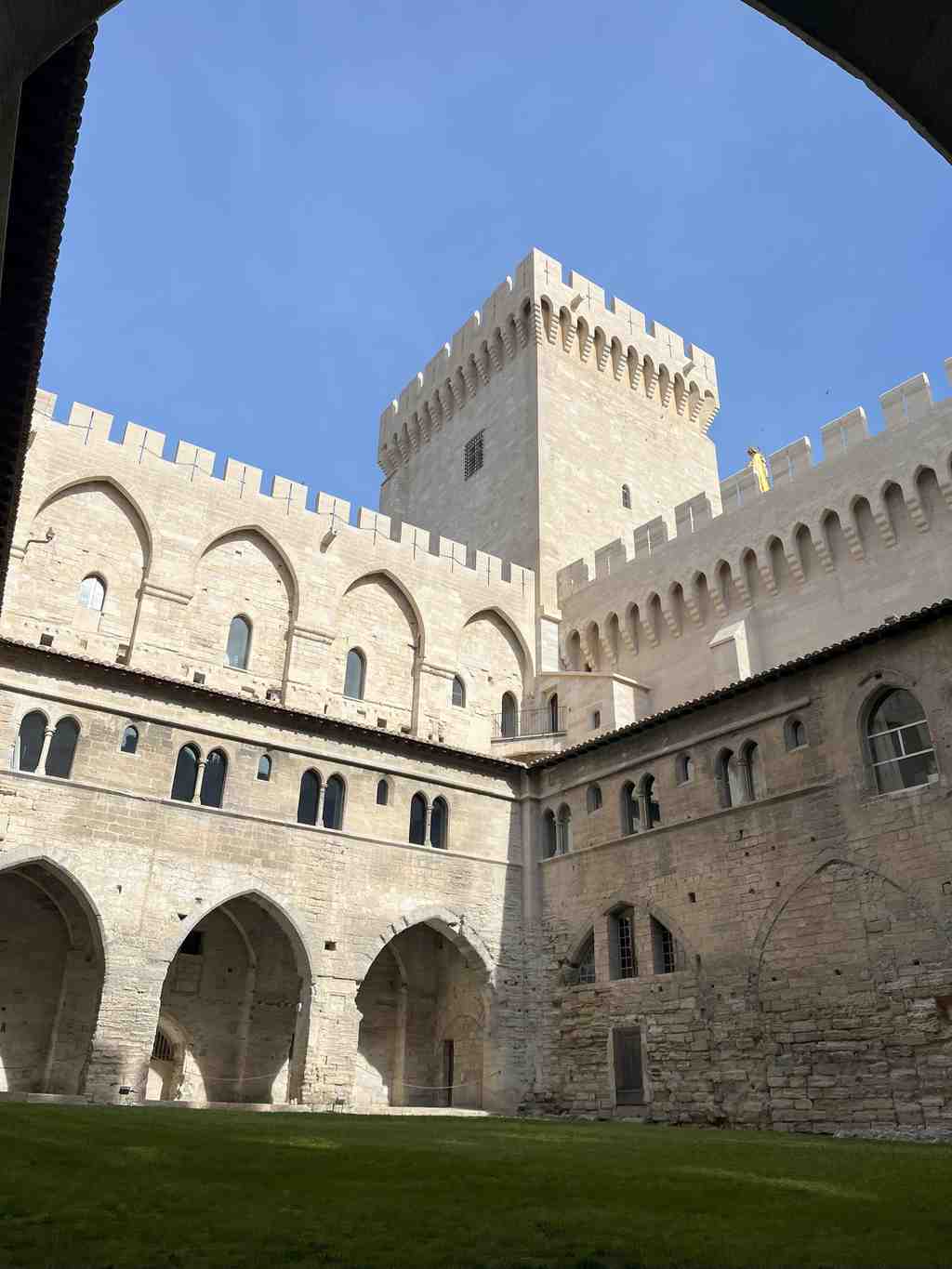
To spot the Palais des Papes, just glance up ahead-the massive stone fortress with its tall, square crenellated tower rising above a web of pointed arches is impossible to miss; the pale stone walls and commanding height stand out against the blue sky.
Welcome to the Palais des Papes, where gothic grandeur towers above you and history whispers through every stone! Close your eyes for a moment and imagine the year is 1340. The smell of fresh-cut limestone is thick in the air, and the clamor of stonemasons, scribes, and medieval cooks fills these walls. This isn’t just any palace-oh no! This is the largest gothic palace in all of the Middle Ages, a place so big some say even its ghosts get lost on stormy nights.
Look at the walls-see how they’re a mix of fortress and fairy tale? That’s because this was both a palace and a castle. Back in the 14th century, the popes picked Avignon over Rome (imagine the moving expenses!) and suddenly, this sleepy town became the center of western Christianity. Imagine cardinals in splendid robes scurrying across this courtyard, troubadours tuning their lutes, and secret conclaves behind heavy wooden doors. Six popes were chosen right here! The echoes of their decisions shaped the world, and if you listen closely, you might hear a papal sigh floating by on a summer breeze.
The palace you see is actually two palaces in one: the older “Palais Vieux,” built by Benedict XII, is all about thick walls and defensive towers-a fortress planted on the Doms Rock, high over the Rhône. Then came Clement VI, who said, “Why not make it fabulous?” He built the glamorous “Palais Neuf” with frescoes by Matteo Giovanetti and Simone Martini. Imagine artists with paint-splattered robes dangling from scaffolding, bringing scenes to life as monks and clerks hurried past below.
But the papal palace wasn’t all prayer and politics. This was once home to the greatest library in Europe-2,000 manuscripts! Petrarch, the very founder of humanism, wandered these halls, quill in hand, dreaming up poetry and philosophy. And if your ears are extra sharp, you might pick up a faint melody: the grand Clémentine chapel drew composers and musicians from across Europe, their music echoing through the lofty halls.
Yet the palace’s splendor didn’t last forever. After almost 70 years as the papal seat, the popes packed up and returned to Rome, lured by the hope of reuniting the Christian world and the irresistible pull of Saint Peter’s tomb. It wasn’t easy-the French king and even the cardinals tried to stop them-yet two determined popes (Urban V and Gregory XI) managed to make the great escape. The palace’s purpose faded, but its grandeur never did.
Through wars, sieges, and even secret nighttime invasions through the kitchens (imagine would-be intruders scrambling up a spiral stair under the cover of darkness, only to be chased out by defenders tossing stones and burning bundles from above!), the Palais has stood firm.
It’s witnessed the rise and fall of empires, the birth of masterpieces, and enough drama to fill a dozen seasons of your favorite TV show. Even after the last pope left, soldiers, aristocrats, and even fortune seekers claimed pieces of the past, yet the palace endured.
Since 1840, it’s been protected as a historic monument, and together with the old center of Avignon, it became a UNESCO World Heritage site-with over 770,000 people walking these same stones just last year!
So as you stand here, let your imagination soar up to those castle towers and down to the hidden chambers below. The Palais des Papes isn’t just a building-it’s centuries of history, art, intrigue, and resilience, still standing proudly above the Rhône and welcoming every curious traveler, maybe hoping you’ll add your own story to its long, echoing halls.
Seeking more information about the localization, palais des papes in avignon today or the christmas party at the palais des papes in avignon? Ask away in the chat section and I'll fill you in.




