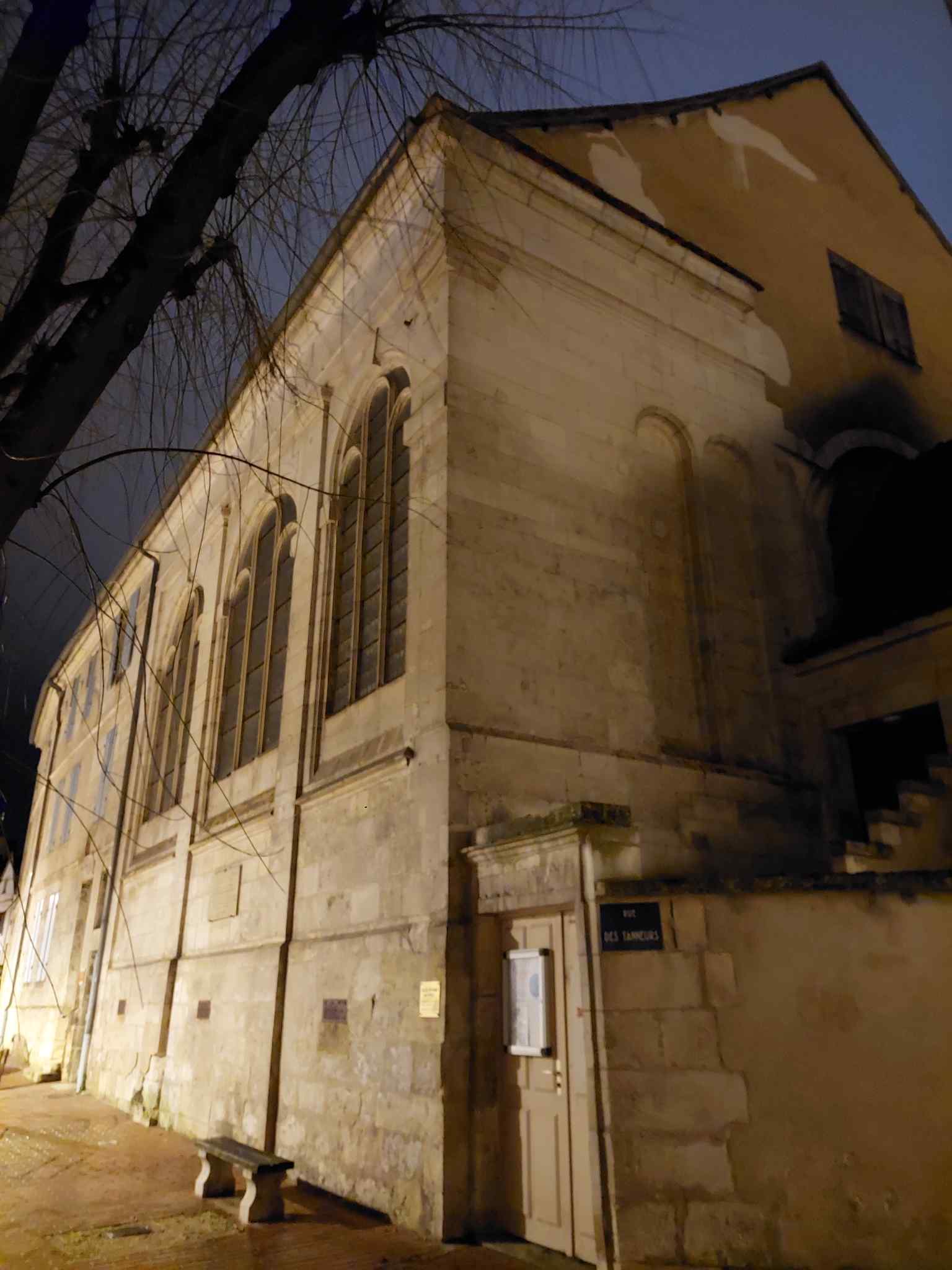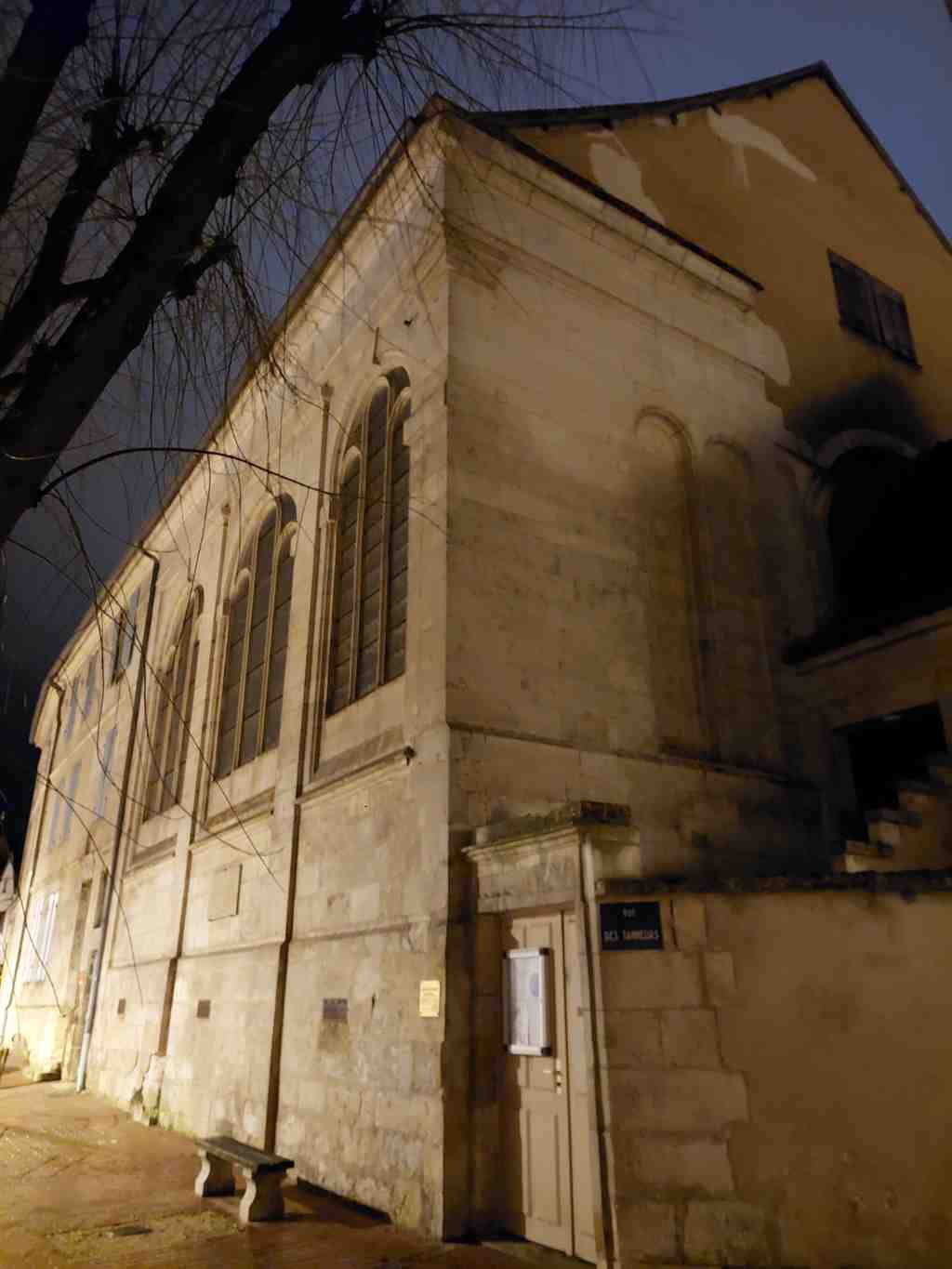
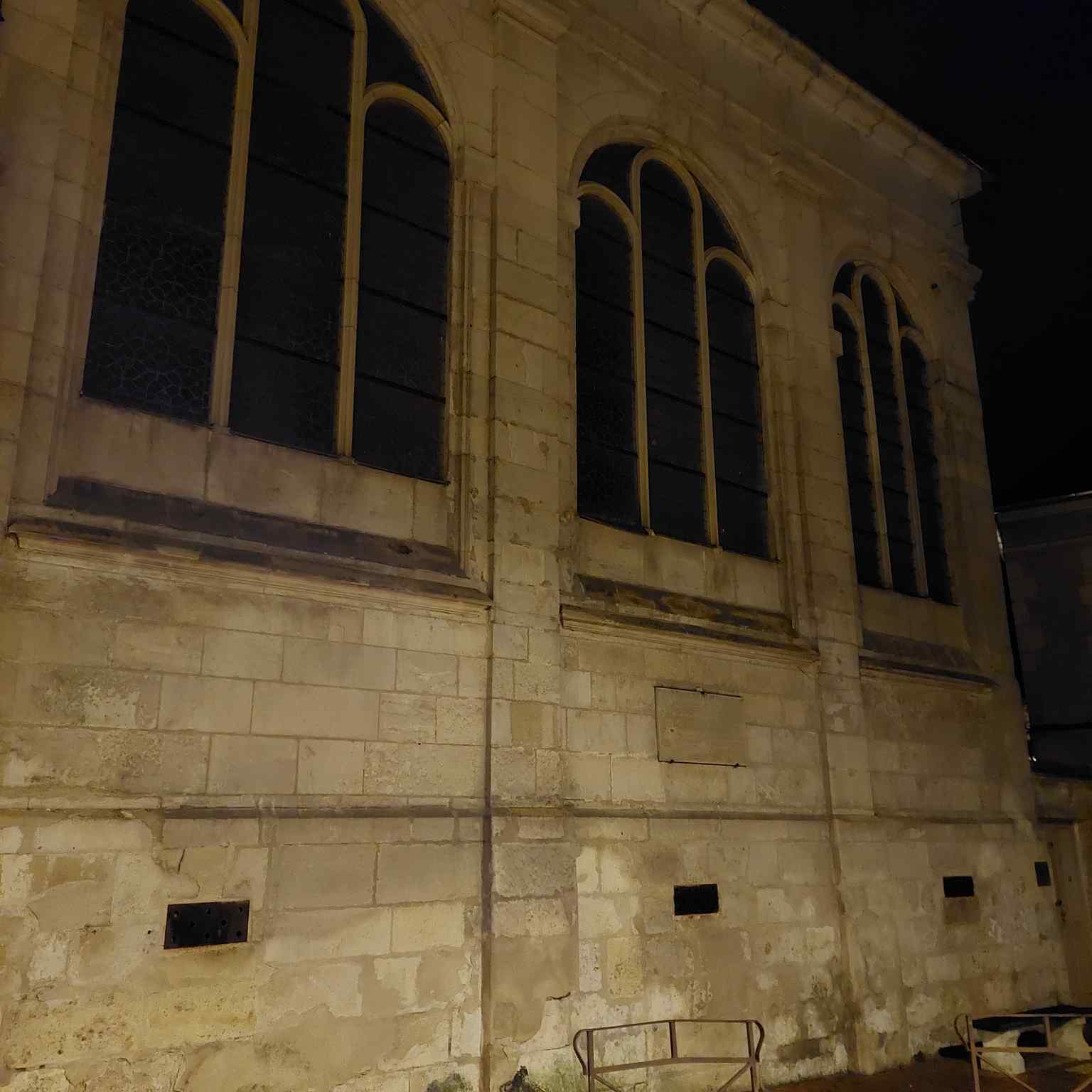
Check your screen to see the tall pale stone facade featuring a row of soaring arched windows and a simple rectangular entrance framed by classical masonry.
Religious and ideological conflicts have deeply scarred Auxerre's architectural landscape, turning places of worship into literal and figurative battlegrounds over the centuries. This building, now the Protestant church of Auxerre, is a perfect example of how a sanctuary can be repeatedly redefined by whoever holds the keys.
Originally known as the Church of Saint-Pèlerin, local tradition long claimed this was Auxerre's very first cathedral. By the mid-sixteenth century, the atmosphere inside was thick with paranoia. In 1563, a fervent Latin inscription was painted onto the ceiling of the southern chapel. In Gothic script, it begged God to protect the faithful from earthly evils and, specifically, from sudden death. This was not just routine piety. It reflected the deep spiritual anxiety of an era defined by deadly epidemics and the terrifying dawn of the Wars of Religion.
In September 1567, French Protestants, known as Huguenots, seized control of Auxerre. The local Catholic population suffered a profound trauma. When the Catholics finally regained control in April 1568, the city magistrates ordered a desperate measure. They permanently barricaded and sealed the city gate right next to this church to lock down a vulnerable flank against future Protestant raids.
History, however, has an impeccable sense of irony.
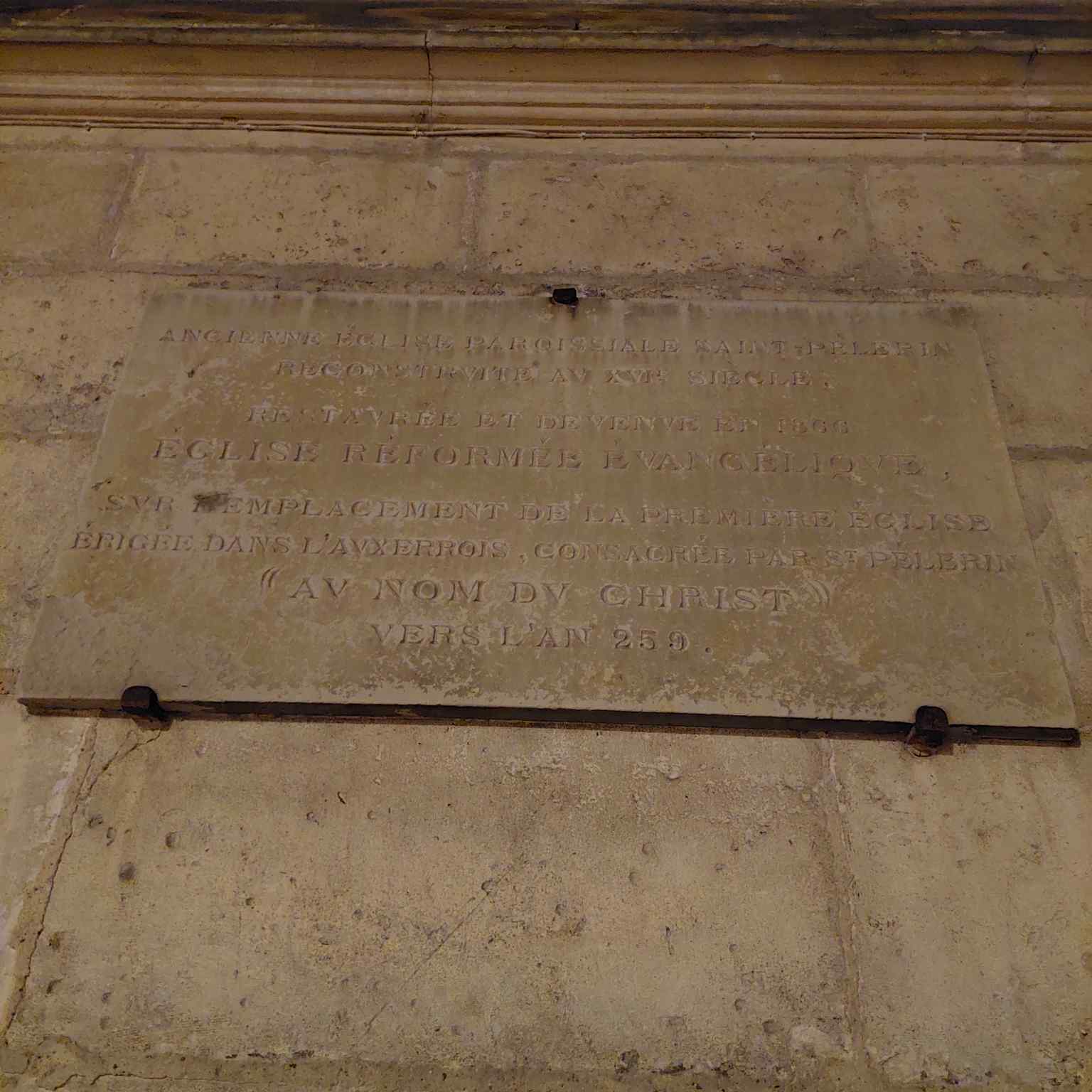
During the French Revolution in 1791, the church was confiscated and sold off. It was violently partitioned. The nave, which is the long central hall where the congregation typically stands, was chopped up into private apartments. Yet, the choir, the sacred area originally surrounding the altar, was spared destruction. In 1866, it was officially purchased to serve as a reformed temple. Yes, the exact same Catholic stronghold that was fortified to keep Protestants out in the sixteenth century eventually became the official heart of Protestant worship in Auxerre. You can even see a plaque on the wall detailing this bizarre transition from Catholic church to private housing to Protestant temple.
The building's physical foundations are just as contested as its religious ones. In the 1920s, an archaeologist named René Louis excavated the basement and proudly announced he had found a sacred ancient crypt and the original third-century baptistery. For nearly a century, locals revered the space.
Then came the modern archaeologists in 2010. They subjected the foundations to a rigorous study of the soil layers, known as stratigraphy, and completely dismantled the myth. There were no ancient Roman relics. The legendary carolingian stones were just recycled rubble thrown in by medieval builders. And the sacred crypt was actually just a twelfth-century crawlspace, designed to elevate the church floor so it would not flood when the nearby river overflowed.
The line between a sacred sanctuary and practical infrastructure is sometimes just a matter of good storytelling.
Let us keep moving. Our next destination is the Episcopal Palace of Auxerre, which is about a four minute walk away.