
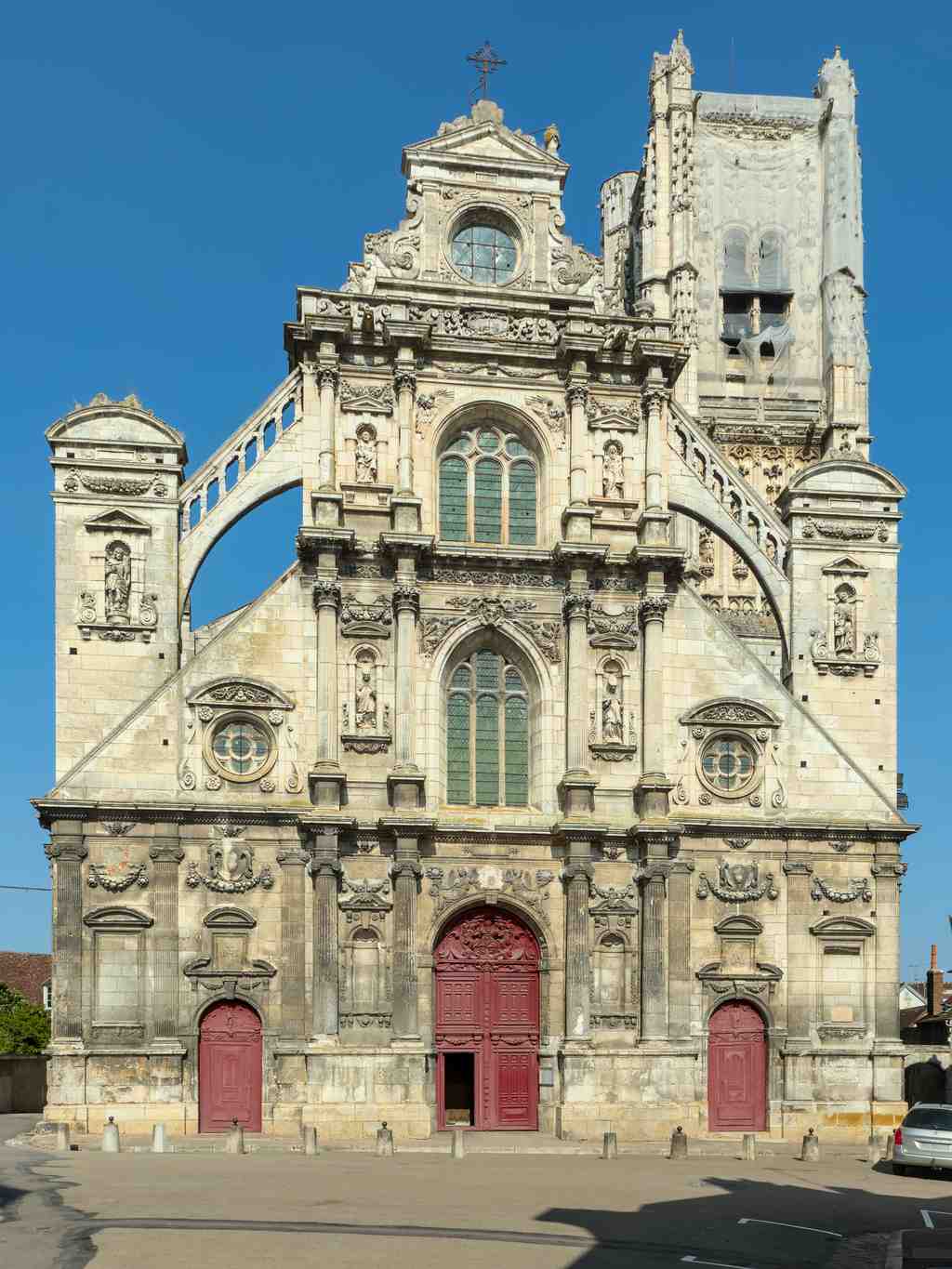
To your left is the Church of Saint-Pierre, a massive pale stone structure featuring a symmetrical classical facade with three red doors, flanked by a distinctly asymmetrical, square Gothic tower on its right side.
For centuries, this spot sat completely exposed, shivering outside the original fortified perimeter of Auxerre. But cities are living things, constantly expanding their reach. Eventually, Auxerre grew enough to wrap its protective stone arms around its vulnerable suburbs, extending a new medieval wall to finally encompass this very ground.
Long before that wall was built, this site was a bustling transitional zone. Excavations in 2007 peeled back the dirt to reveal a sprawling cemetery from the eighth and ninth centuries. Back then, this area marked the messy shift from Roman Antiquity to the High Middle Ages, a classic pagan to Christian transition where locals sought to bury their dead as close to the sacred church walls as possible. Because it was isolated outside the early city defenses, the vulnerable monks here were sitting ducks. The original church was repeatedly damaged, most notably during the Saracen invasions of the eighth century.
But the real devastation came much later. Because why let foreign invaders have all the fun when you can destroy your own city? In 1567, a wave of violent civil uprisings reached the city. Rebel factions captured Auxerre, setting fire to Saint-Pierre and pillaging it so thoroughly that the unstable medieval ruins eventually had to be demolished. Glance at the app to see the result of the massive rebuilding effort that followed in the seventeenth century. The locals funded it themselves, paying the master masons over four thousand livres, roughly a quarter of a million dollars today, to reconstruct the nave, which is the soaring central hall of the church.
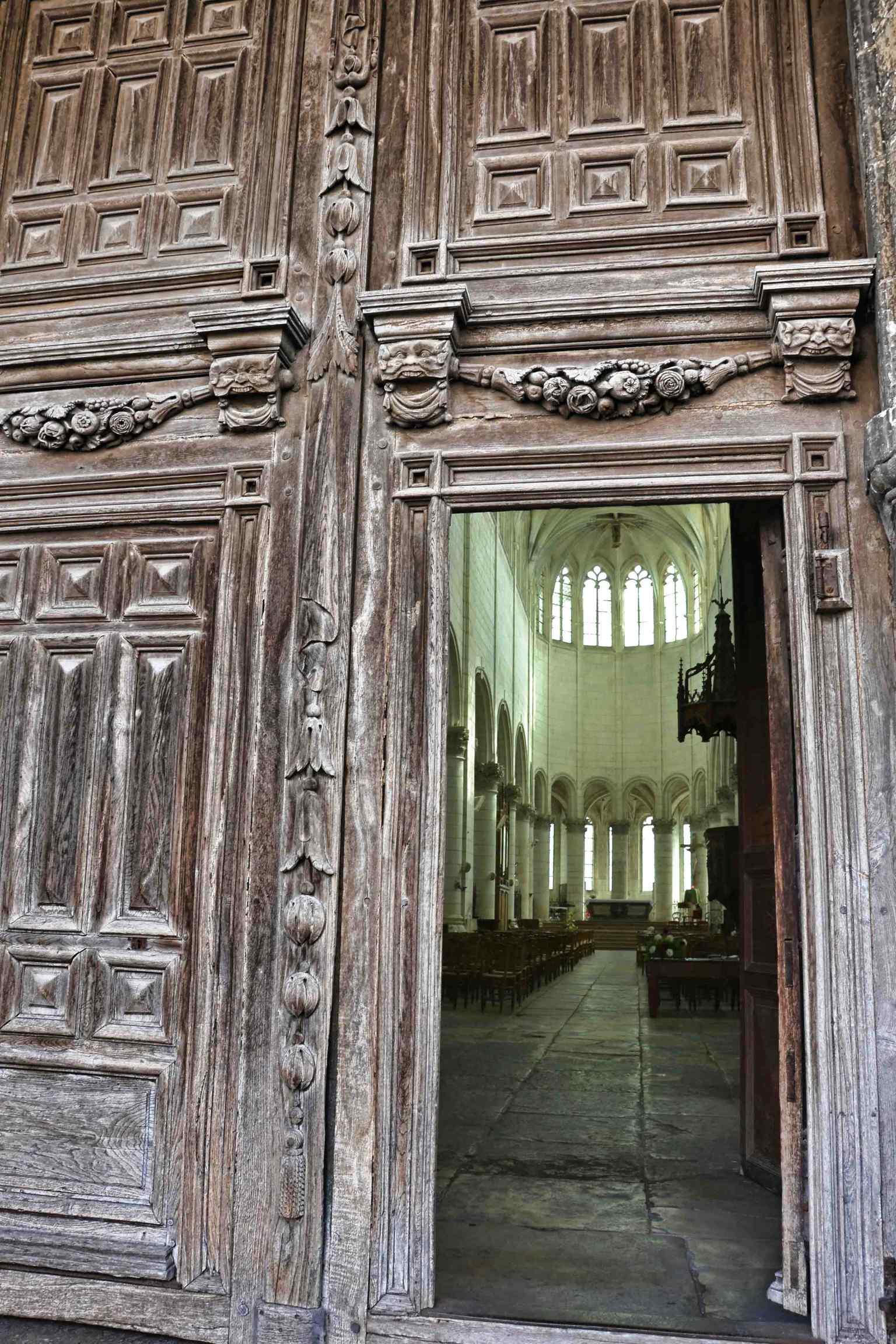
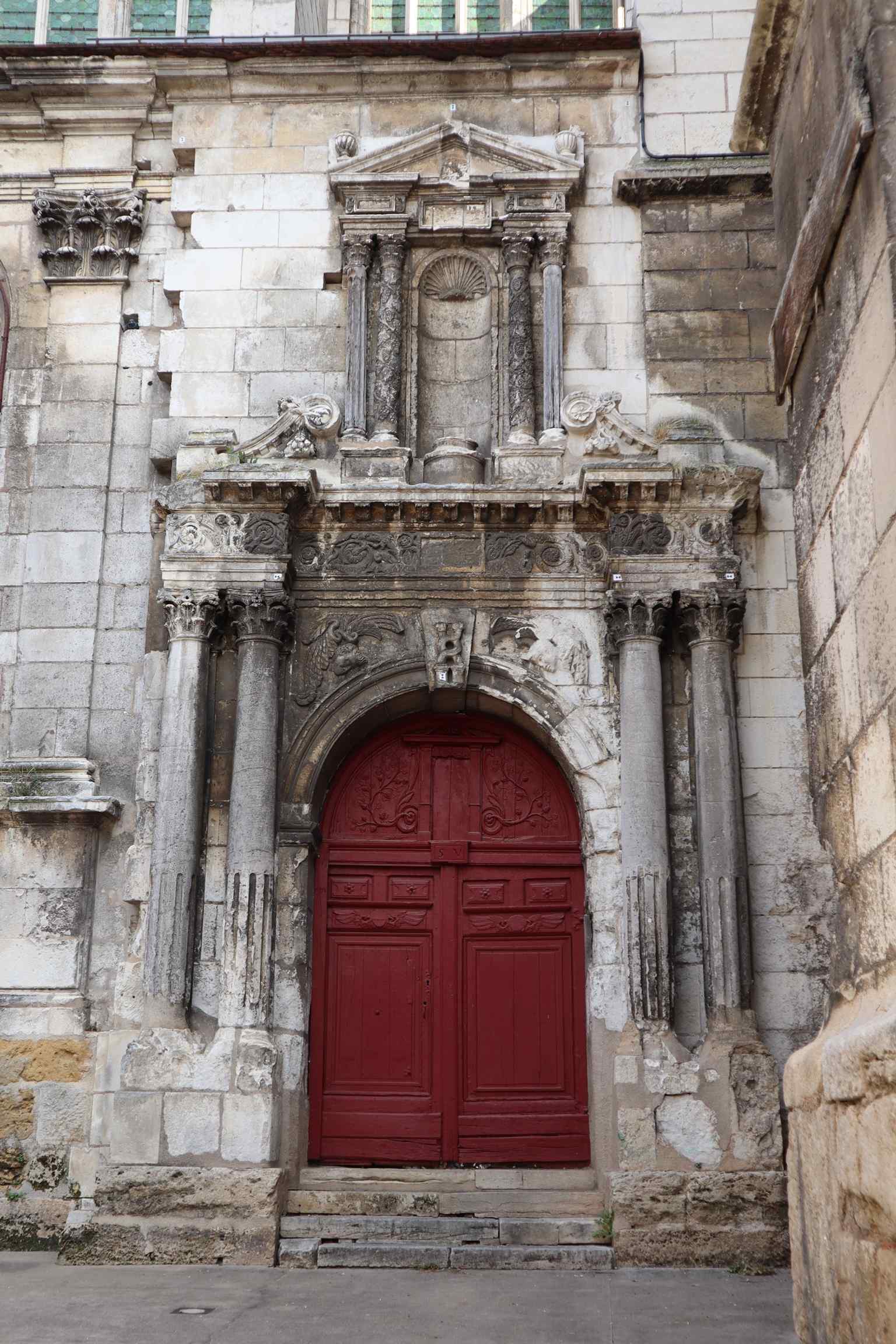
The architects decided to get creative. They took three classical column styles, Ionic, Corinthian, and Composite, and slapped them directly onto the surviving Flamboyant Gothic structure. It is a bizarre architectural mashup of logical classical symmetry and pointy, medieval flying buttresses, those external arched stone supports holding up the upper walls. If you look at the right side of the building on your app, you can see the surviving square Gothic tower from 1530, looking like it belongs to a completely different church.
By the eighteenth century, the church was fully operational again, but the working-class parishioners were apparently getting a little too comfortable in their newly rebuilt sanctuary. In 1769, the parish had to issue a formal decree banning locals from entering the church wearing hair curlers, casual vests, or work aprons. God demands reverence, and apparently, proper grooming.
Much later, this modernized church became the daily refuge of Marie Rouget, famously known as the poetess Marie Noël. She sat in these pews wrestling with her internal demons, writing dark, tormented poetry about raw human suffering, before her funeral was held right here in 1967.
The destruction this building suffered back in 1567 was just one chapter in a deeply divided era. Let us walk four minutes down the road to the Protestant church of Auxerre, where we will examine a very different kind of conflict.






%20%C3%89glise%20Saint-Pierre%20-%20Ext%C3%A9rieur%20-%2001.jpg)
%20%C3%89glise%20Saint-Pierre%20-%20Int%C3%A9rieur%20-%2006.jpg)