AudaTours logoAudaTours

Stop 3 of 16

Église de la Trinité d'Angers

headphones 03:16
Église de la Trinité d'Angers
Church of the Trinity of Angers
Church of the Trinity of AngersPhoto: Mbzt, Wikimedia Commons, CC BY 3.0. Cropped & resized.

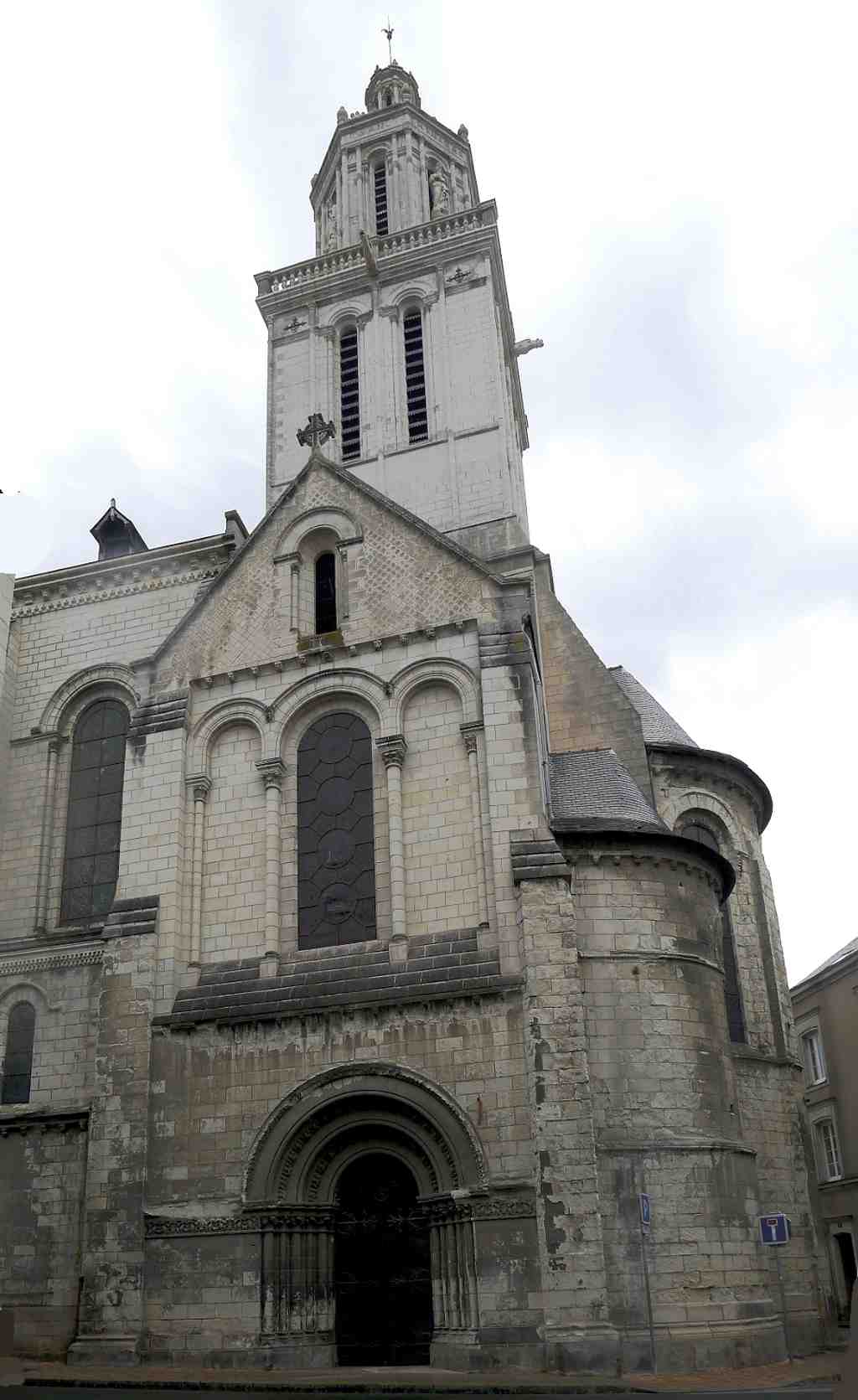
Look to your right to spot a towering structure of pale limestone, defined by a multi-tiered, intricately carved bell tower and a deeply recessed, arched stone doorway at its base. This is the Church of the Trinity.

It was built out of pure social awkwardness. Back in the eleventh century, the local abbesses ran the neighboring Abbey of Ronceray. They had a problem. The abbey was full of young, wealthy girls from the nobility. But their chapel was also being used by the local commoners. The abbesses wanted to maintain strict control over the parish, but they absolutely did not want their aristocratic girls mixing with the regular townsfolk. Their solution? They built this parish church completely tangled up in the abbey's architecture, keeping the commoners close, but safely separated by solid stone walls.

Take a look at your screen for a glimpse inside the main hall, or the nave. You are looking at a perfect example of what is called the first Angevin Gothic style. Unlike standard flat or slightly curved ceilings, this regional design features heavily domed vaults reinforced by irregular stone ribs. Notice the carved stone joints where the ribs meet. Each of those keystones is totally unique, with the central one seemingly suspended in mid-air.
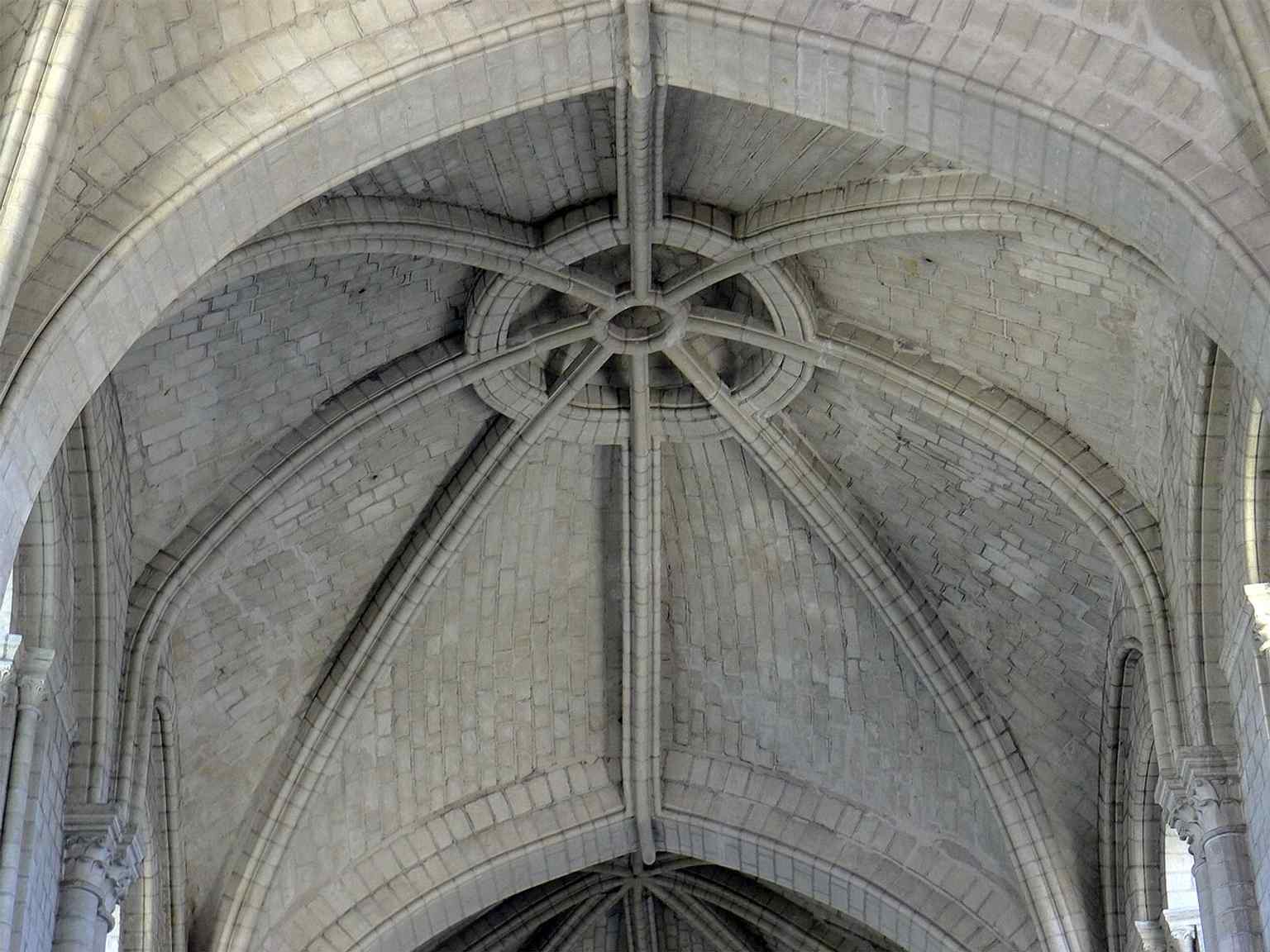
Close-up of the nave's unique vaulting, showcasing its irregular ribs and different keystones, including a remarkable 'suspended keystone,' characteristic of the 'first Angevin Gothic' style.
Close-up of the nave's unique vaulting, showcasing its irregular ribs and different keystones, including a remarkable 'suspended keystone,' characteristic of the 'first Angevin Gothic' style.Photo: Mbzt, Wikimedia Commons, CC BY-SA 4.0. Cropped & resized.

Of course, this church has seen its share of drama. During the French Revolution in seventeen ninety-three, the resident priest, Father Simon-Jean Gruget, refused to swear allegiance to the new revolutionary government. He was forced into hiding. He holed up in a tiny secret room across town, overlooking the main square where the guillotine was set up. From a small window, he would watch the executions. Whenever a condemned prisoner was marched to their death, Father Gruget would wave a blue handkerchief with red checkers. This was a secret signal, letting the victims know he was silently giving them absolution, the religious forgiveness of their sins, right before the blade fell.

He narrowly escaped death himself. During a tense police raid on his hideout, he disguised himself as an old woman spinning yarn, completely faking his voice. A police inspector actually recognized him, but decided to let it slide, shouting out a greeting to the fake old woman to throw off the other guards and save the priest's life.

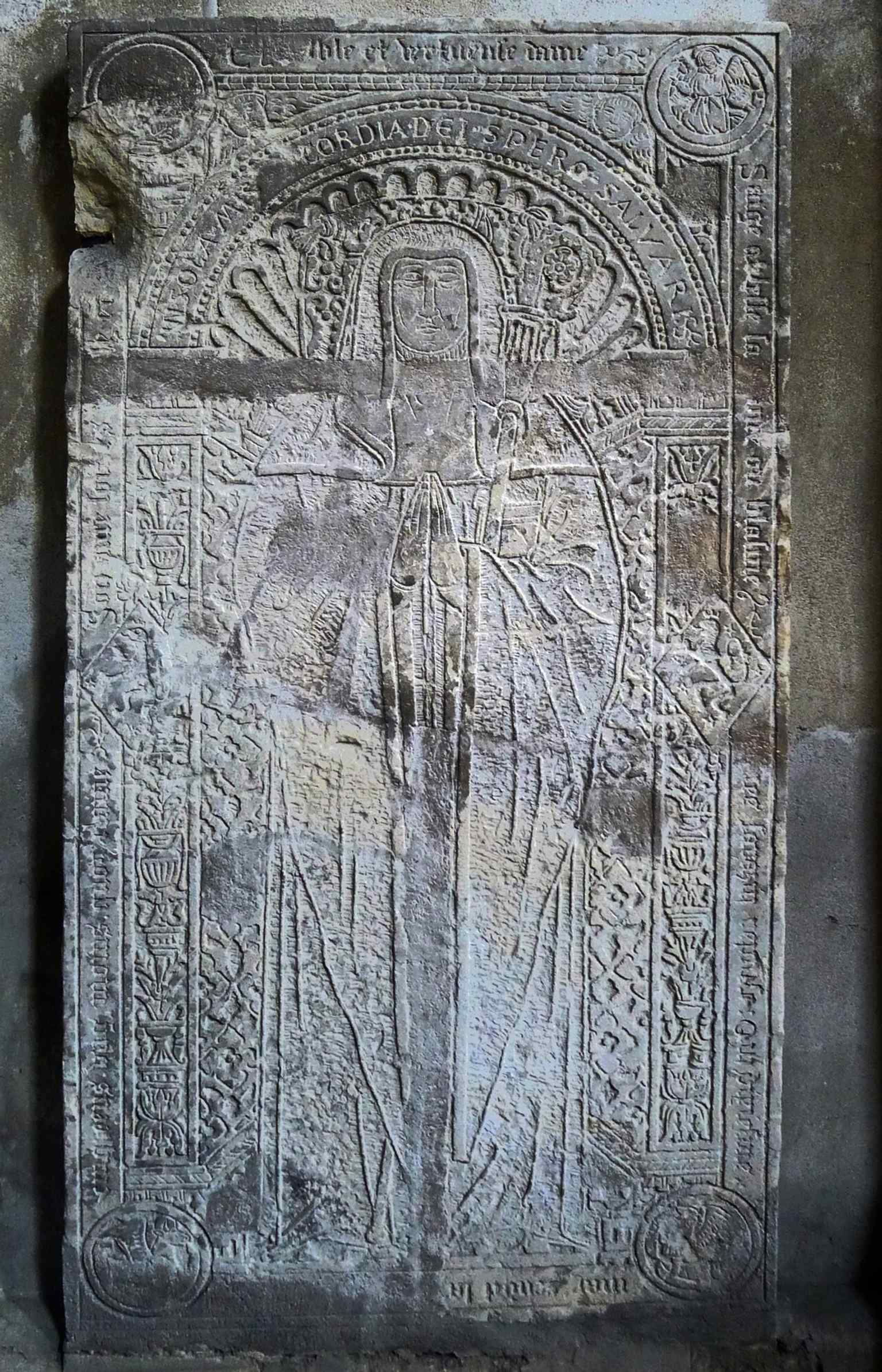
To really understand who held the power here, check your app again to see a hidden architectural detail tucked away inside. This intricately carved sixteenth-century spiral wooden staircase allowed for secret movement through the building. It leads directly down into the mysterious crypt of the neighboring abbey. Right on those stairs sits the heavy limestone tomb of an abbess from fourteen ninety-three. It is a very literal reminder that even after death, the noble abbesses were always hovering over the commoners.
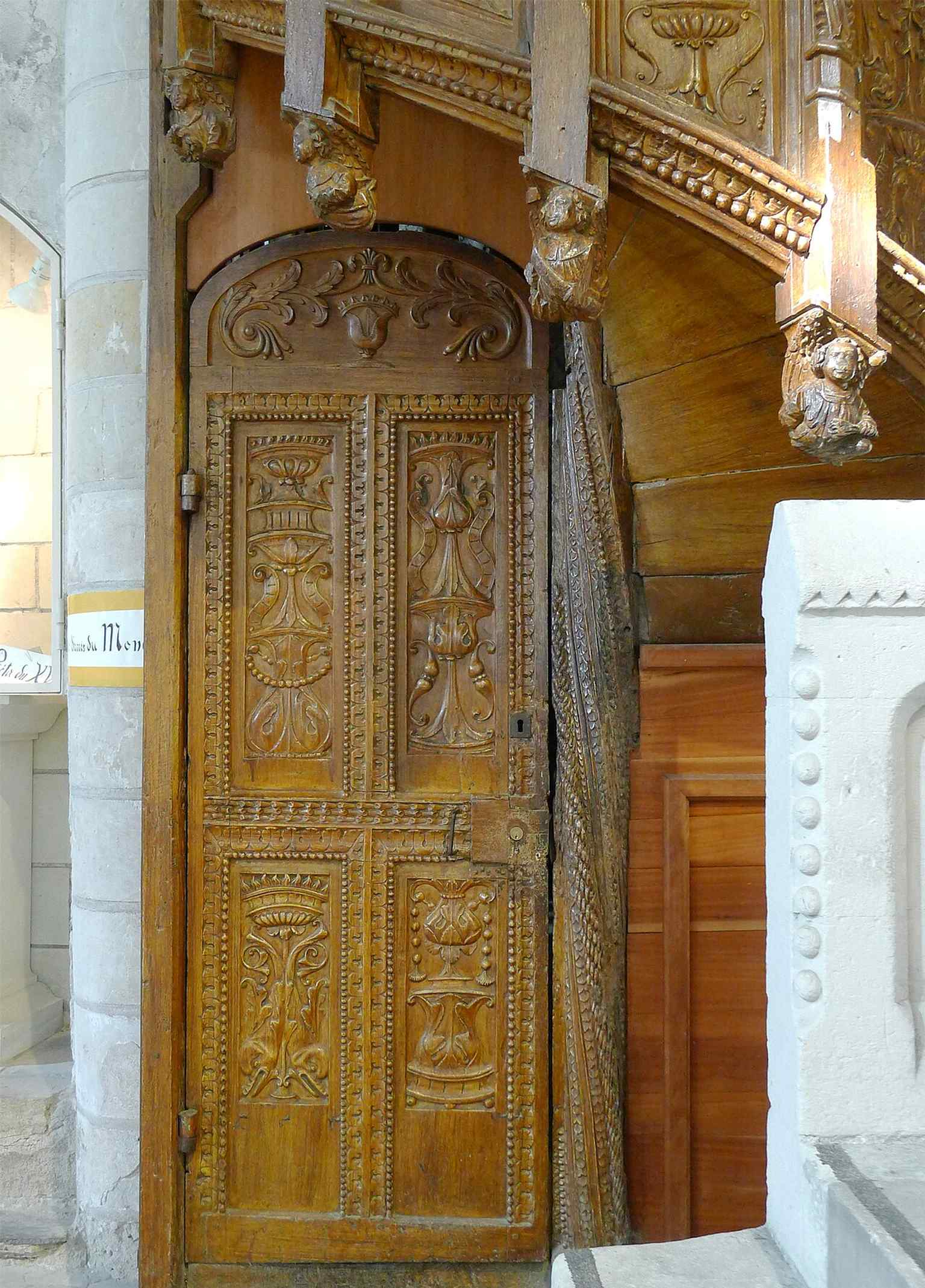
This 16th-century sculpted wooden helical staircase is a 'hidden architectural gem' that once provided secret internal circulation and leads to the crypt.
This 16th-century sculpted wooden helical staircase is a 'hidden architectural gem' that once provided secret internal circulation and leads to the crypt.Photo: Mbzt, Wikimedia Commons, CC BY-SA 4.0. Cropped & resized.

This church is a brilliant piece of historical engineering, built to manage both faith and high society. Whenever you are ready to move on, we can head to the next stop.
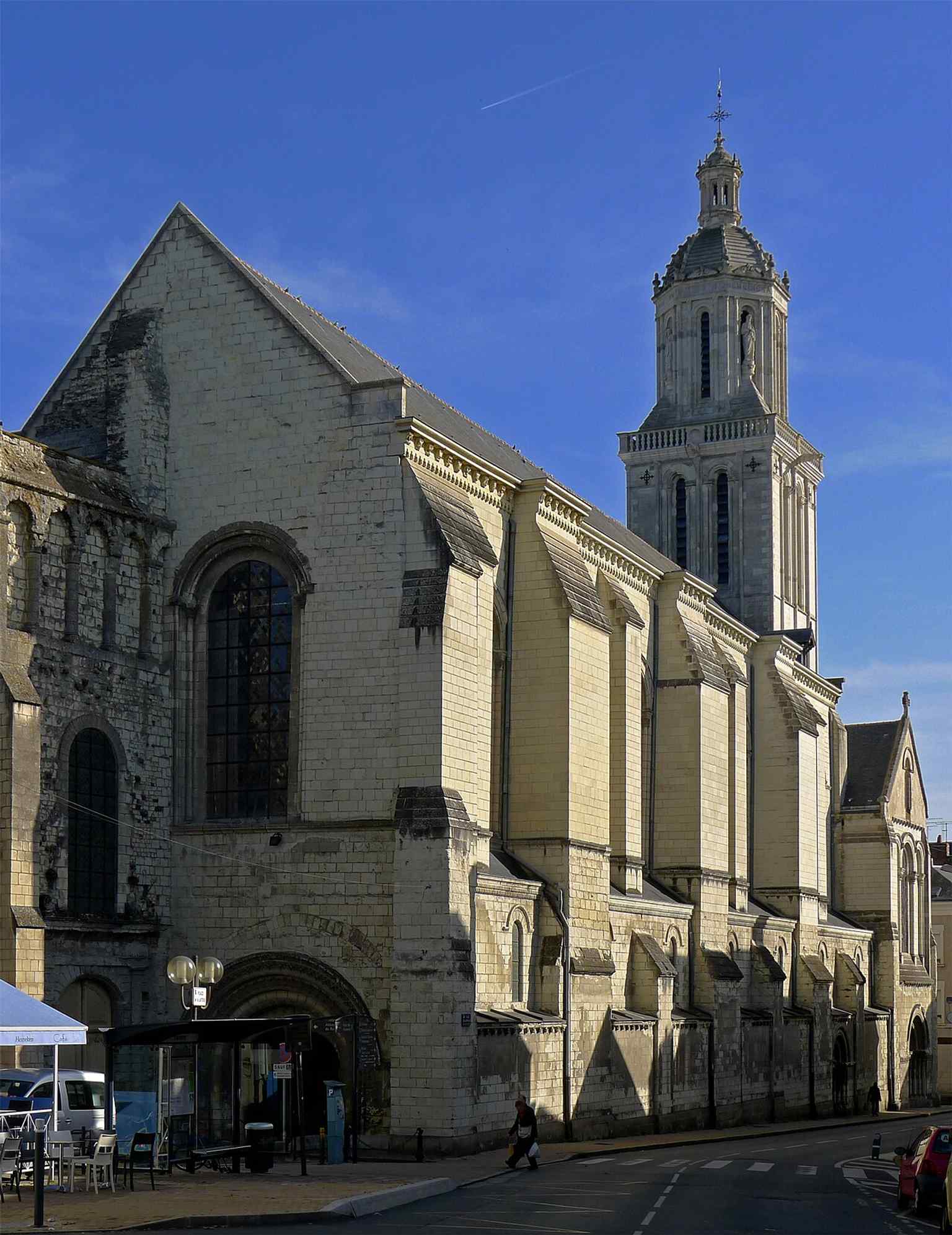
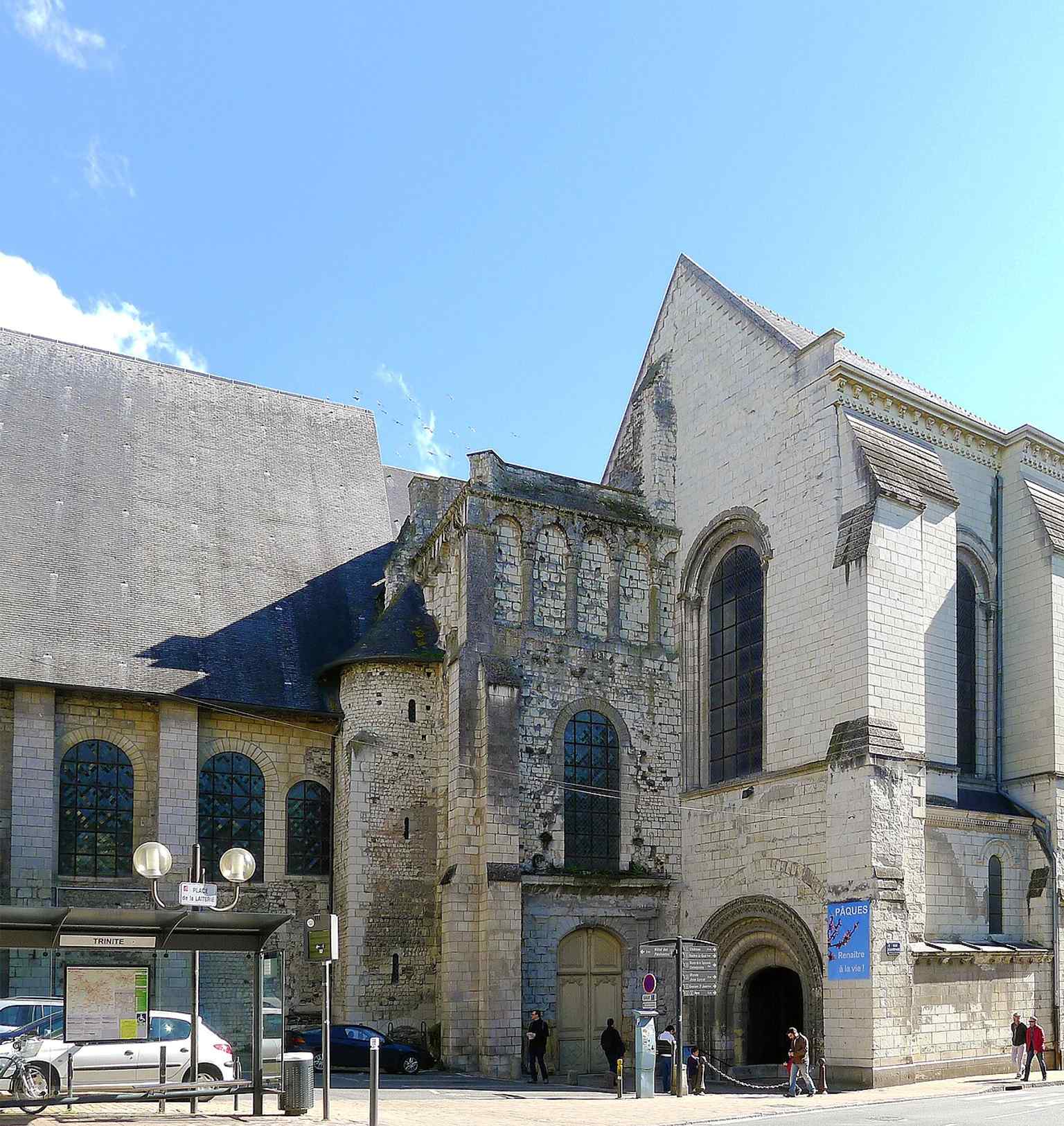
A general view of the Church of the Trinity, a historic monument in Angers classified in 1840.
A general view of the Church of the Trinity, a historic monument in Angers classified in 1840.Photo: Mbzt, Wikimedia Commons, CC BY-SA 4.0. Cropped & resized.
This photo illustrates the unique 'enmeshment' of the Church of the Trinity with the neighboring Abbaye du Ronceray, built to separate parishioners from the noble girls of the abbey.
This photo illustrates the unique 'enmeshment' of the Church of the Trinity with the neighboring Abbaye du Ronceray, built to separate parishioners from the noble girls of the abbey.Photo: Mbzt, Wikimedia Commons, CC BY-SA 4.0. Cropped & resized.
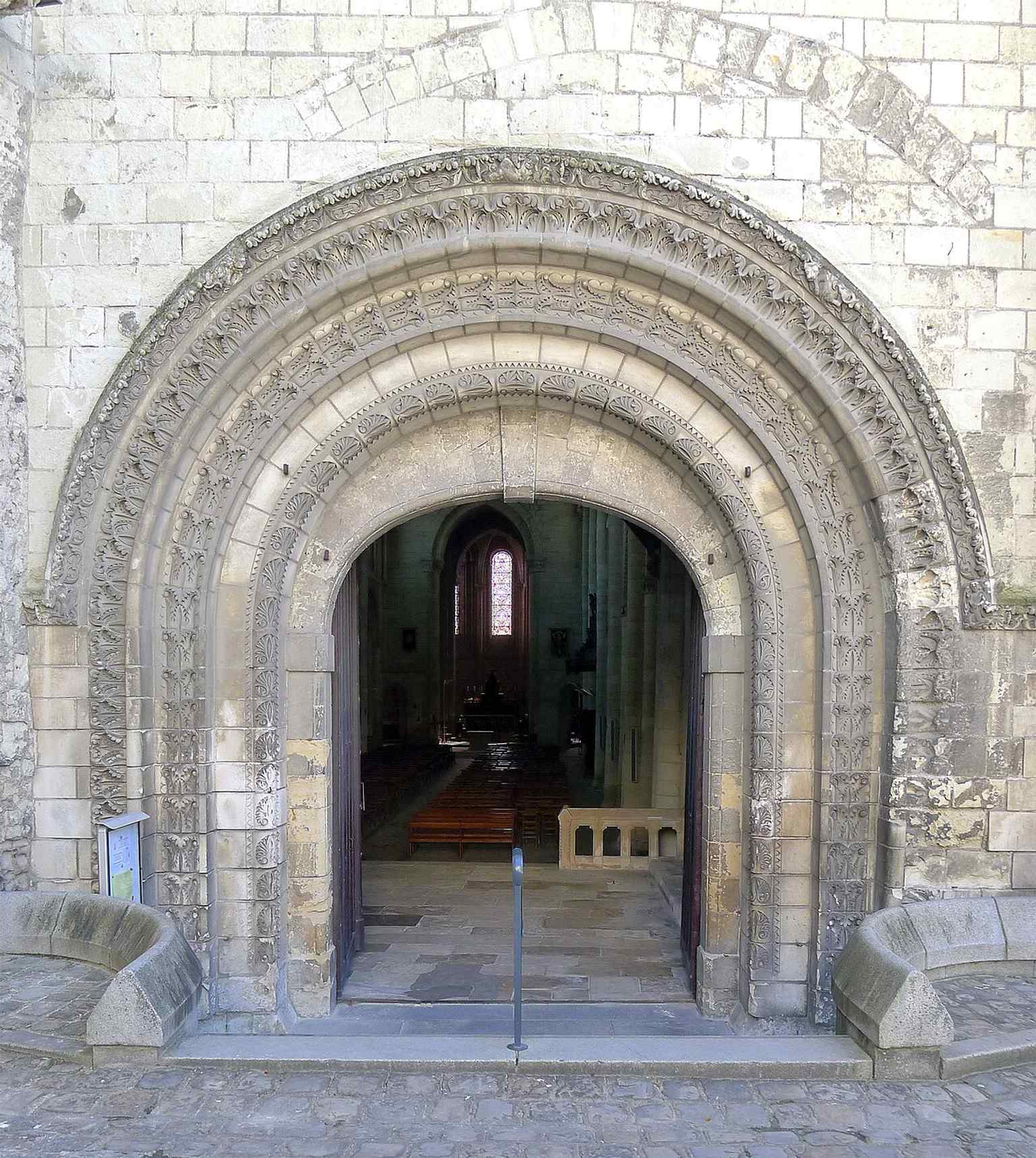
The Neo-Romanesque portal on the south facade, which was only fully revealed in the 1860s after old timber houses blocking it were destroyed during architect Joly-Leterme's restorations.
The Neo-Romanesque portal on the south facade, which was only fully revealed in the 1860s after old timber houses blocking it were destroyed during architect Joly-Leterme's restorations.Photo: Mbzt, Wikimedia Commons, CC BY-SA 4.0. Cropped & resized.
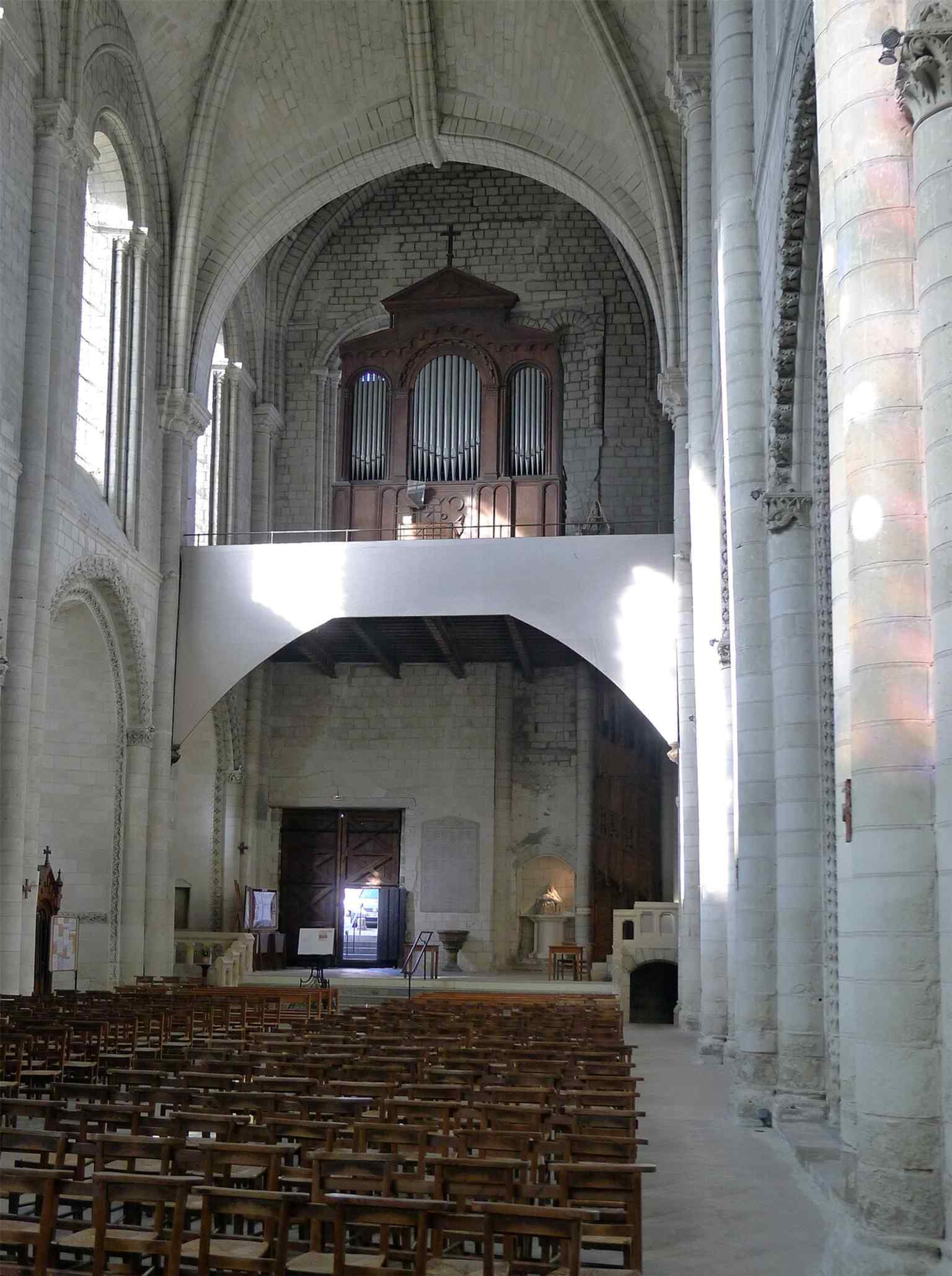
A general view of the nave, which features the distinctive 'first Angevin Gothic' style with its vault supported by irregular ribs.
A general view of the nave, which features the distinctive 'first Angevin Gothic' style with its vault supported by irregular ribs.Photo: Mbzt, Wikimedia Commons, CC BY-SA 4.0. Cropped & resized.
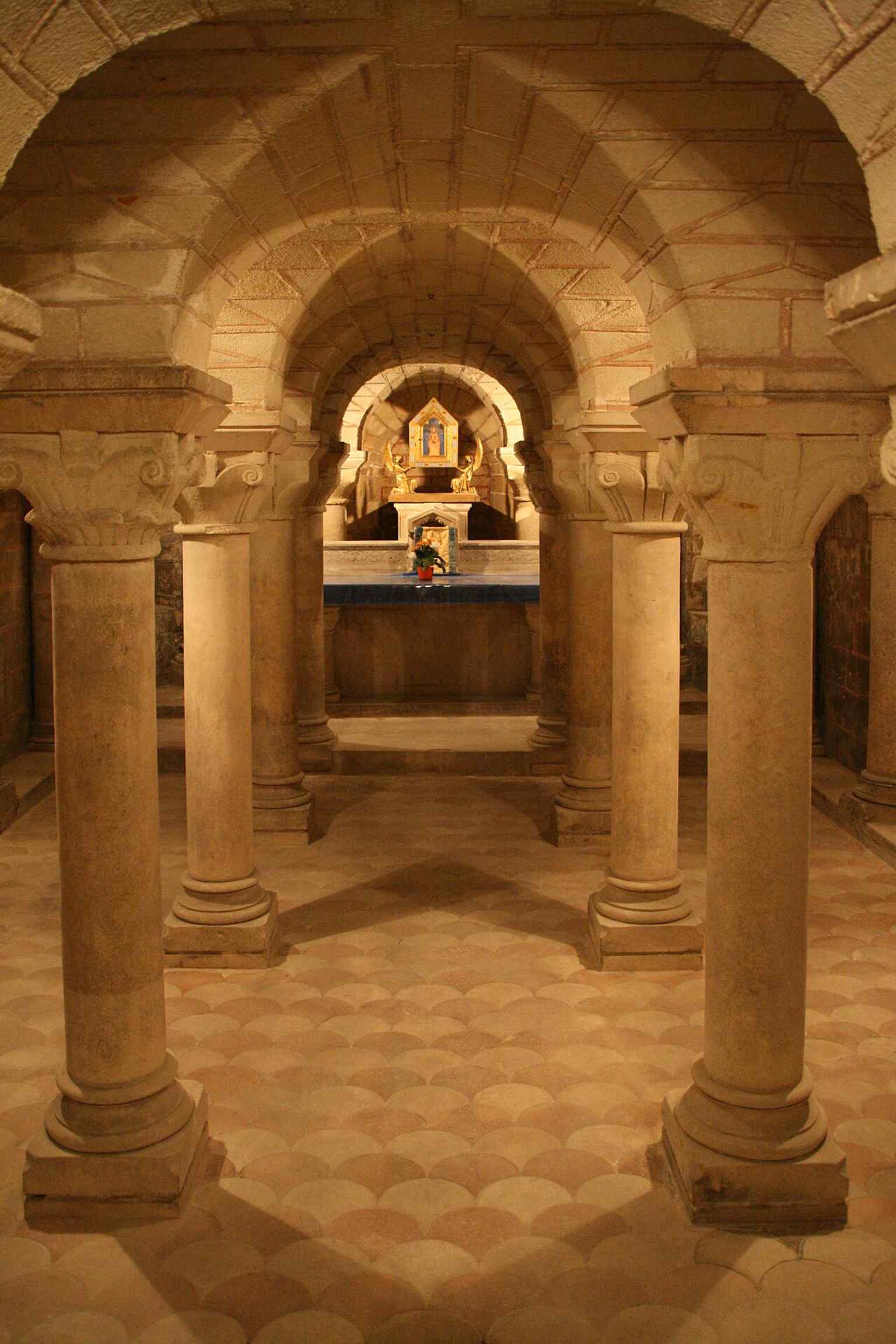
The crypt, rediscovered in 1527 and later formally attached to the parish church in 1857, offering a glimpse into the mysterious history of the Abbaye du Ronceray.
The crypt, rediscovered in 1527 and later formally attached to the parish church in 1857, offering a glimpse into the mysterious history of the Abbaye du Ronceray.Photo: Sémhur, Wikimedia Commons, CC BY-SA 4.0. Cropped & resized.
The limestone tombstone of Renée Sarazin, an abbess of Ronceray from 1493 to 1499, found within the ancient staircase, symbolizing the abbey's historical dominance over the parish.
The limestone tombstone of Renée Sarazin, an abbess of Ronceray from 1493 to 1499, found within the ancient staircase, symbolizing the abbey's historical dominance over the parish.Photo: Mbzt, Wikimedia Commons, CC BY-SA 4.0. Cropped & resized.
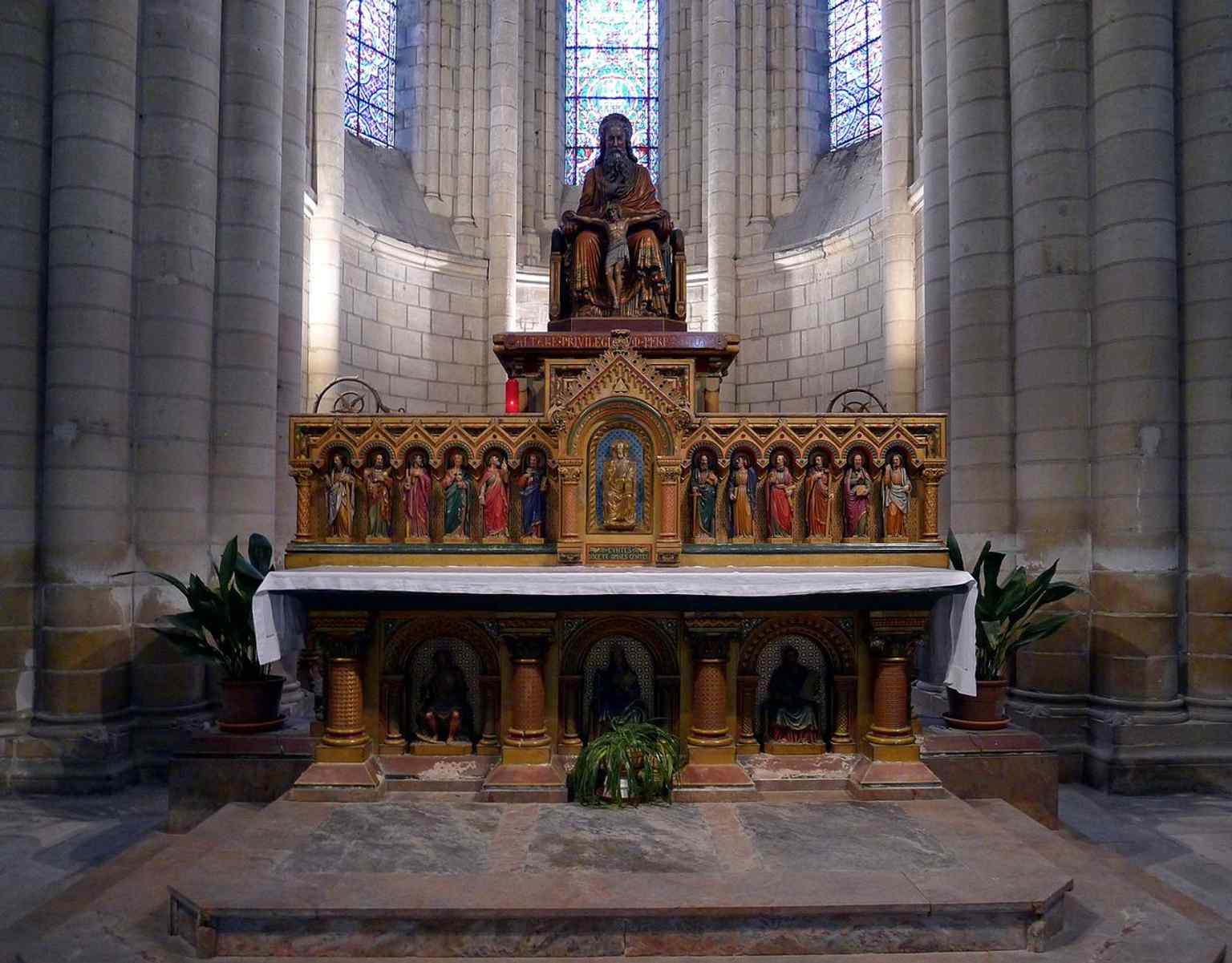
The main altar, crafted in 1873 from polychrome carved stone, features a rare Trinitarian motif and Apostles, notably replacing Judas with Paul.
The main altar, crafted in 1873 from polychrome carved stone, features a rare Trinitarian motif and Apostles, notably replacing Judas with Paul.Photo: Mbzt, Wikimedia Commons, CC BY 3.0. Cropped & resized.
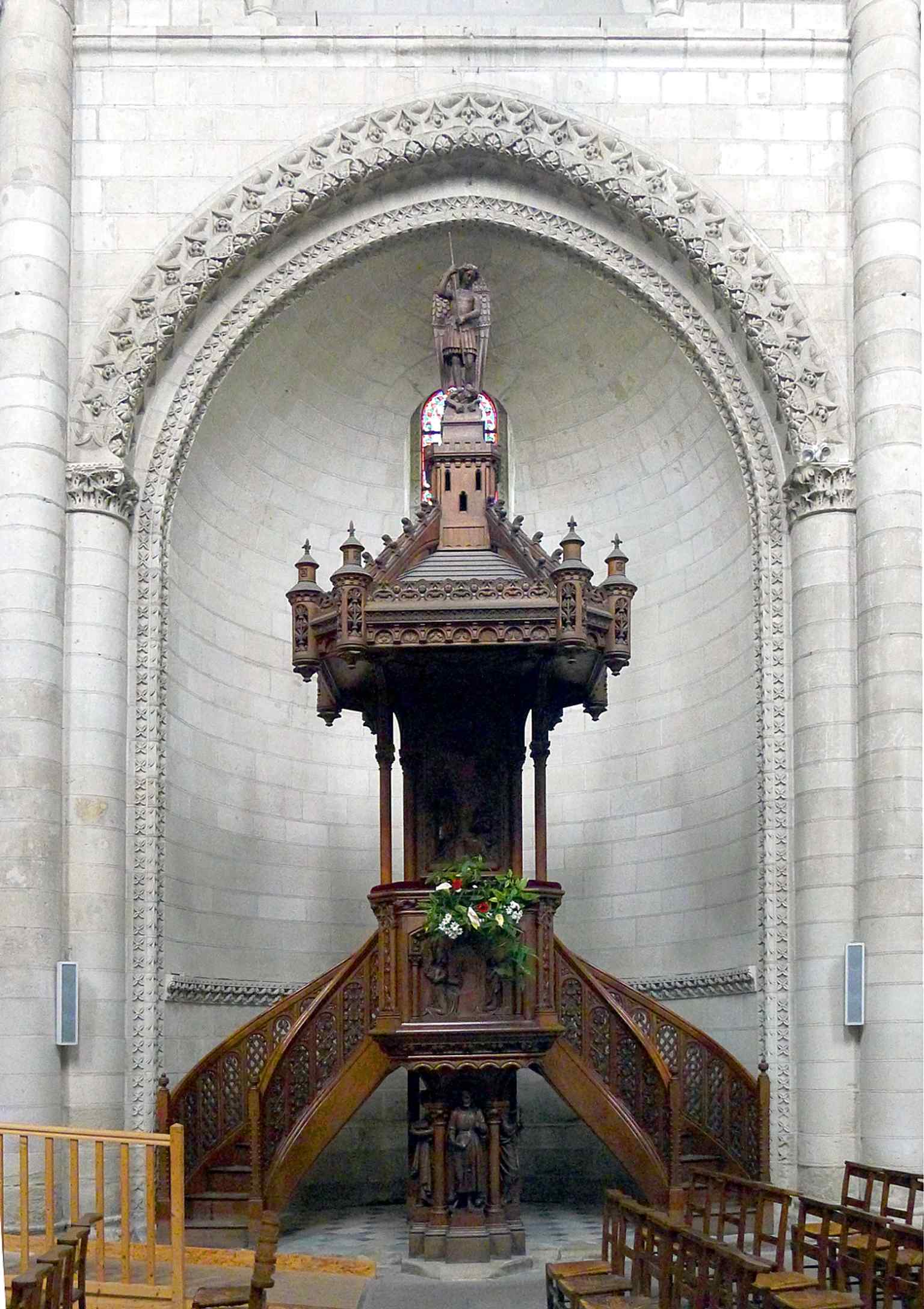
The 18th-century pulpit, an ornate piece of cabinetry adorned with sculptures including Saint George slaying the demon and the Annunciation.
The 18th-century pulpit, an ornate piece of cabinetry adorned with sculptures including Saint George slaying the demon and the Annunciation.Photo: Mbzt, Wikimedia Commons, CC BY 3.0. Cropped & resized.
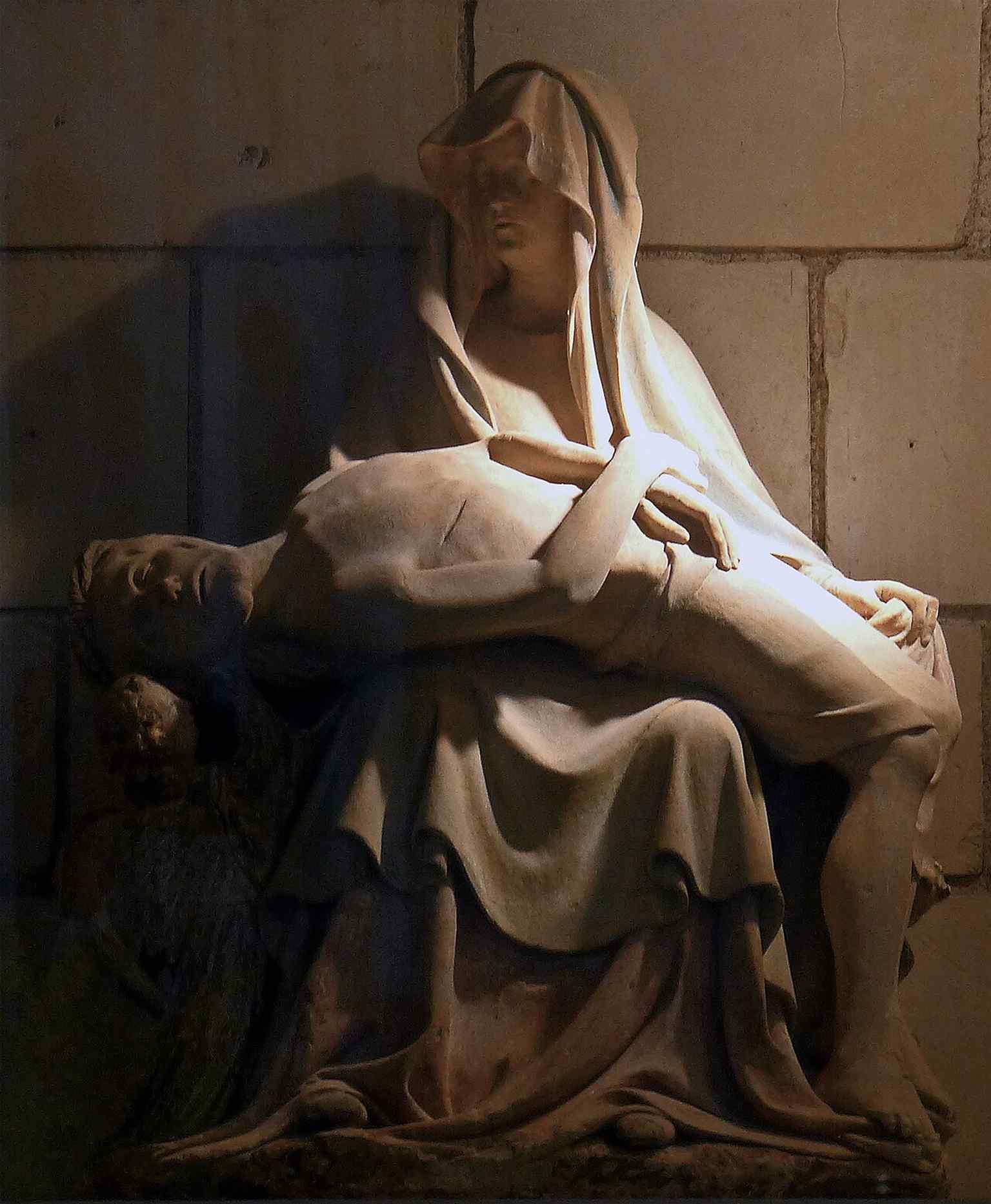
This medieval Pietà from the 15th century tragically lost its original polychrome colors due to repeated floods from the Maine river, including the historic 1910 inundation.
This medieval Pietà from the 15th century tragically lost its original polychrome colors due to repeated floods from the Maine river, including the historic 1910 inundation.Photo: Mbzt, Wikimedia Commons, CC BY-SA 4.0. Cropped & resized.
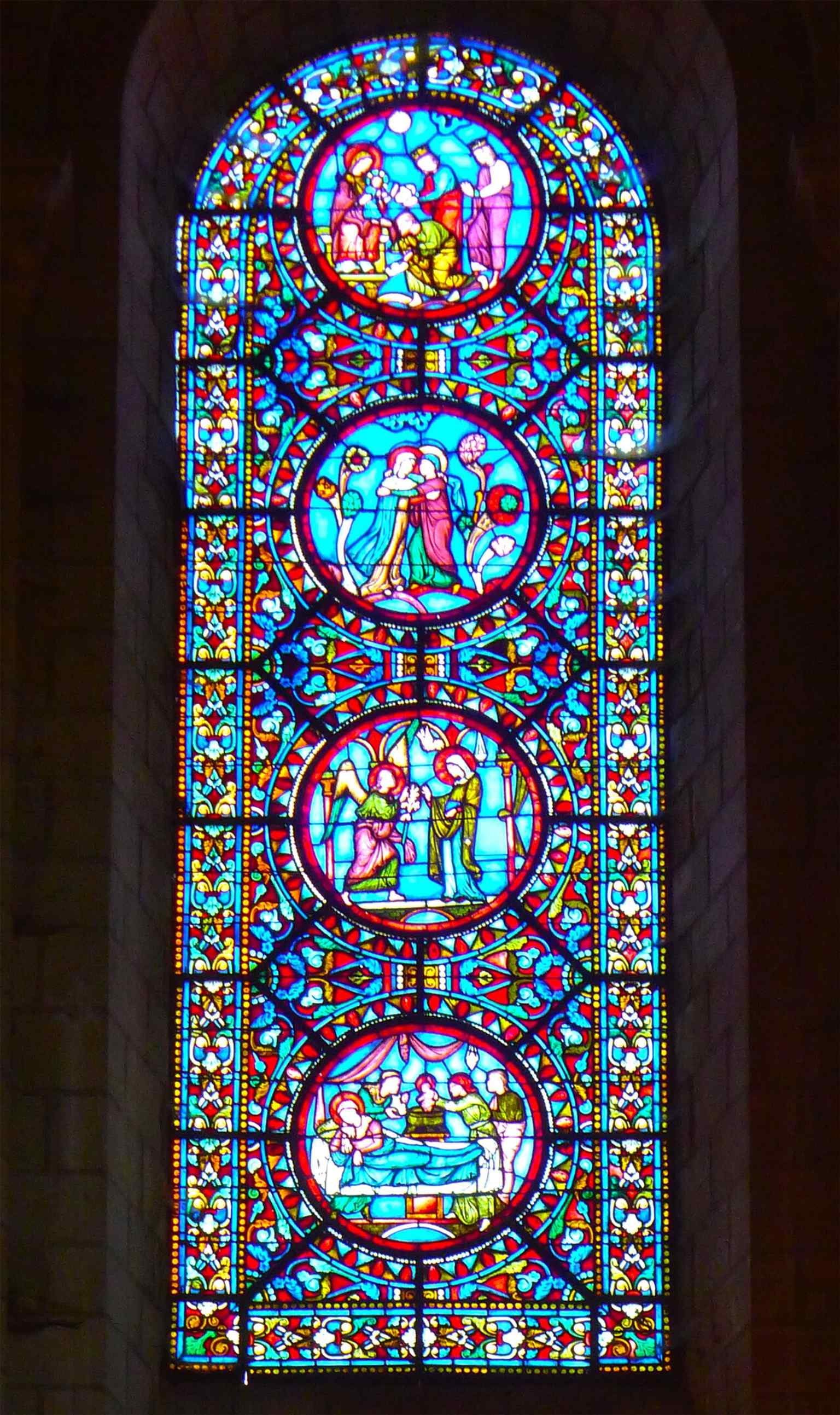
One of the choir's stained-glass windows by Thierry fils (1860s), designed in an 'archaeological' style with deep blues and medallion compositions to evoke a medieval atmosphere.
One of the choir's stained-glass windows by Thierry fils (1860s), designed in an 'archaeological' style with deep blues and medallion compositions to evoke a medieval atmosphere.Photo: Mbzt, Wikimedia Commons, CC BY-SA 4.0. Cropped & resized.
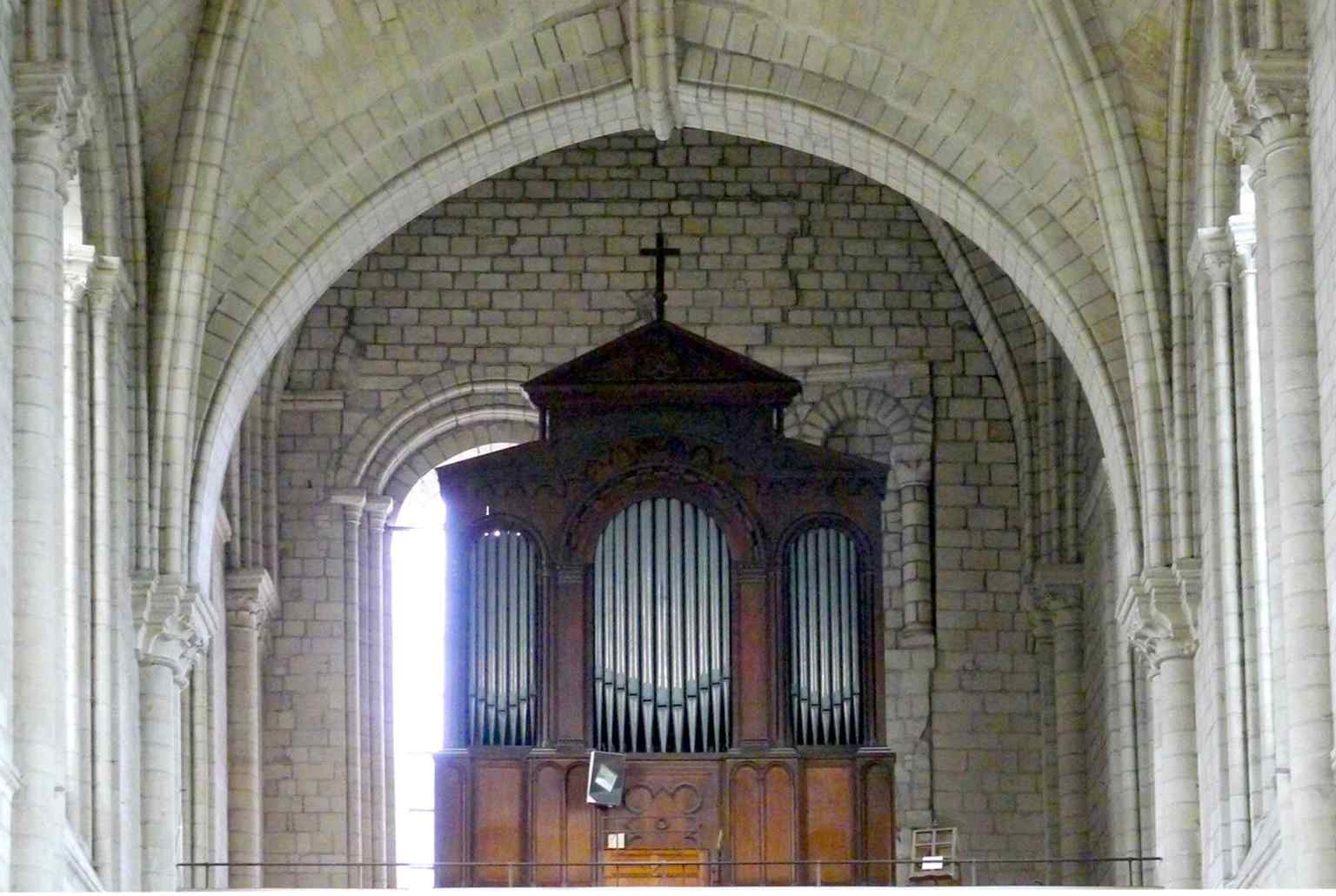
The current organ, built in 1840 by DAUBLAINE and CALLINET, which was declared a historical monument for its instrumental part in 1997.
The current organ, built in 1840 by DAUBLAINE and CALLINET, which was declared a historical monument for its instrumental part in 1997.Photo: Mbzt, Wikimedia Commons, CC BY 3.0. Cropped & resized.
arrow_back Back to Angers Audio Tour: Echoes Through Courtyards, Convents & Creativity

AudaTours: Audio Tours

Entertaining, budget-friendly, self-guided walking tours

Try the app arrow_forward

Loved by travelers worldwide

format_quote This tour was such a great way to see the city. The stories were interesting without feeling too scripted, and I loved being able to explore at my own pace.
Jess
Jess
starstarstarstarstar
Tbilisi Tour arrow_forward
format_quote This was a solid way to get to know Brighton without feeling like a tourist. The narration had depth and context, but didn't overdo it.
Christoph
Christoph
starstarstarstarstar
Brighton Tour arrow_forward
format_quote Started this tour with a croissant in one hand and zero expectations. The app just vibes with you, no pressure, just you, your headphones, and some cool stories.
John
John
starstarstarstarstar
Marseille Tour arrow_forward

Unlimited Audio Tours

Unlock access to EVERY tour worldwide

0 tours·0 cities·0 countries
all_inclusive Explore Unlimited