
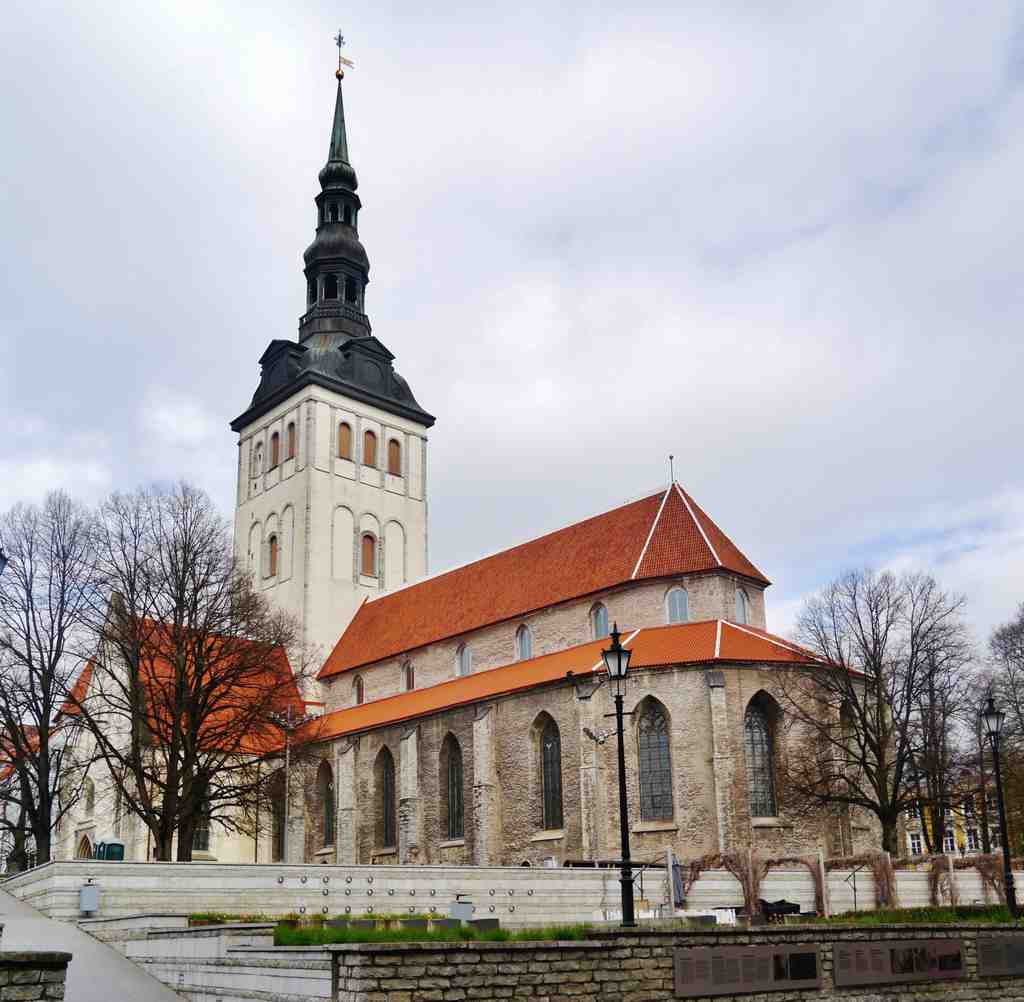
On your left, look for a pale stone Gothic church with a long, steep roof, a square tower rising into a slender spire, and stepped gables along the side chapels.
This is St. Nicholas Church, or Niguliste, founded in the mid-thirteenth century by Westphalian merchants who came through Gotland and chose Saint Nicholas, protector of sailors, as their patron. That choice tells you plenty. In Tallinn, church life for merchants was practical as well as devotional. Across the Baltic, a merchant church network tied ports together: places where people prayed for safe voyages, stored goods, met partners, and tried to keep both ships and souls from sinking.
Niguliste did all of that. The early church stood here as a three-aisled hall, meaning three parallel interior spaces, with a heavy west tower built for defense. Traders used the building as a warehouse, and sometimes they even struck business deals inside. Nothing says medieval efficiency like combining worship, storage, and urban security under one roof.
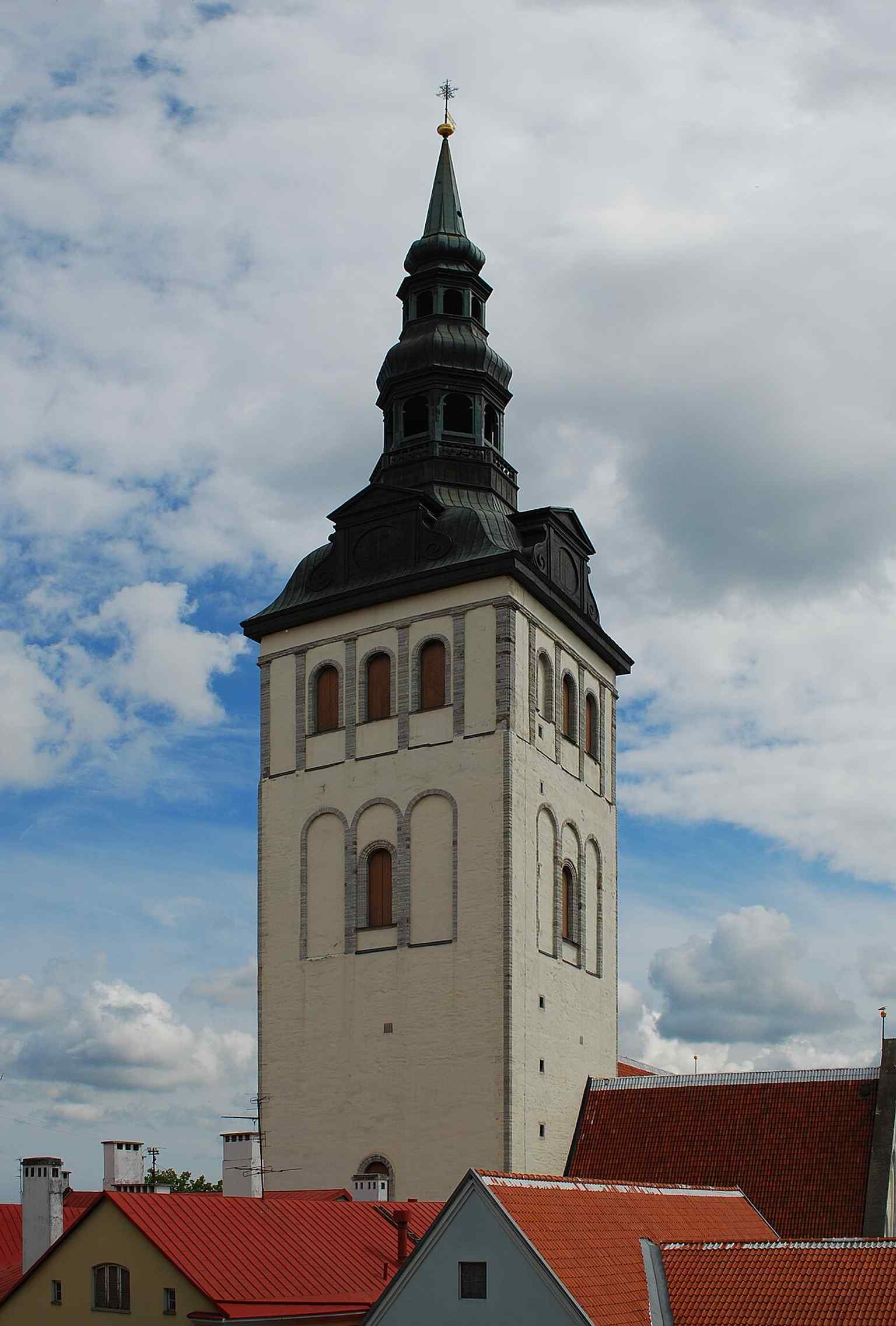
As trade grew, the church grew with it. Between the early fifteen hundreds and its later rebuilds, chapels multiplied, the central body rose into a taller basilica, and by fifteen fifteen master builder Andreas Mor crowned the tower with a Gothic spire. Eventually it reached about one hundred and five meters, high enough to act as a landmark for ships and a statement to the town below: the merchant quarter had money, reach, and confidence.
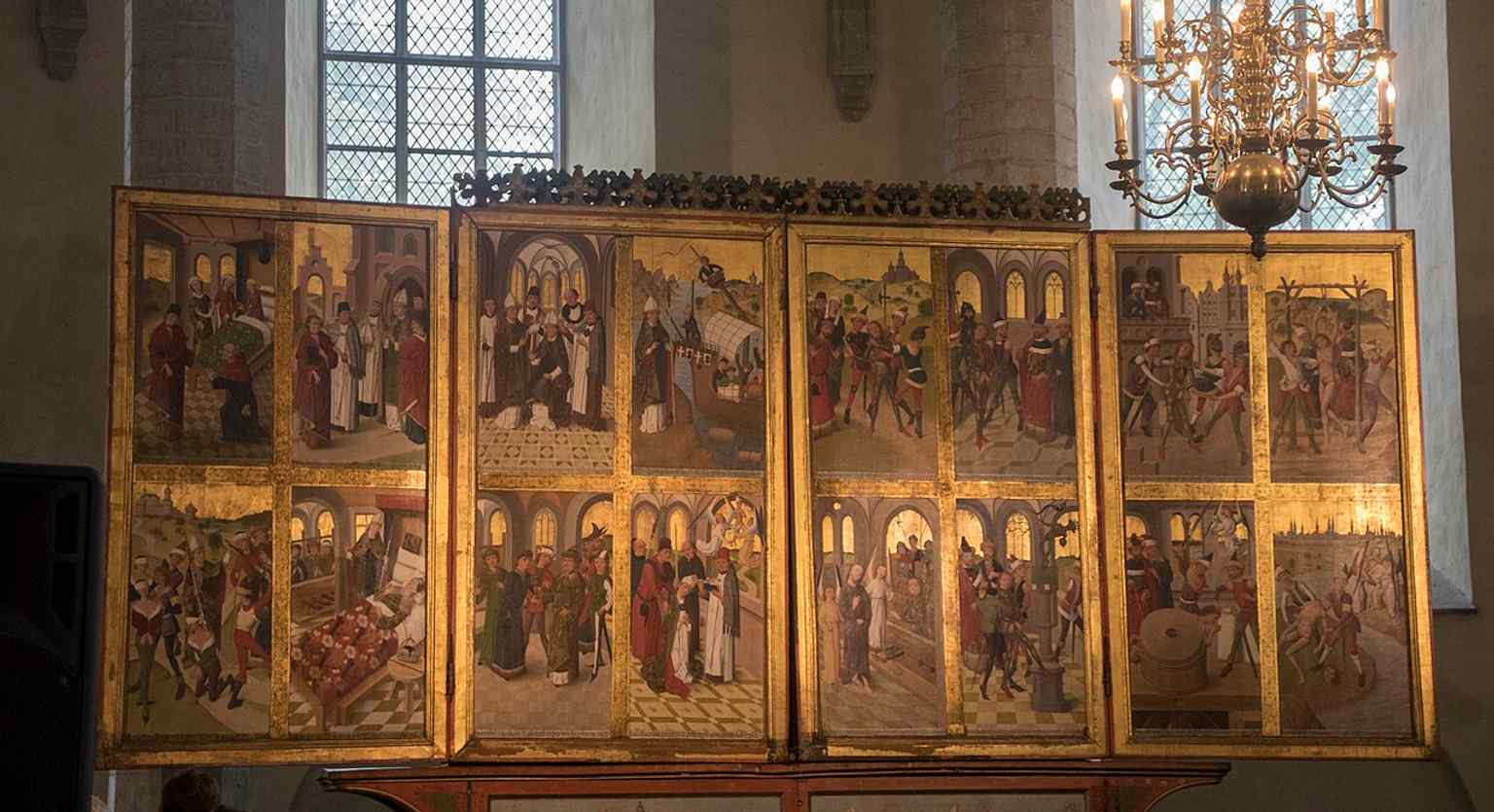
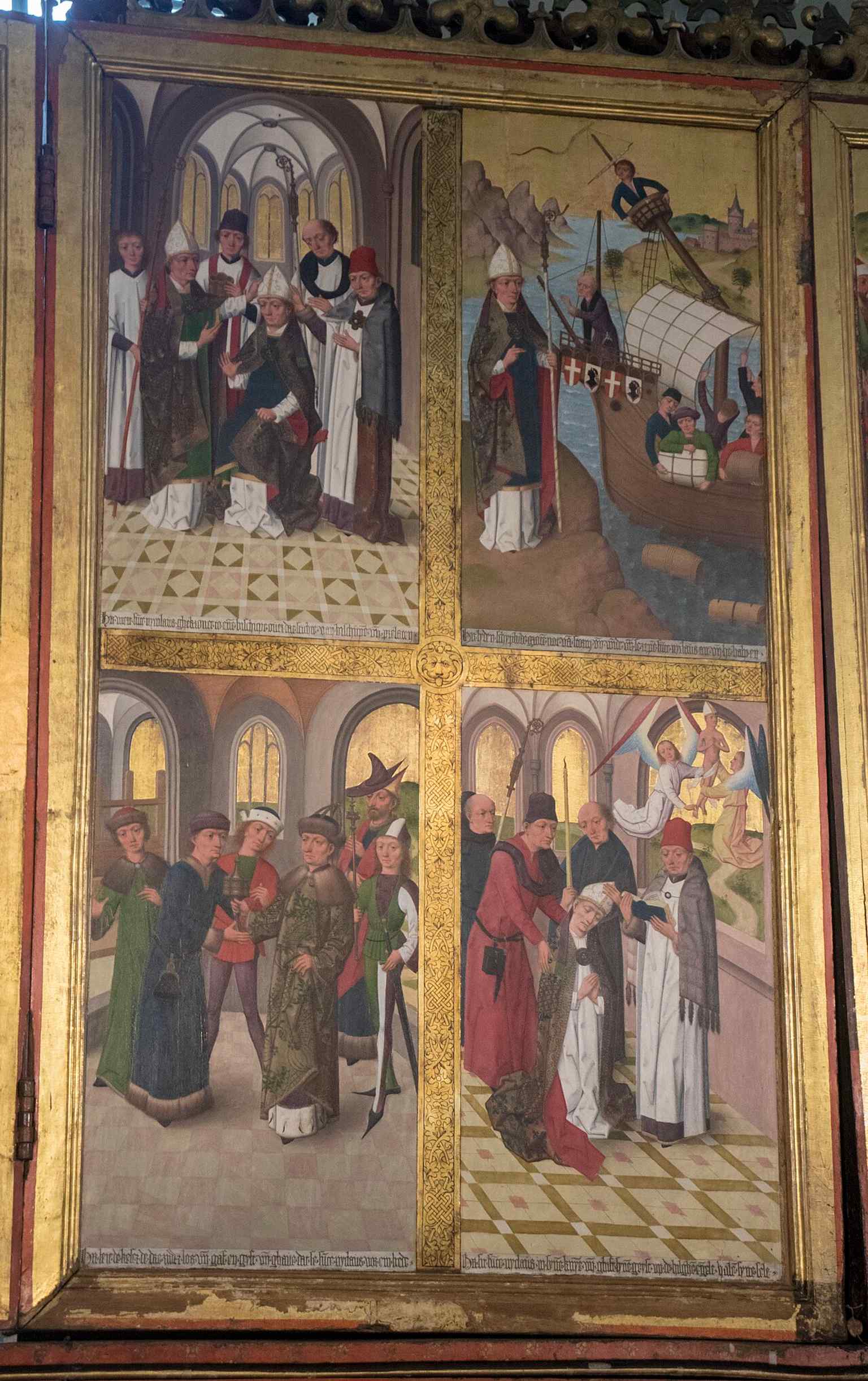
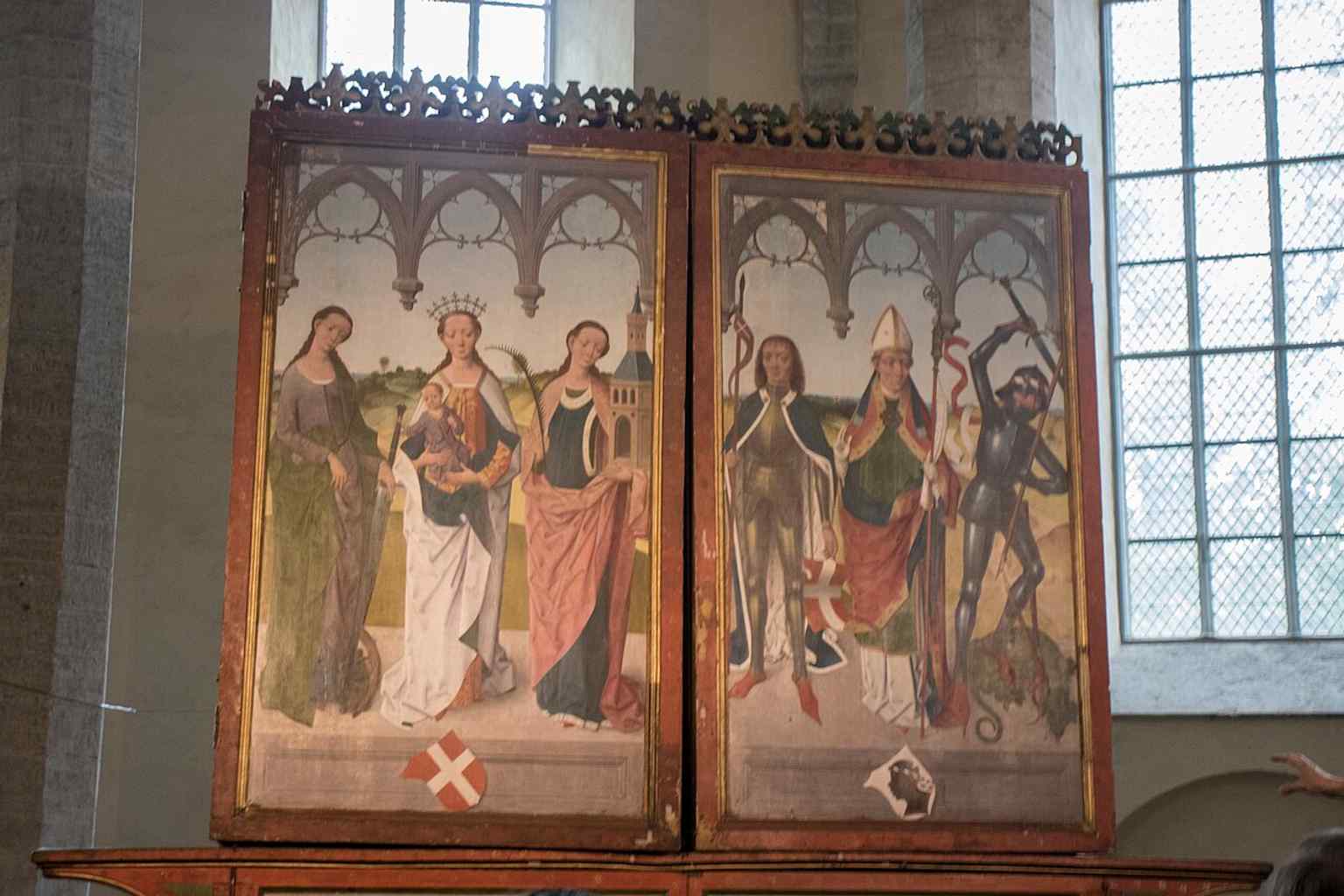
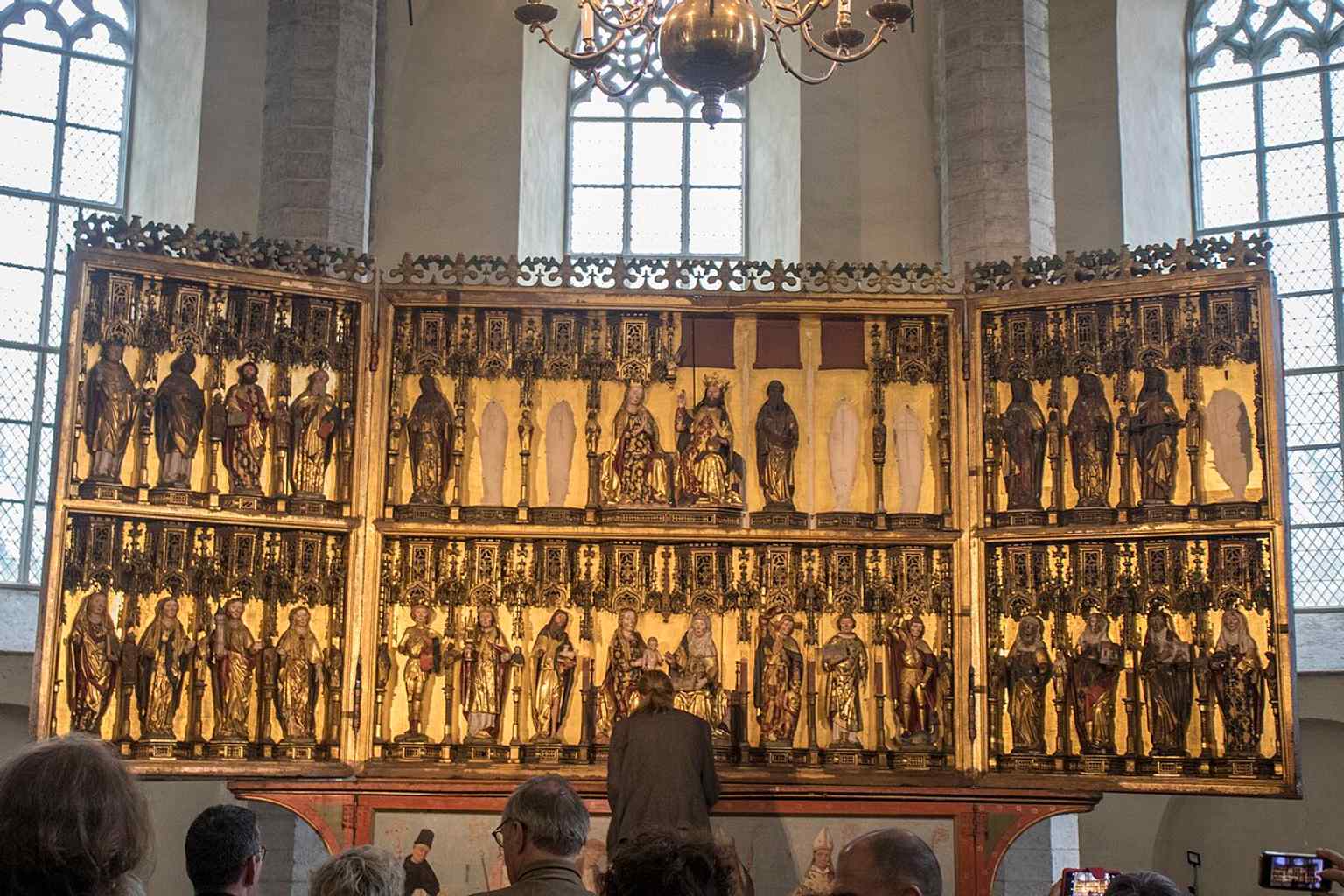
There is a good story here from the Reformation. In fifteen twenty-four, crowds smashed church interiors elsewhere in town. Niguliste escaped. Local legend says someone sealed the door locks with lead, buying enough time for tempers to cool. So this became the only lower town church to keep much of its rich interior. On your phone, have a look at the great altarpiece by Hermen Rode. The men kneeling there likely include members of the Great Guild and the Brotherhood of Blackheads, the merchants who paid for it. When unrest threatened, they carried that altar out and hid it in the House of the Blackheads, where it stayed until nineteen forty-three. We will meet that house soon enough.
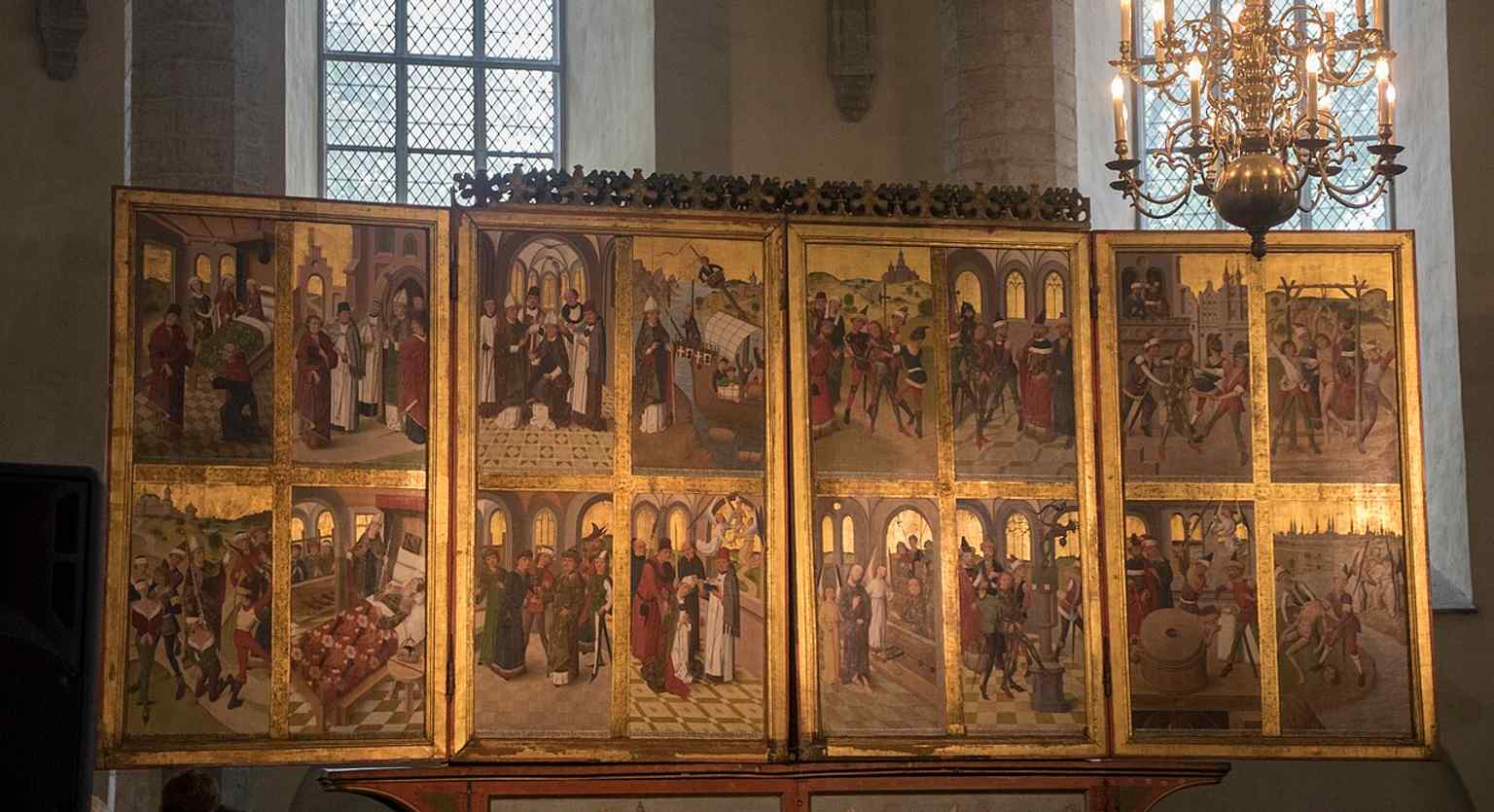
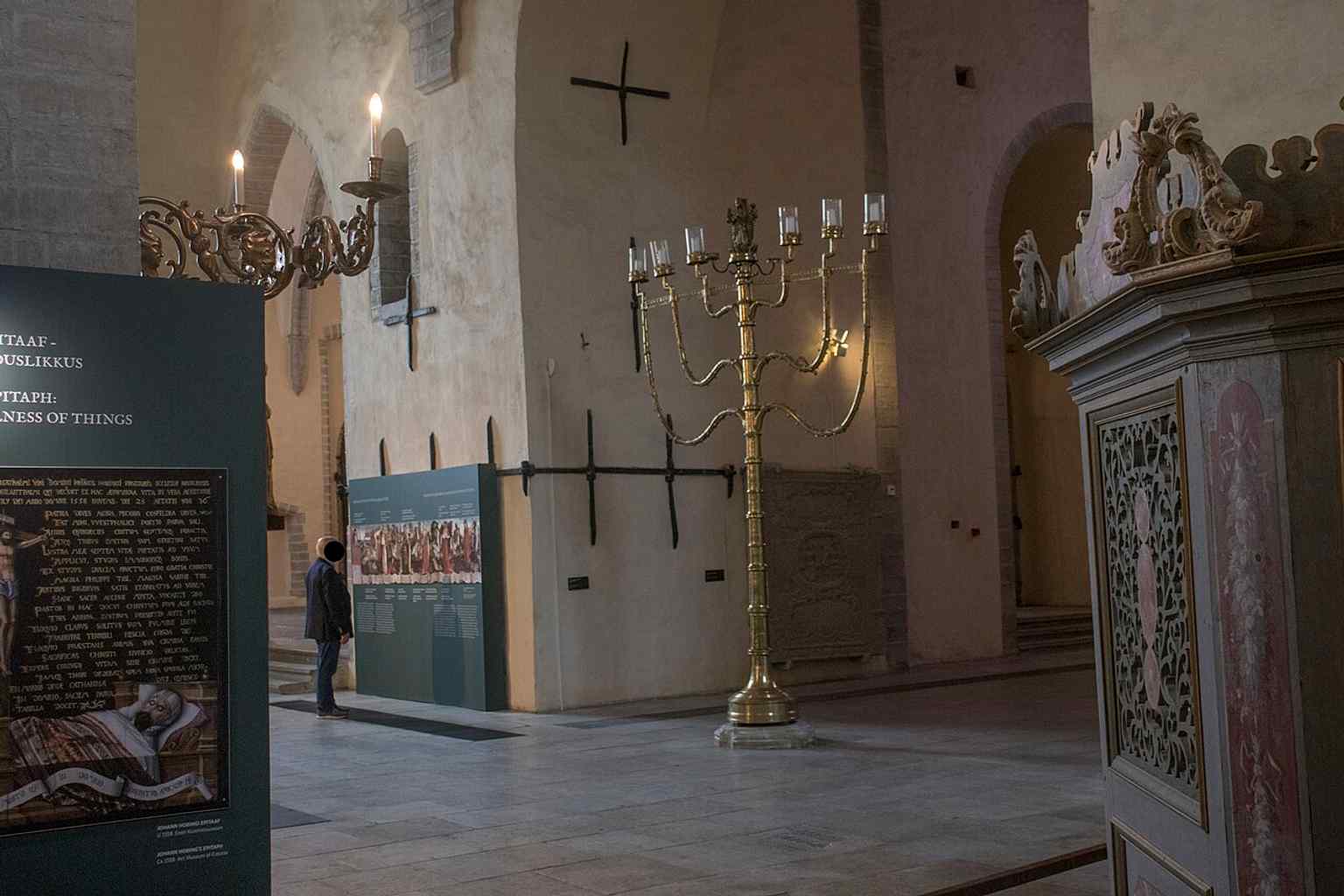
The church did not escape the twentieth century. Soviet bombing in March nineteen forty-four left it badly damaged, and fire destroyed much that remained. Another fire in nineteen eighty-two knocked down the rebuilt spire again. Estonia answered with patience: generations of restorers studied, repaired, and rebuilt this place until it reopened as a museum and concert hall. Inside, among the survivors, is even a fragment of Berndt Notke’s Dance of Death, a rather blunt reminder that rank and wealth impress everyone... except death.
From here, merchant influence steps out of the church and into its own headquarters. We’re heading next to the Great Guild Building, where trade stopped pretending to be modest. If you want to return inside later, Niguliste is generally open daily from ten to six.






.jpg)