
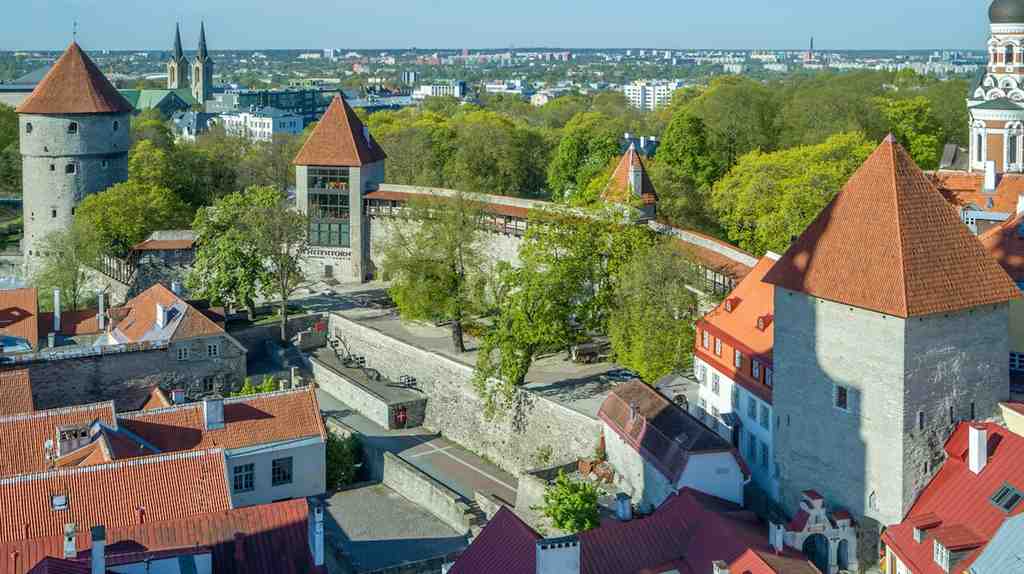
Look for the limestone fortress wall, the round stone towers, and the stylized iron knight that marks this small garden on the edge of Toompea.
This is Danish King’s Garden, and it plays a neat Tallinn trick: it feels peaceful while leaning against raw military architecture. That contrast is the point. In twelve nineteen, King Valdemar the Second of Denmark landed near the old stronghold here, seized the site, and then faced a fierce counterattack from Estonian forces on the fifteenth of June... or, in some retellings, the fifteenth of July. Even the calendar gets a little slippery when legend moves in.
Here comes the famous part. The Legend of the Dannebrog says that as Danish troops faltered, bishops climbed the hill and prayed for help. Then a red banner with a white cross fell from the sky, the Dannebrog, and Danish morale snapped back into place. Very convenient, if you’re trying to prove heaven had picked a side. Another version says Pope Honorius the Third sent the flag as a blessing for crusade, which is less theatrical but probably easier on the laws of physics.
Take a moment and look out beyond the wall toward the lower city. Try to picture this quiet strip as a battlefield edge, not a park. You can often pick out Niguliste, St. Nicholas, rising among the roofs... we’ll head there next.
Most visitors miss that this calm garden is the young part of the story. For centuries this was just an unbuilt strip beside the defenses. Only in the nineteenth century did Tallinn turn it into a decorative public park. By eighteen twenty-five, plans already marked it as one of Toompea’s important green spaces, with rosehip, currant, and viburnum growing on the limestone slope. If you glance at the memorial stone in the app, you’ll see how firmly later Tallinn anchored the miracle to this spot.
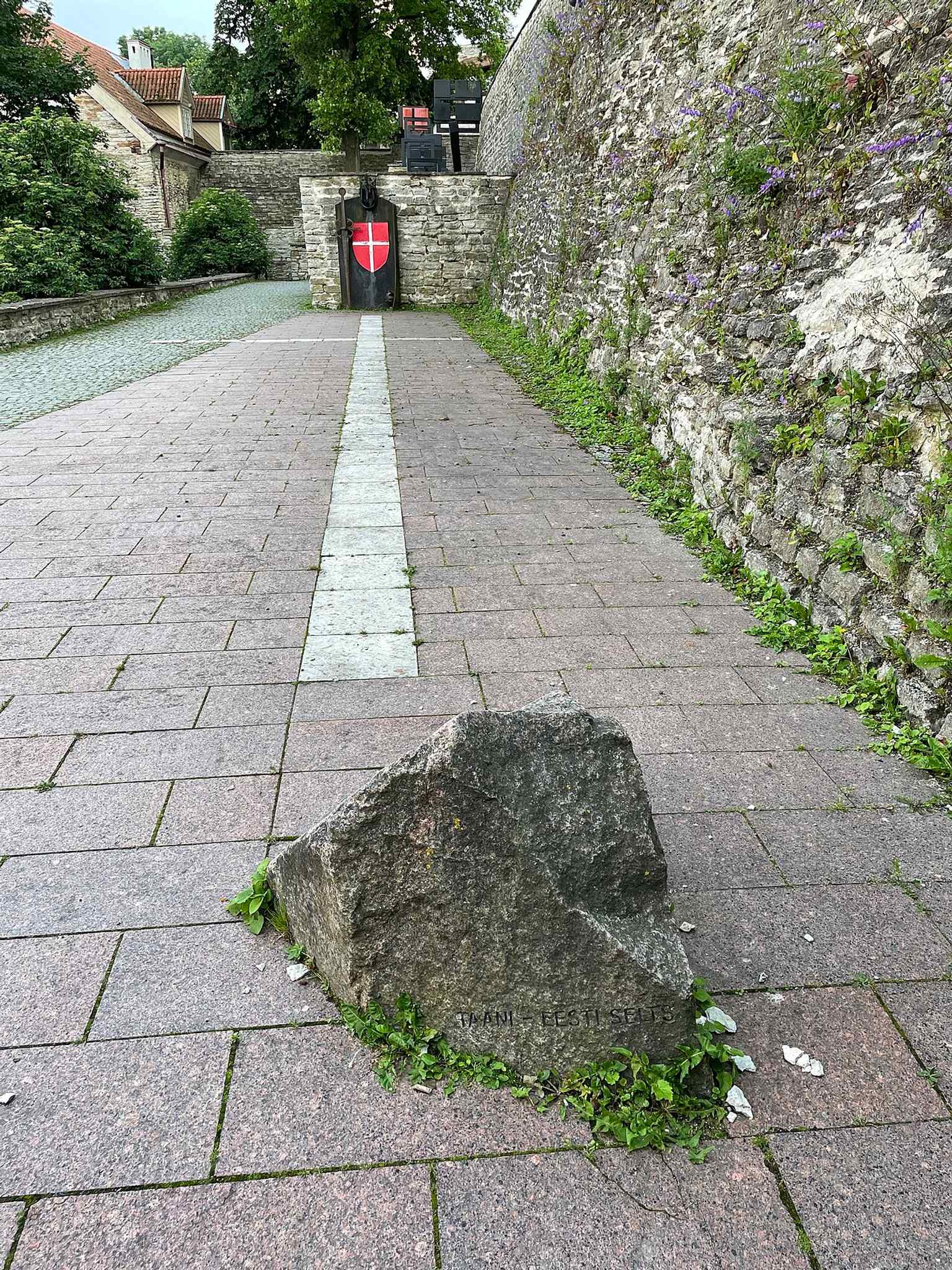
Later legend added another Danish king, Erik Menved, who supposedly protected the lower town’s rights here in thirteen eleven. So this place remembered not only conquest, but who got to trade, build, and stay.
Let your gaze drop toward Niguliste now, and we’ll walk down into the merchants’ city. Conveniently, this garden never closes; it is open all day, every day.





