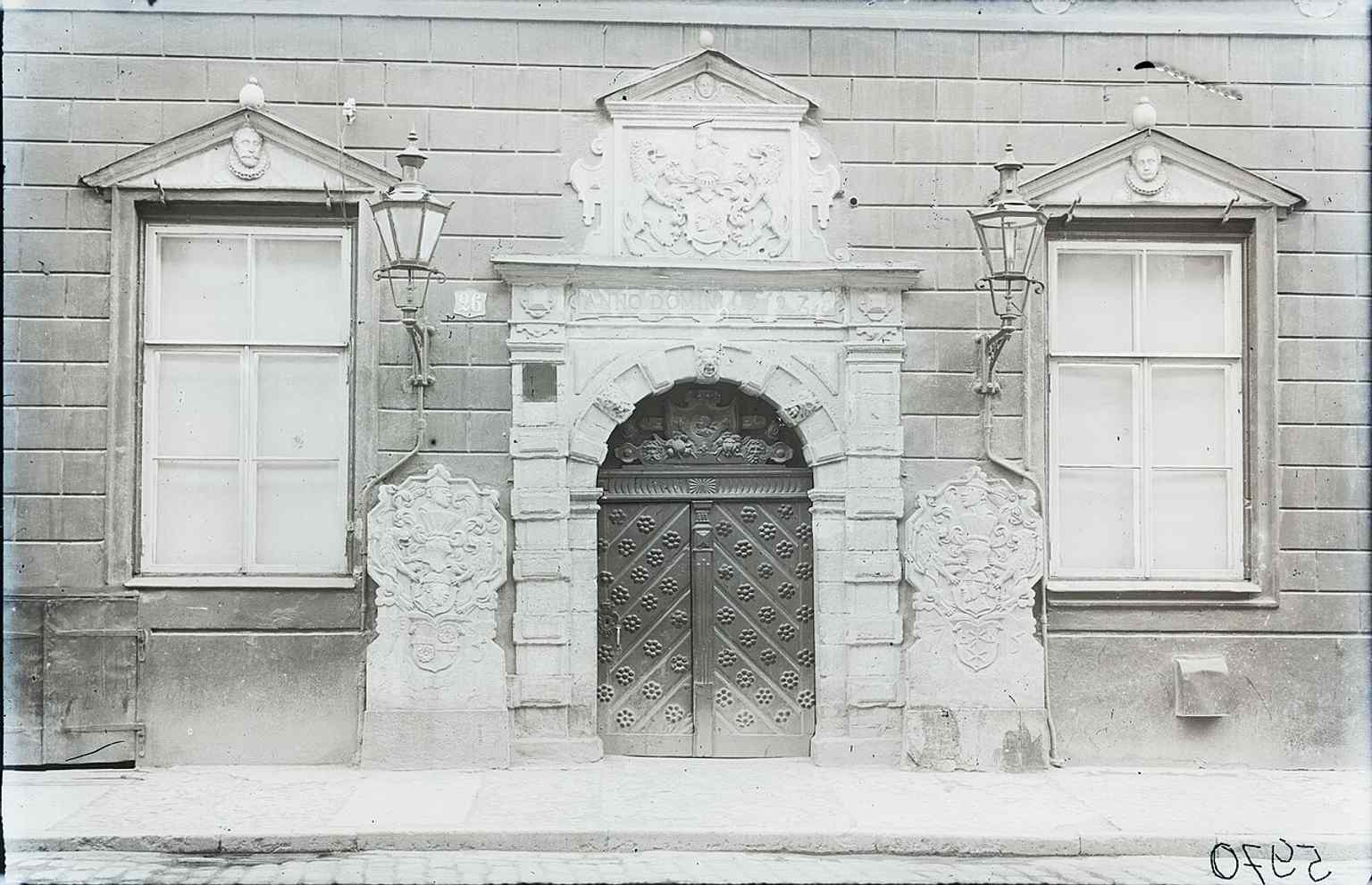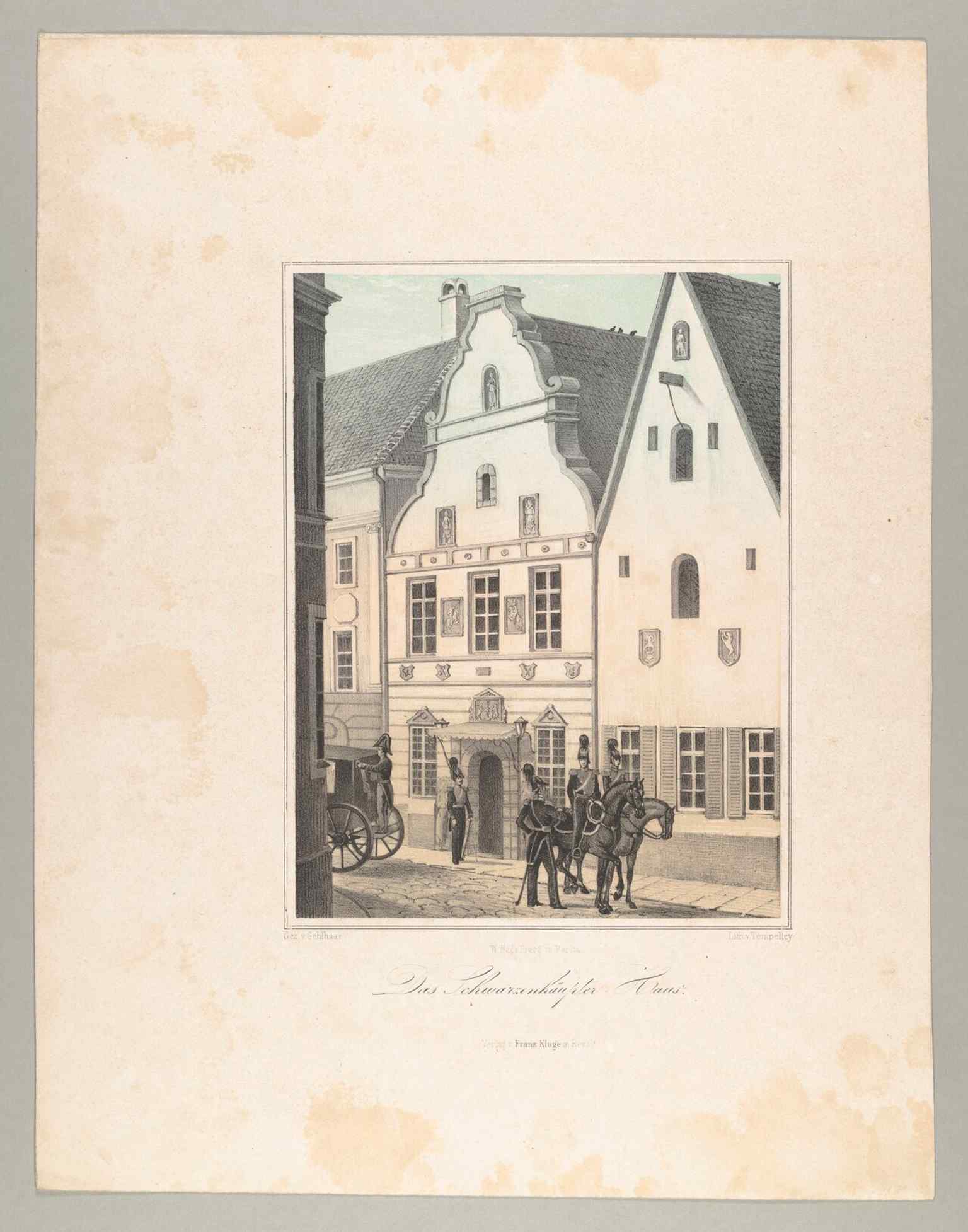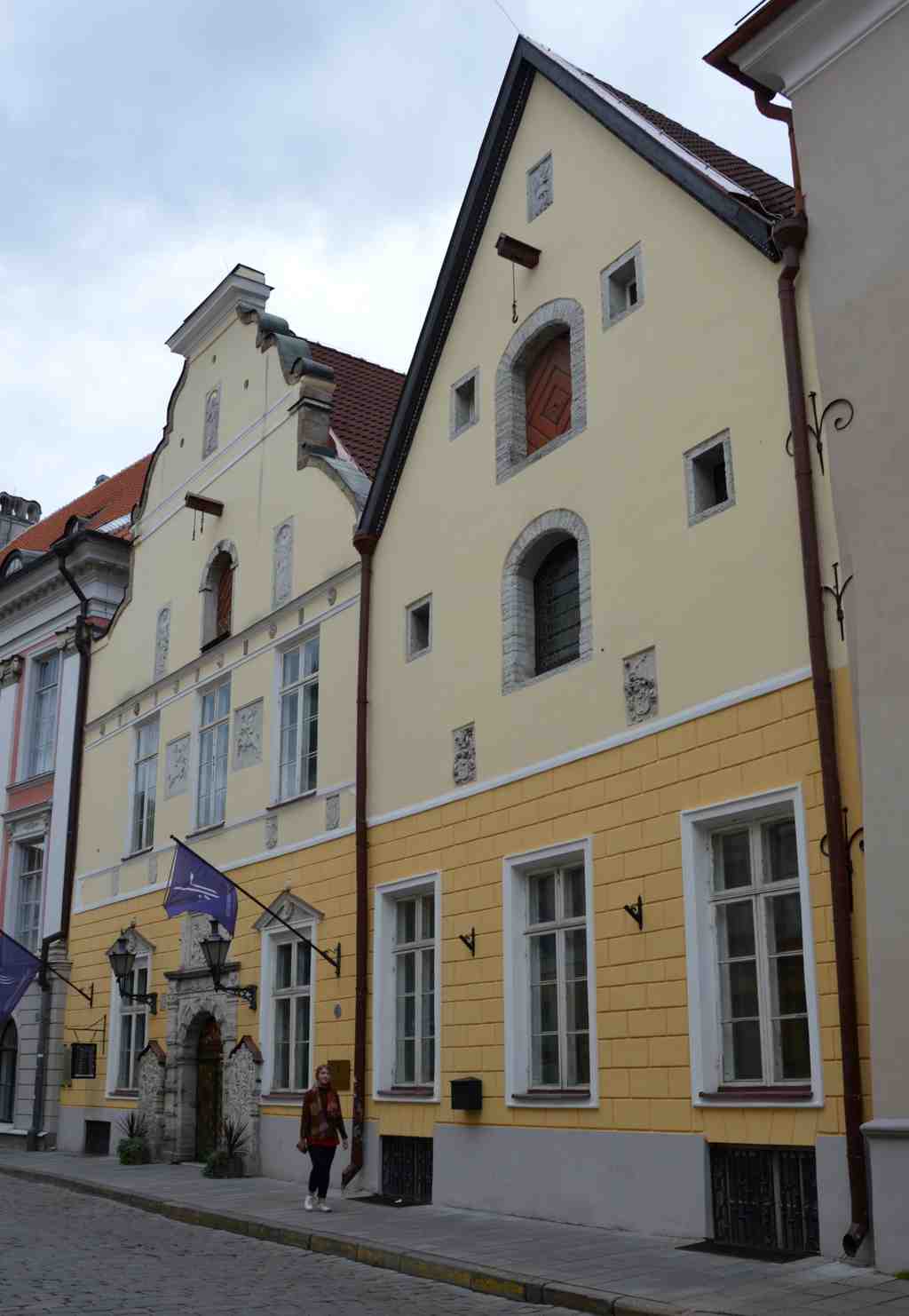
On your right stands a pale stone facade with a steep stepped gable, a dark carved portal, and sculpted figures set between and above the windows.
This is the House of the Blackheads, and despite the slightly alarming name, it belonged to the Brotherhood of the Blackheads, a Tallinn association of unmarried merchants and shipowners. They were a sharp, ambitious slice of the Hanseatic merchant world: not yet the settled old guard, but wealthy enough to build a headquarters, stage ceremonies, and defend their status with impressive seriousness.
Their rulebook, written down by fourteen oh seven, tells you a lot. It laid out behavior, duties, and fines for breaking the rules... paid in money or in wax for church candles. Nothing says fellowship like a penalty system with devotional accessories. This was not just a business club. The brothers attended church services together, marked feast days together, and held memorial masses for dead members. So the house stood for profit, yes, but also discipline, ritual, and reputation.
In fifteen seventeen they rented this property, and in fifteen thirty-one they bought it from a wealthy councilman named Fiant. Then they reshaped it. Instead of the usual merchant storage spaces, they created a grand hall, supported by an octagonal stone pier and wide arches, dividing the room into two long aisles, almost like a church turned toward banquets and assemblies. The point was clear: these bachelors intended to matter.
And then came the surprise. When the Reformation began threatening church treasures in fifteen twenty-four, the Blackheads did not wait politely for trouble to knock. They removed and hid their valuables in advance, including a magnificent altarpiece from Bruges that they had commissioned back in fourteen eighty-one. That one detail changes the picture, doesn’t it? These men were not only flamboyant traders in fine clothes. They were also deeply vulnerable to political and religious upheaval, and smart enough to act before the storm hit.
The facade in front of you became their public performance. In fifteen ninety-seven, the master builder Arent Passer redesigned it, keeping the tall Gothic shape but dressing it in Dutch Renaissance style. Look up and you find Christ as Savior of the World, then Justice with scales, Peace with a palm branch, and the coats of arms of Hanseatic trading centers like Bruges, Novgorod, London, and Bergen. This wall is practically giving a speech: we are pious, connected, respectable, and very much part of the wider world.
Then there is the sly bit of theater. The window pediments on the ground floor carry portraits of King Sigismund the Third Vasa and his wife Anna of Austria, carved for a royal visit that never happened. Tallinn has always understood optics.
If you like, check the before-and-after image in the app; the portal kept its old stone dignity while the doorway itself picked up a more modern face. And if you glance at the White Hall photo, you can see how the old feast rooms still live on as concert spaces, complete with dark blue tiled stoves and chandeliers ordered from Berlin.
So lift your eyes along Pikk Street, because ahead waits another church farther down the route. The house usually opens on weekdays from nine to five and stays closed on Saturdays and Sundays.