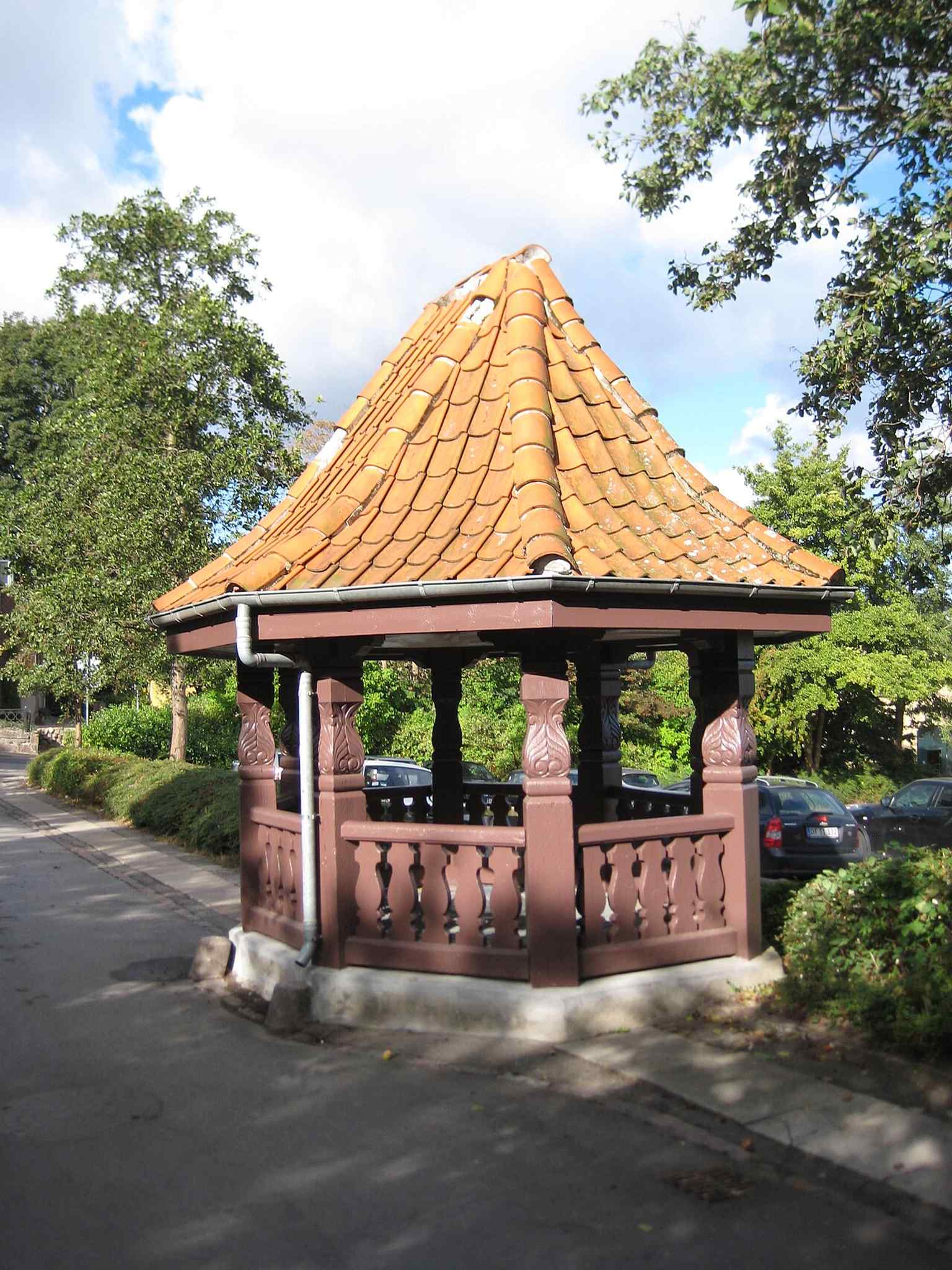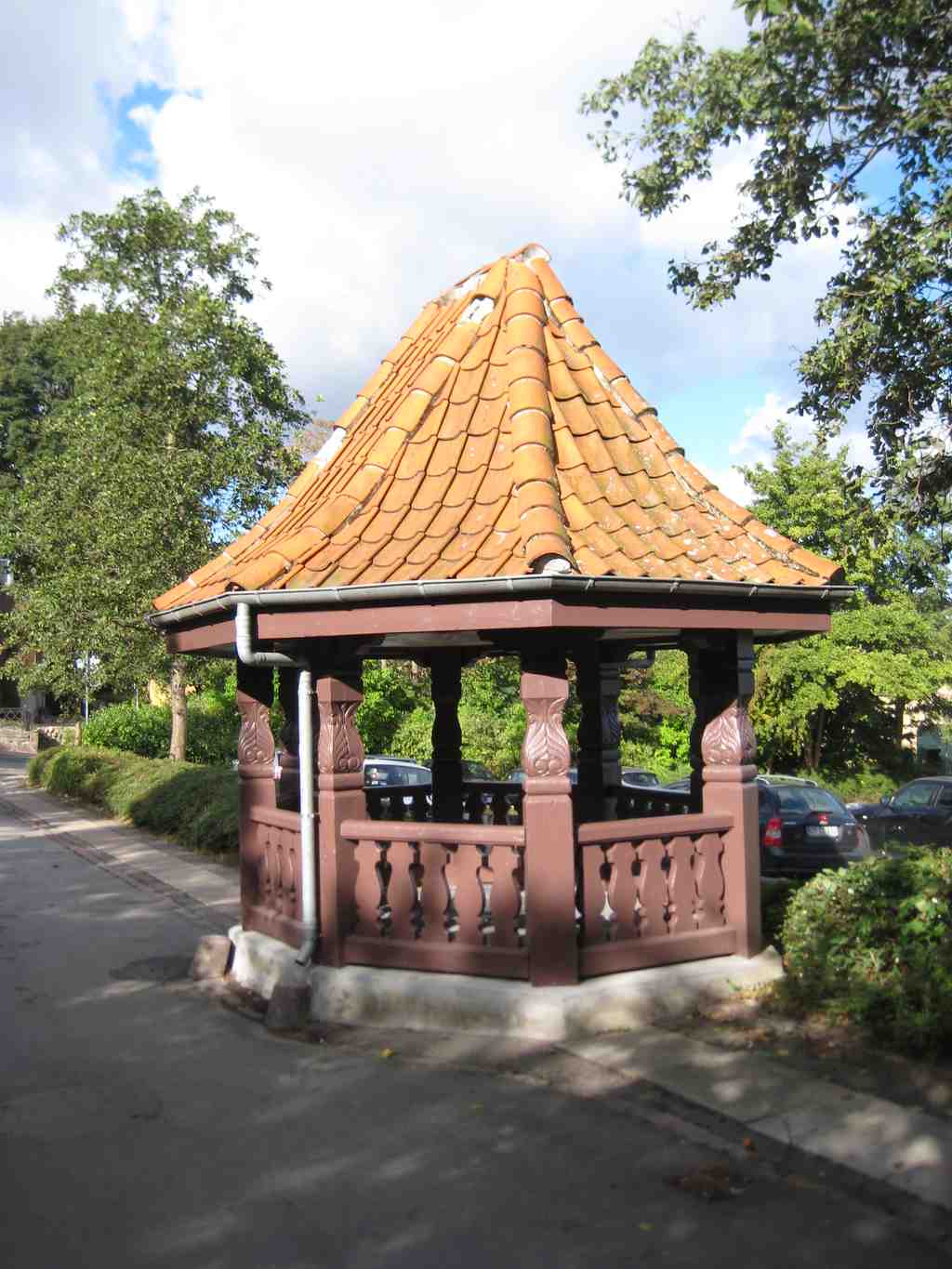
Welcome to Maglekilde, where you can spot a small, octagonal timber wellhouse topped with a steeply pitched red tile roof and supported by beautifully carved wooden pillars. This spot marks the most powerful natural spring in all of Roskilde! It used to pump out a staggering ninety thousand liters of water every single hour. Today it is closer to fifteen thousand, but its historical impact on the city is immeasurable.
Back in the eleventh and twelfth centuries, builders mined travertine... a type of light, porous limestone formed by the spring's mineral deposits... to construct several local churches before bricks became readily available. The spring naturally formed a large pool, which soon powered the Maglekilde Watermill, first officially recorded in twelve fifty-eight.
As the centuries rolled by, the energy of this rushing water became irresistible to industry. After a devastating fire swept through Roskilde in seventeen thirty-one, a paper mill and later a textile mill took over the site. In eighteen ten, five Jewish industrialists from Copenhagen bought the complex, bringing in skilled weavers from Magdeburg and building new housing for their workers. By eighteen twenty, this forward-thinking paper mill even installed the fourth steam engine in the entire country! Check out the historical image on your screen...... to see what the bustling mill looked like back then.
But despite the cutting edge technology, the factory could not compete with larger operations and eventually went bankrupt. Then, a group of ambitious citizens had a completely different vision. In eighteen forty-six, they demolished the factories, filled the mill pond, and built a luxurious spa and mineral water factory designed by architect Hans Conrad Stilling. Take a look at your app again...... to see this incredible eighteen forty-six woodcut of the spa's grotto, where the spring water flowed directly from the mouth of a sculpted Neptune figure! It was highly dramatic, but sadly, the spa flopped and closed after just two years.
Eventually, this quaint little wellhouse was built over the spring in nineteen twenty-seven to protect what remains of Roskilde's once mighty water source. Pause to enjoy the sound of the spring. When you are ready, we can head to the next stop.