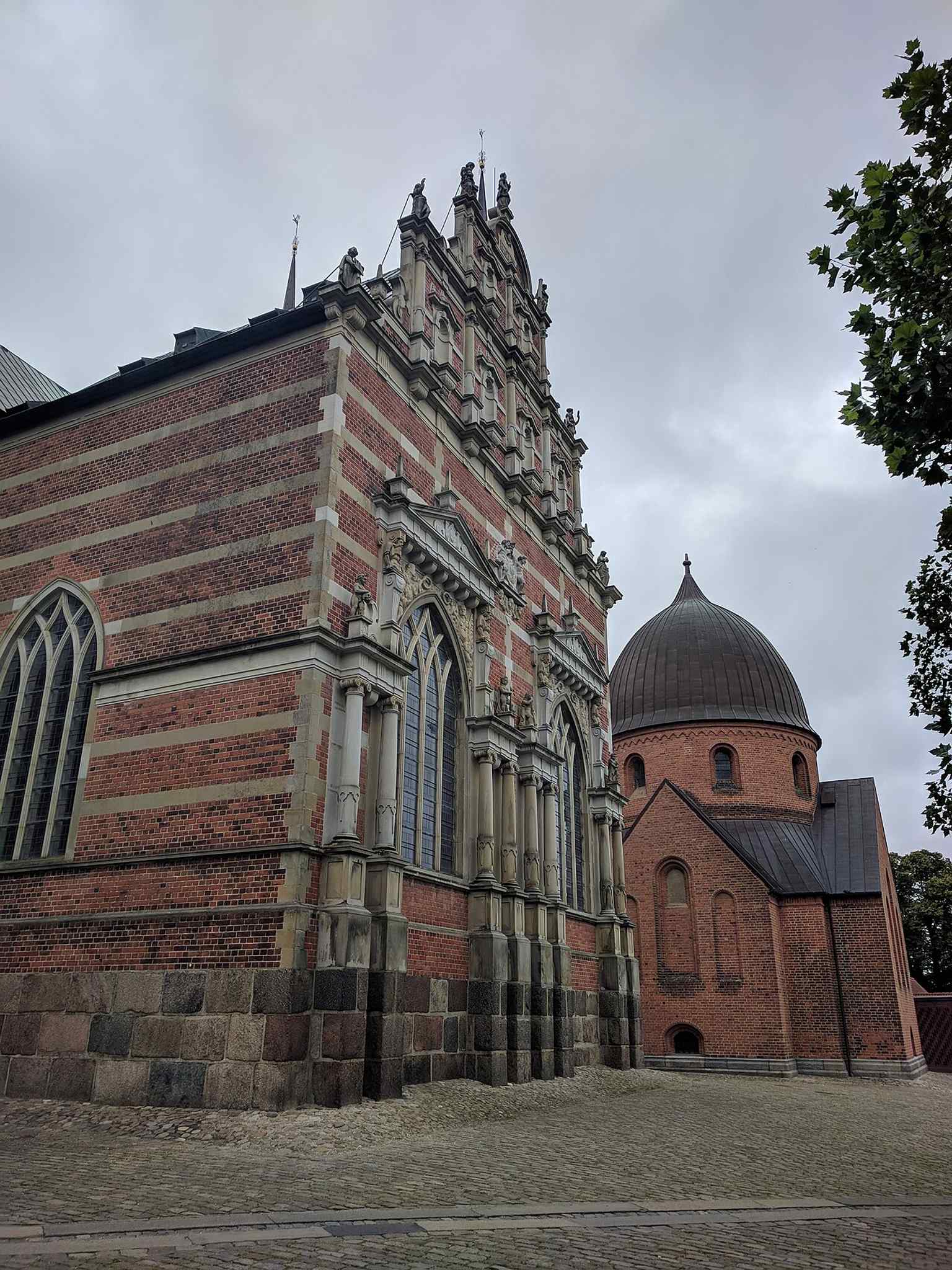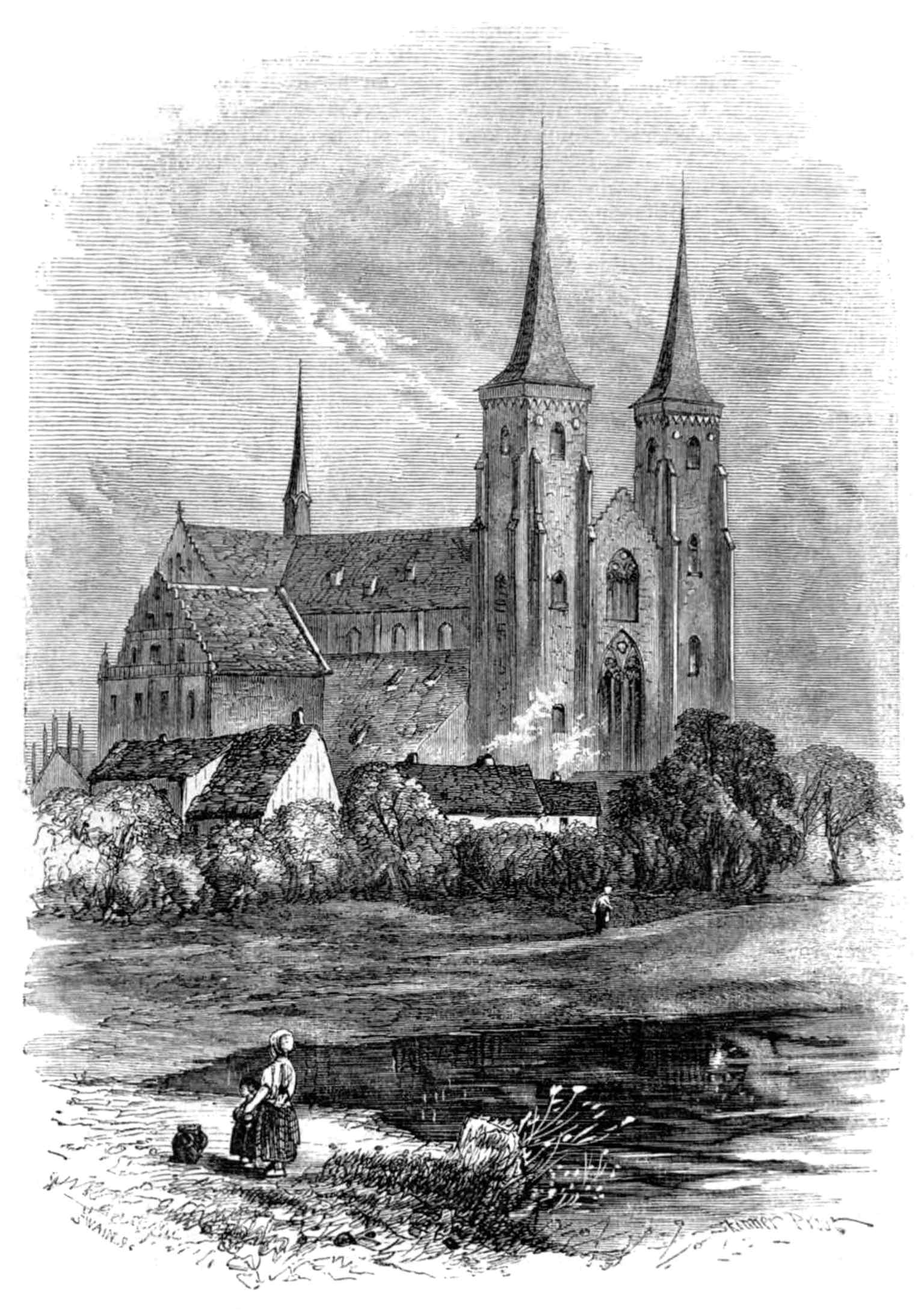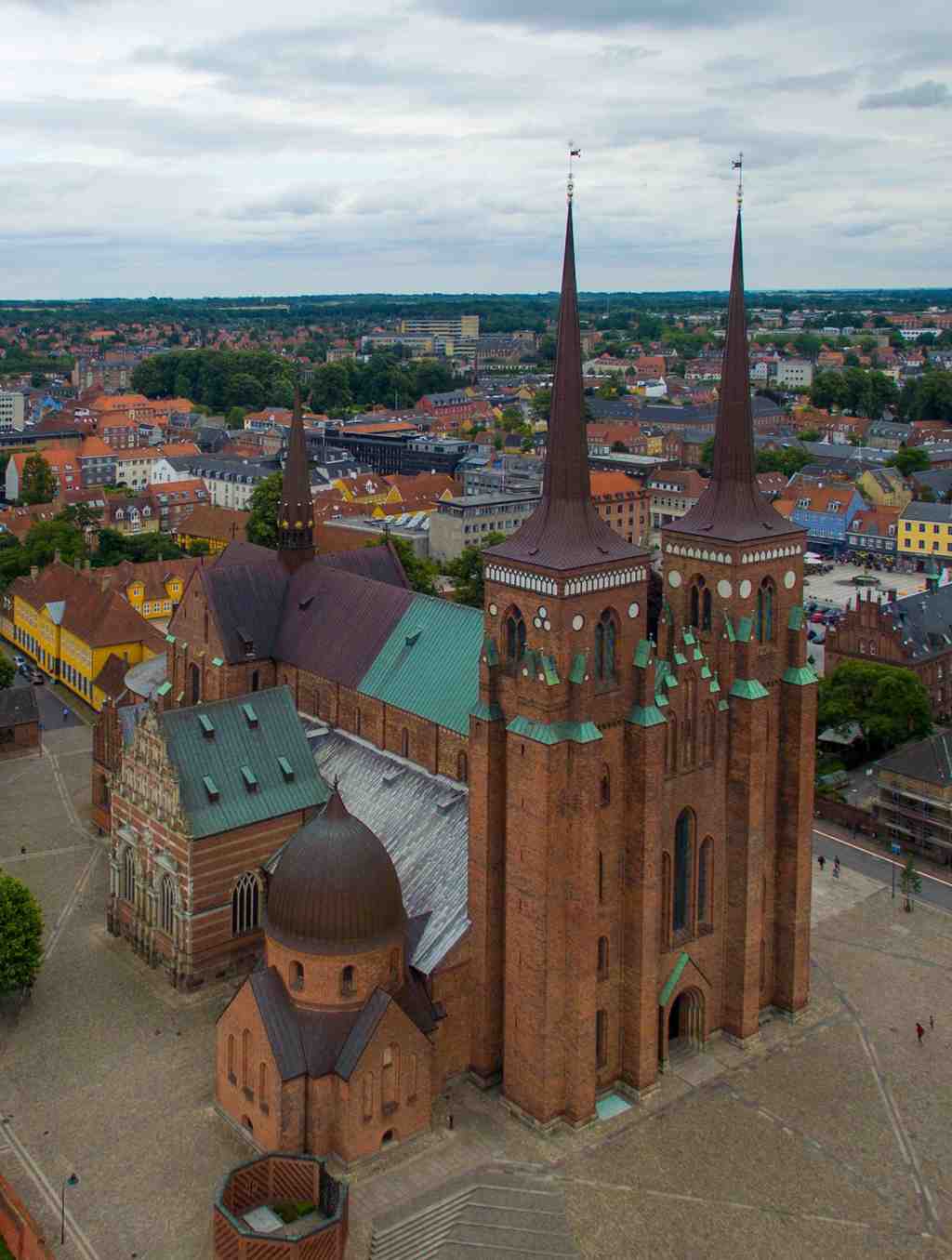
On your left, look for the monumental red brick cathedral, defined by its massive twin towers reaching toward the sky with needle-like copper spires. Welcome to Roskilde Cathedral! This is not just a church, it is the official royal burial ground of the Danish monarchy and an absolute masterpiece that literally rewrote the architectural history of Northern Europe.
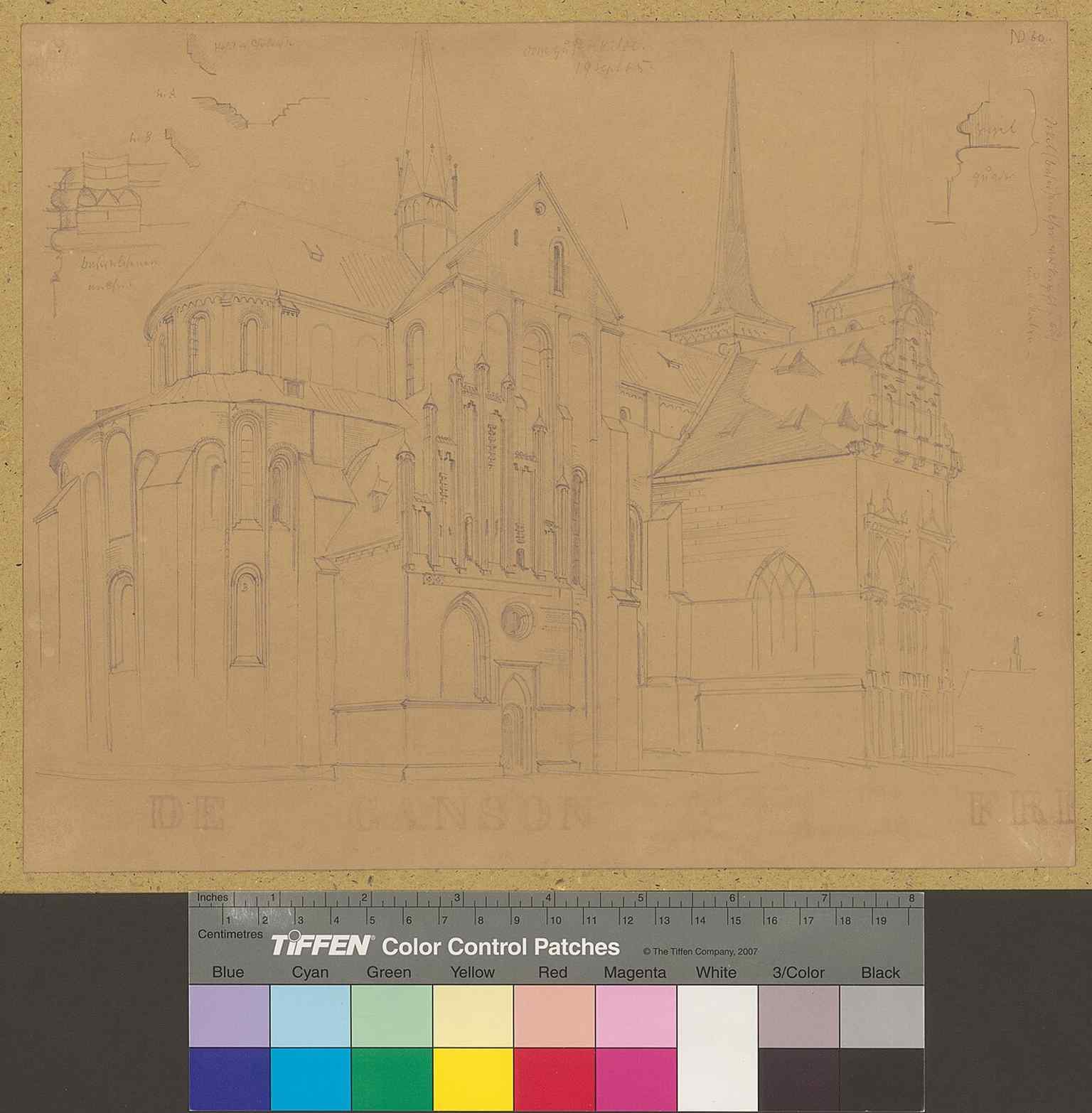
It is a UNESCO, the United Nations Educational, Scientific and Cultural Organization, World Heritage Site. Why? Because it spans eight hundred years of architectural styles. If you look at your screen, you can see an aerial view showing how these vastly different chapels were added onto the building over the centuries.
The story of this site goes way back to around the year nine sixty. King Harald Bluetooth made Roskilde his new capital and built a small wooden church right about here. When he died, his army brought his body back and buried him inside.
Later, the local bishops decided they needed a holy relic to elevate the status of the church. Two clerics traveled to Rome and secured the shining skull of Saint Lucius. As they sailed back to Denmark, a powerful demon attacked their ship! The terrified crew drew straws, and the man holding the skull had to act. He washed the skull three times, threw the water into the ocean, and jumped in. Amazingly, the cleric walked on water, and the demon vanished screaming into the depths. You have to love a dramatic origin story!
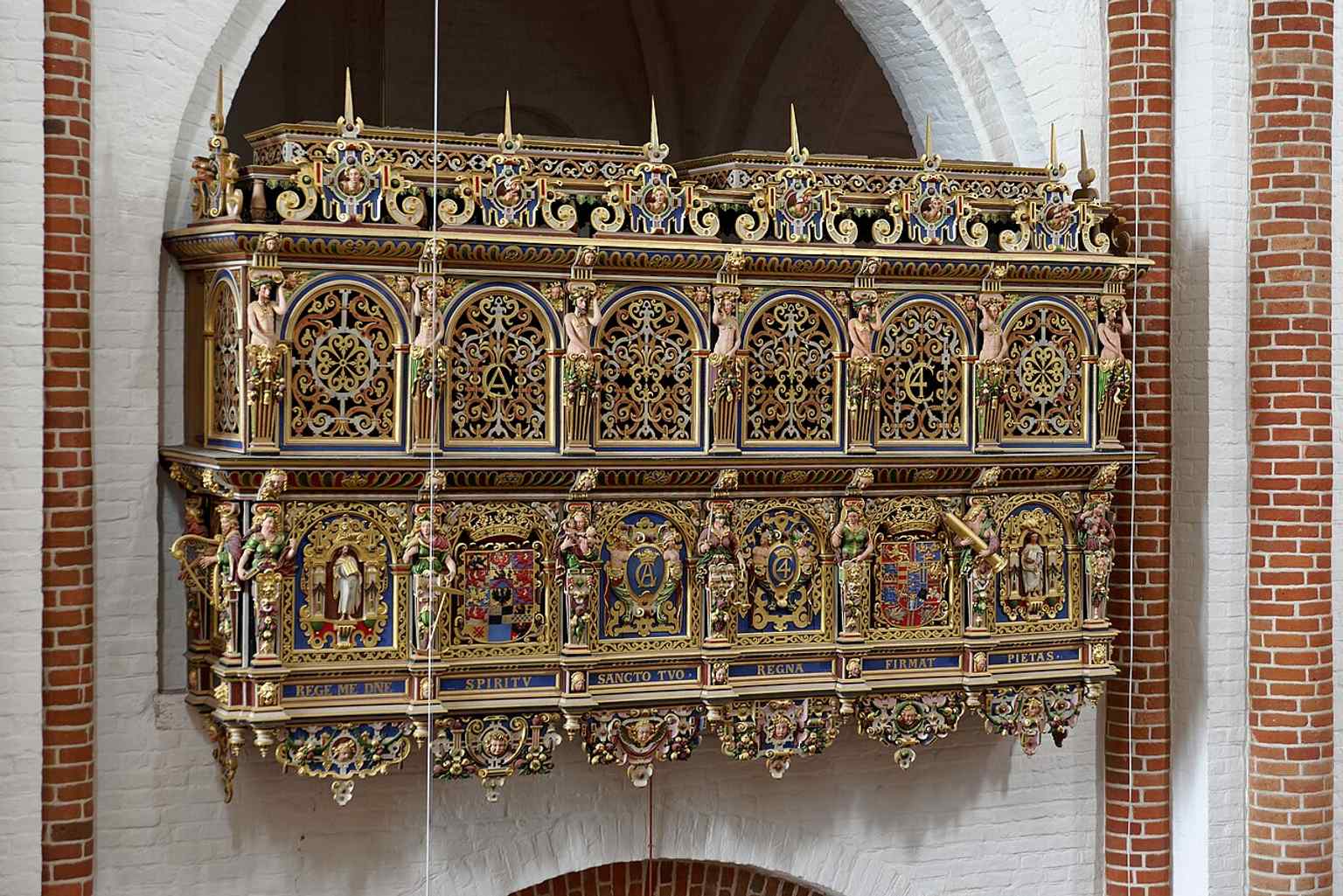
In the eleven sixties, Italian monks brought the art of firing bricks to Denmark, and the massive Gothic cathedral you see today began to rise. It soon became the ultimate resting place for generations of Danish royalty. Take Queen Margrethe the First. When she died in fourteen twelve, she was buried in a completely different town. But a year later, the bishop of Roskilde brought her body here. The monks at her original resting place were absolutely furious! They lost the massive income from saying paid prayers, known as requiem masses, for her soul. Take a peek at your app to see the intricate details of her magnificent sarcophagus.
There is also a fascinating spot inside called the King's Pillar. It is a central granite column marked with the heights of visiting royals. The absolute tallest mark belongs to Tsar Peter the Great of Russia, measured in seventeen sixteen at a towering two hundred and eight centimeters.
From a simple wooden church to a sprawling brick marvel holding centuries of Danish kings and queens, this cathedral truly captures the soul of the nation. Let the cathedral's sheer magnitude sink in. When you're ready, we can head to the next stop.