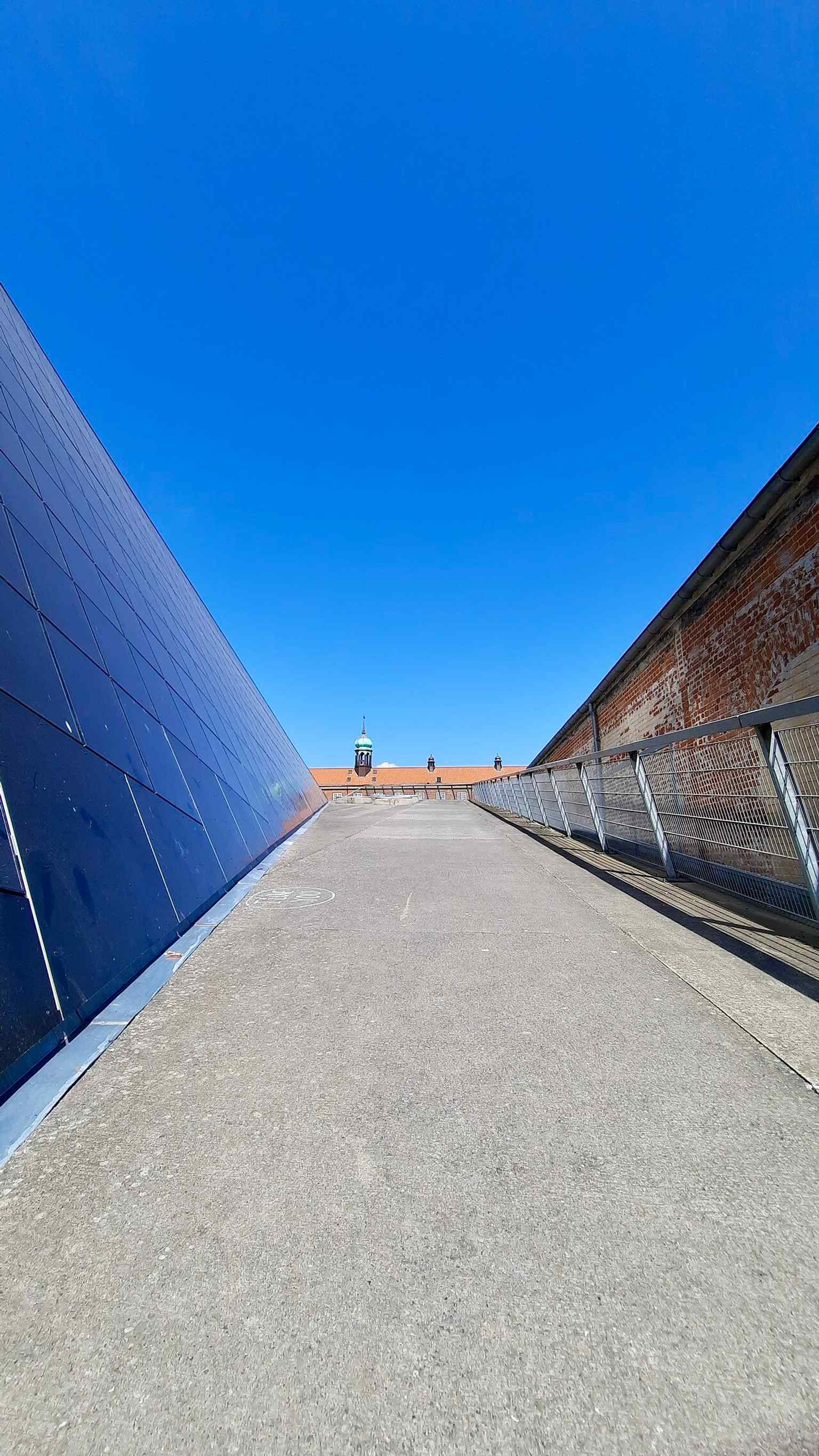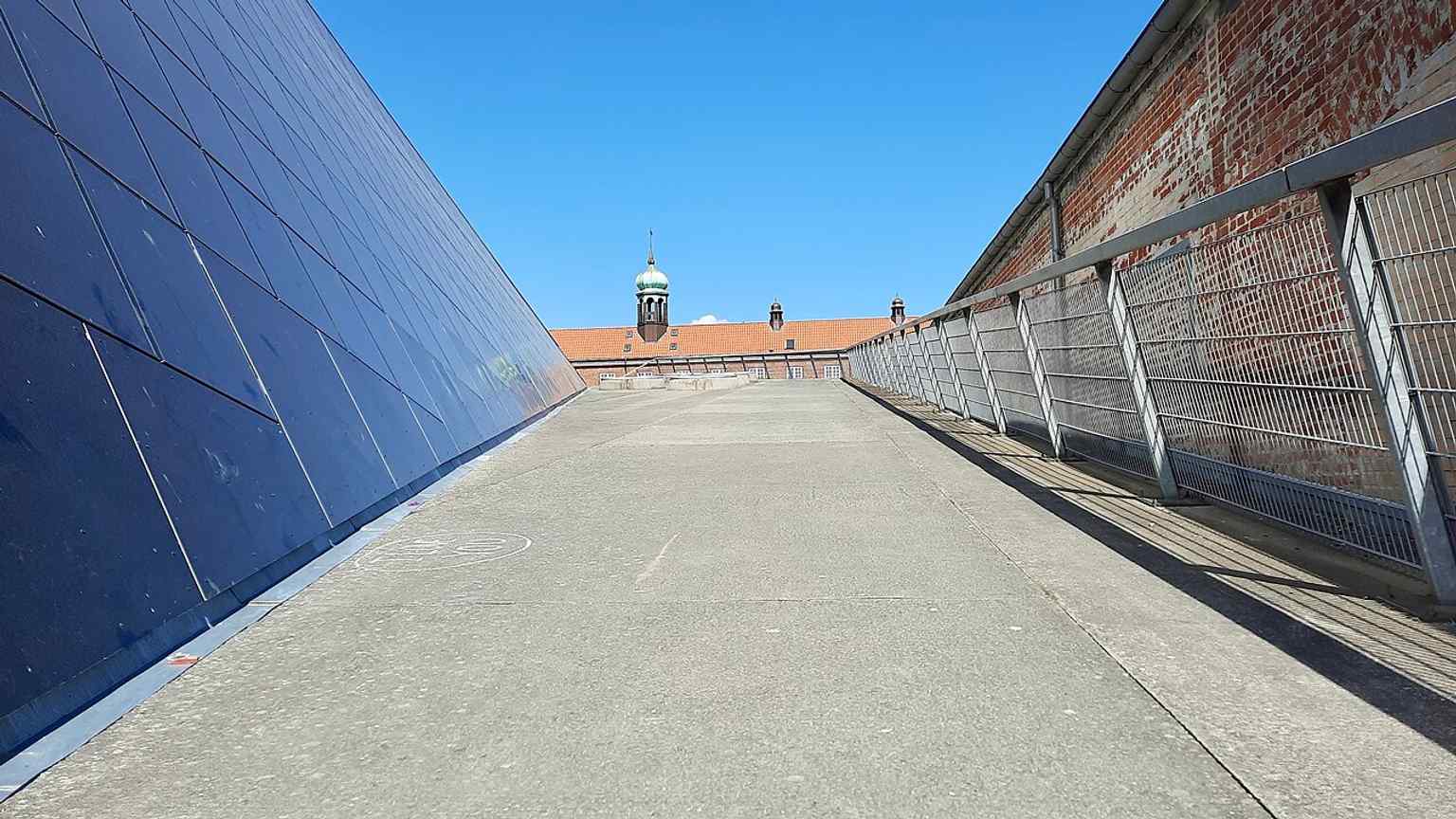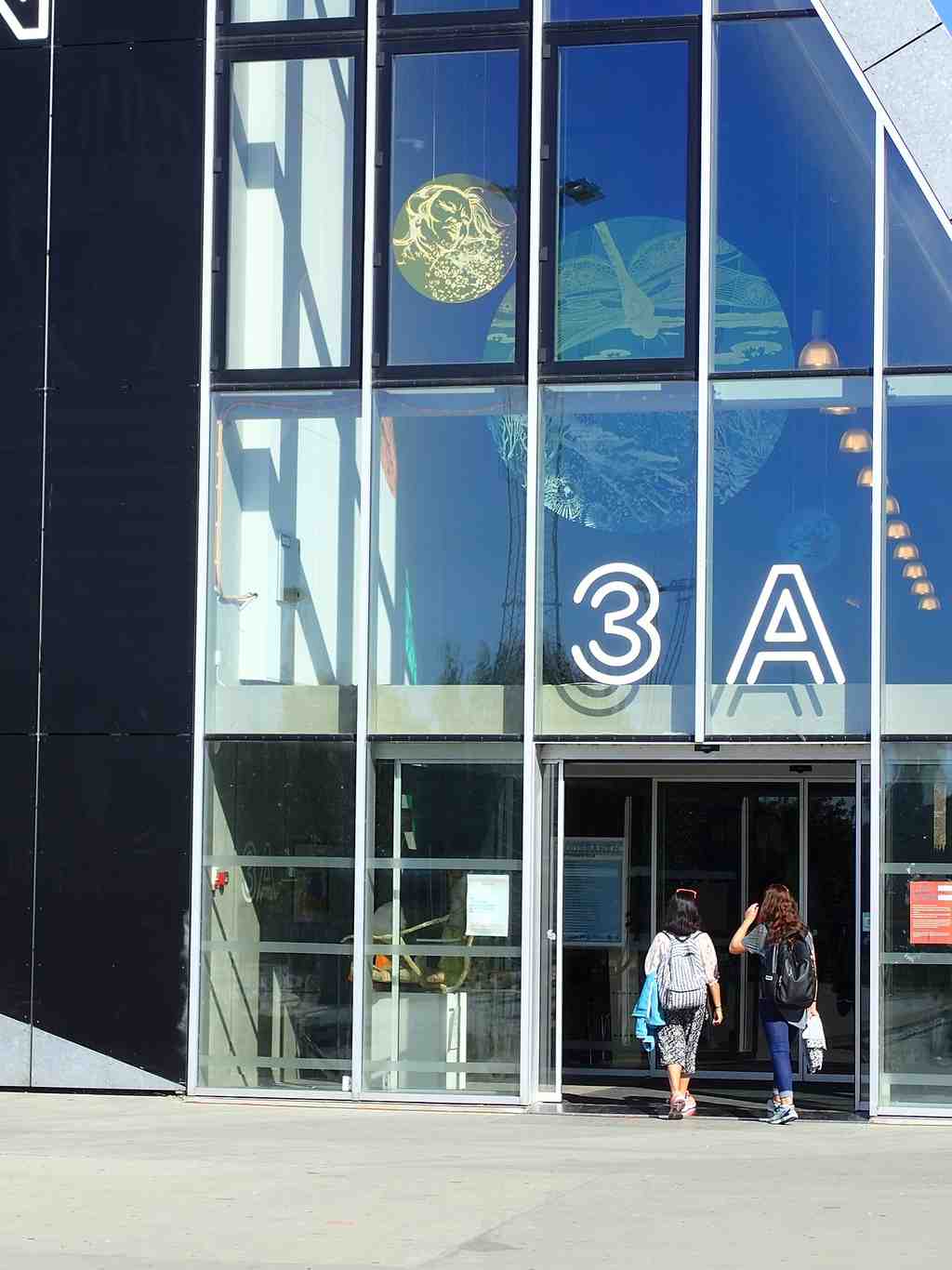
On your right, look for the long red-brick station building with its low industrial shape and the newer angular addition beside it, topped by a walkable roof.
This began as Aarhus’s freight station, the place where goods arrived, paused, and got sorted before moving on. In two thousand and three, the city decided the old station deserved a second career, and after a major rebuild, Aarhus Municipality and Realdania opened Godsbanen here on the thirtieth of March, twenty twelve.
Now it works as a cultural production center rather than a cargo depot... which is a much better use of a railway building unless you are personally very devoted to pallets. Inside are ten thousand five hundred square meters of workshops, project rooms, rehearsal rooms, exhibition spaces, guest housing, and venues for more than four hundred events each year. There’s even a black box called Åbne Scene, or Open Stage - a plain, flexible performance room that artists can reshape for theater, dance, readings, and whatever else they dare try. Teater Katapult, Radar, Spiselauget, Aarhus Billedkunstcenter, and Aarhus Litteraturcenter all make their home here.
Take a glance at the image on your screen and you’ll see the rooftop path, one of the clever touches from the renovation, letting visitors look across the old station and the new extension in one sweep. And yes, a few tracks still belong to Banedanmark and serve D-S-B, plus one platform said to be reserved for the royal family... because even the scruffiest creative district keeps a respectable handshake with the state.
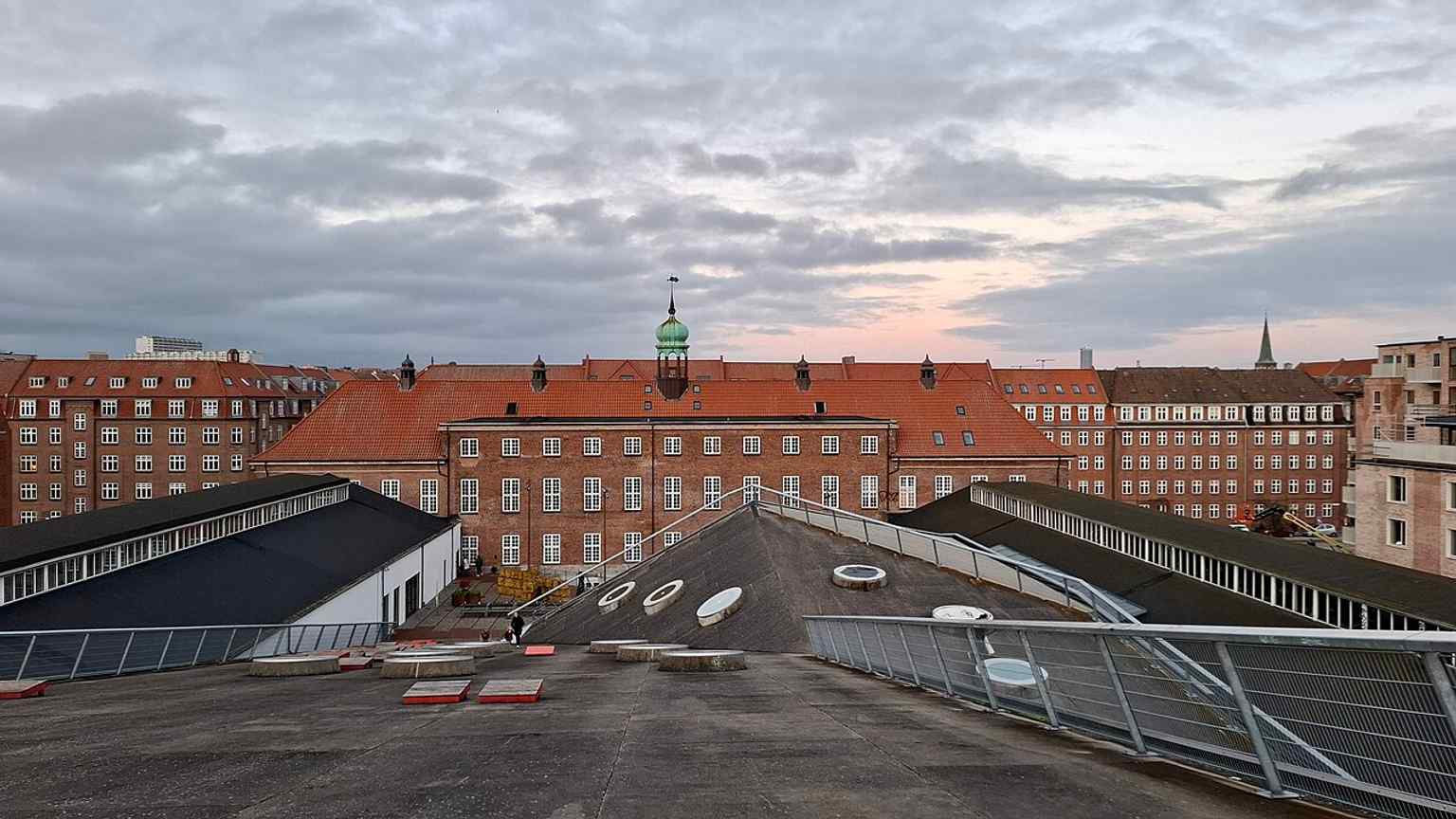
This old freight yard now ships ideas instead of cargo.
When you’re ready, continue on and let Aarhus unfold a little further.