
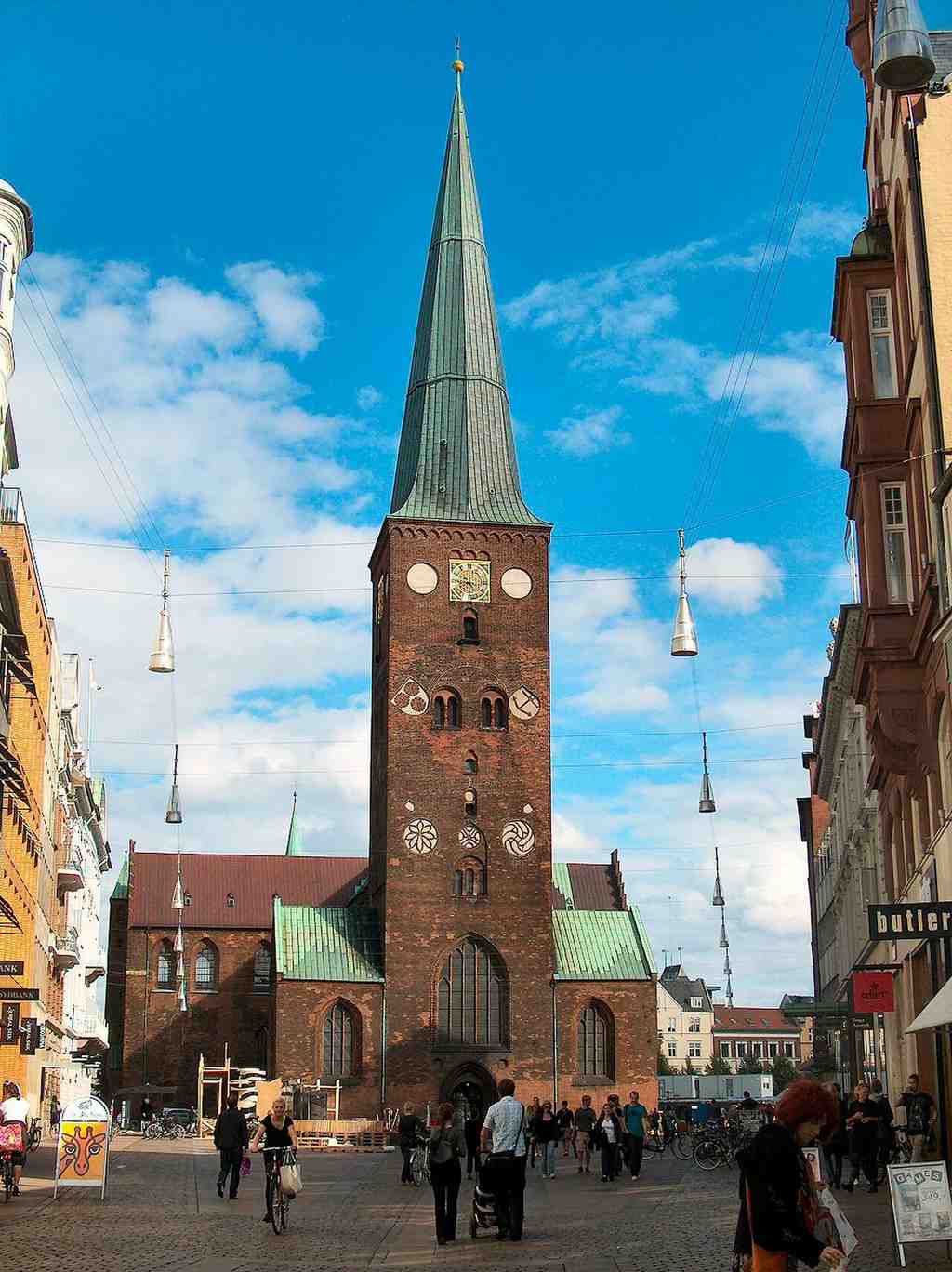
On your right, look for a broad stone-paved square framed by old facades, with the long brick flank of Aarhus Cathedral beside it and the curling bronze fountain locals call the Water Dragon.
This is Store Torv, the Main Square... though for its first centuries it was less a grand plaza and more a practical passage. Around the year twelve hundred, as builders raised the cathedral, this space took shape between Lille Torv and the church. Back then people called it Torvegaden, a route running from Immervad toward the cathedral, while nearby Lille Torv did the real work as the city’s center.
What you see now opened up only after a demolition job with excellent timing. A gate called Borgporten once split Store Torv from Lille Torv. It had a medieval tower, and the city watchmen used it as their base. In sixteen eighty-five, the town tore it down because it blocked traffic. Even then, Aarhus had opinions about congestion.
For centuries this square handled nearly everything a town could throw at it. Markets filled it from the Middle Ages onward. The king set the rules: trade could begin only when the church bells rang. First came local shoppers, then the middlemen and visitors from outside town. Butchers stood with butchers, bakers with bakers, shoemakers with shoemakers... a tidy little system meant to keep competition lively and arguments efficient.
And yes, justice happened here too. Opposite the old gate stood the town hall until eighteen fifty-nine, pressed so close to the cathedral entrance that only a narrow passage separated them. Inside were council rooms, courtrooms, and jail cells in the cellar. Outside, the city court often met in the open air until around seventeen hundred. If a sentence involved whipping, the stocks, or hanging, the condemned had a very short walk from the basement to the square. Convenient for officials... less so for everyone else.
The place could be festive as well. That same town hall hosted weddings and citizens’ balls in its large hall. Around seventeen hundred, after a major renovation, the building also carried Aarhus’s first streetlights: two oil lanterns. Military parades marched here for royal birthdays, the citizen militia showed off in uniform, and the fire brigade tested its pumps here too. Nothing says civic pride quite like rehearsing for disaster in public.
Store Torv also had a strong relationship with mess. Cows passed through daily, loose pigs annoyed residents, and by eighteen sixty-five people complained that the gutter smelled foul enough to earn its own legal case. Later came horse trams, electric trams, cars, taxis, and buses, until the city finally made the square car-free in nineteen ninety. In two thousand and three, Elisabeth Toubro added the fountain installation called Torvenes Brøndsløjfe... better known as Vanddragen, the Water Dragon.
The app lists hours here as daily from ten to eight, though the square itself has clearly ignored opening times for about eight hundred years.
Store Torv is Aarhus in miniature: trade, ceremony, punishment, traffic, and a stubborn gift for reinvention.
When you’re ready, continue toward the Viking Museum, where the city drops a few centuries and gets even more interesting.




