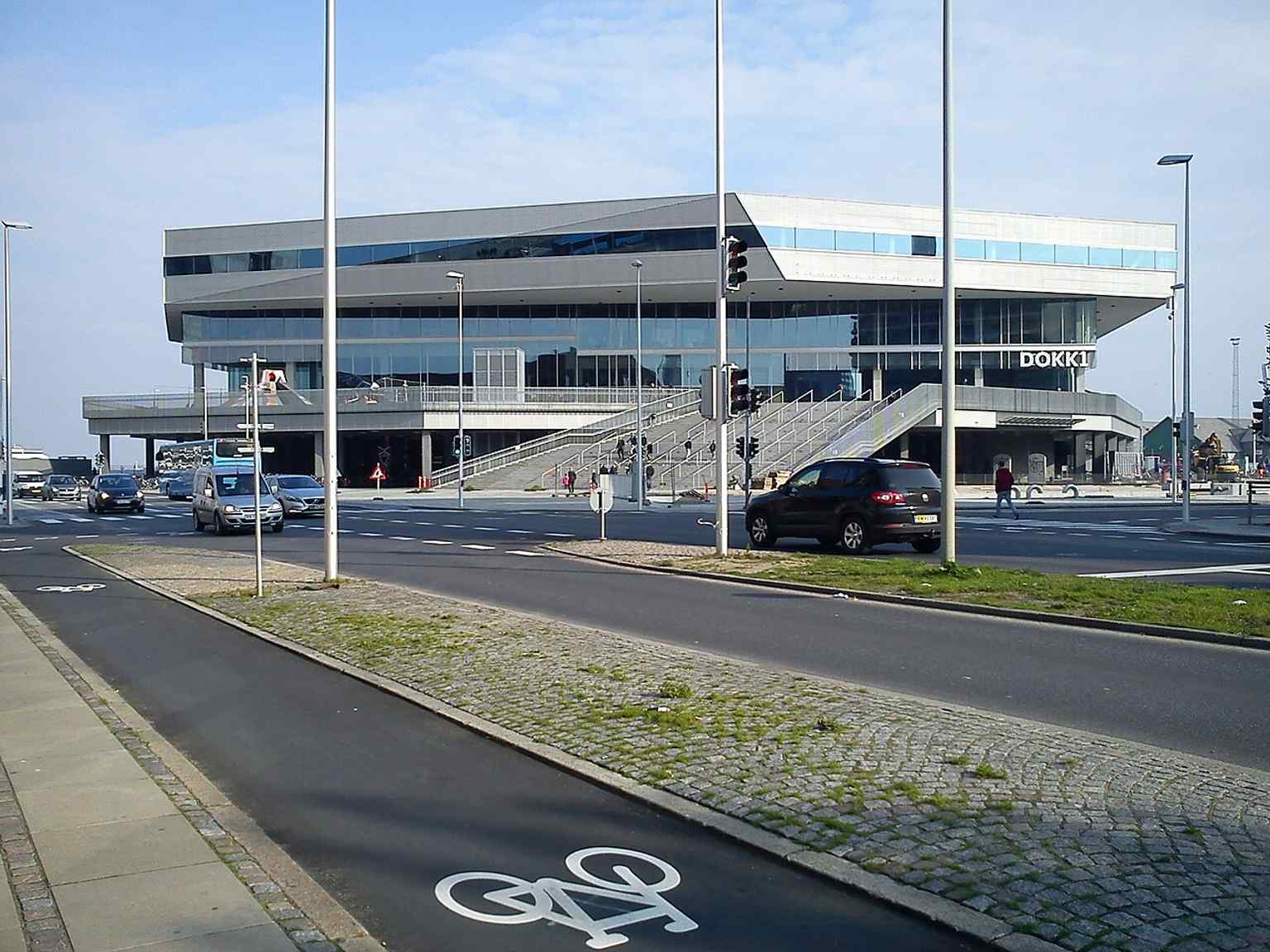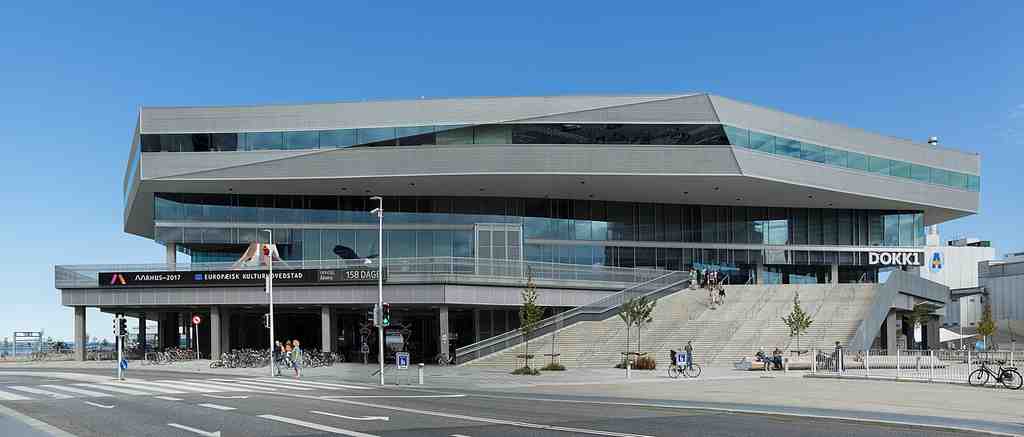
On your left, Dokk One looks like a giant seven-sided metal disc resting on a transparent glass base, all lifted above broad concrete stairways at the waterfront.
Dokk One is what happens when a city decides its old harbor should stop being merely industrial and start being public. You’re standing at the edge of a huge remake of Aarhus’s waterfront, part of the Urban Mediaspace project, where former dockland turned into civic space instead of fading into rust and nostalgia. Aarhus Municipality and Realdania put in two point one billion Danish kroner, Schmidt Hammer Lassen Architects and landscape architect Kristine Jensen shaped the design, and NCC managed the construction. Work began on the eighth of June, twenty eleven, and the building opened on the twentieth of June, twenty fifteen.
The name came from a public contest in the autumn of twenty twelve. People say it as “Dokken,” “Dok-Et,” or “Dok-Een,” but the meaning stays the same: Dock One. Simple, direct, and very tied to this patch of former industrial harbor.
Architecturally, it’s a neat trick. The upper volume is a heptagon - that just means seven-sided - clad in metal, while the lower part is a glass prism meant to show the life inside. Instead of hiding a library behind solemn walls, the architects let the place advertise itself. If you glance at the app, the interior image shows that idea perfectly: open reading spaces, clear sightlines, and activity visible right through the glass.
And this is not only a library. Dokk One packs in the Aarhus Main Library, municipal citizen services, theater and event spaces, business offices, and an automated underground garage with twenty lifts and room for one thousand cars. Because apparently even the parking here has career ambitions. The library alone covers seventeen thousand five hundred square meters, and it is one of the largest public libraries in Scandinavia.
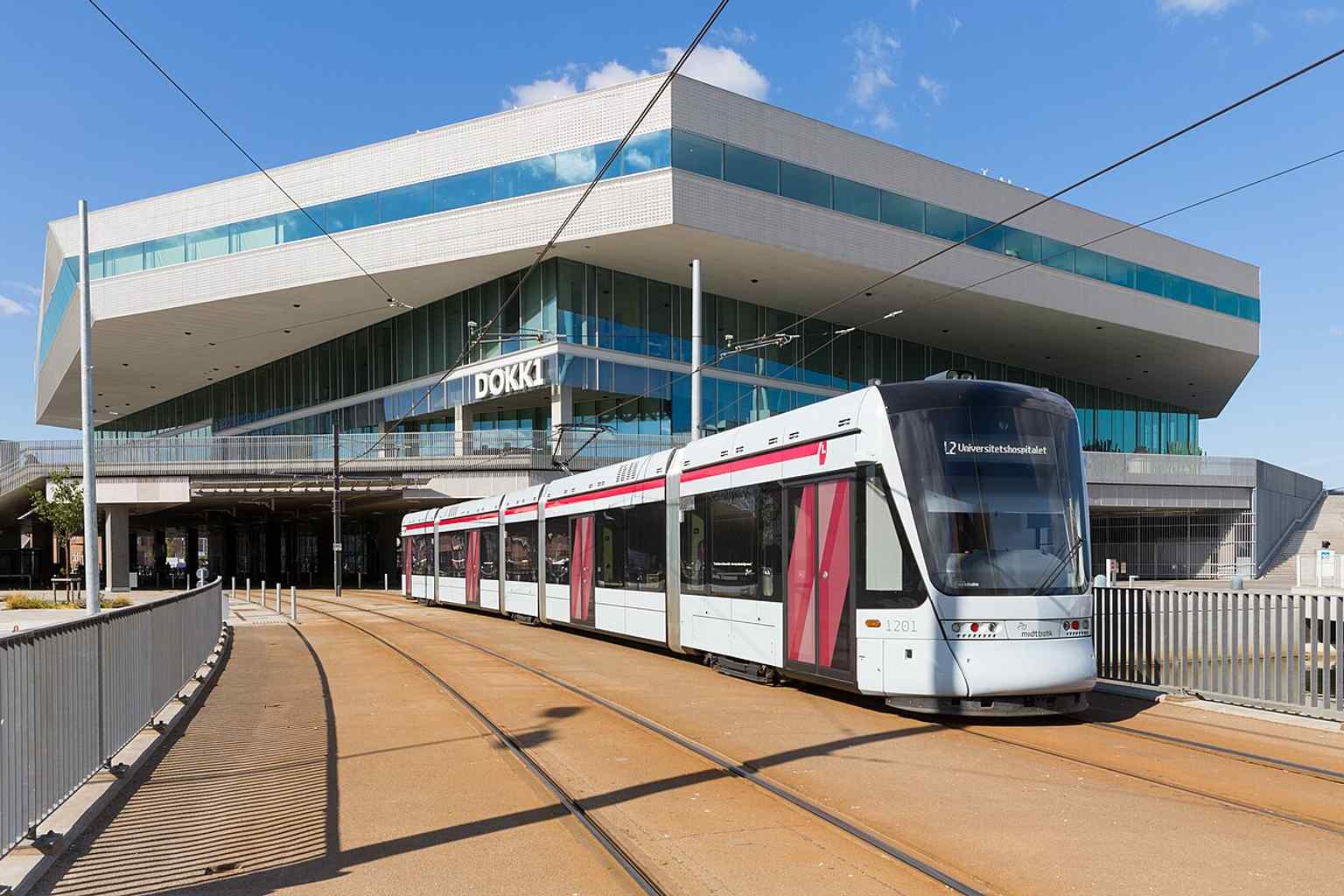
The building also plugs straight into the light rail. Trains run through and under it, with a station right by the lower entrance. On your screen, you can see how deliberately the whole place was designed around public transport, not just around cars. That matters, because Dokk One tried to be a model of urban convenience: elevators, ramps, inclines, adaptable counters, hearing loops, and pictogram signs all help make the building usable for as many people as possible.
Inside hangs one of its most touching details: a bronze pipe bell by Kirstine Roepstorff, about seven and a half meters long, eighty centimeters wide, and close to three tonnes in weight. Parents at Aarhus University Hospital can press a button after a baby is safely born, and the bell sounds here in the library. Not bad for a public building - a place where bureaucracy, books, and brand-new life briefly share the same soundtrack.
Dokk One also aimed for low energy use: solar panels on the roof, seawater for cooling, L-E-D lighting, and durable recyclable materials. Not everything went perfectly; some magnesium oxide wind-barrier boards absorbed water and had to be replaced after opening. Even futuristic buildings, it turns out, still have to deal with boring chemistry.
If you go inside, Dokk One is generally open from eight to ten on weekdays, and from ten to four on weekends.