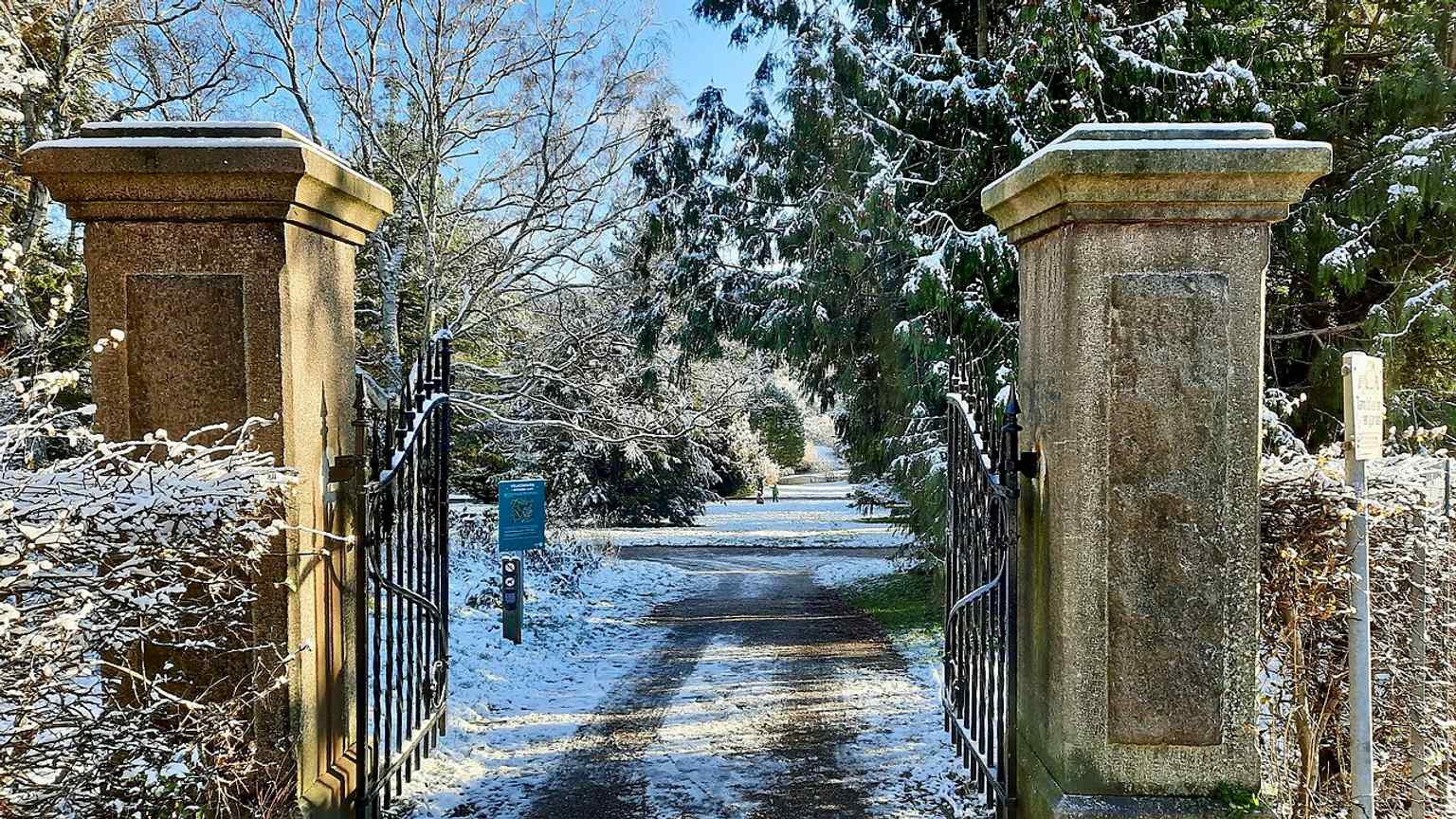
Look for tall stone gateposts, open iron gates, and the garden’s name set at the entrance to a broad landscaped park.
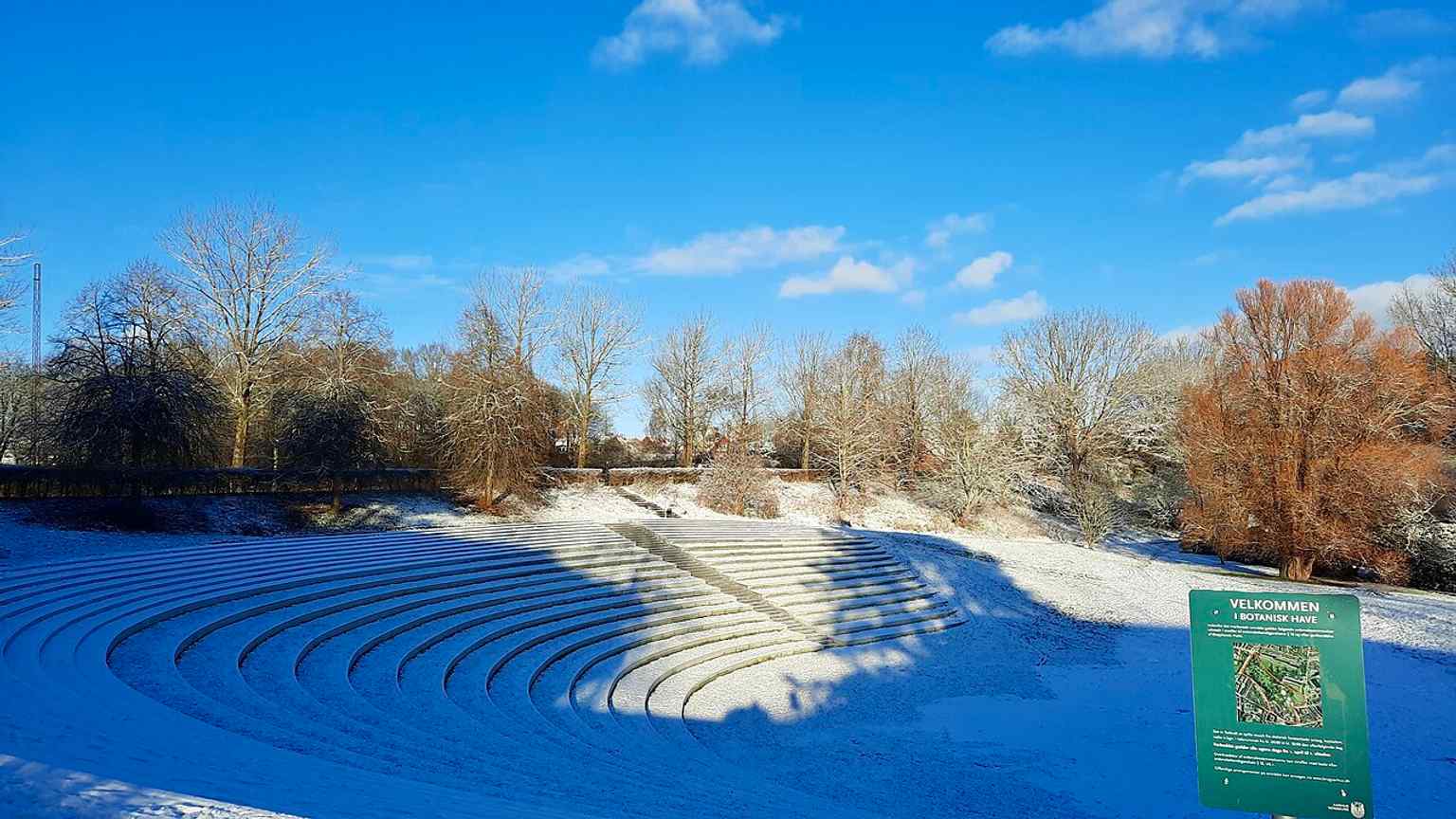
This is Aarhus Botanical Garden... or, to be precise, a park that began life as a botanical garden. The city leased this land in eighteen seventy-three to a new gardening society, later called Det Jydske Haveselskab, and the place first went by the modest name Haven ved Vesterbro. Since then, it has grown into about twenty-one and a half hectares, right beside Den Gamle By, with five hectares of that area now folded into the Old Town museum next door. Gardens and museums make friendly neighbors, though both have a habit of expanding.
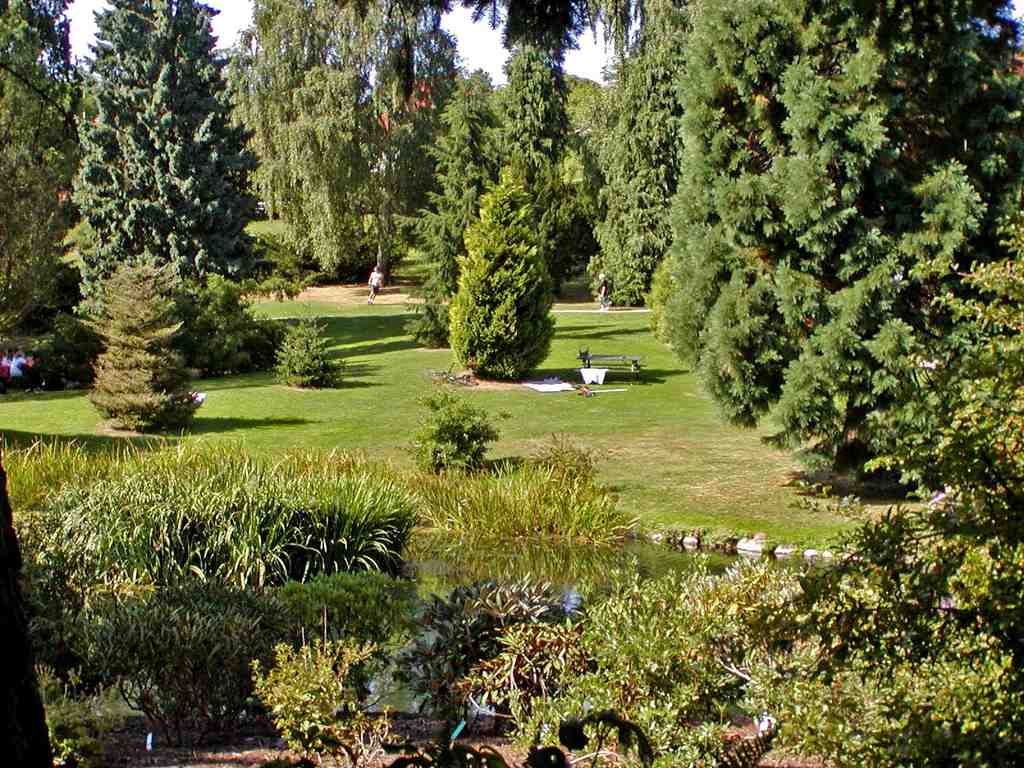
Inside, the garden spreads into themed sections: Flower Valley, stone beds, climbing plants, rhododendrons, a beech wood, and an arboretum, which simply means a collection of trees. The arboretum is the largest part, with species from temperate regions and wide lawns meant less for strict science and more for human beings to sit, wander, and briefly pretend they have no emails.
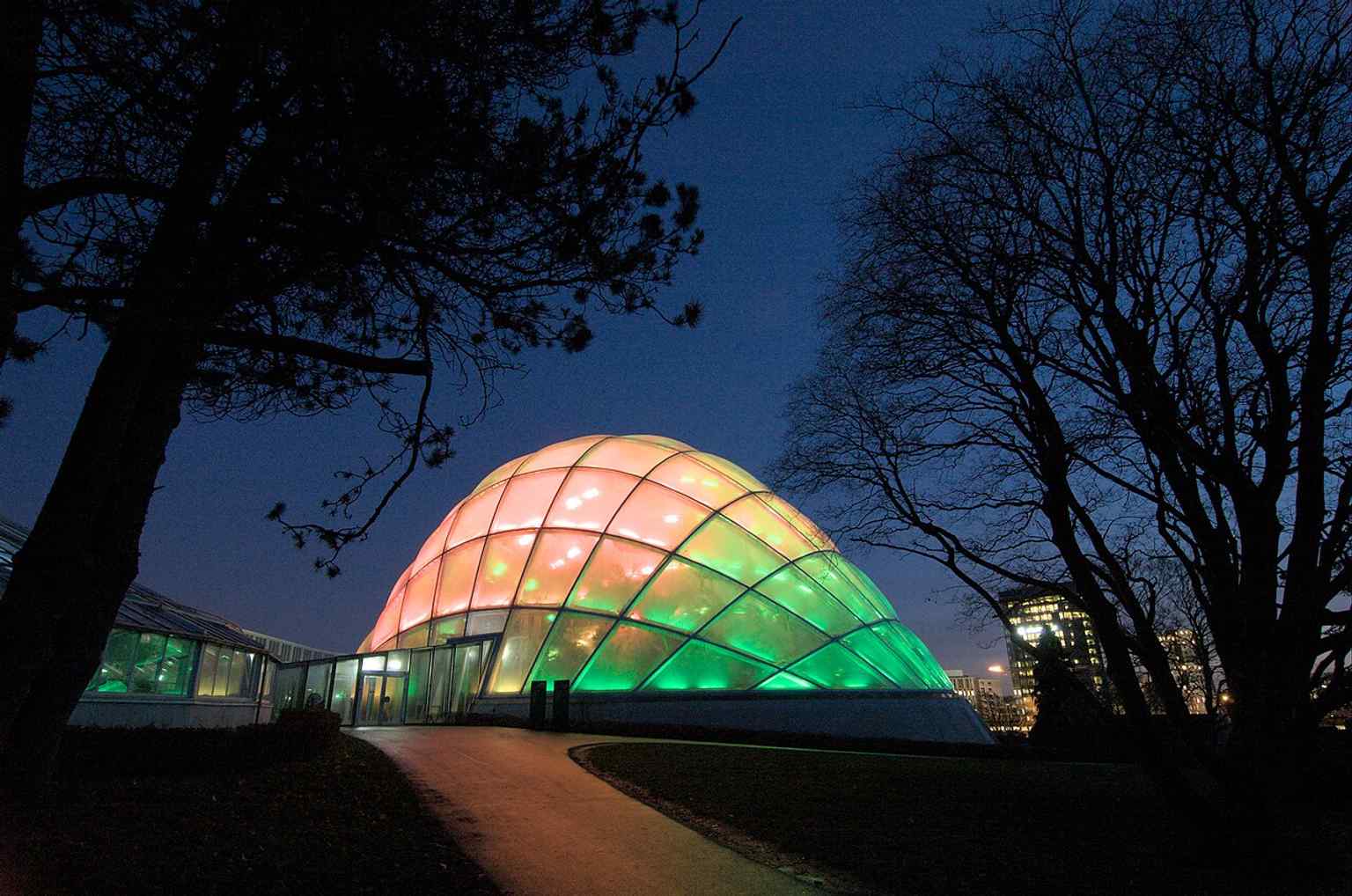
The greenhouses gave the place a new chapter. In nineteen seventy, architect C-F Møller designed the original complex. Then, between twenty eleven and twenty fourteen, the garden got a major renovation: a new tropical house arrived, and the old tropical house became a café, shop, and meeting space. If you glance at your screen, you can peek inside that glass world of different climate zones here.
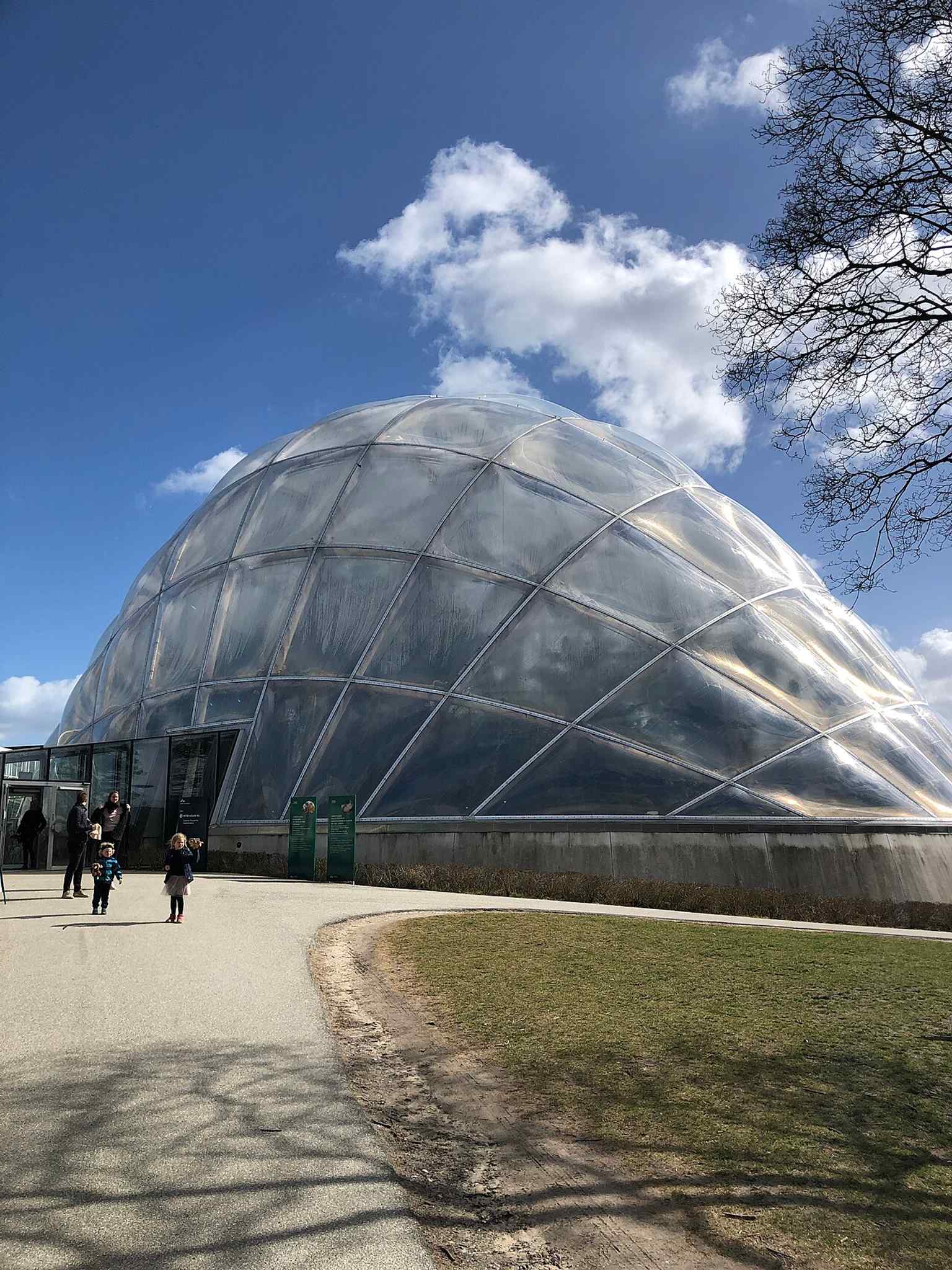
Not every change pleased everyone. When the city chose in twenty twelve to remove several labor-intensive beds, including many rose beds in Flower Valley, local volunteers formed Friends of the Botanical Garden and still maintain them without pay. The park also won legal protection in twenty fifteen, confirmed in twenty seventeen, to preserve the land itself and its biodiversity, even if the old scientific botanical mission has largely given way to education and recreation with free access.
If you want to visit the indoor areas, they generally open from nine to four on weekdays and from ten to four on weekends.
This place is Aarhus at its best: cultivated, public, and a little stubborn.
When you’re ready, keep going and let the next stop add another layer to the story.