AudaTours logoAudaTours

Stop 9 of 11

City fortifications

City fortifications
City fortifications
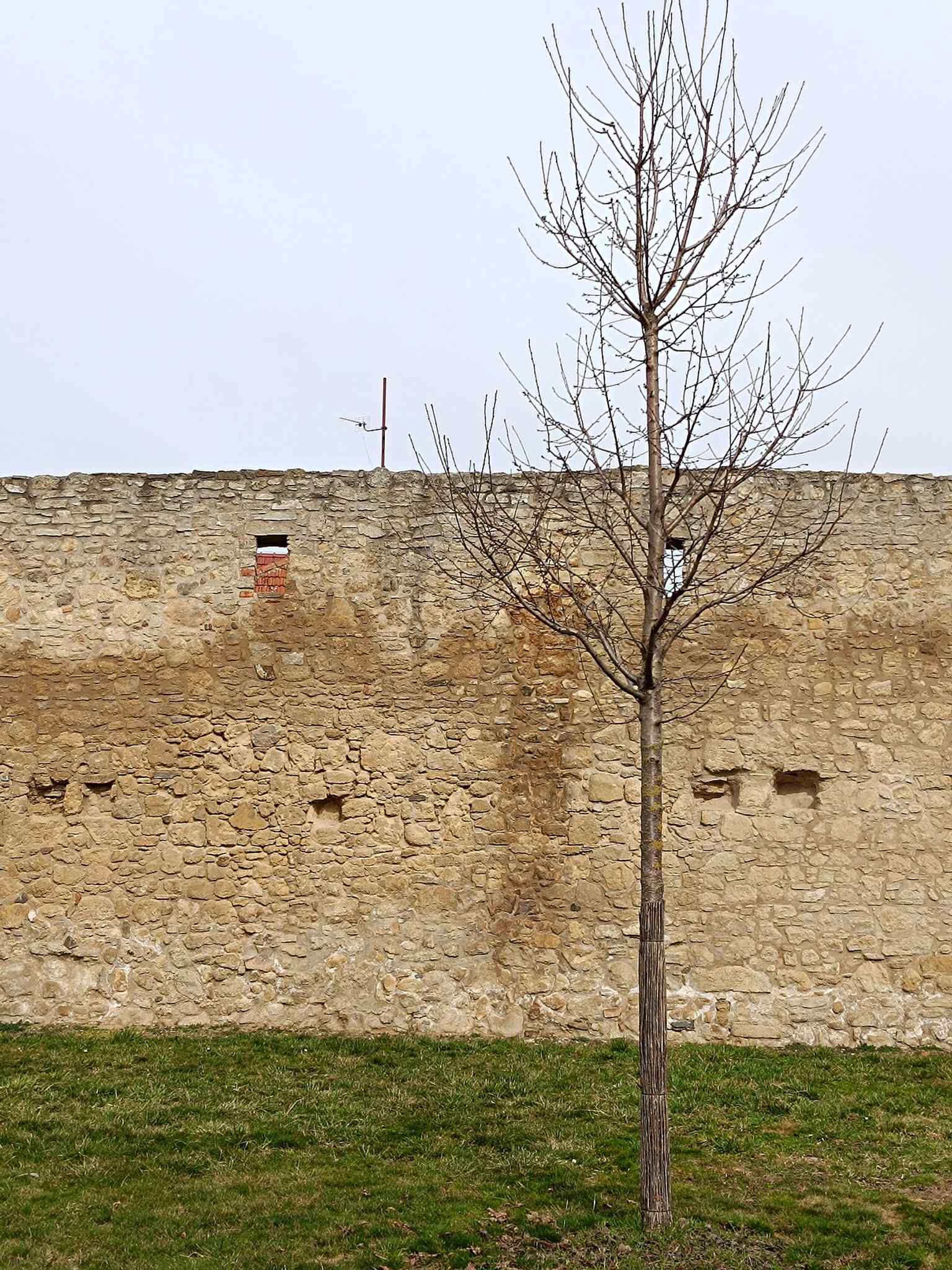
City fortificationsPhoto: Martin Strachoň, Wikimedia Commons, CC BY-SA 4.0. Cropped & resized.

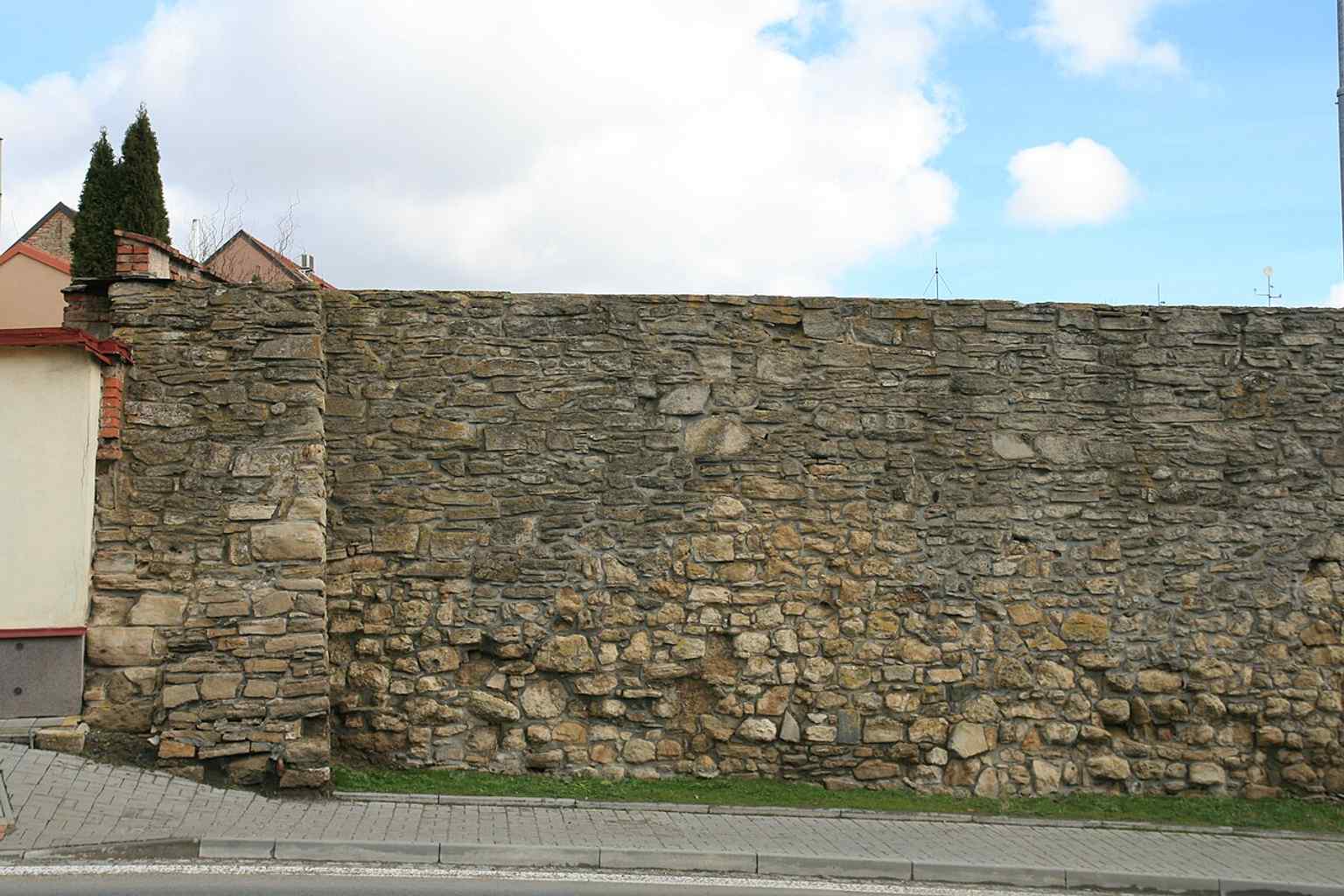
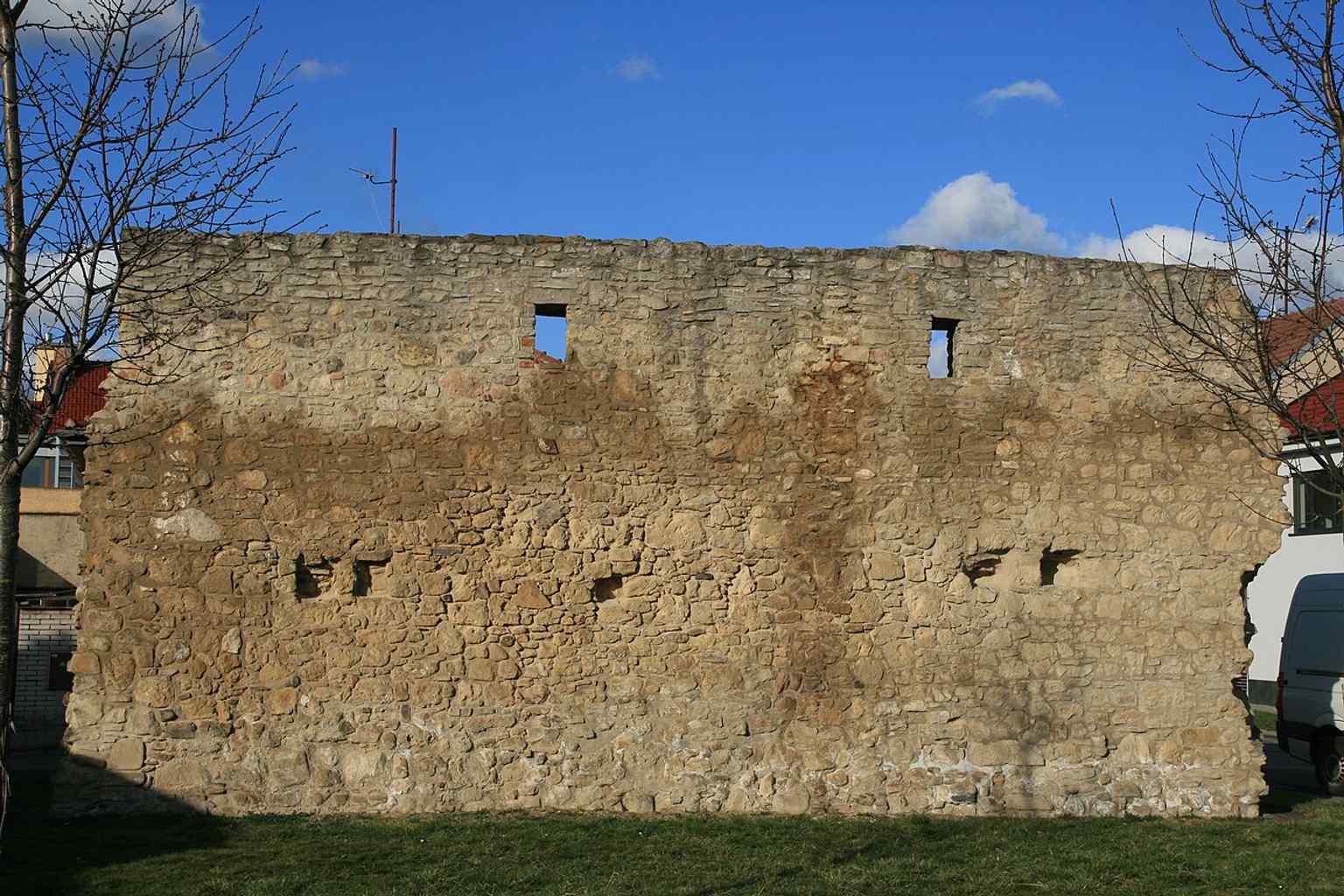
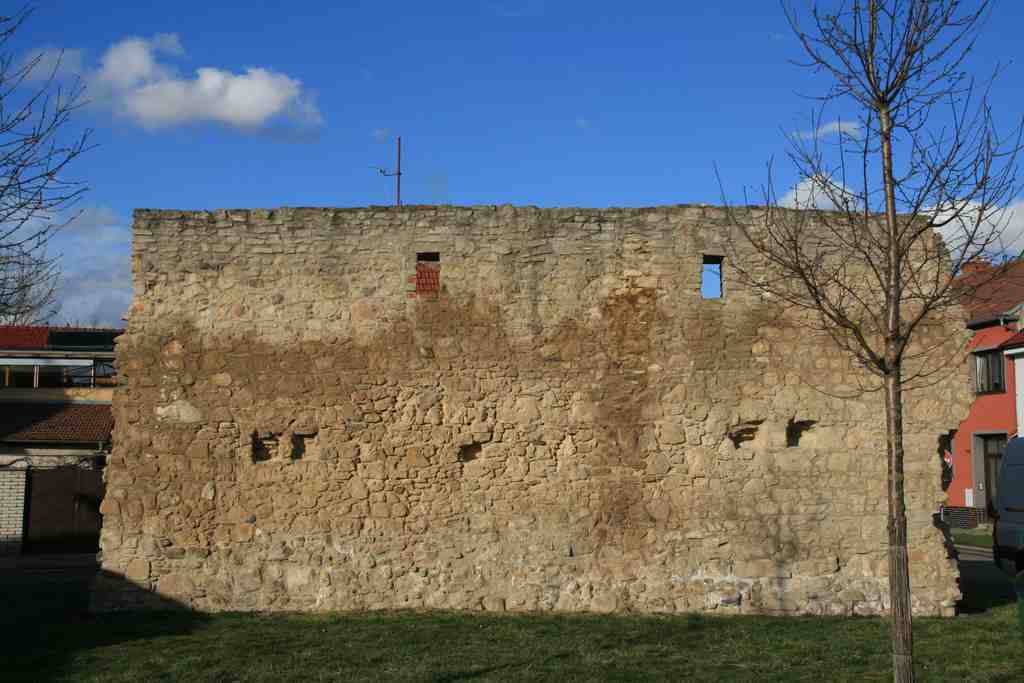
On your right, you will see a massive, freestanding rectangular slab of rough-hewn stone masonry, punctuated near the top by two small, deep-set rectangular openings. It looks a bit lonely sitting there, does it not? But this rough patch of rock is a stubborn survivor.

These are the remnants of the city fortifications. Starting way back in the thirteenth century, the Teutonic Knights turned this town into a formidable stronghold. They established their most powerful commandery-the fortified headquarters we mentioned earlier-right here in the region. They wrapped the entire city center in a system of walls reaching up to seven meters high. The fortifications featured corner bastions, deep defensive moats, and four heavy gates pointing toward neighboring cities. They even relied on a massive artificial pond called Tazus, spanning over three hundred acres, which they could use to flood the southern and eastern moats whenever an enemy army approached.

But all that incredible medieval engineering eventually met its match. In 1425, during a period of intense conflict, a rebel army of Bohemian religious reformers known as the Hussites swept through the area. Led by an aggressive commander named Hašek, they overwhelmed these very defenses. The attackers managed to breach the towering stone walls and successfully set the town's castle and church on fire.

Centuries passed, warfare evolved, and cannons grew stronger. By the 1700s, stone walls were practically useless for defense, so the fortifications lost their military purpose entirely. But the townspeople did not simply tear them down. Instead, they got incredibly practical. They started treating the old walls like free architectural foundations, building small houses right up against the stone, and using the medieval defenses as garden fences or the back walls of their living rooms. The four grand gates were slowly dismantled one by one to make room for growing traffic, ending with the 1903 demolition of the Clock Gate we discussed earlier.

It is fascinating how the modern world just swallowed the ancient one. If you check out the before and after images on your screen, you can see how the streetscape around this particular medieval fragment has subtly updated over a recent fourteen year span. And the locals really did take liberties with these stones. Take a look at your app for a prime example. In the late twentieth century, someone actually smashed right through a section of this ancient, culturally protected masonry just to build a residential garage. It was a harsh renovation, sparking major preservation efforts, but it perfectly captures how history gets woven into the messy reality of everyday life.
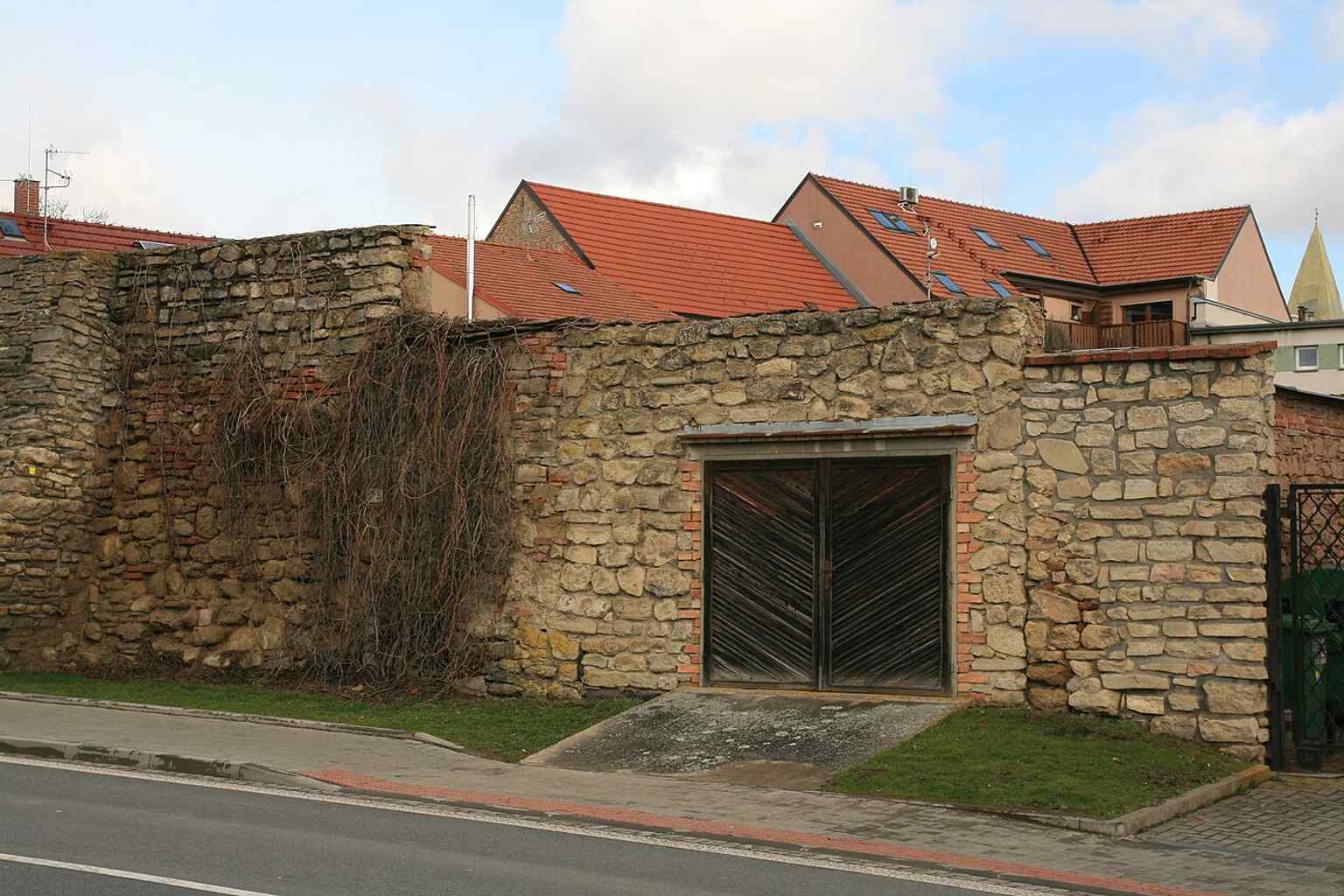
This image highlights a garage built directly into the medieval city wall, an example of "insensitive additions" that prompted calls for preservation in the late 20th century.
This image highlights a garage built directly into the medieval city wall, an example of "insensitive additions" that prompted calls for preservation in the late 20th century.Photo: Martin Strachoň, Wikimedia Commons, CC BY-SA 4.0. Cropped & resized.

Today, only eight fragments of the original medieval ring survive, standing quietly as protected cultural monuments, and since they are part of the streets, they are completely open twenty four hours a day. Take a moment to trace the irregular stones with your eyes and imagine the massive fortress they used to form. When you are ready, let's head to our final stop.
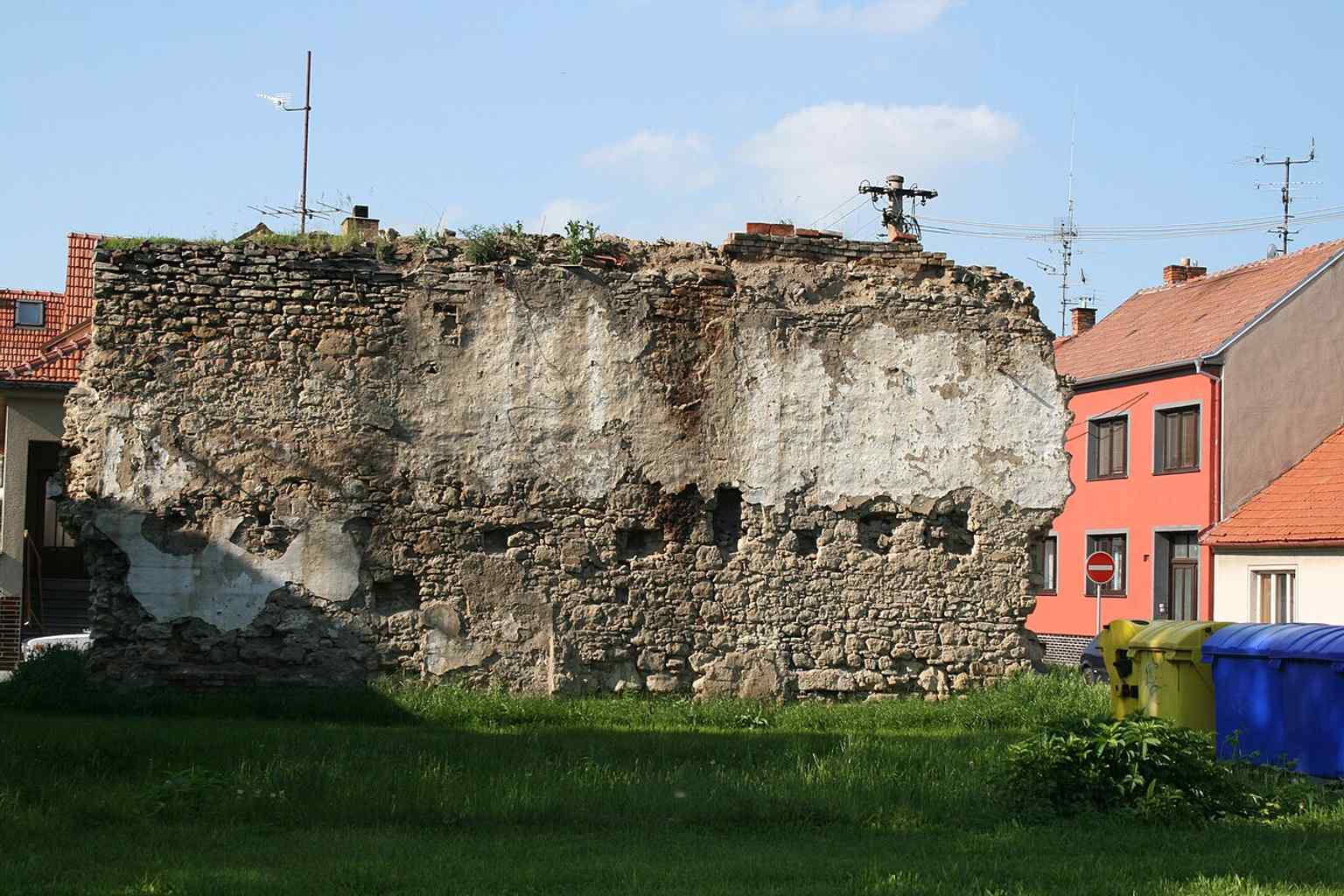
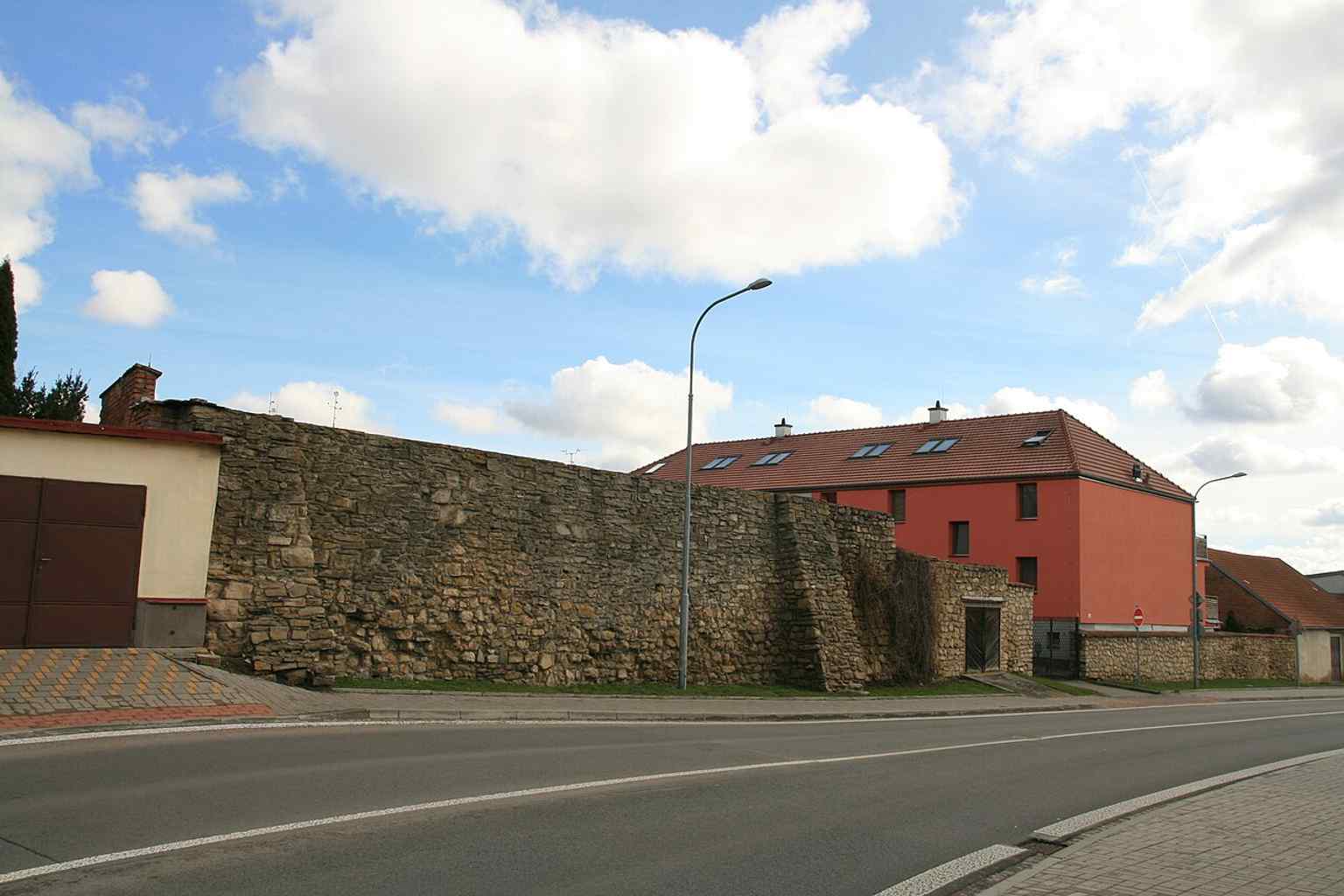
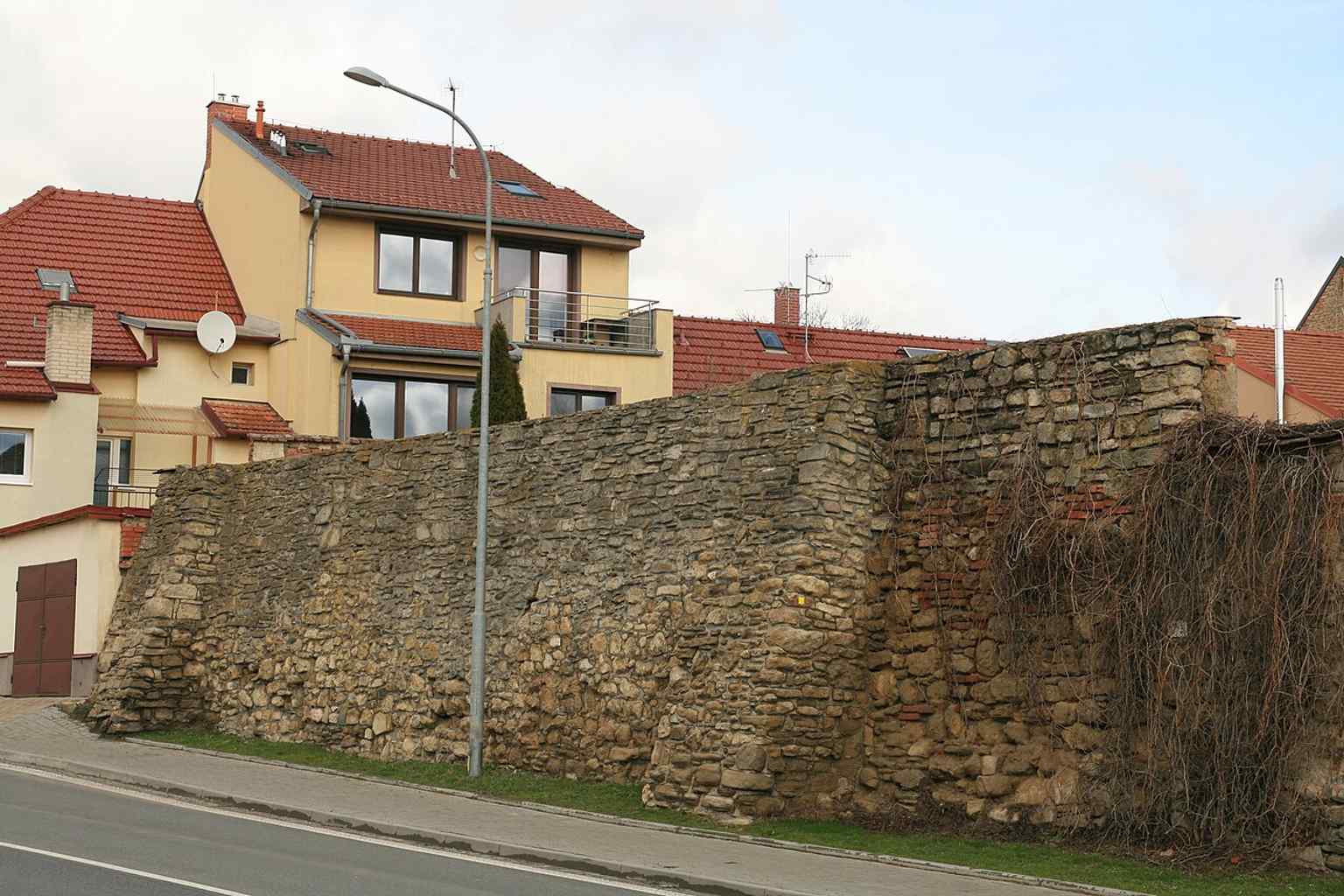
A general view of one of the surviving fragments of the Gothic-Renaissance town fortifications, which were built to protect Slavkov u Brna from the 13th century.
A general view of one of the surviving fragments of the Gothic-Renaissance town fortifications, which were built to protect Slavkov u Brna from the 13th century.Photo: Martin Strachoň, Wikimedia Commons, CC BY-SA 3.0. Cropped & resized.
This wide shot showcases a well-preserved section of the medieval city walls in Kollárova Street, which forms part of the culturally protected western fortification line.
This wide shot showcases a well-preserved section of the medieval city walls in Kollárova Street, which forms part of the culturally protected western fortification line.Photo: Martin Strachoň, Wikimedia Commons, CC BY-SA 4.0. Cropped & resized.
Two distinctive supporting pillars are visible on this section of the city walls in Kollárova street, a feature noted in the 1965 documentation of this cultural monument.
Two distinctive supporting pillars are visible on this section of the city walls in Kollárova street, a feature noted in the 1965 documentation of this cultural monument.Photo: Martin Strachoň, Wikimedia Commons, CC BY-SA 4.0. Cropped & resized.
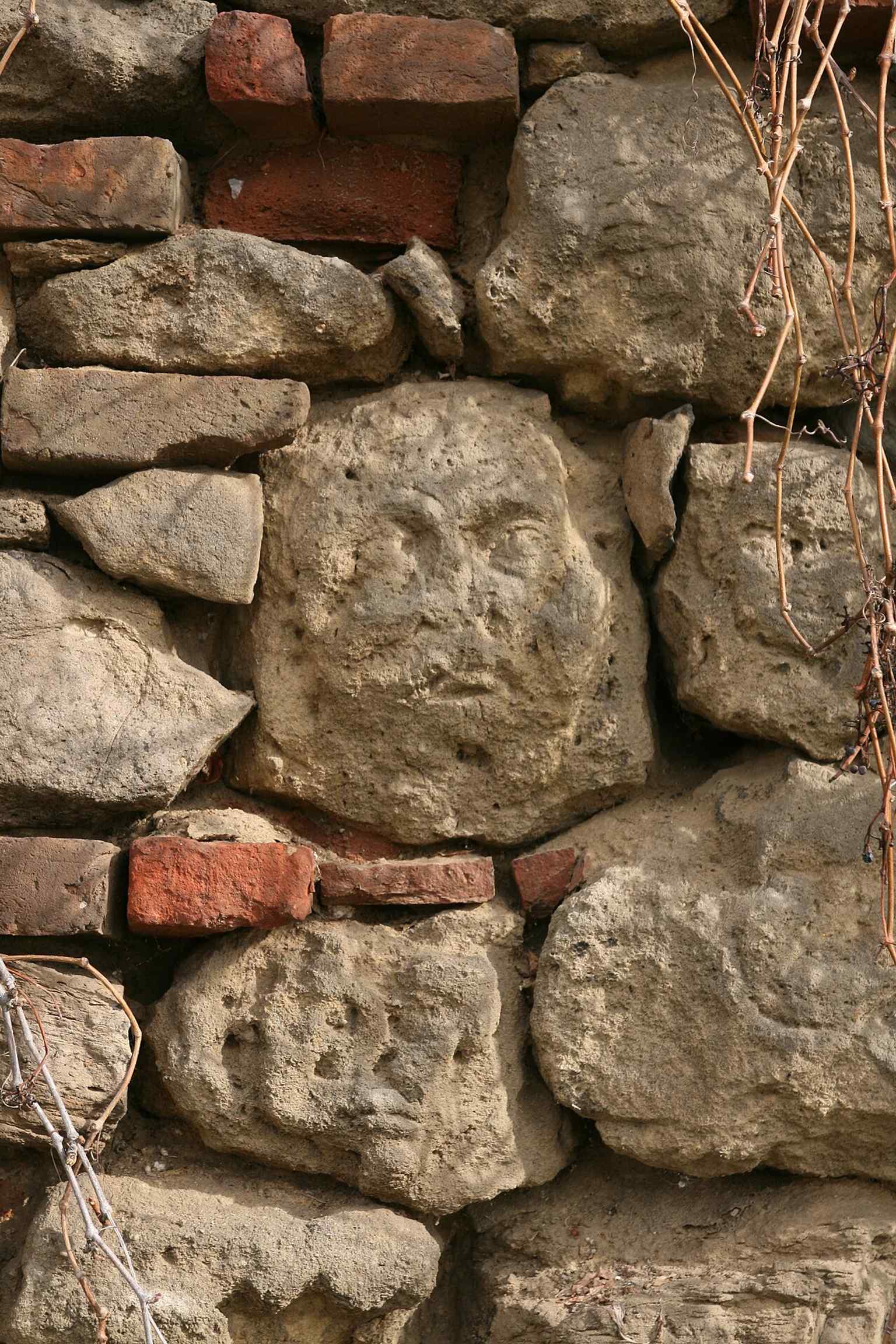
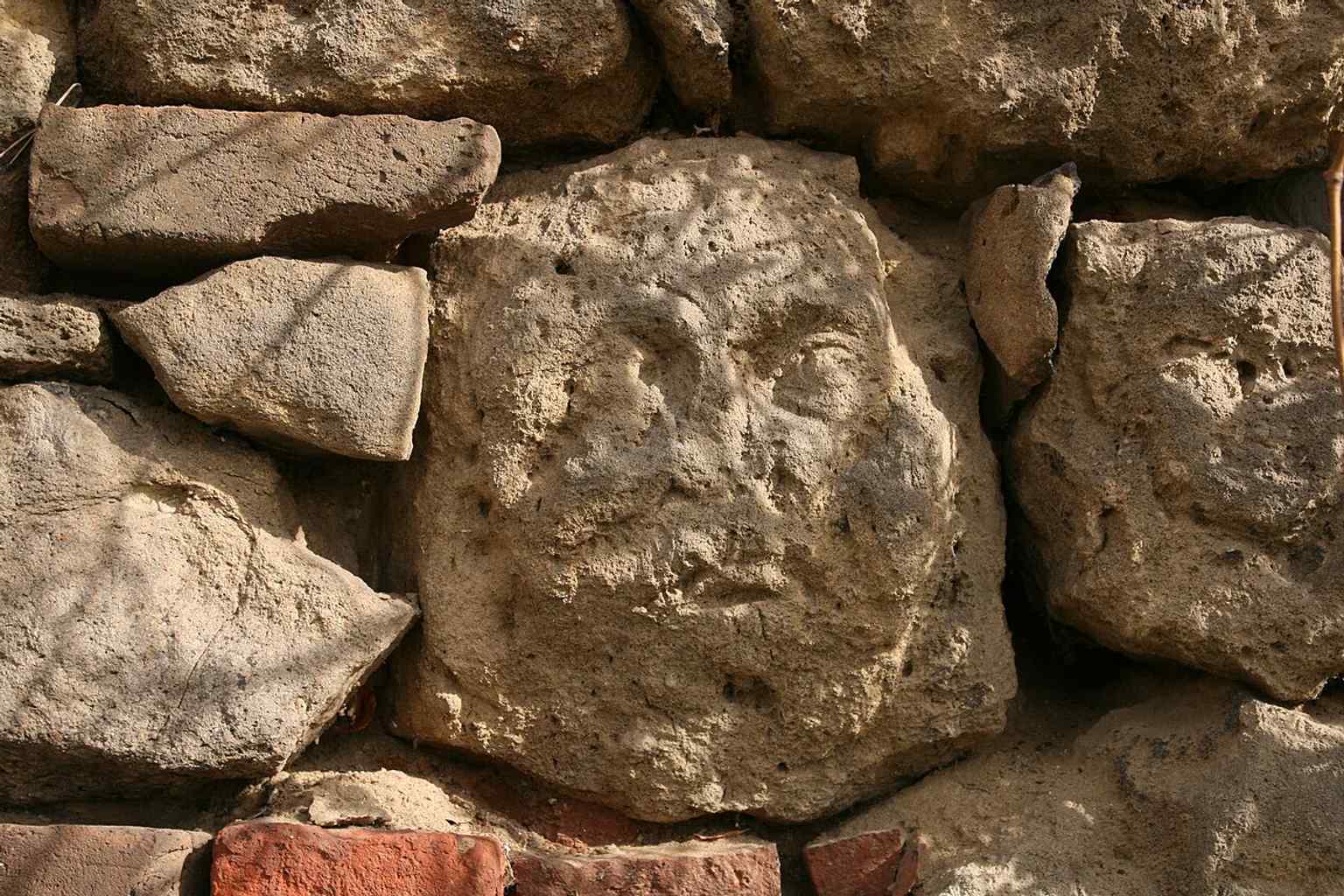
A close-up reveals one of the unique faces carved into the stones of the city fortifications, an intriguing detail found in the Kollárova street section.
A close-up reveals one of the unique faces carved into the stones of the city fortifications, an intriguing detail found in the Kollárova street section.Photo: Martin Strachoň, Wikimedia Commons, CC BY-SA 4.0. Cropped & resized.
A clear close-up of a single carved face embedded in the stones of the Kollárova street fortifications, an ancient decorative element.
A clear close-up of a single carved face embedded in the stones of the Kollárova street fortifications, an ancient decorative element.Photo: Martin Strachoň, Wikimedia Commons, CC BY-SA 4.0. Cropped & resized.
This view captures a section of the city walls from a higher vantage point near a residential building, providing a different perspective of the medieval fortifications in Kollárova Street.
This view captures a section of the city walls from a higher vantage point near a residential building, providing a different perspective of the medieval fortifications in Kollárova Street.Photo: Martin Strachoň, Wikimedia Commons, CC BY-SA 4.0. Cropped & resized.
This image shows an end section of the medieval city wall in Kollárova street, featuring a prominent supporting pillar and the adjacent house, illustrating how the walls became integrated into the urban fabric.
This image shows an end section of the medieval city wall in Kollárova street, featuring a prominent supporting pillar and the adjacent house, illustrating how the walls became integrated into the urban fabric.Photo: Martin Strachoň, Wikimedia Commons, CC BY-SA 4.0. Cropped & resized.
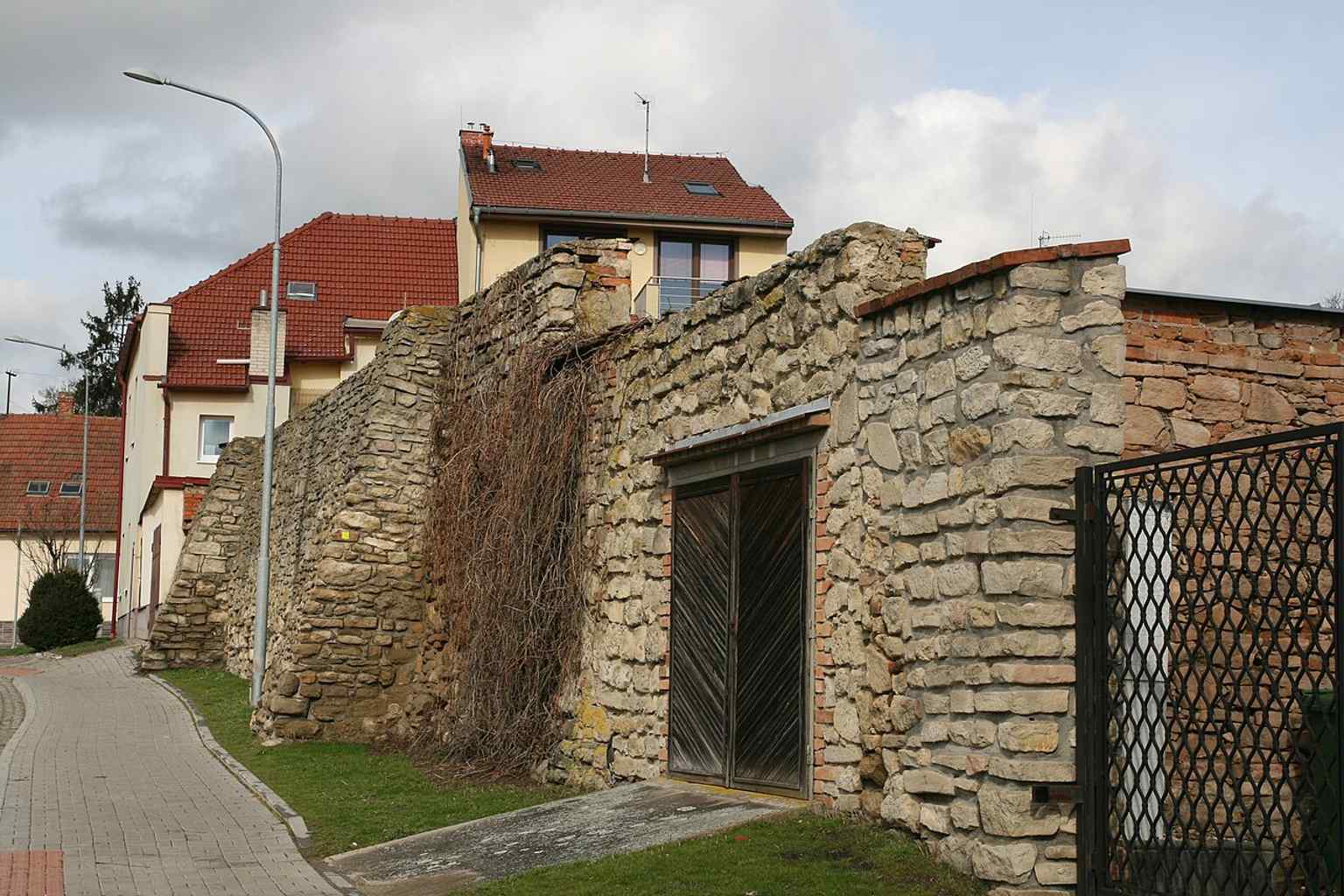
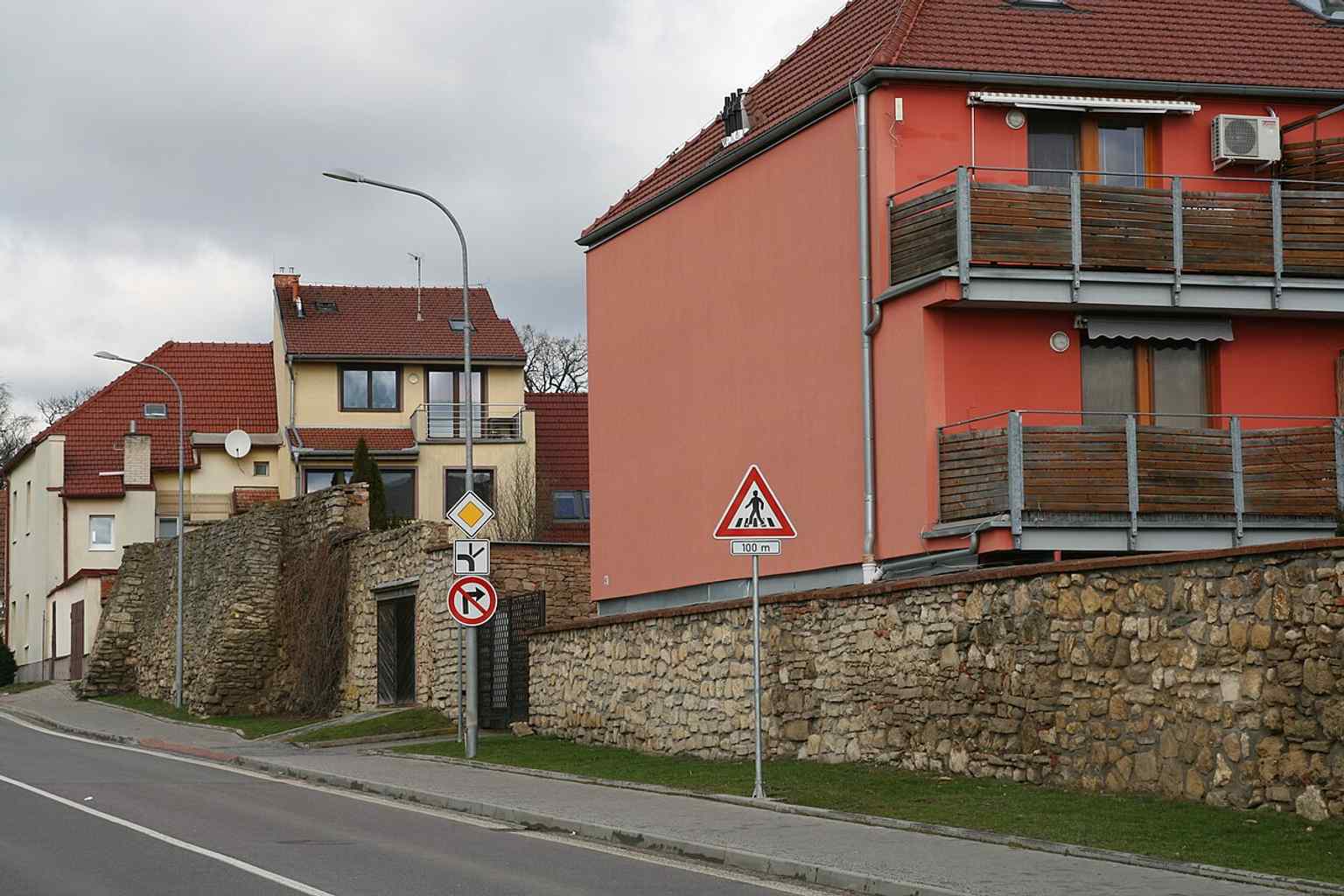
This image shows the medieval city wall in Kollárova street, with residential buildings integrating into its structure and a view towards the junction with Brněnská Street, highlighting its urban context.
This image shows the medieval city wall in Kollárova street, with residential buildings integrating into its structure and a view towards the junction with Brněnská Street, highlighting its urban context.Photo: Martin Strachoň, Wikimedia Commons, CC BY-SA 4.0. Cropped & resized.
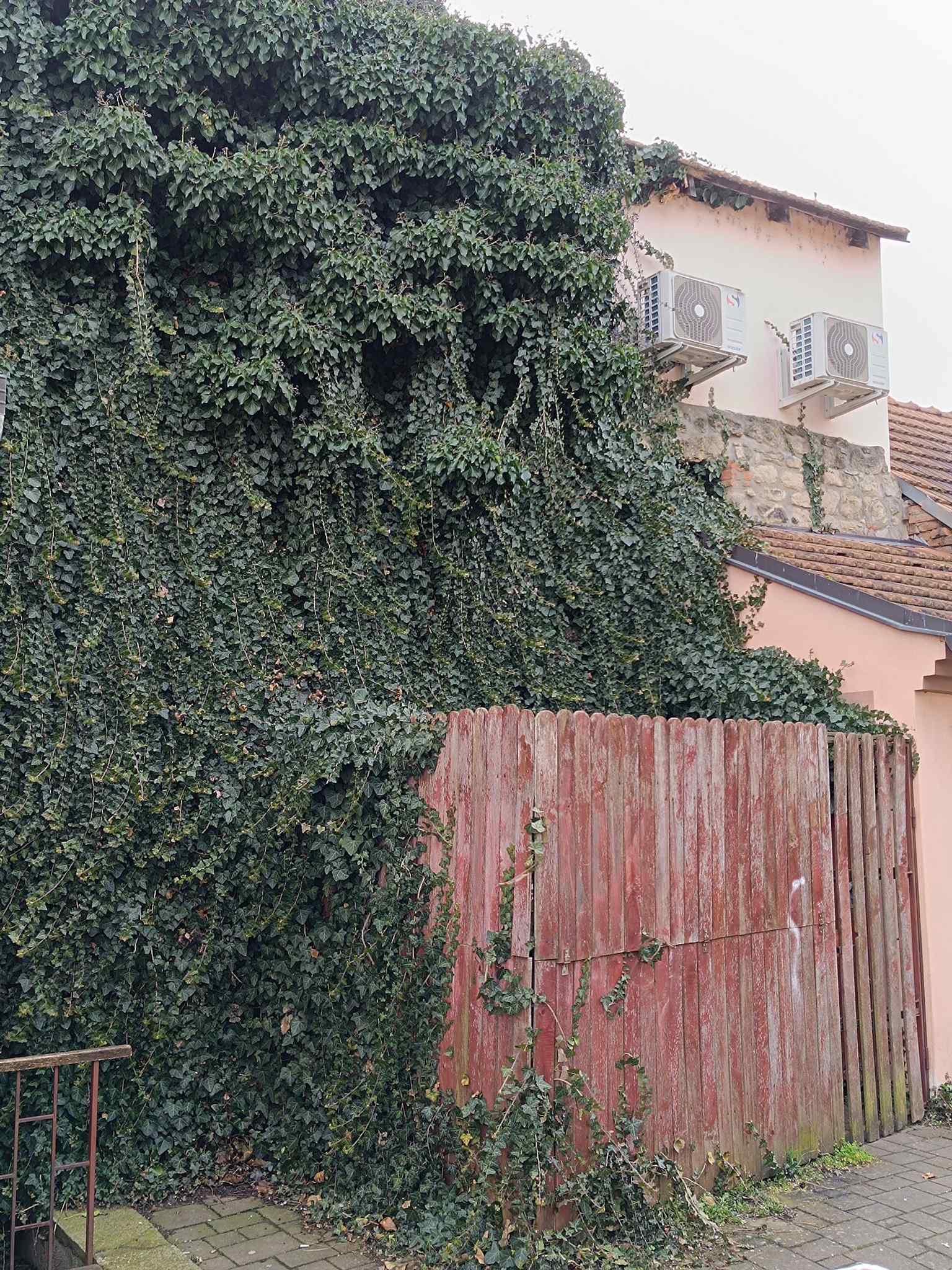
Covered in ivy, this fragment of the city wall in Hradební street illustrates how the ancient fortifications were incorporated into the fabric of later residential buildings.
Covered in ivy, this fragment of the city wall in Hradební street illustrates how the ancient fortifications were incorporated into the fabric of later residential buildings.Photo: Martin Strachoň, Wikimedia Commons, CC BY-SA 4.0. Cropped & resized.
This fragment of the city walls is located at the intersection of B. Němcové, Zborovská, and Hradební streets, near where the southern Rybničná (Clock) gate once stood.
This fragment of the city walls is located at the intersection of B. Němcové, Zborovská, and Hradební streets, near where the southern Rybničná (Clock) gate once stood.Photo: Martin Strachoň, Wikimedia Commons, CC BY-SA 4.0. Cropped & resized.
A vertical perspective of the city wall fragment connecting Zborovská and Hradební streets, situated in the vicinity of the former southern Rybničná (Clock) gate.
A vertical perspective of the city wall fragment connecting Zborovská and Hradební streets, situated in the vicinity of the former southern Rybničná (Clock) gate.Photo: Martin Strachoň, Wikimedia Commons, CC BY-SA 4.0. Cropped & resized.
arrow_back Back to Slavkov u Brna Audio Tour: Echoes of Castles, Chapels, and Legends
Loved by travellers

Thousands of tours started.
Plenty of opinions.

4.8 across the App Store and Google Play. Here's a few we keep coming back to.

starstarstarstarstar
This was a solid way to get to know Brighton without feeling like a tourist. The narration had depth and context, but didn't overdo it.
Christoph
Christoph
Brighton Tour
starstarstarstarstar
Started this tour with a croissant in one hand and zero expectations. The app just vibes with you, no pressure, just you, your headphones, and some cool stories.
download Get the app

Pop your headphones in.
Step outside.

Free to download. Tours in every city. Start in 60 seconds — no account, no card.

Download on the App StoreGet it on Google Play
starstarstarstarstar_half
4.8
AudaTours app icon
headphones
~ 4 min until your first tour starts
public
1,000+ cities worldwide
all_inclusive
AudaTours
Unlimited

Every tour. Every city. One subscription.

3096 tours2272 cities138 countries50+ languages