
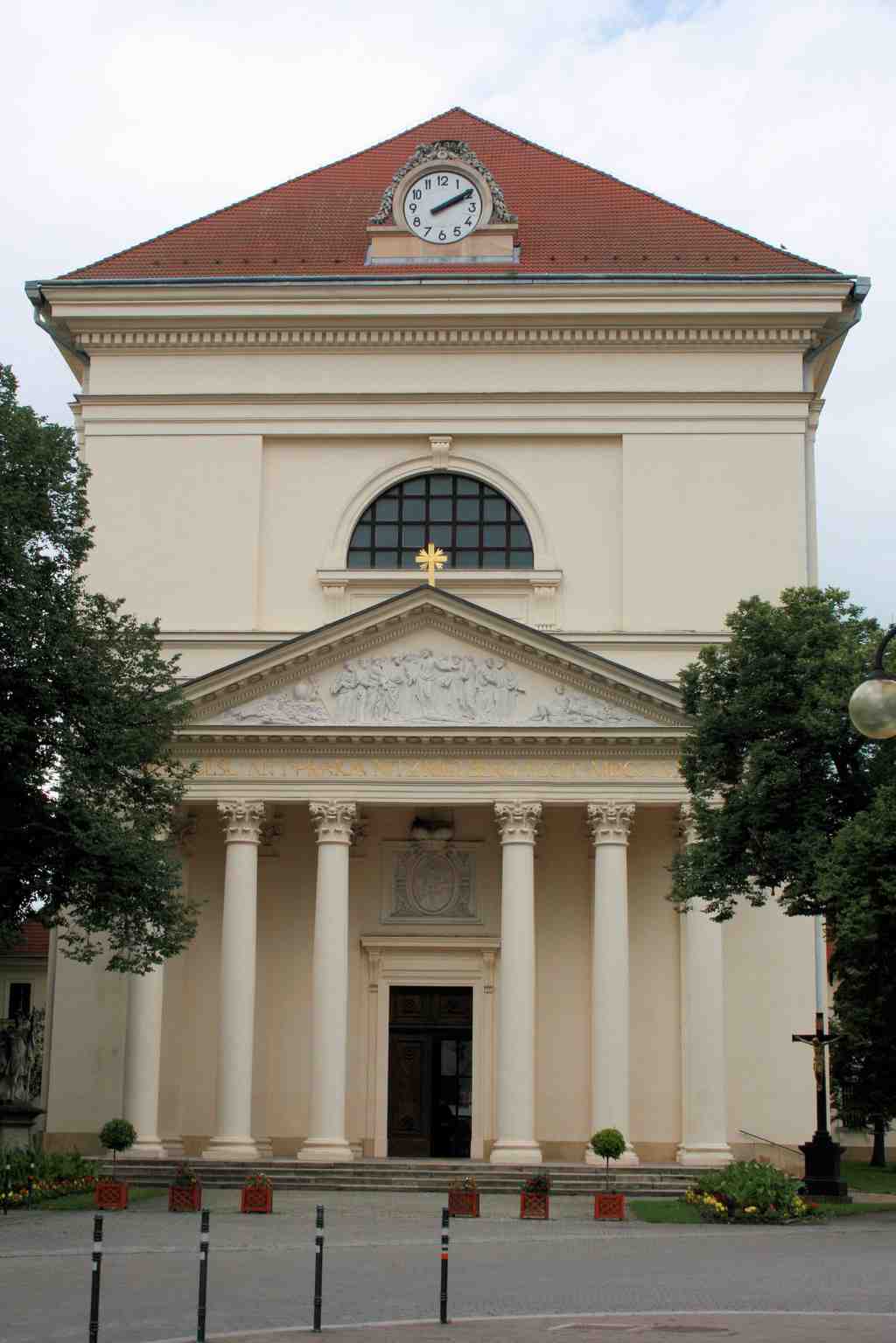
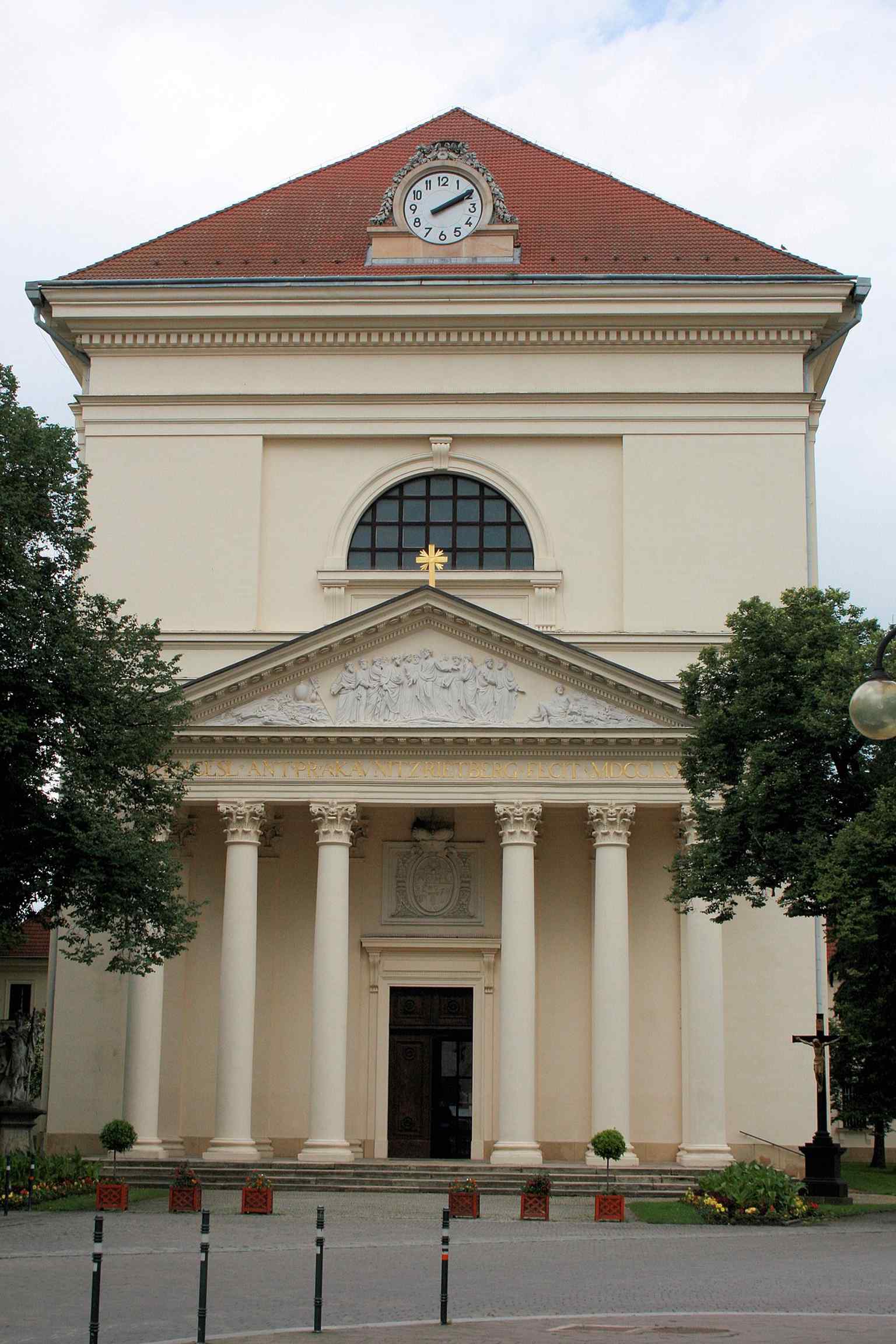
Look to your right and spot the massive, smooth cream colored building defined by a grand triangular roof resting directly on six towering stone columns, topped with a small clock. That is the Church of the Resurrection of Our Lord.
It looks more like an ancient Greek temple than a traditional European parish church, right? That is actually the magic of the Classicism style from the late 1700s, which favored clean, logical lines over overly fussy decorations.
The story behind this place starts with a bit of a disaster. Remember that old Gothic church we mentioned earlier? In 1757, it partially collapsed under its own weight. Instead of patching up the rubble, the ruling Kounic family decided to build something completely modern. He brought in an imperial architect from Vienna, and between 1786 and 1789, this monumental structure was born.
Check out your screen for a closer look at that impressive front entrance. That covered porch area with the pillars is called a portico. If you look closely at the golden words carved above those columns, you will see a dedication to the Prince himself, ensuring history remembered exactly who funded this grand project. Above the writing is the tympanum, which is that large triangular section, featuring a beautifully carved scene of the apostles.
If you were to walk inside, you would not find the usual dark, shadowy aisles of older cathedrals. Instead, it is one massive, bright, vaulted hall. The interior keeps a very calm, uniform color tone, letting the detailed wall carvings stand out. In 1986, the church received a brand new main altar carved from pure white marble, which actually holds the relics, or sacred physical remains, of an Italian martyr named Saint Maria Goretti. Up in the bell tower, completely hidden from the street, sit two historic bells that have been ringing out over the rooftops since the 1760s.
It is a brilliant mix of Enlightenment era thinking and quiet, enduring faith. Enjoy the atmosphere, and when you are ready, we can head over to our next stop.





