AudaTours logoAudaTours

Stop 15 of 16

Špilberk Castle

Špilberk Castle
Spilberk
SpilberkPhoto: Michal Kmínek, Wikimedia Commons, CC BY-SA 3.0. Cropped & resized.

Ahead of you is a broad pale masonry fortress with long rectangular wings, sloping bastioned walls, and a commanding gateway set high on the hill.

Špilberk is where Brno stops being modest. It began in the second half of the thirteenth century, when Přemysl Otakar the Second planted a Gothic castle on this rocky height as both a power statement and a proper seat for Moravian rulers. The first written records appear in the late twelve hundreds, and almost immediately this hill mattered: in twelve seventy-seven he dedicated the castle chapel to Saint John the Baptist, and a year later a grand assembly of the Czech kingdom met here. So yes... from the start, this was never just a handy lump of stone.

In the fourteenth century, Špilberk became the residence of the Moravian margraves, especially John Henry and then his son Jošt of Moravia. Jošt did rather well for himself: in fourteen ten, princes of the Holy Roman Empire elected him king of the Romans, which meant that for a brief moment this hilltop castle served as the seat of a ruler of the whole empire. Then history, with its usual timing, cut the triumph short. Jošt died here only three months later, and today he lies in the crypt of Saint Thomas, the church we met earlier.

After that, Špilberk shifted from residence to hard power. It declined, burned badly in fifteen seventy-eight after years of neglect, then found new purpose when war came for Brno. In sixteen forty-five, during the Thirty Years’ War, the city and this fortress held out for three months against a much larger Swedish army. Colonel Jean-Louis Raduit de Souches led the defense, and his success helped save Brno. After that, builders transformed Špilberk into the strongest Baroque fortress in Moravia, with bastions, moats, and casemates - vaulted chambers built into the defenses for soldiers, storage, and, eventually, something darker. If you check the old fortress view in the app, you can see how severe that military shell once looked.
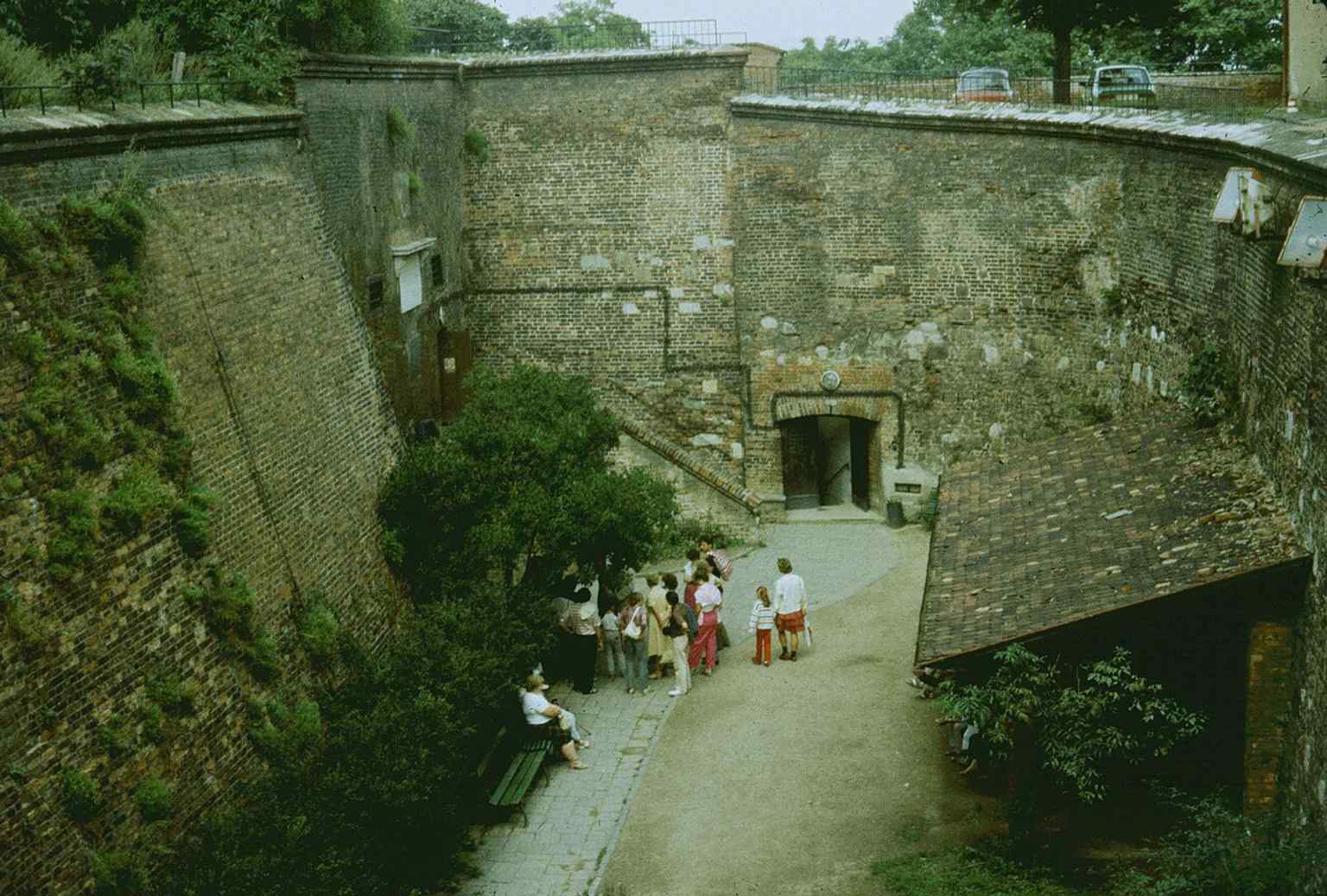
An older documentary view of the fortress, useful for showing how Špilberk looked before today’s museum era.
An older documentary view of the fortress, useful for showing how Špilberk looked before today’s museum era.Photo: Dguendel, Wikimedia Commons, CC BY 3.0. Cropped & resized.

In seventeen eighty-three, Emperor Joseph the Second turned Špilberk into a civilian prison for the most serious criminals. The lower casemates held twenty-nine wooden cells, and guards chained some prisoners there for life until Leopold the Second finally ended that punishment in seventeen ninety. Later political prisoners gave the place a wider notoriety. The Italian patriot and writer Silvio Pellico survived imprisonment here and published My Prisons, which made Špilberk famous across Europe as a symbol of Habsburg repression. Another inmate, Václav Babinský, became a legend of Czech crime mostly because prison records described him in oddly intimate detail: tall, strong, gray-eyed, with a small mark on his right shoulder. Bureaucracy, when determined, misses nothing.

Look at the well on your screen. It drops about one hundred and twelve meters. That is not decoration; that is survival. A fortress without water is just expensive optimism.
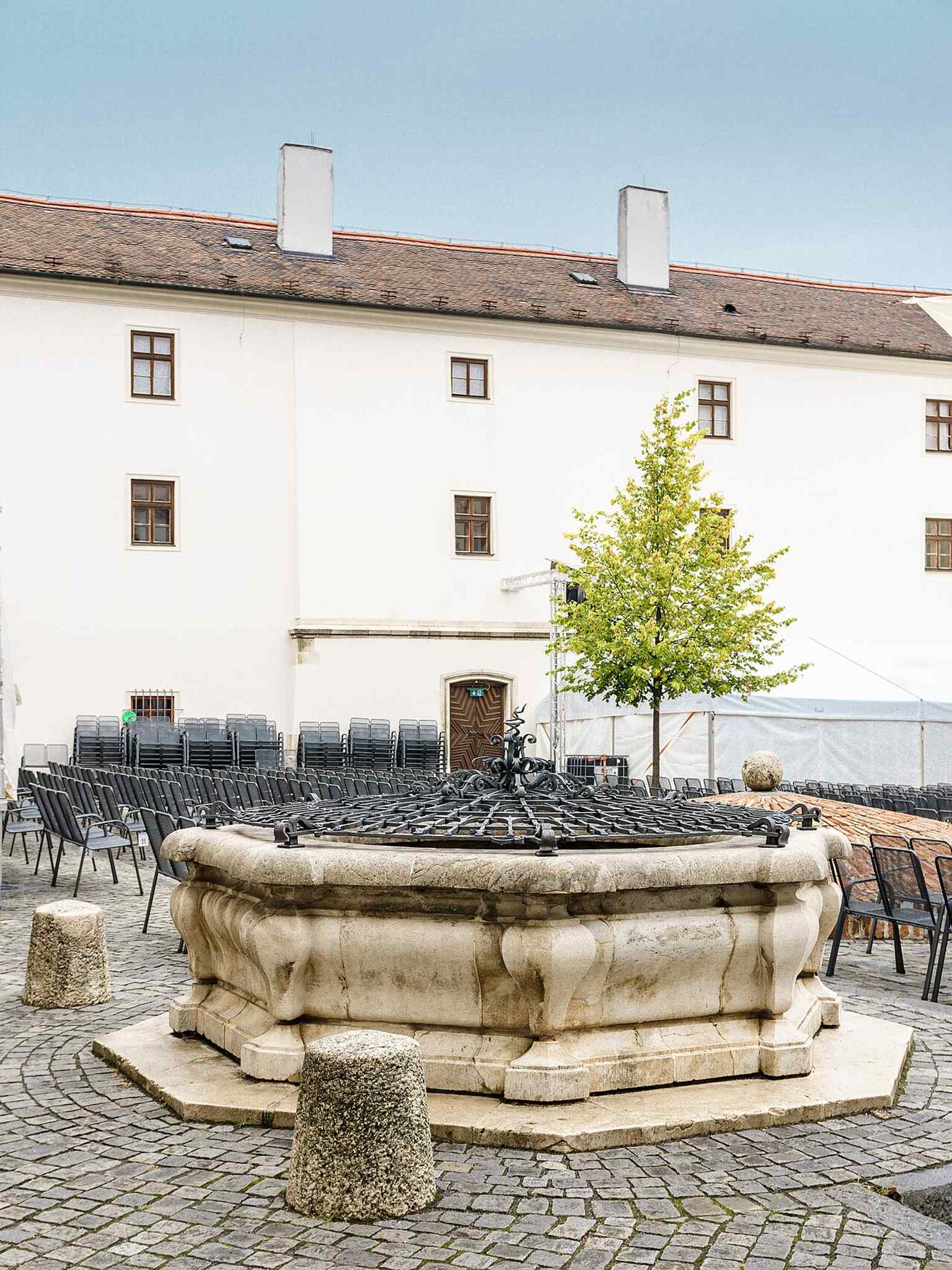
Špilberk’s deep well — the fortress depended on water supplies like this one during sieges and long military occupations.
Špilberk’s deep well — the fortress depended on water supplies like this one during sieges and long military occupations.Photo: Radler59 (talk), Wikimedia Commons, CC BY-SA 4.0. Cropped & resized.

Napoleon’s army damaged parts of the defenses in eighteen oh nine. The prison closed in eighteen fifty-five. The site served as barracks for another century, then during the Nazi occupation it became a place of repression again, where Czech patriots were jailed and some died. Only in the late nineteen fifties did its military life finally end. Since then, the City of Brno Museum has lived here, and the old stronghold now hosts exhibitions, concerts, and festivals. A surprisingly graceful retirement.

And that feels like the right final image for Brno: from crypt to market to cathedral to fortress, the city keeps taking old stone and asking it to serve a new kind of authority. If you want to go inside, Špilberk is generally open daily from nine in the morning to six in the evening.
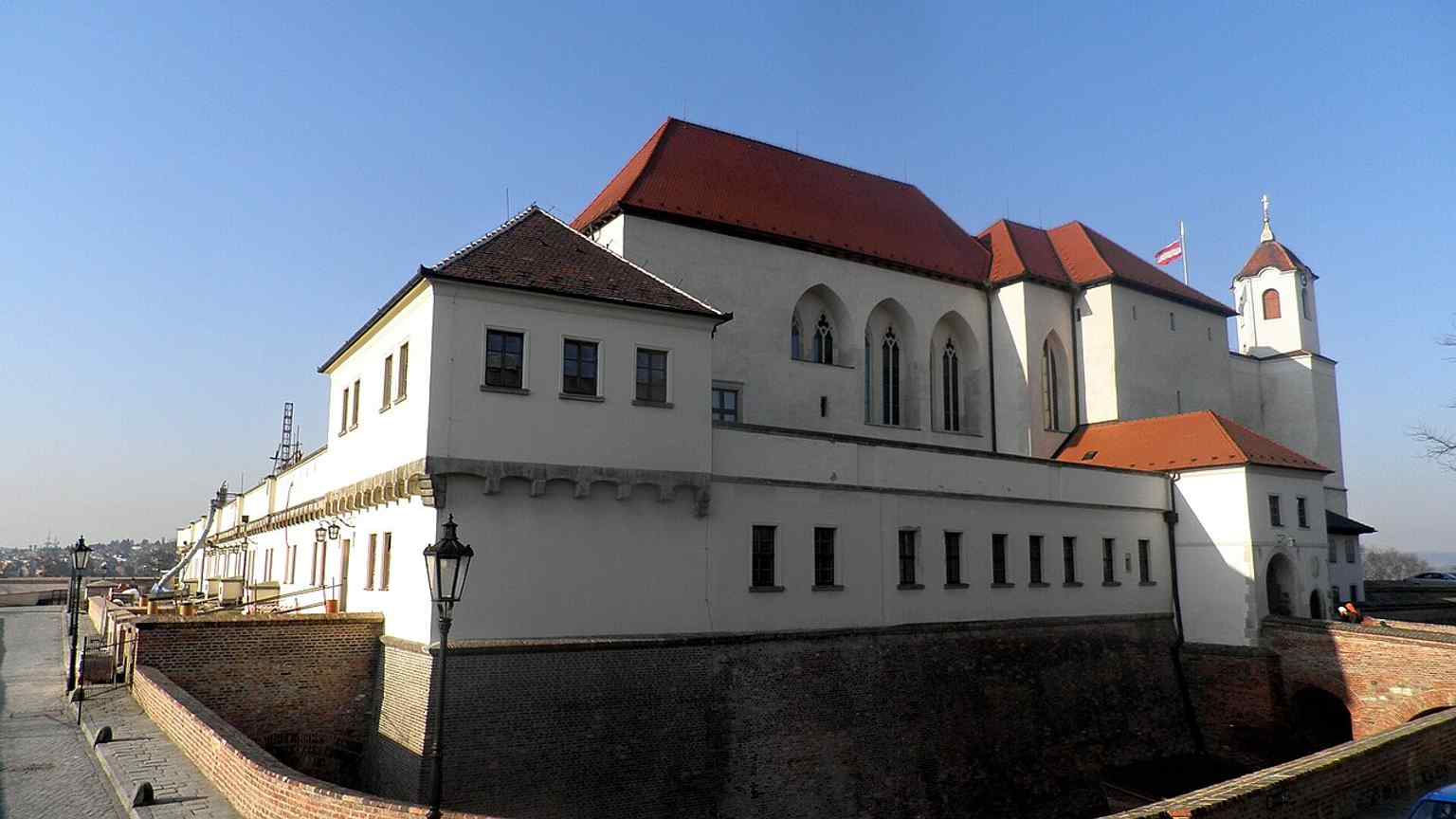
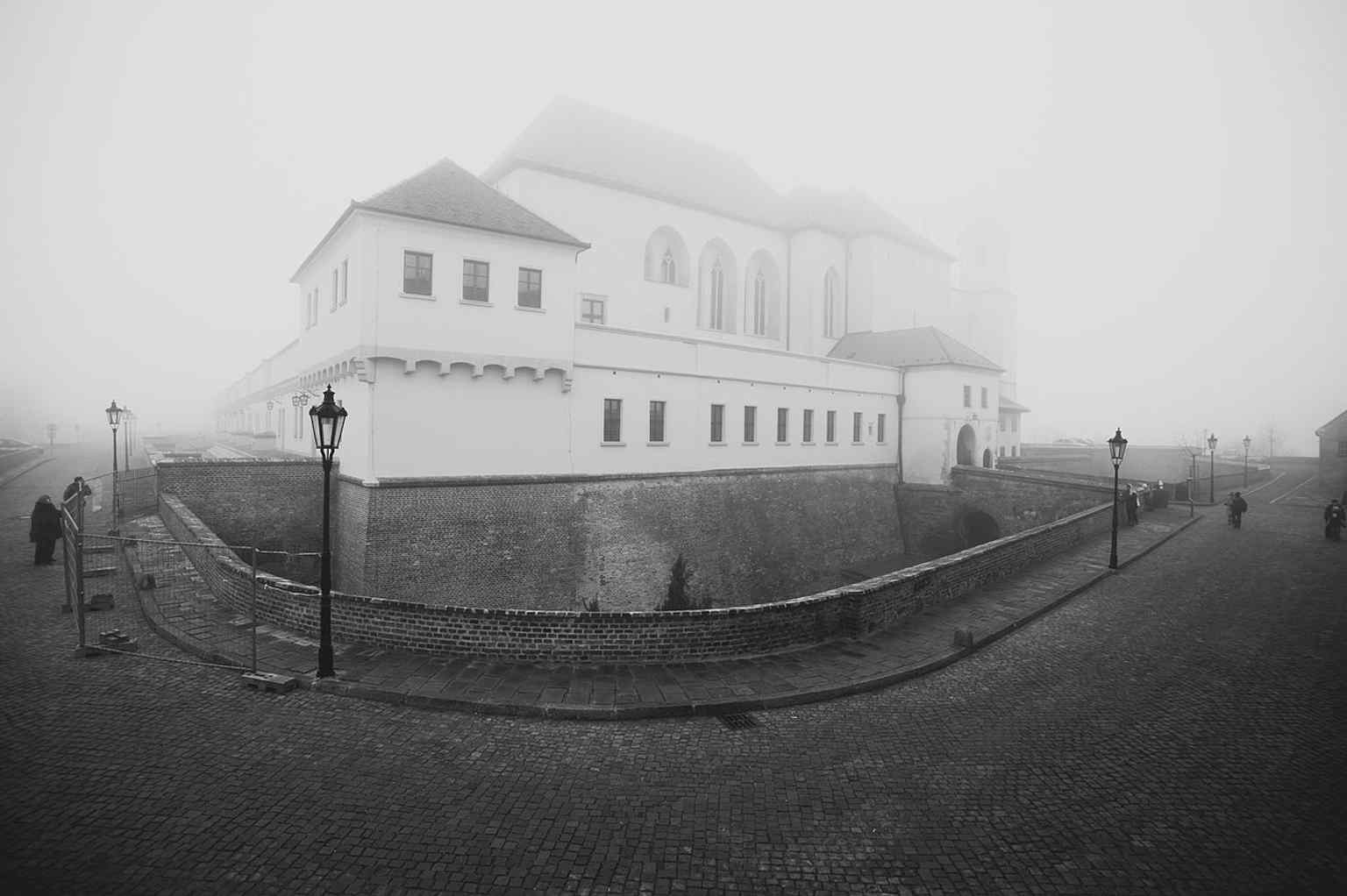
A classic view of Špilberk on its hilltop above Brno, matching the castle’s role as the city’s dominant landmark.
A classic view of Špilberk on its hilltop above Brno, matching the castle’s role as the city’s dominant landmark.Photo: Sokkk y, Wikimedia Commons, CC BY-SA 3.0. Cropped & resized.
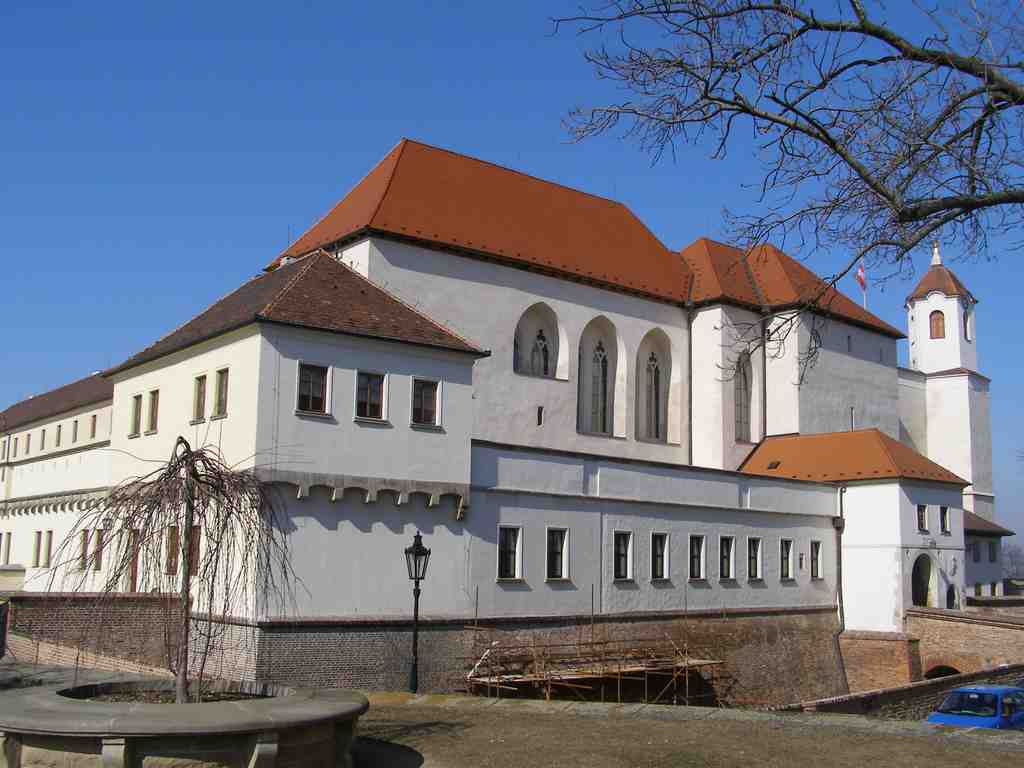
The castle seen from outside in a clear modern panorama, ideal for introducing Špilberk as both a castle and a fortress.
The castle seen from outside in a clear modern panorama, ideal for introducing Špilberk as both a castle and a fortress.Photo: Jan Prokopius, Wikimedia Commons, CC BY-SA 4.0. Cropped & resized.
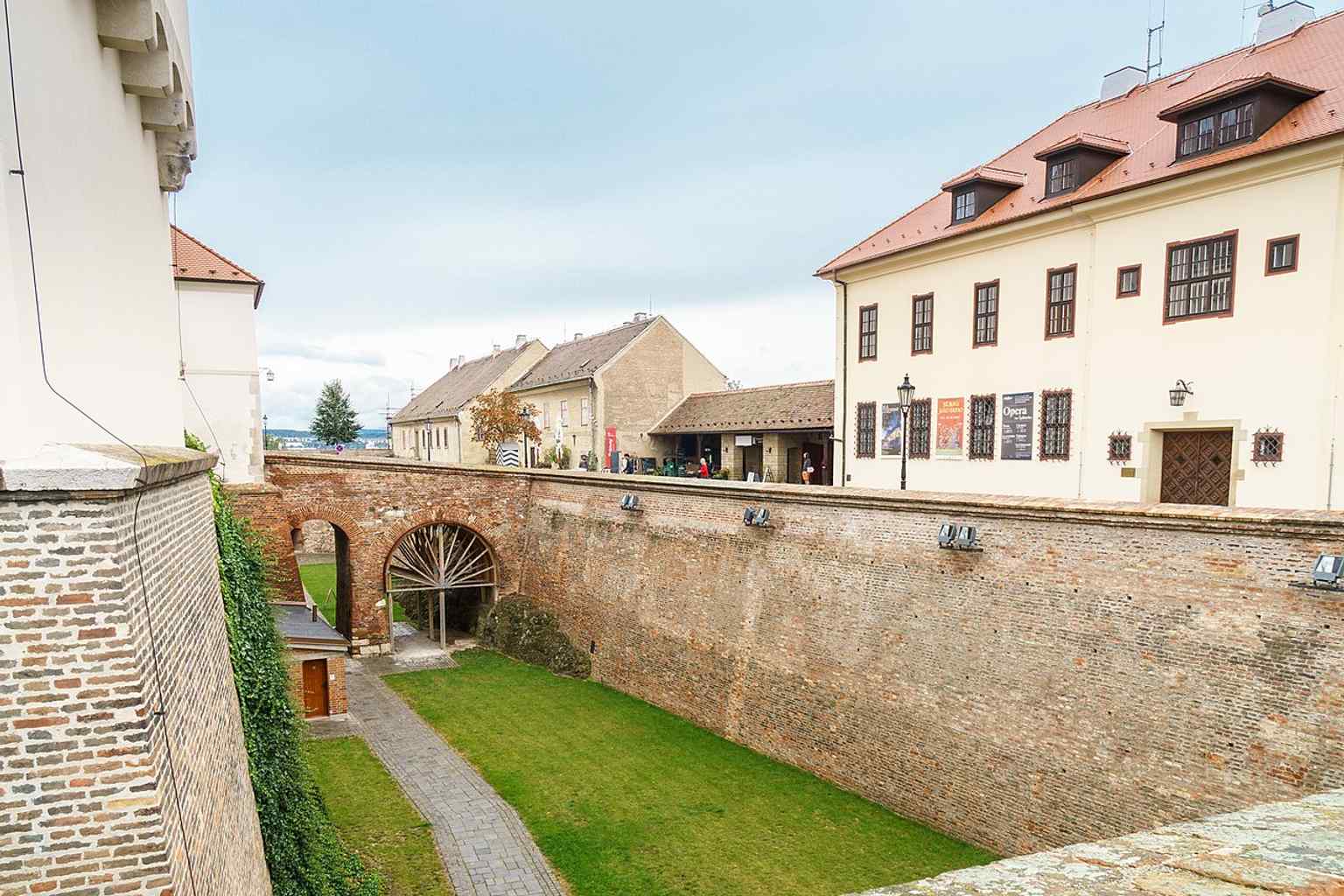
A close look at the brick bridge inside the fortress complex, part of the defensive system built when Špilberk became a baroque stronghold.
A close look at the brick bridge inside the fortress complex, part of the defensive system built when Špilberk became a baroque stronghold.Photo: Radler59 (talk), Wikimedia Commons, CC BY-SA 4.0. Cropped & resized.
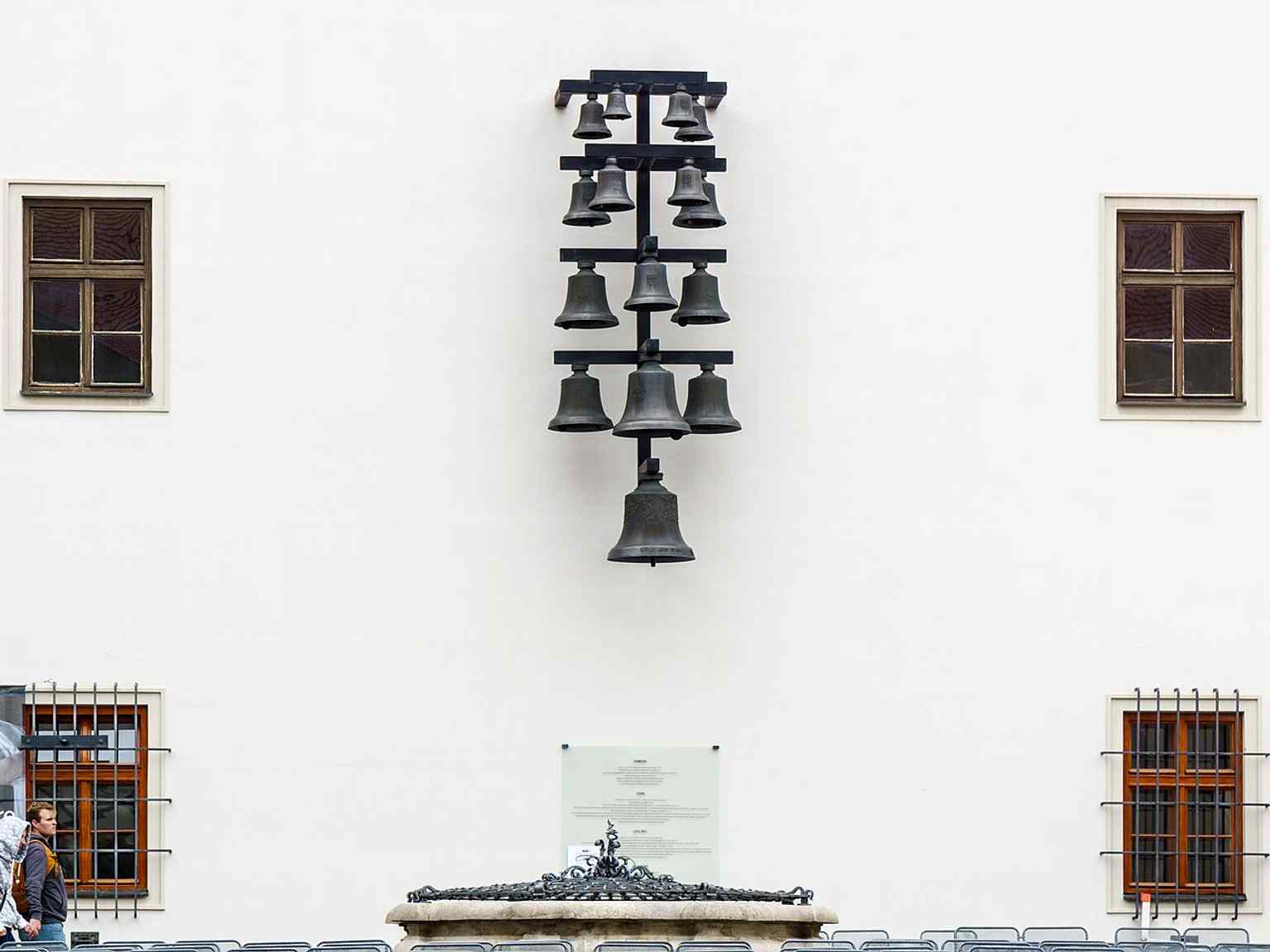
The carillon adds a living contemporary layer to the castle, which now hosts cultural events instead of soldiers or prisoners.
The carillon adds a living contemporary layer to the castle, which now hosts cultural events instead of soldiers or prisoners.Photo: Radler59 (talk), Wikimedia Commons, CC BY-SA 4.0. Cropped & resized.
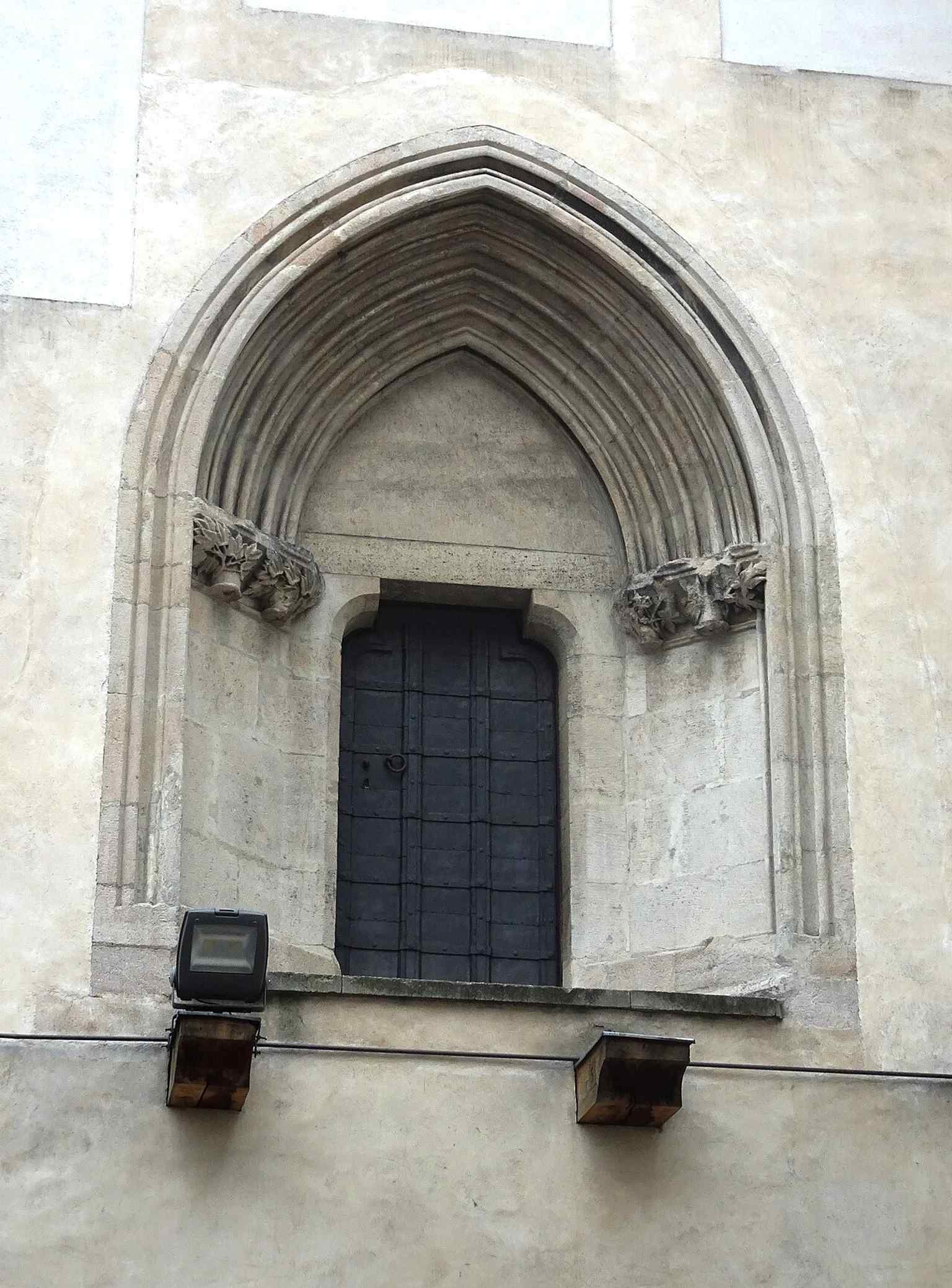
A Gothic portal from the first courtyard, echoing the castle’s 13th-century origins before its later baroque transformation.
A Gothic portal from the first courtyard, echoing the castle’s 13th-century origins before its later baroque transformation.Photo: Palickap, Wikimedia Commons, CC BY-SA 4.0. Cropped & resized.
The first courtyard shows the layered architecture of Špilberk, where the medieval castle and later fortress still meet.
The first courtyard shows the layered architecture of Špilberk, where the medieval castle and later fortress still meet.Photo: Palickap, Wikimedia Commons, CC BY-SA 4.0. Cropped & resized.
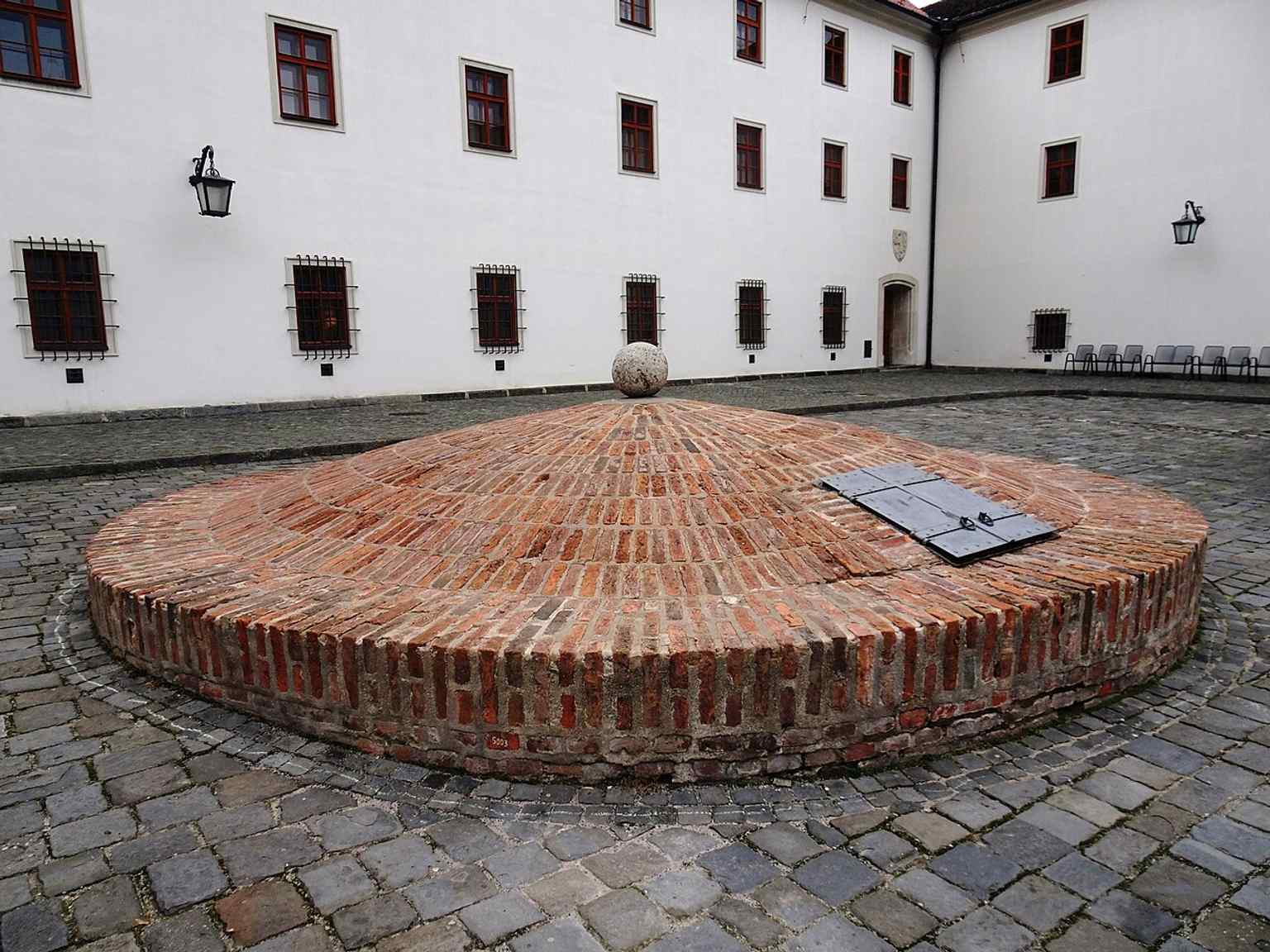
The cistern in the second courtyard is a reminder of the practical infrastructure that supported the fortress and later prison.
The cistern in the second courtyard is a reminder of the practical infrastructure that supported the fortress and later prison.Photo: Palickap, Wikimedia Commons, CC BY-SA 4.0. Cropped & resized.
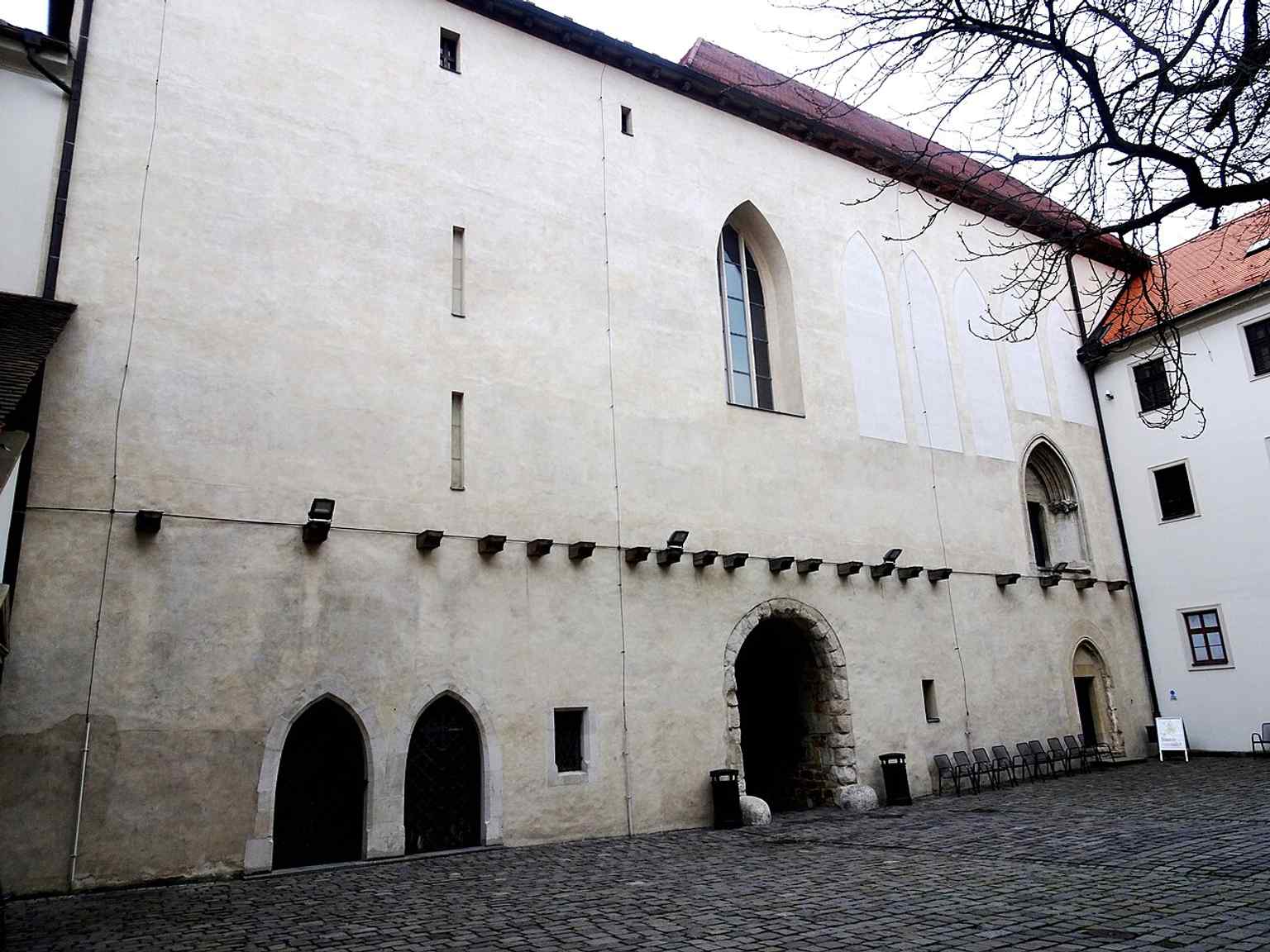
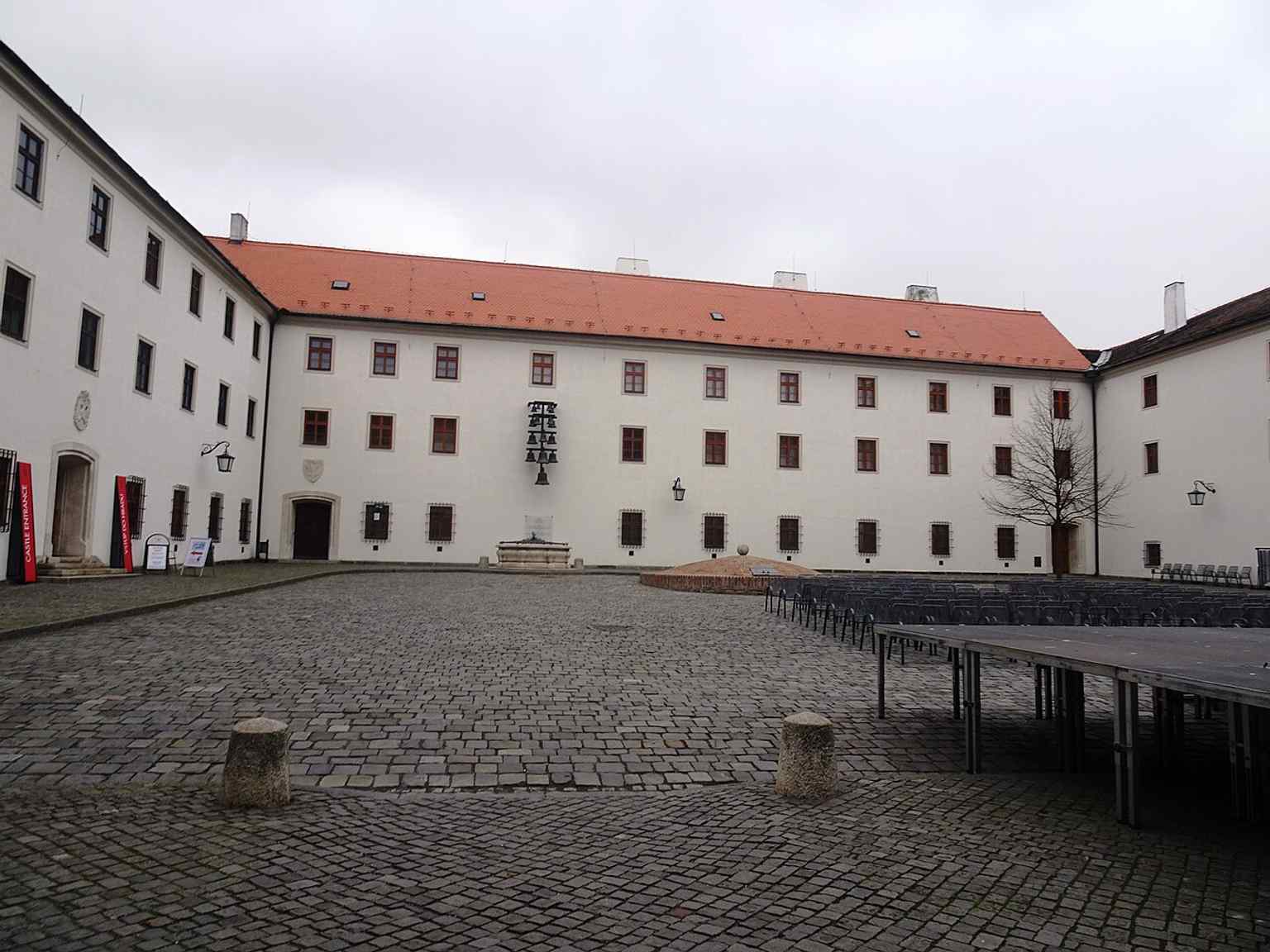
A wider view of the second courtyard, part of the fortress complex that later served as barracks and a museum setting.
A wider view of the second courtyard, part of the fortress complex that later served as barracks and a museum setting.Photo: Palickap, Wikimedia Commons, CC BY-SA 4.0. Cropped & resized.
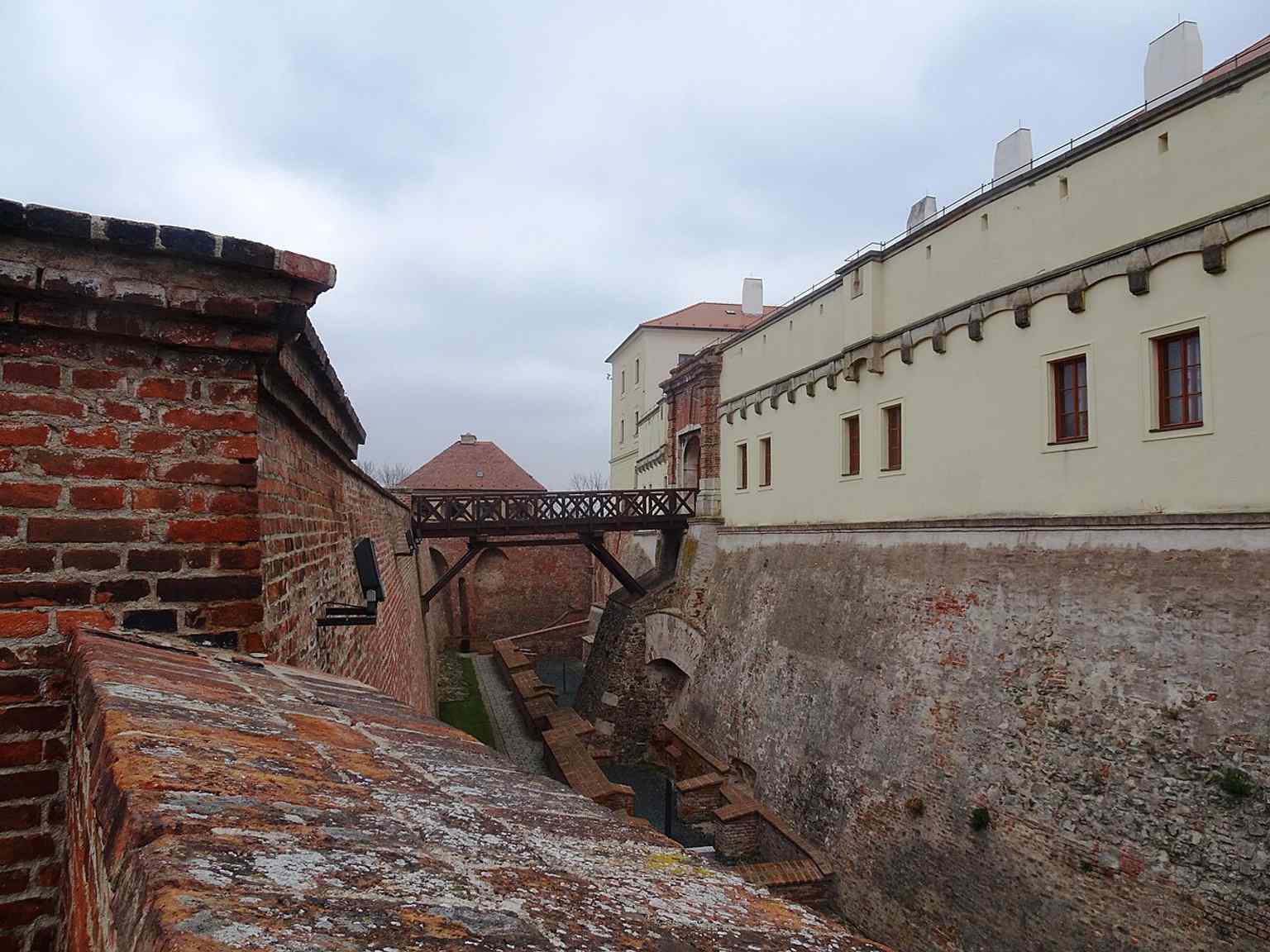
The moat area emphasizes Špilberk’s military character, especially after its major baroque fortification in the 17th and 18th centuries.
The moat area emphasizes Špilberk’s military character, especially after its major baroque fortification in the 17th and 18th centuries.Photo: Palickap, Wikimedia Commons, CC BY-SA 4.0. Cropped & resized.
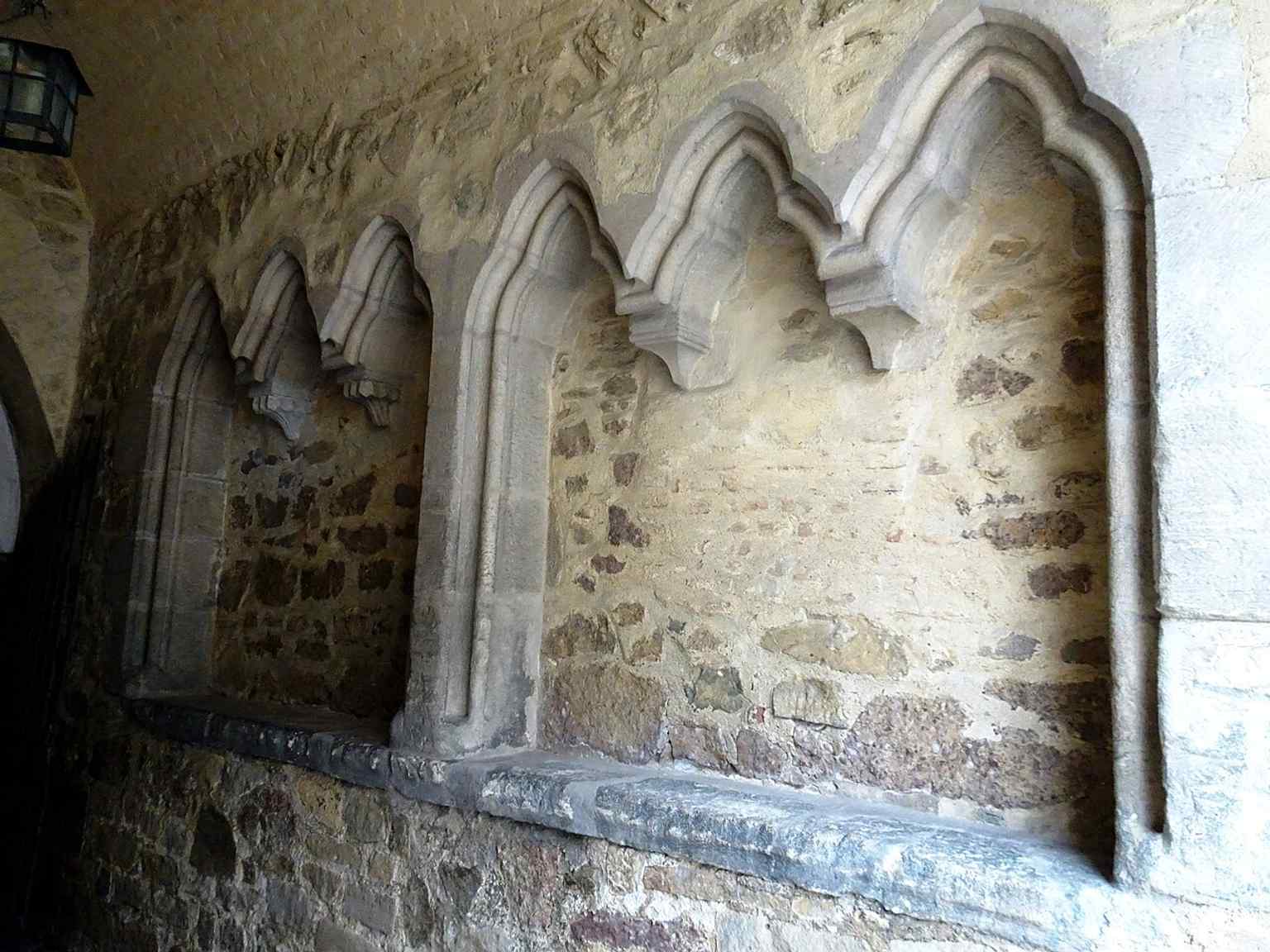
A preserved stone seat in the castle interior, one of the smaller details that help bring the historic fortress spaces to life.
A preserved stone seat in the castle interior, one of the smaller details that help bring the historic fortress spaces to life.Photo: Palickap, Wikimedia Commons, CC BY-SA 4.0. Cropped & resized.
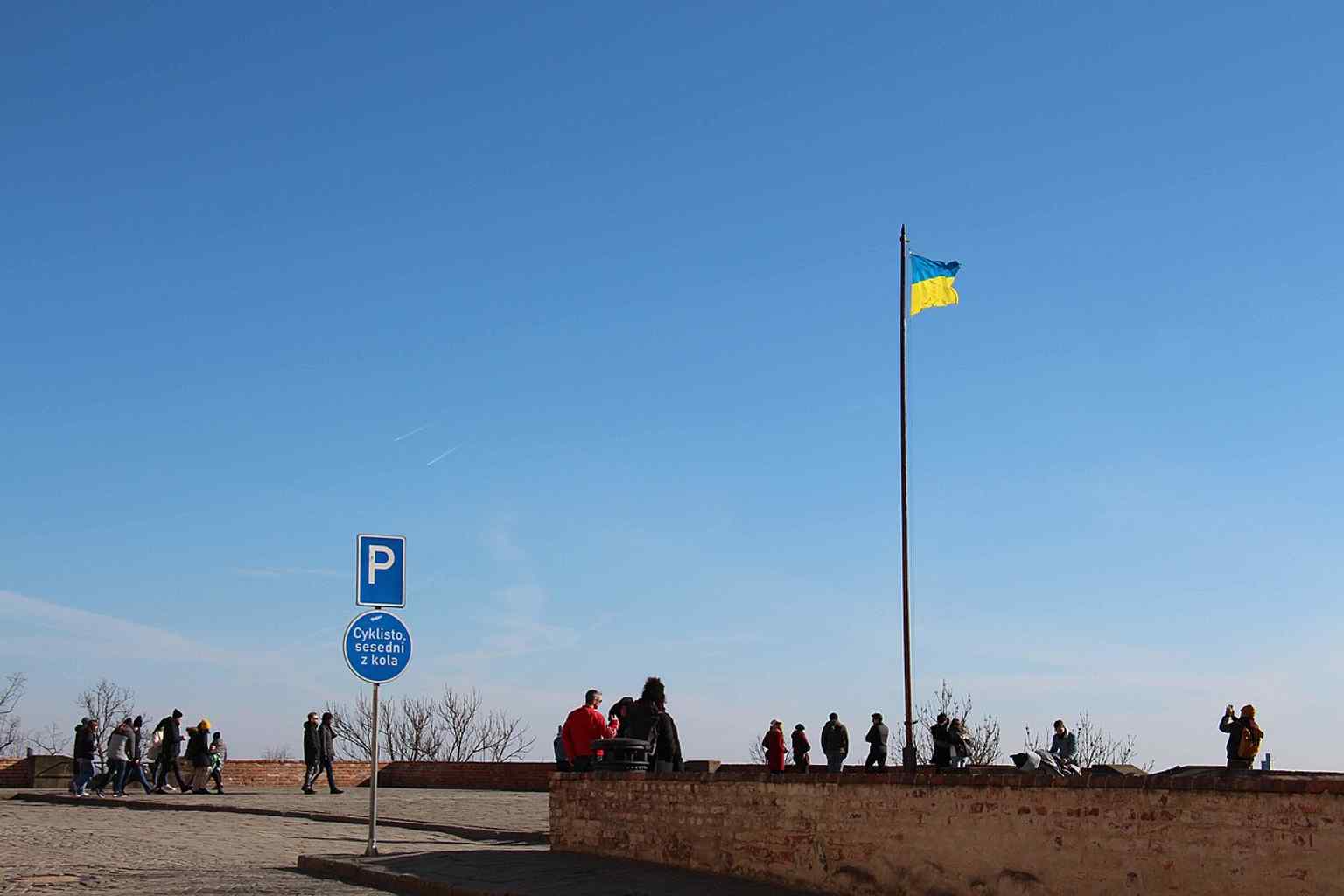
Špilberk as a civic symbol today, with the Ukrainian flag showing the fortress still appears in contemporary public life.
Špilberk as a civic symbol today, with the Ukrainian flag showing the fortress still appears in contemporary public life.Photo: Nicthurne, Wikimedia Commons, CC BY-SA 4.0. Cropped & resized.
arrow_back Back to Brno Highlights Audio Tour: Cultural Treasures and Historical Gems
Loved by travellers

Thousands of tours started.
Plenty of opinions.

4.8 across the App Store and Google Play. Here's a few we keep coming back to.

starstarstarstarstar
This was a solid way to get to know Brighton without feeling like a tourist. The narration had depth and context, but didn't overdo it.
Christoph
Christoph
Brighton Tour
starstarstarstarstar
Started this tour with a croissant in one hand and zero expectations. The app just vibes with you, no pressure, just you, your headphones, and some cool stories.
download Get the app

Pop your headphones in.
Step outside.

Free to download. Tours in every city. Start in 60 seconds — no account, no card.

Download on the App StoreGet it on Google Play
starstarstarstarstar_half
4.8
AudaTours app icon
headphones
~ 4 min until your first tour starts
public
1,000+ cities worldwide
all_inclusive
AudaTours
Unlimited

Every tour. Every city. One subscription.

3101 tours2271 cities138 countries50+ languages