
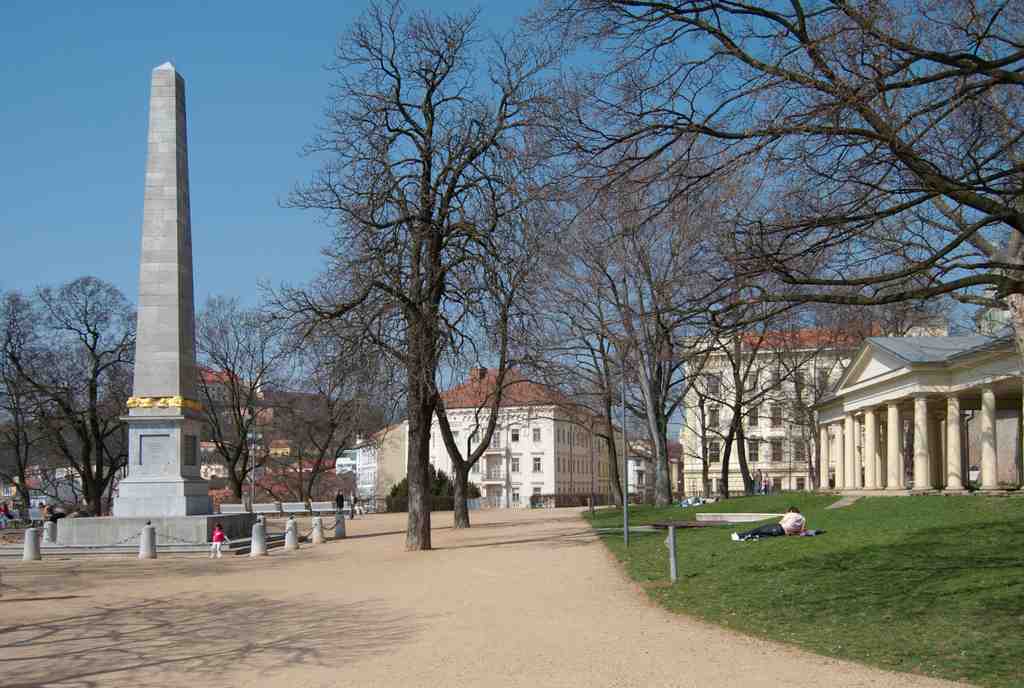
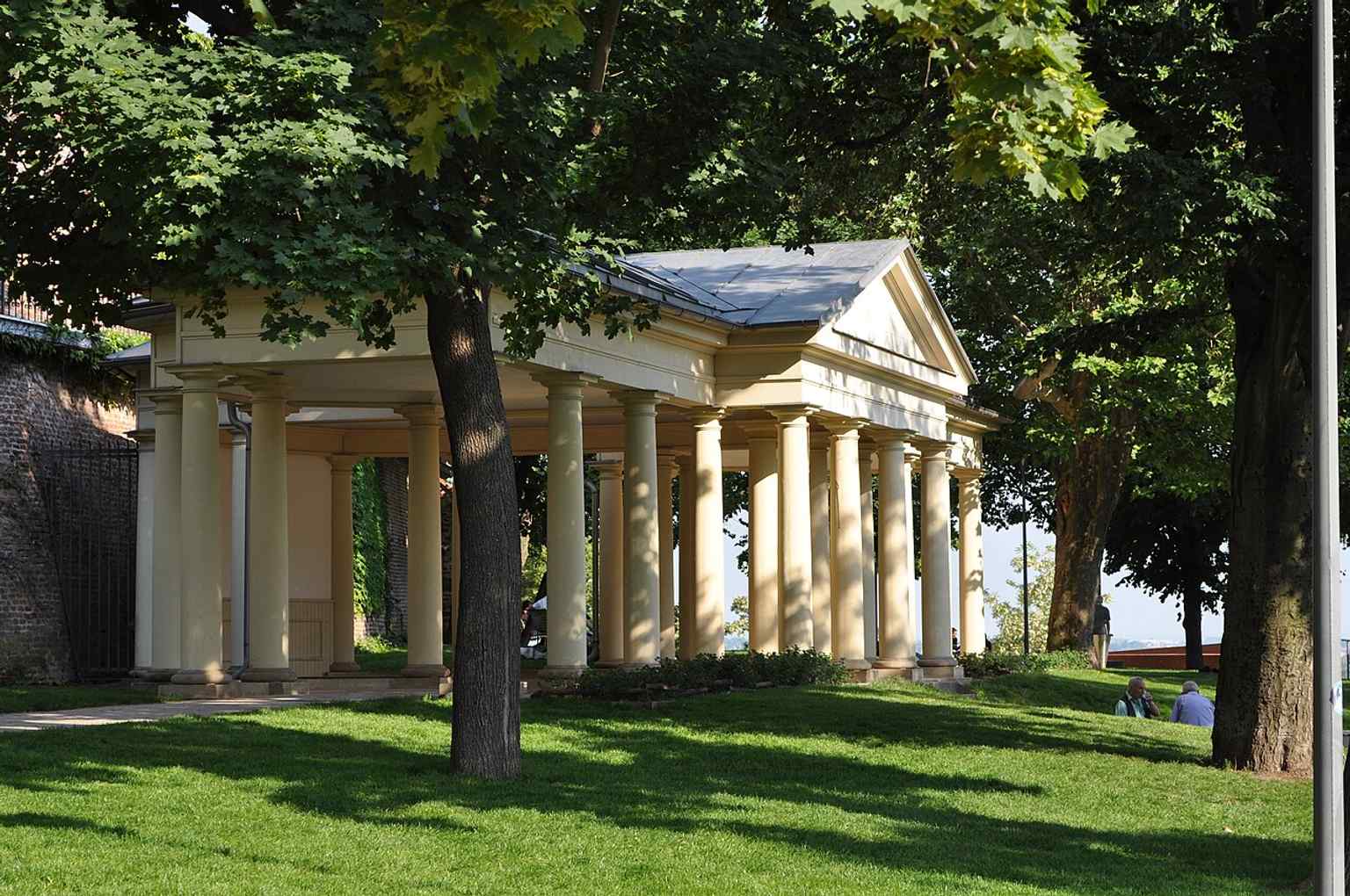
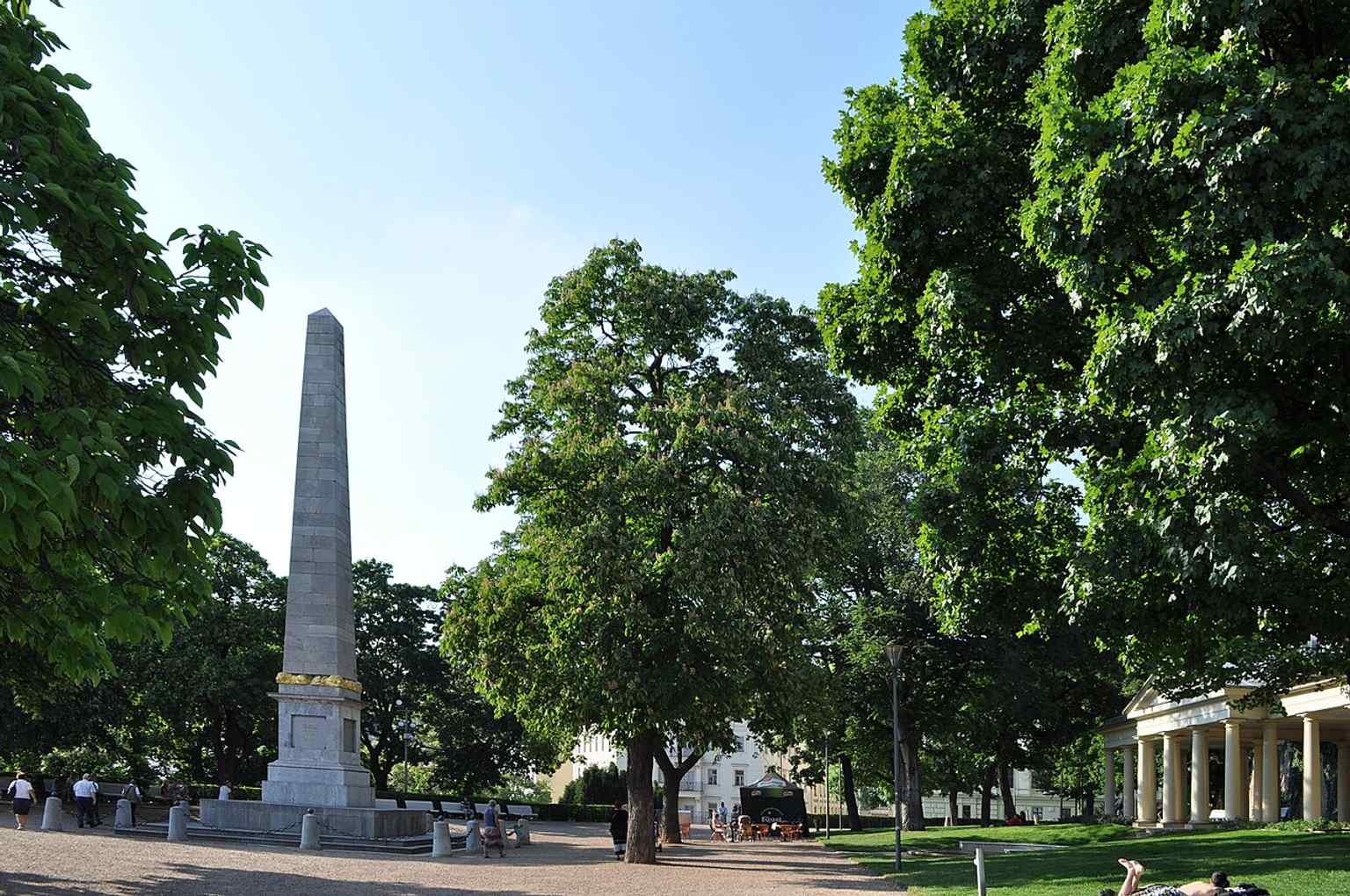
Look for terraced stone paths rising along the hillside, backed by old masonry walls and marked by a slender pale obelisk beside a small colonnade.
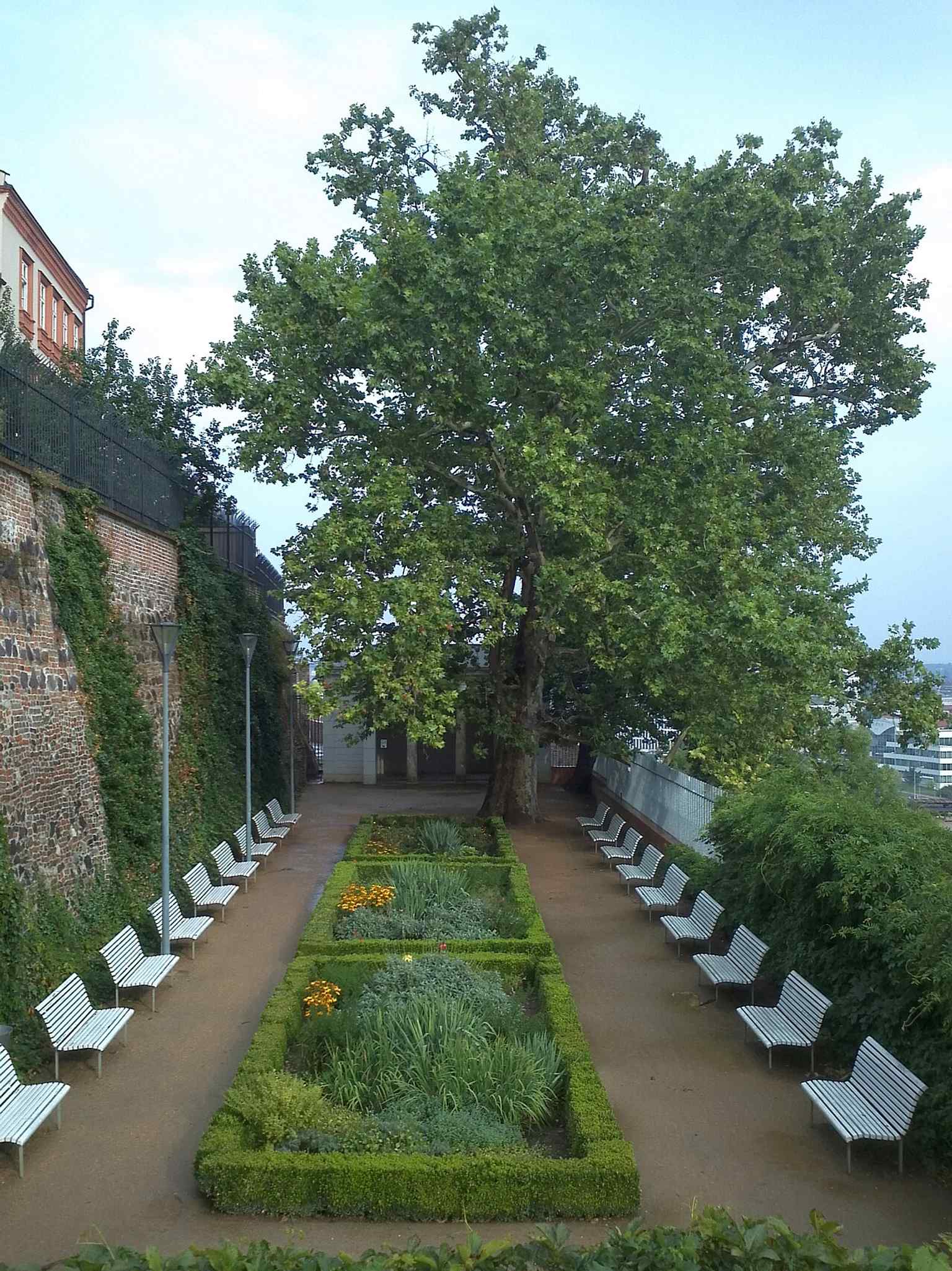
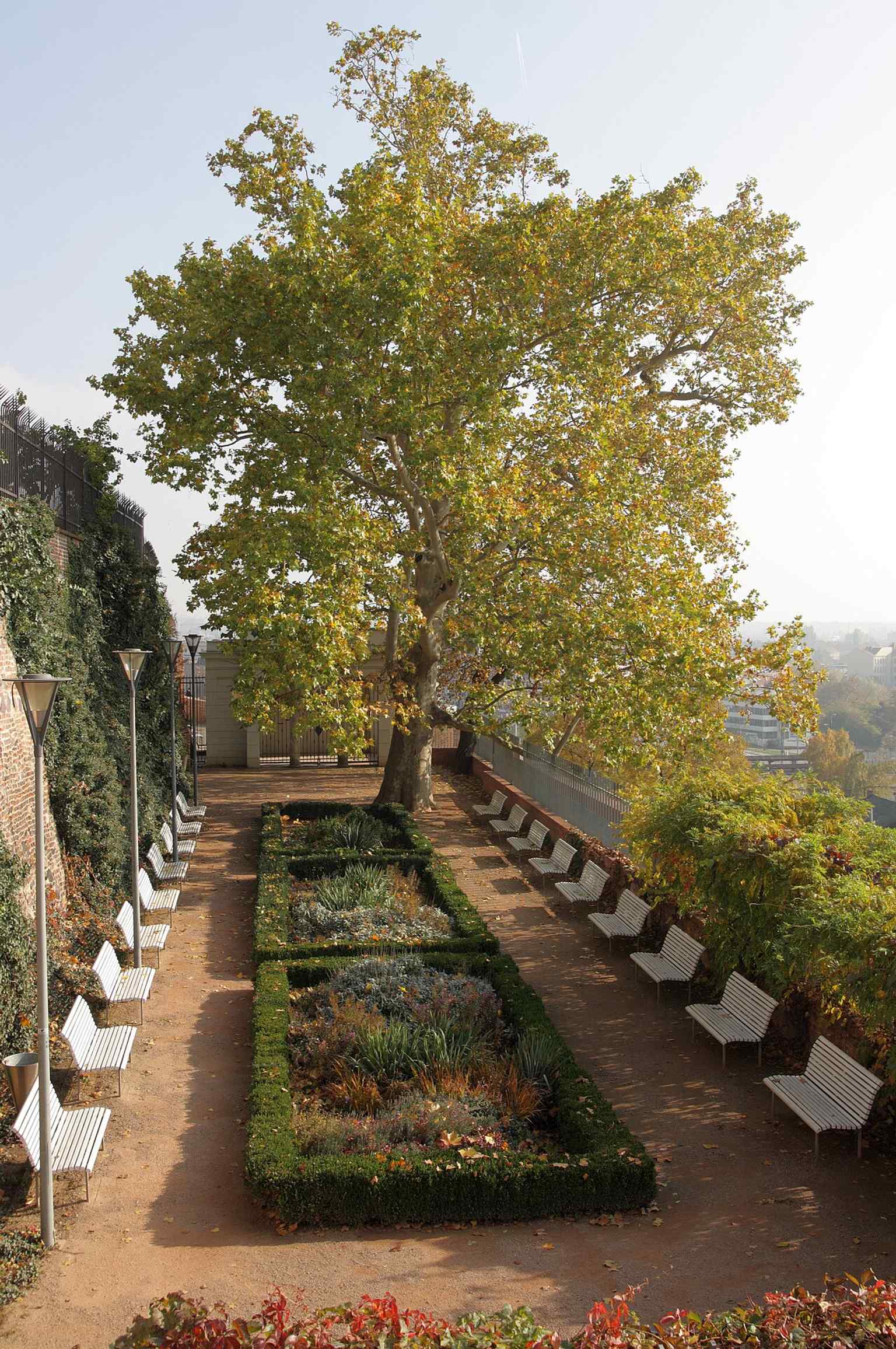
This is Denisovy sady, Denis’s Gardens... a place where Brno took ground meant for defense and taught it some better manners. You are standing on the slope of Petrov, between the old city walls and the road along Husova Street. Those winding paths curling up the hill are not decorative fussiness. They are the gentle version of military geometry, laid over former fortifications and older noble gardens.
Most visitors miss the real bragging right here: this was among the first public parks in Moravia, and one of the earliest in the Czech lands, created by public authorities. Not a private estate opened by kindness, not a leftover patch of green... a proper public park, shaped for the city. After the Napoleonic wars, Count Prokop Lažanský, the Moravian governor, pushed for it. Then Count Antonín Bedřich Mitrovský drove the big changes from eighteen fourteen to eighteen eighteen, remaking the old eighth bastion. A bastion, by the way, was the projecting chunk of a fortress where soldiers could watch and fire along the walls. Hardly peaceful origins.
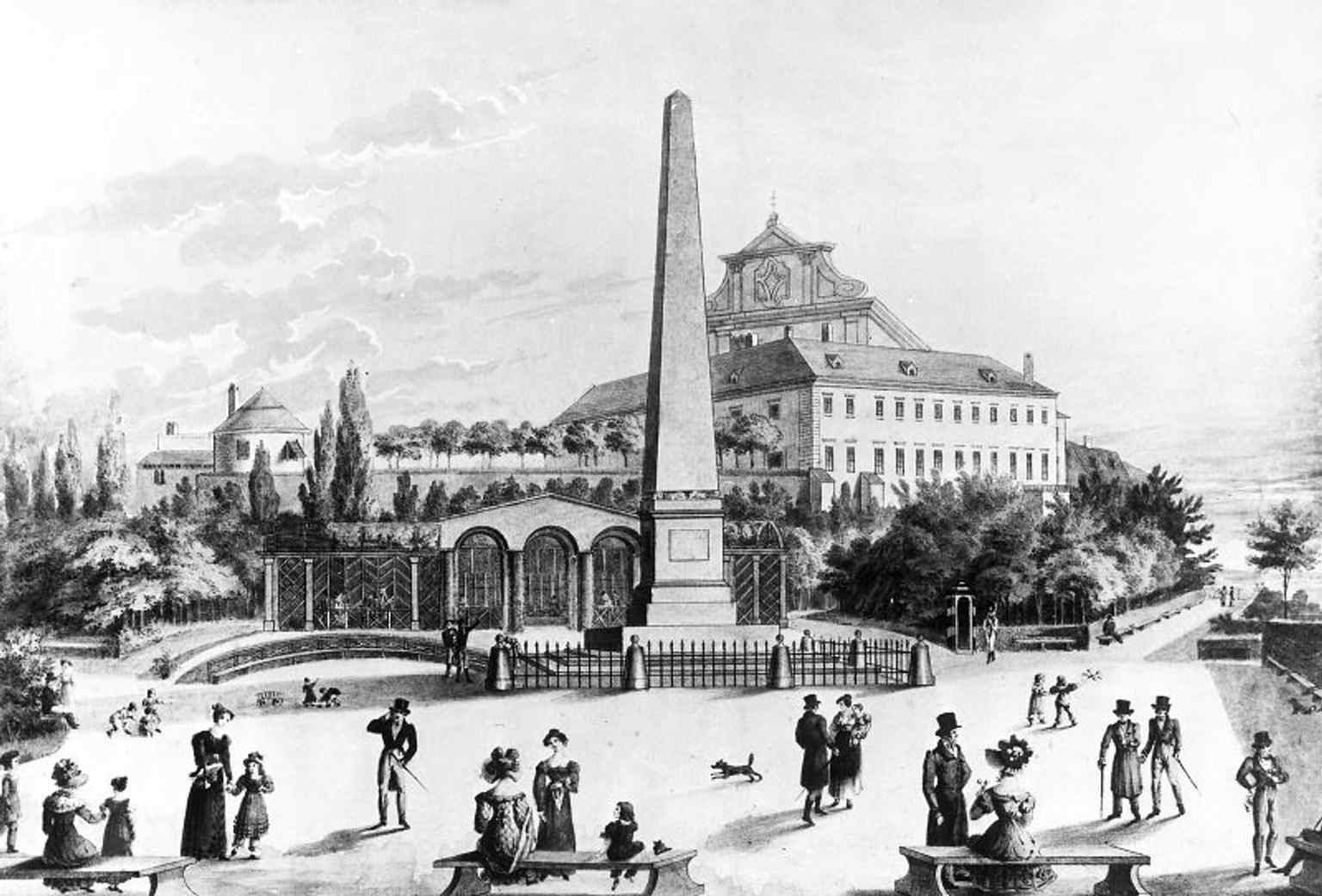
When the park officially opened on the fourth of October, eighteen eighteen, it already had benches, a fence, a guard, greenhouses, an orangery, even a spring called Fons salutis... “the fountain of health.” Brno does enjoy giving practical things ambitious names. That same day, they unveiled the obelisk nearby, designed by Alois Pichl, to celebrate victory over Napoleon. It stood on four gilded lions and praised Emperor Francis the First as liberator. Later, in nineteen nineteen, the park got a new name: Denis’s Gardens, after the French historian Ernest Denis, who supported the birth of Czechoslovakia. Same hillside, new politics. Brno rarely wastes a good stage.
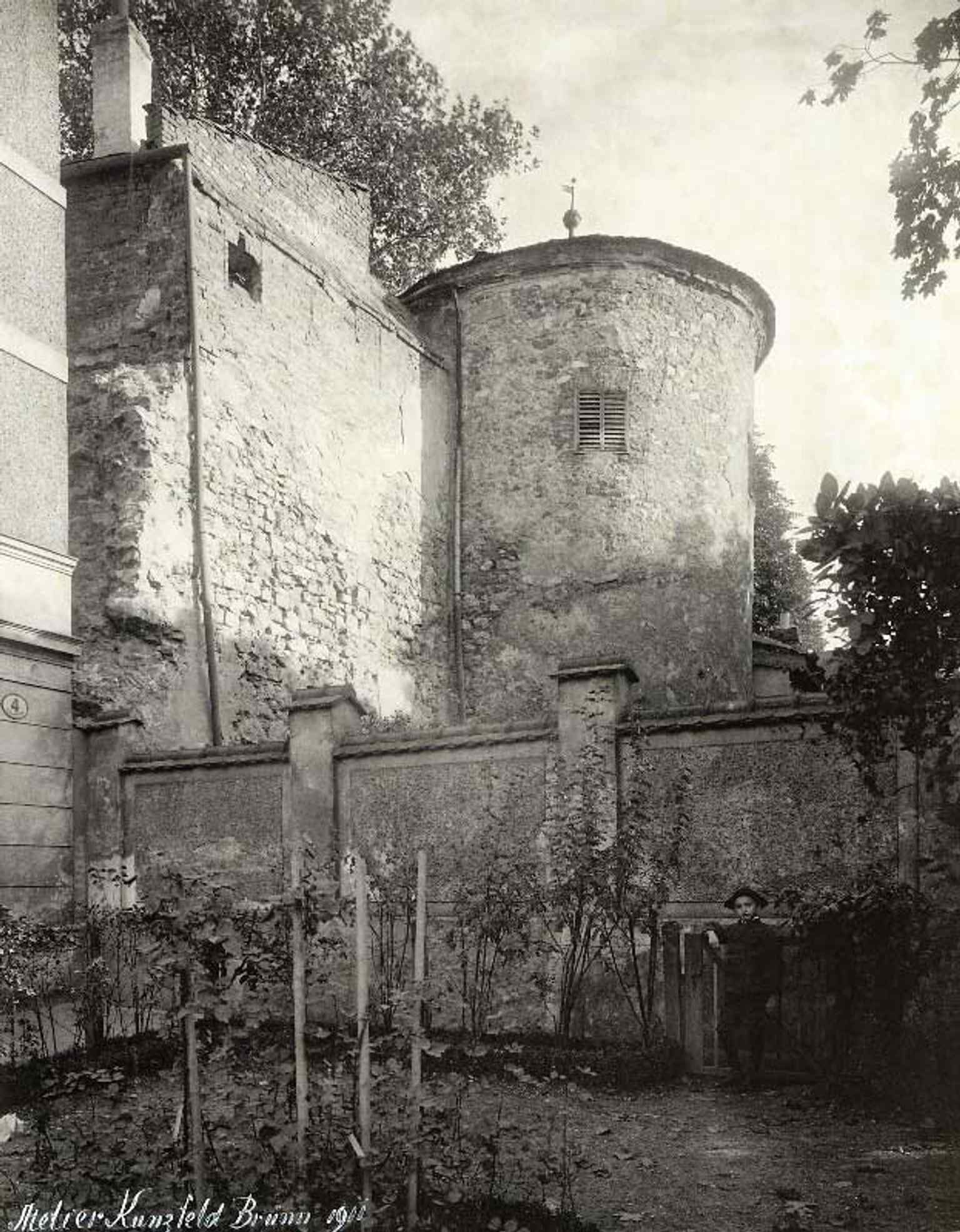
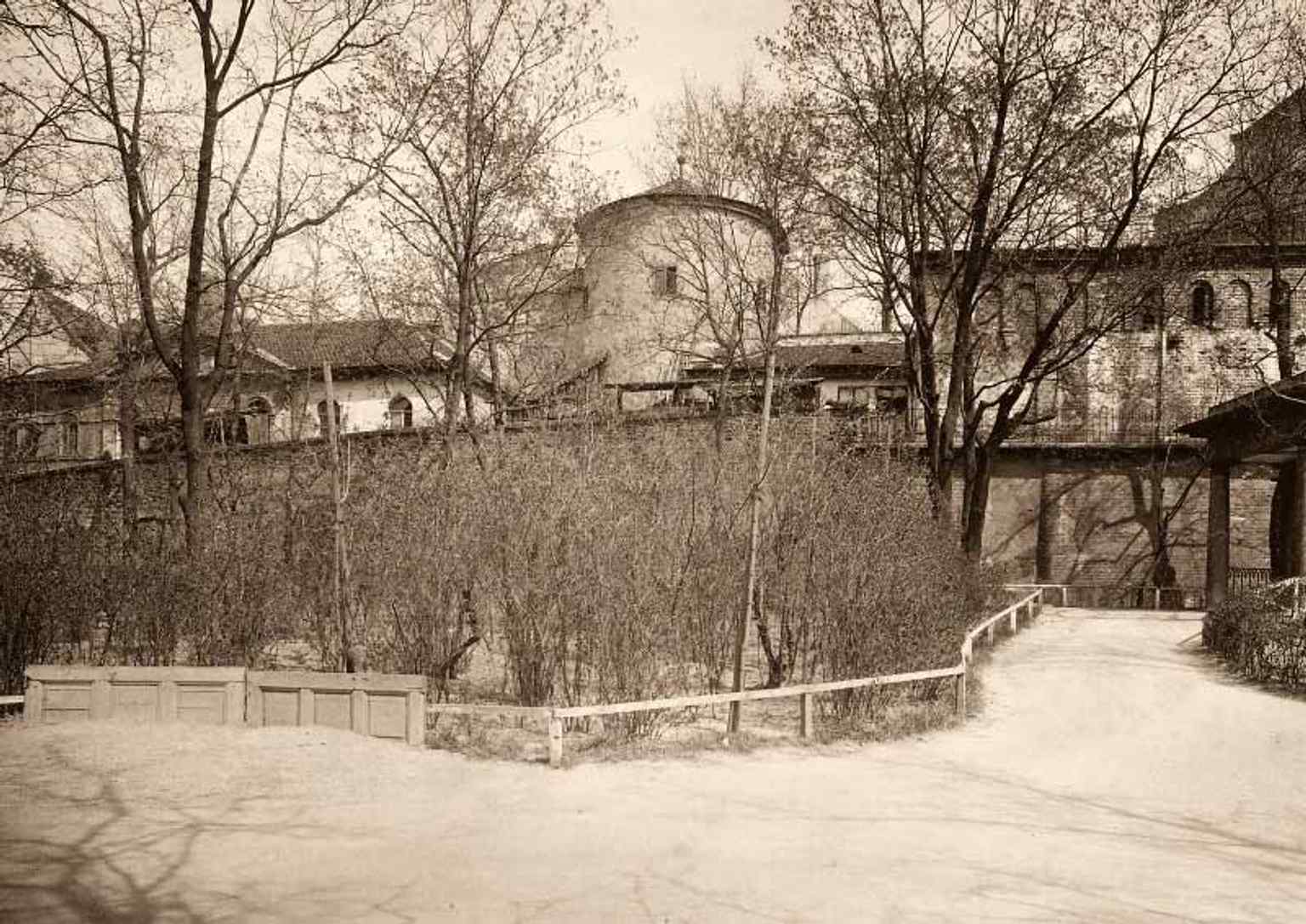
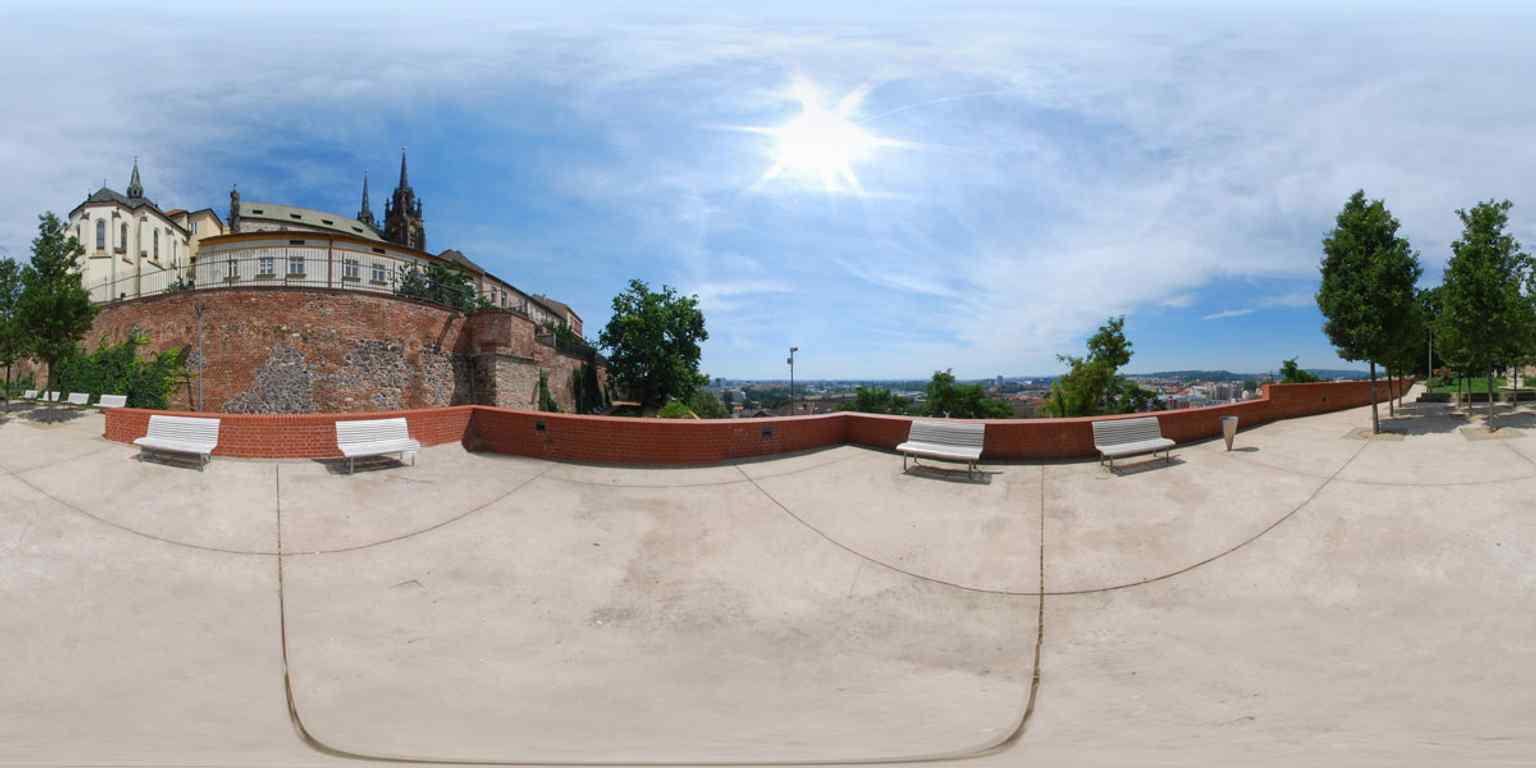
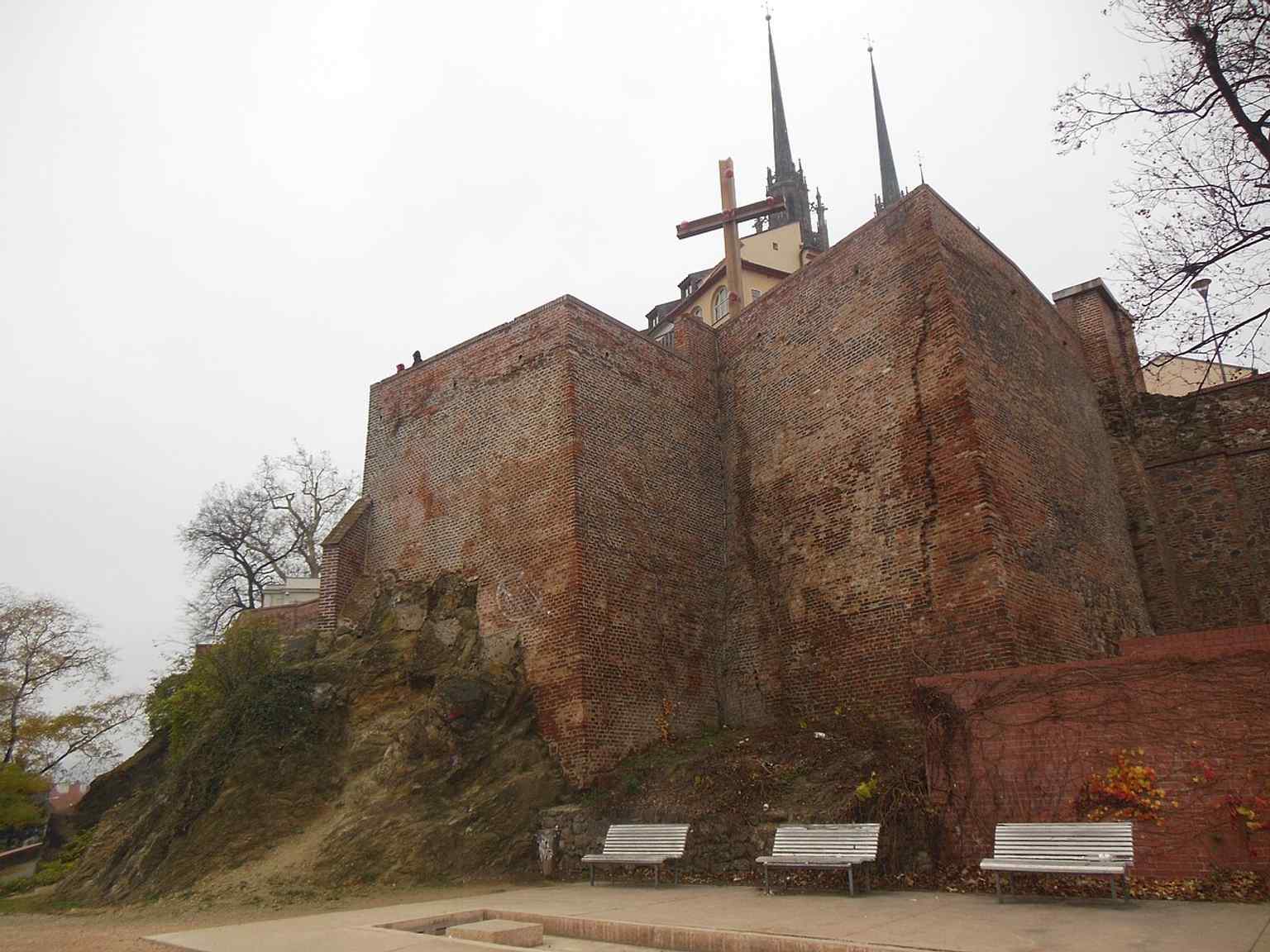
If you check the image on your screen, you can see the preserved stretch of medieval wall that still runs beside the gardens. And the older view from around eighteen twenty shows how quickly this place turned from bastion into promenade, with the obelisk already watching over it.
In the nineteenth century, Josef Esch helped link this park to other former defensive edges, turning the old ring of fortifications into a belt of walks and views. Then, during reconstruction after two thousand, archaeologists dug in the Bašty area and confirmed that this calm terrace still sits directly on the line of the moat and walls. Even peace here has foundations designed for siege.
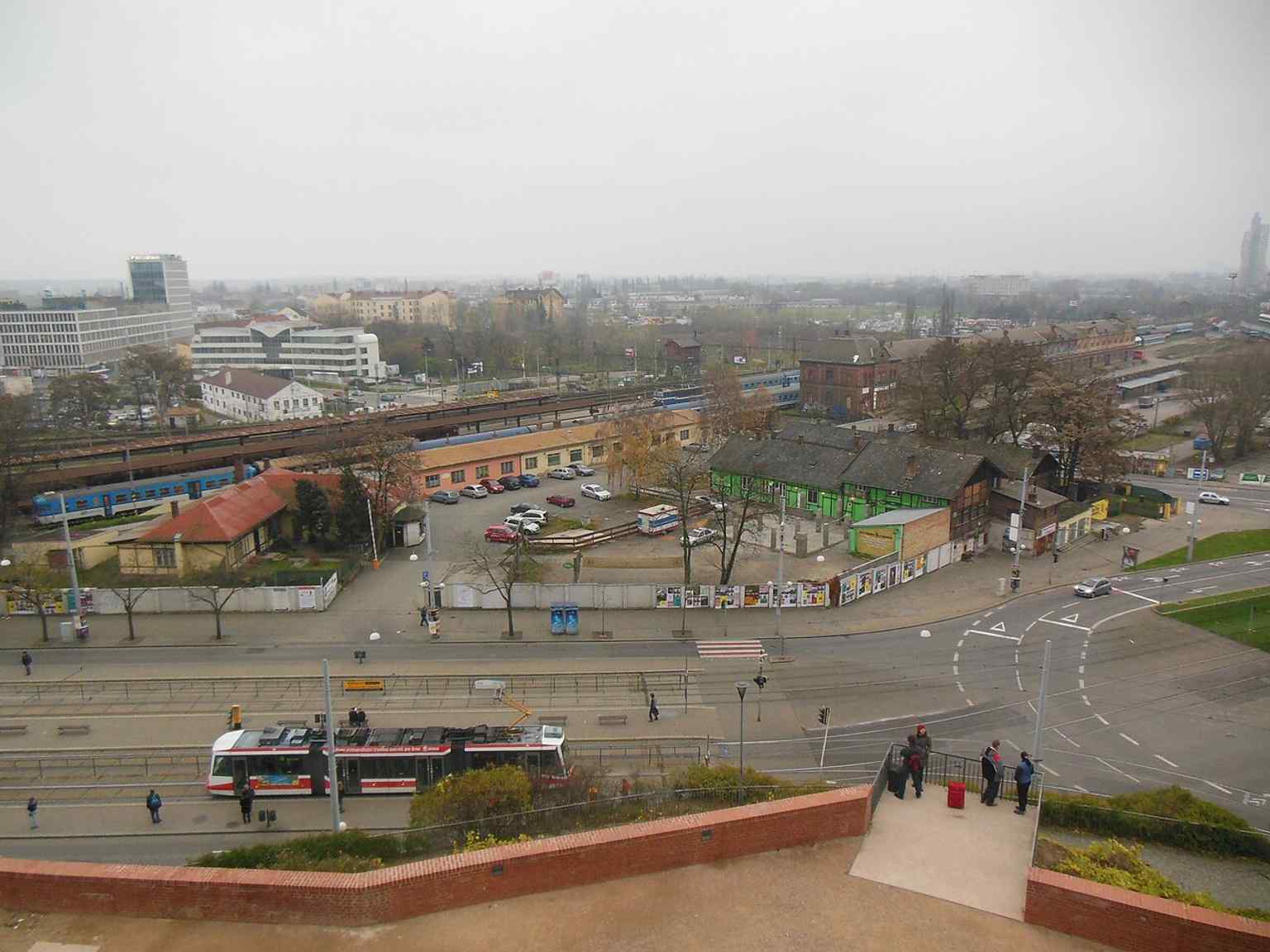
That is what lingers at Denis’s Gardens: not escape from the city, exactly, but the moment the city becomes readable. Stones, walls, terraces, traffic, cathedral hill... all of it lines up. When you are ready, Špilberk is about a twenty-two minute walk from here. And conveniently, this park never closes; it is open all day, every day.





.jpg)
.jpg)
.jpg)
.jpg)
.jpg)


.jpg)
