
Cali Audio Tour: Journey Through Cali's Timeless Echoes
Cali is a city where every corner holds the trace of triumph and disaster, faith and rebellion. Between sparkling riverside churches and centuries-old bridges, secrets flicker just beneath the surface. This self-guided audio tour invites you to uncover the stories most travelers never hear—the untold legends woven into The Hermitage Church, Jorge Isaacs Theater, Ortiz Bridge, and more. Did a devastating earthquake really save the city’s most sacred relic? What scandalous events forced the theater’s patrons into the streets in panic one fateful night? Why did workers find strange artifacts hidden beneath the Ortiz Bridge nearly two centuries after its opening? Follow Cali’s dramatic transformations as you move from fairy-tale spires to grand theaters and silent bridges. Feel each moment’s echo and see the city not as a map, but as a living drama. Ready to begin your search for the next hidden chapter? Dive in—Cali’s secrets await.
Tour preview
About this tour
- scheduleDuration 30–50 minsGo at your own pace
- straighten1.0 km walking routeFollow the guided path
- location_on
- wifi_offWorks offlineDownload once, use anywhere
- all_inclusiveLifetime accessReplay anytime, forever
- location_onStarts at The Hermitage Church
Stops on this tour
If you’re looking for The Hermitage Church, just glance towards the tall, white fairy-tale-like building with a sharp spire and delicate architectural details-it almost looks like…Read moreShow less
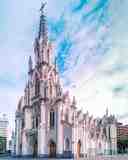
If you’re looking for The Hermitage Church, just glance towards the tall, white fairy-tale-like building with a sharp spire and delicate architectural details-it almost looks like a miniature Gothic castle standing brilliantly by the river. Now that you’ve found it, let me take you back in time-picture yourself in early 1600s Cali, but don’t worry, there are no horse-drawn taxis to run you over! The original church here was nothing like the dazzling vision in front of you now. It was a modest structure, made with straw and humble materials, sitting quietly near the banks of the Cali River. Its real treasure was spiritual: it was dedicated to Our Lady of Solitude and the Señor de la Caña-a special image of Christ, which, believe it or not, survives even today. Fast forward a few centuries and, like a soap opera twist, disaster struck. In 1925, a powerful earthquake came rumbling through Cali. The quaint old ermita crumbled down, but the image of Señor de la Caña was miraculously saved-talk about divine intervention! The city, ever resilient, rebuilt-and in 1942, the church you’re standing before was completed. It’s not the old straw chapel, but a sparkling neo-Gothic masterpiece, inspired by the towering Ulm Cathedral in Germany. This version brought a little European magic to Colombia, with all its soaring arches, white marble altars, and three magnificent naves covered with ribbed vaults. This church is as international as a tourist hostel! Its heavy bells were forged in France, the glorious stained glass windows (spot the 12 apostles!) were made in Amsterdam, and the iron doors were crafted right here by local students in 1937. At night, the whole building glows as if it’s been sprinkled with fairy dust, turning the riverside into pure magic. Peek inside and you’ll find more than just architecture. There are images carved over 300 years ago-Our Lady of Sorrows, the Cristo de la Caña, San José, Magdalena, San Francisco Javier, and more, all watching over visitors with centuries of stories in their eyes. Even the campanario (bell tower) is currently getting a little facelift, while the main and side altars, all carved from white marble, shine bright enough to outdo any Instagram filter. And here’s a little secret: most people who visit aren’t praying-they’re staring, snapping photos, and marveling at the beauty that survived so much. You’re part of a long tradition of wanderers who come for faith, history, and one truly unforgettable selfie. So, enjoy this gem of Cali-where every stone has a story and every visitor is a little part of the legend!
Open dedicated page →To spot the Jorge Isaacs Theater, just look for a grand and elegant building painted a warm coral orange with white neoclassical columns and big arched windows right on the…Read moreShow less
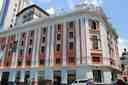
To spot the Jorge Isaacs Theater, just look for a grand and elegant building painted a warm coral orange with white neoclassical columns and big arched windows right on the bustling corner ahead. Alright, picture yourself in Cali in the early 1930s-people are walking past you in shoes that squeak on the stone pavement, and the city is buzzing with excitement. That’s when this beautiful theater popped up, thanks to a gentleman named Hermann Bohmer who wanted something truly special for the city. He tore down an older theater to make way for this masterpiece, putting the Italian engineer Gaetano Lignarolo in charge. They named it in honor of Jorge Isaacs, a local literary hero famous for writing the romantic novel "María"-no relation to Romeo, but plenty of drama and heartache! On December 26, 1931, the theater opened its doors to the city. But only a few years later, disaster struck-a fierce fire ripped through, sending people running in panic and probably leaving poor ushers wondering if they should stick to selling popcorn instead. The fire was such a big deal that Cali decided it was time to start its own volunteer firefighters brigade-see, this theater didn’t just host drama, it inspired real-life heroes! For decades, the Jorge Isaacs Theater lived through ups and downs. By the 1970s and ’80s, it fell into neglect, gathering dust and pigeons, until it was finally declared a national monument in 1984. That’s when the state stepped in, rolling up its sleeves for a full restoration. Today, this building is a true gem-a grand French neoclassical beauty with touches of romantic Italian style, Ionic capitals, balustrades, and stained glass showing Cali’s coat of arms. If you look up and around, you just might imagine dancers twirling on the broad stage, or hear echoes of applause bouncing from the high acoustic box-one of the tallest in Latin America! So stand proud-there’s real Cali history in these walls, and you’re right in front of it. Now, who wants to take center stage?
Open dedicated page →To spot the Ortiz Bridge, look for a bright white structure with three wide arches stretching over the river, decorated by an ornate iron fence, right in front of you-if you…Read moreShow less
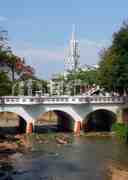
To spot the Ortiz Bridge, look for a bright white structure with three wide arches stretching over the river, decorated by an ornate iron fence, right in front of you-if you glance just above the bridge, you’ll see the dramatic spire of La Ermita church in the background. Now, let’s step back in time together-close your eyes for a second and imagine the scent of the river in the air and the distant chatter of people and carriages echoing around you. It’s the mid-1700s, and Cali is growing fast. The townsfolk are desperate-they need a way to cross the wild, unpredictable Rio Cali. The first attempt was a bridge made of guadua, a local bamboo. However, as you might guess, Mother Nature had her own plans. The river showed no mercy, and soon the bridge was in ruins! Decades passed, and the locals were tired of tiptoeing through muddy crossings. Along came Santiago Reyes, the mayor with a big vision, and a dream of a grand bridge connecting the bustling center to the quieter north. An engineer named José Montehermoso started the job in 1835, hammer in hand, dreams in his head-except, the governor thought it was all a waste of money. Can you imagine Montehermoso sweating under the sun, hoping no one would come tell him to stop? But fate is full of plot twists! In 1842, Fray Ortiz, a Franciscan friar and amateur engineer from Candelaria, took over the project. For three years he worked with endless determination-even if he wasn’t the only mastermind behind it, the bridge now proudly bears his name. By October 1845, with dust, laughter, and probably a bit of prayer, Ortiz Bridge was finally born. Picture it-the first solid connection across the water! Over time, the bridge has been remodeled, expanded, and even transformed for cars and those fancy “berlinas”-imagine those shiny old cars rumbling over the river for the first time. In 2011, during roadworks, workers stumbled upon ancient hidden pieces of the original bridge, along with mysterious objects-old dishes, animal bones, and even fragments from times long gone. So, as you stand here, take a moment to see not just a bridge, but nearly three centuries of Cali’s hopes, mishaps, and surprises-proof that sometimes, teamwork (and maybe a little divine help) builds wonders that last!
Open dedicated page →
Show 5 more stopsShow fewer stopsexpand_moreexpand_less
 4
4National Palace
Buy tour to unlock all 12 tracksTo spot the National Palace, just look to your right for a grand, white, five-story building with tall windows and a classic, elegant entrance facing the eastern side of Cayzedo…Read moreShow less
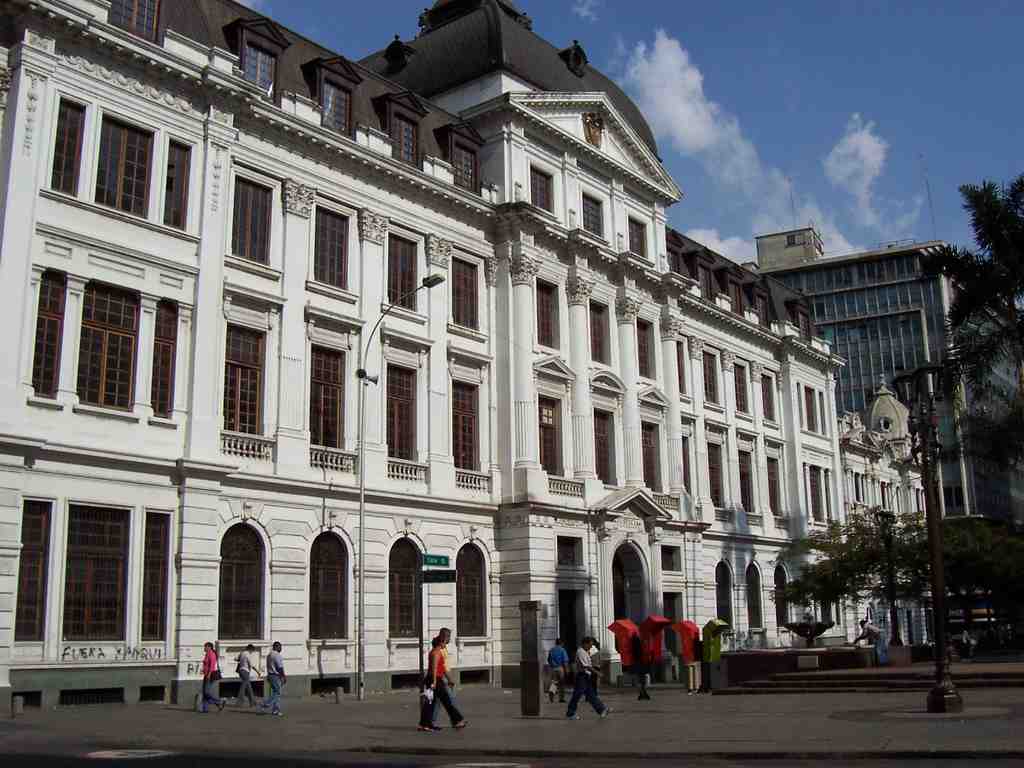
To spot the National Palace, just look to your right for a grand, white, five-story building with tall windows and a classic, elegant entrance facing the eastern side of Cayzedo Square. Alright, picture yourself in front of this magnificent structure-its white façade almost glowing, tall arching windows lined up like guards, and cedar wood doors that have welcomed countless footsteps over the decades. The National Palace stands here like a wise old storyteller in Cali's historic center, keeping secrets from nearly a hundred years ago. Now, back in the late 1920s, this land was just a patch owned by the department, and Cali was spreading out like spilled coffee, with government offices scattered all over the city. The government wanted to tidy things up a bit-can you imagine their frustration, running around town with important papers every time a signature was needed? So, they decided, “Let’s build a palace!” Joseph Martens, a Belgian architect who liked his buildings grand and dignified, drew up the first plans. Soon, local engineers and builders joined in. Construction began in 1928, and let me tell you, it wasn’t all smooth sailing. The clatter of hammers and shouting workers filled the air. But in 1931, public unrest stopped everything-imagine the half-built palace standing silent, a skeletal giant brooding over Cali. It was eventually finished in 1933, thanks to the determination of a new crew led by engineer Guillermo Garrido. Built of cement and brick, with floors as solid as a judge’s verdict, and cedar wood arches and bronze locks so shiny they could almost double as mirrors, this building became the home for judges, administrators, and even… a small sugar cane museum! Every day, 28 offices buzz with the city’s legal drama, while visitors wander around learning about the sweet roots of Cali’s history. And if you think this place looks important, you’re spot on-it’s so special, it was declared a National Monument in 1977. So, as you stand here, you’re not just seeing a building, you’re meeting Cali’s storyteller, still keeping watch over the heart of the city.
Open dedicated page → 5
5Plaza de Cayzedo
Buy tour to unlock all 12 tracksTo spot Cayzedo Square, just look for the wide-open plaza lined with tall palm trees and a grand statue rising from the center, visible between the greenery in front of you. Now,…Read moreShow less
To spot Cayzedo Square, just look for the wide-open plaza lined with tall palm trees and a grand statue rising from the center, visible between the greenery in front of you. Now, let’s step back in time-imagine you’re standing at the very heart of Cali’s story, where all the action and gossip used to happen! You’re in Cayzedo Square, the city’s bustling main plaza, where the ground beneath your feet has felt the tread of footsteps for centuries. In colonial times, this was “La Plaza Mayor,” and it was every bit the center of attention. If you close your eyes, you might just hear the shouts of vendors, the clatter of horse hooves, and the laughter of townsfolk gathered for the day’s big spectacle. Oh, and let’s not forget the rather intense tradition of bullfights-yes, right here-where locals cheered or gasped in suspense as daring riders faced off with the bulls. Imagine dodging a charging bull while wondering if today’s shoes would last till tomorrow’s market! But the square was also a market where the city’s best deals were struck. Merchants would sell their produce, and the rich built their elegant homes all around, hoping for some good old neighborly competition-“Whose house is fancier this season?” And, of course, every great city needs a hero! In 1913, this place took on the name Cayzedo Square, in honor of Joaquín de Cayzedo y Cuero, whose statue now watches over everyone (don’t worry, he doesn’t judge your outfit choices). By the late 1800s, the plaza became the city’s park, complete with a bandstand for the municipal band. It even had a decorative fence that lasted until 1936-maybe it wasn’t bull-proof, but at least it kept out stray chickens! Over time, the square saw everything from the arrival (and dramatic mishap) of Cali’s very first car to citywide celebrations, band concerts, scribes scribbling documents by hand, and children chasing pigeons in the sun. Today, Cayzedo Square remains the vibrant, palm-lined heart of Cali, with grand historic buildings and endless stories swirling in the breeze. Just imagine: all of Cali’s big dreams began right where you’re standing. Not a bad place to linger for a moment, right?
Open dedicated page →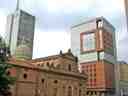 6
6Religious complex of San Francisco
Buy tour to unlock all 12 tracksDirect your gaze just ahead-you’ll spot the Religious Complex of San Francisco as a reddish-brown brick church front, with distinctive classical columns and a dome behind it,…Read moreShow less
Direct your gaze just ahead-you’ll spot the Religious Complex of San Francisco as a reddish-brown brick church front, with distinctive classical columns and a dome behind it, nestled among much taller, modern buildings. Welcome to Cali’s own time machine, the Religious Complex of San Francisco! Right now, you’re standing at the heart of a place that’s pretty much seen it all: centuries-old prayers, earthquakes, political drama, and a few sneaky monks (well, maybe not sneaky, but definitely determined ones). Picture it: the 1700s. Back then, the Franciscan monks didn’t have this grand compound. No, they squeezed into a modest house, borrowing room next to Santa Rosa church, probably tripping over their long robes and wishing for a bit more elbow room. But in 1750, Father Fernando Larrea rolled into Cali with something special-a vision and a plan to build something enduring. He wasn’t shy to ask for help, either. Through a spirited fundraising campaign, rallying the faithful, he pulled together enough coins-fifteen thousand patacones thanks to a generous priest named Nicolás de Hinestrosa-to finally purchase these grounds. If you listen carefully, you might hear the clink of coins in a wooden chest--each one paving the way to a new beginning. Construction began in 1757, and by 1764, the capilla de la Inmaculada and the main convent stood proudly. That year, the monks finally put down their pillows, moved in, and Father Larrea became not just a builder, but the very guardian of this spiritual shelter until his last breath in 1773. Still, this peaceful sanctuary wouldn’t last forever. In 1861, as Colombia hit turbulent times, General Tomás Cipriano de Mosquera ordered the monks out, trying to keep a tight leash on the Catholic Church’s power. Ten years later, and a few sleepless nights for the city’s faithful, the brave Eustaquio Palacios fought to have their beloved complex returned. The monks marched back in, probably with great relief-and maybe a silent vow to never travel light again. But wait-there’s more! The complex isn’t just the church. It’s a whole captivating bundle: convent, chapels, religious art museum, and just next to the capilla, stands one of the most beautiful towers in the Americas-the famed Torre Mudéjar. Rising 23 meters, it’s called the loveliest Mudéjar tower on the continent. If you look to your side, try to spot its four stacked sections adorned with intricate brickwork-cornices popping out proudly, arches where bells once tolled, and at the very top, a rounded roof sprinkled with blue and green tiles that glint under the sun. It’s a silent witness to everything from monks’ footsteps to the distant sounds of horse-drawn carts clattering down cobbled streets. As for the main church in front of you, it’s a neoclassical masterpiece, boasting powerful brick columns, doors framed with stone, and an iconic art-filled dome. Step inside, and you’d find a painted ceiling that sweeps you through the entire life of St. Francis of Assisi-his mischievous youth, his moments of revelation, and his peaceful passing. The altar is no ordinary spot either. Imagine twelve tiny statues of St. Francis in all kinds of poses, seven life-sized Franciscan saints, and, taking center stage, a triumphant, risen Christ. The side chapel to your right holds one of Cali’s cherished scenes-a statue of Christ at Calvary, watched over by the grieving Virgin and John the Evangelist. It’s become an emotional touchstone for city residents. And throughout the temple, you’ll find treasures: a rare statue of Señor Nazareno from Quito, an extraordinary Virgen de las Apocalipsis-carved in wood with antique silver wings, and an old Christ from the Cañasgordas estate, once visited by slaves seeking hope and comfort. Sure, some people say the church’s interior style fights with the bold face outside, but isn’t that just like real life-full of unexpected surprises? Despite earthquakes in 1885, 1896, and 1925 rattling its bones, this sanctuary has held on to its original face and spirit. So, while you look at these ancient walls, whisper a greeting to the monks who once bustled through here, and remember: every brick whispers a story of hope, strength, and a little bit of divine humor. After all, if these walls could talk, I bet they’d have a few secrets worth confessing!
Open dedicated page →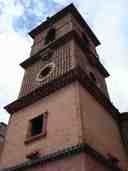 7
7Cali Mudejar Tower
Buy tour to unlock all 12 tracksLook just ahead and lift your eyes-what you’ll spot is a tall, reddish brick tower with intricate geometric patterns and a striking dome at the very top, standing like a quiet…Read moreShow less
Look just ahead and lift your eyes-what you’ll spot is a tall, reddish brick tower with intricate geometric patterns and a striking dome at the very top, standing like a quiet sentinel next to the religious complex. Welcome to the mysterious and dazzling Cali Mudejar Tower, a structure that’s got more stories than a library and more style than a peacock! Imagine you’re standing here in the late 1700s: Cali is smaller, the church next door is fresh and new, but there’s something missing-no bell tower. No dramatic call to prayer, no way for the city to be told it’s time for celebration, mourning, or maybe, you know, lunchtime. So the people of Cali decided, “Let’s build something unforgettable!” But here’s where the tale gets tangled. Grab your detective hat, because the truth about who designed and built this tower is as mysterious as a magician’s trick. Some say a Spanish architect named Pablo brought the plans from faraway Sevilla, using memories of Moors and minarets as inspiration. Others whisper it was a freed Moor named Pedro Umbas, once enslaved to a local priest and gifted the tools of his trade upon earning his freedom. Pedro, said to have a flair for dramatic lines and dazzling detail, may have poured his soul into these bricks, channeling a bit of Seville, a bit of Córdoba, and a lot of imagination right into Cali’s heart. Oh, and the plot thickens! One letter mentions a builder named Antonio Idrobo shifting loads of brick and “amarillo de Castilla” pigment from a local hacienda-if you glance inside or study the outside, see if you can spot those golden-yellow tinges. Another version stars Ignacio Camacho, a mulatto slave working on another church, and Antonio García, master designer of religious buildings around Colombia. Honestly, if you stacked all the legends as high as this tower, you’d have your own bell tower! Now, let’s take a closer look. The Cali Mudejar Tower isn’t just a pile of bricks stacked up to ring the noon bell-it’s an architectural adventure. Its design features elements borrowed straight from North Africa and southern Spain: its square base stands solid, no platform required, and its walls gently tilt inward-just like the old minarets that once dotted cities across Muslim Africa. The brickwork climaxes in patterns almost hypnotic, and at each level, the details change-square windows framed in stone and brick, a band of tiny trapezoidal bricks swirling in geometric harmony, and higher up, round “eyeball” windows shaped like fifteen-pointed stars. Blink and you might feel like you’ve just traveled to a Moorish fairy tale. The crowning glory is the campanario-the belfry-where lacy arches and elegant curves echo the style of Córdoba’s great mosque, and the very top is capped with a semi-spherical dome clad in glossy ceramic tiles, all topped off with a delicate iron cross. Stand here long enough and you’ll almost expect to hear echoes of distant muezzins or the laughter of the workers who laid each brick with sweat and maybe a little hope for immortality. Time marched on, and the tower saw change after change. Artists and painters came along, borrowing, experimenting, and sometimes just trying to outdo each other for the sake of style. In one renovation, the geometric patterns got covered with plaster-imagine painting over a masterpiece just because you’re changing the curtains! Then, around 1936, artist Luis Acuña raised the parapets, tinkered with the windows, and added mosaics to the dome’s base, leaning even harder into its exotic, “oriental” vibe. Once, the whole tower might have gleamed ochre-yellow or blinding white, but Acuña gave it the now-famous pale red hue to make sure no one missed it against the Cali skyline. In every brick, there’s a story-of freedom, creativity, and a whole lot of mystery. Some people say ghosts of the original builders come to check on their work during odd nights, making sure no one has snuck in another coat of plaster. So, next time you’re here, give a wink or a tip of your hat-you might just be saying “hello” to history itself!
Open dedicated page →
Frequently asked questions
How do I start the tour?
After purchase, download the AudaTours app and enter your redemption code. The tour will be ready to start immediately - just tap play and follow the GPS-guided route.
Do I need internet during the tour?
No! Download the tour before you start and enjoy it fully offline. Only the chat feature requires internet. We recommend downloading on WiFi to save mobile data.
Is this a guided group tour?
No - this is a self-guided audio tour. You explore independently at your own pace, with audio narration playing through your phone. No tour guide, no group, no schedule.
How long does the tour take?
Most tours take 60–90 minutes to complete, but you control the pace entirely. Pause, skip stops, or take breaks whenever you want.
What if I can't finish the tour today?
No problem! Tours have lifetime access. Pause and resume whenever you like - tomorrow, next week, or next year. Your progress is saved.
What languages are available?
All tours are available in 50+ languages. Select your preferred language when redeeming your code. Note: language cannot be changed after tour generation.
Where do I access the tour after purchase?
Download the free AudaTours app from the App Store or Google Play. Enter your redemption code (sent via email) and the tour will appear in your library, ready to download and start.
If you don't enjoy the tour, we'll refund your purchase. Contact us at [email protected]
Checkout securely with 


