
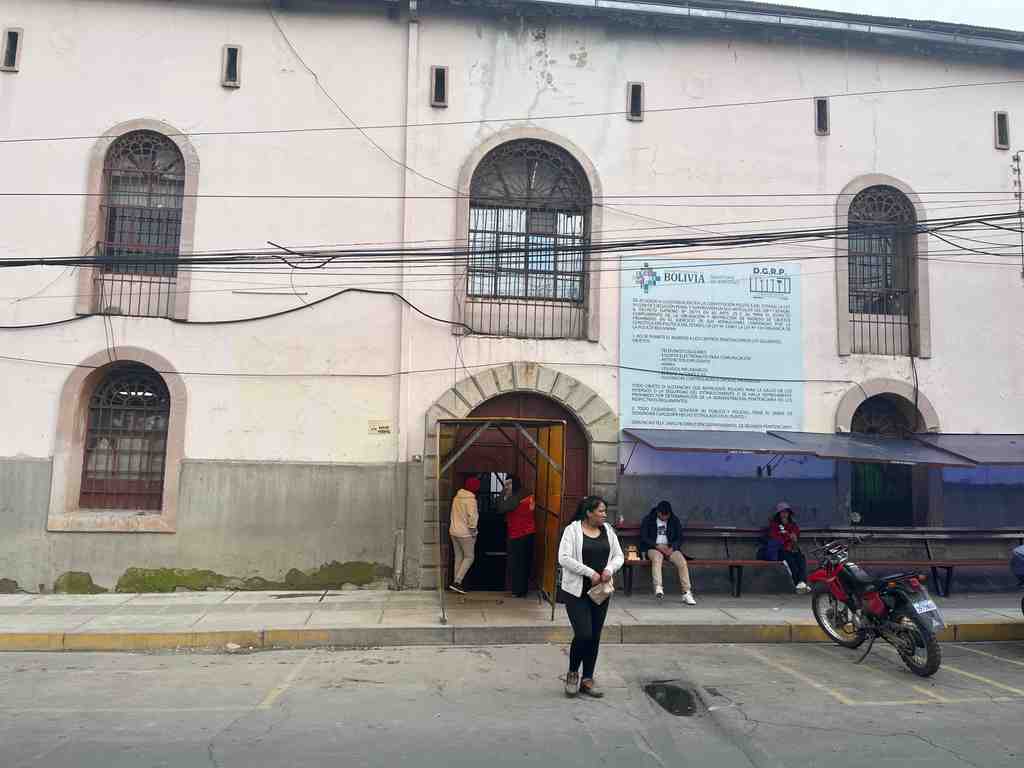
If you’re searching for San Pedro prison, just look for a long, pinkish-beige wall with tall, barred windows and a large sign out front-plus an unmissable arched doorway usually buzzing with activity along the roadside.
Alright, brace yourself-what you’re looking at isn’t just any old prison! San Pedro is like a city within a city, a truly bizarre place that’s bustled with secrets and stories for over a century. Close your eyes for a moment and picture life unfolding just behind that wall: nearly 3,000 inmates-plus wives, kids, and the odd family dog-walking freely through open courtyards, shopping at mini-markets, and cooking together as if they’re in a quirky neighborhood rather than a locked institution.
But don’t be fooled: security here is like a joke with a punchline missing. There are no uniformed guards patrolling the inside. Instead, police simply patrol the outer walls-think of them as extremely passive babysitters, only concerned with making sure no one escapes, not what’s happening inside. That’s left up to the inmates themselves-who elect their own leaders, manage markets, organize football tournaments, fix sidewalks, and even form their own sporting committees. It’s like mixing “Survivor” with “The Sims,” but where the penalty for breaking rules isn’t being voted off the island…it’s being sent to an isolation cell, or occasionally, dealt with more sharply-often enforced by a dreaded form of inmate justice: stabbing.
The prison’s sections-Posta, Pinos, Alamos, and more-are like exclusive neighborhoods in a surreal real-estate market. Want a three-floor cell with a hot tub and cable TV? If you’ve got the cash (a few thousand bucks could get you more luxury than most outside the walls), it’s yours. If money’s tight, you might be sharing a tiny, crumbling space with five others-no hot tub, but on the bright side: plenty of company! The real estate here is so official, each cell comes with its own property title, like you’re buying a studio apartment in a mysterious, slightly dangerous alternate universe.
There are restaurants, little shops, even a hotel for guests-which, yes, used to be open to backpackers. Not joking! In the wild days before 2009, enterprising inmates (like the legendary Thomas McFadden, whose adventures fill the pages of the bestseller “Marching Powder”) led daring tourists inside, sometimes letting them sleep over in the hotel. Instead of campfires, guests shared stories with men who’d seen the city from the toughest side. Some inmates made their fortune not just by selling homemade crafts but something a little more… stimulant. If you ever wondered where La Paz’s most lucrative (and illegal) cocaine could be sourced, for a time the answer was, nervously, “Try inside San Pedro.” Guards were often bribed to look the other way or even lend a hand-let’s say the only thing stricter than the rules here was how to creatively bend them.
Children grew up here, darting past the stalls while mothers shared gossip and traded candies. These days, about 200 children and their families live inside, attending school nearby and running wild in lunchtime games-imagine a kindergarten where nap time is traded for street football. Most of the wives and mothers came out of necessity, unable to survive in the city alone; the prison’s two nurseries are full of laughter, and the occasional shouts of celebration when the games begin.
Elections aren’t just for the outside world-prisoners here vote for their leaders, campaign for committee spots, and even cast ballots in national elections. (Can you picture a candidate making stump speeches next to a stall selling soda and handmade bags?) One thing the residents agree on: crimes against women or children are strictly punished-not by police, but by the inmates themselves, making sure grim justice is doled out when needed.
If you stayed until September, you might hear the pounding rhythm of a live band: every Prisoner’s Day, leaders throw a barbecue party-because even the harshest communities need their celebrations. Sometimes you’ll spot a cell extension on the hardened old building: a new floor, a glimpse of La Paz’s rooftops, a reminder that life here-odd and harsh as it is-never stops evolving.
Now, although the wild tours and famous nights have ended, the walls still echo with stories from every corner of Bolivia. Like I always joke, San Pedro is the only place where you can buy real estate, run a shop, raise a family, and still not make parole. A city behind bars, and as you can probably tell-it’s never, ever quiet.
Seeking more information about the prison layout, prison guards or the section committees? Ask away in the chat section and I'll fill you in.


