
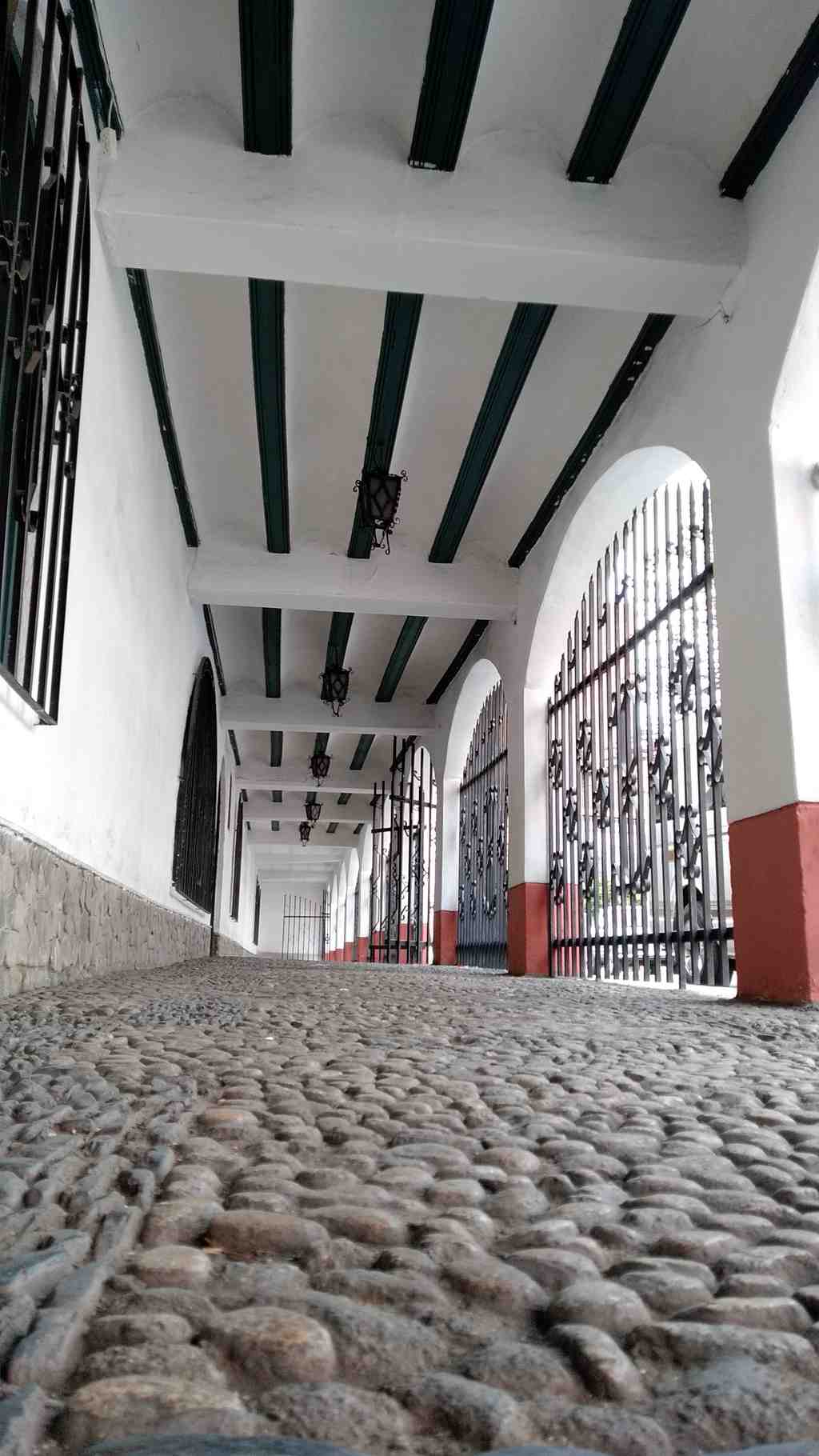
To spot the Juan de Vargas Museum of Folklore, look for a long white colonial-style building with black iron gates and stone archways running alongside a pebbled walkway-if you see those arches and the stone underfoot, you’re right at the entrance.
Now, take a deep breath and step a little closer-because you’re about to dive into centuries of La Paz’s vibrant story! Imagine standing here as the cool Andean breeze brushes by, mixed with the echo of footsteps on those time-worn cobblestones. This isn’t just a museum-it’s a living scrapbook of La Paz, tucked right here between tradition and everyday city life. Built in 1979 and named after Juan de Vargas, the city’s very first mayor, this place is dedicated to all things paceño-funny traditions, heroic tales, and even a bit of mischief!
Once inside, the fun begins immediately. The main attraction? A dazzling woven tapestry by Carmen Albares, bringing the 1978 La Paz Carnival to life with each colorful thread. You’ll almost hear the distant sound of dancing and music as you imagine the carnival sweeping through the city. Next, you’ll spot a grand colonial metal carriage that once rolled through these streets-imagine the street gossip when Bolivia’s ex-president Ismael Montes climbed aboard in 1904! Speaking of travel, check out the model of the old city tram: it’s easy to picture the hustle and bustle as the old trolley bell rings and folks hop aboard, clinging to their hats.
But this is La Paz-so don’t expect only parades and parties. Keep your eyes open for miniature clay figures, heroes and villains of Bolivia’s past, frozen mid-drama. There’s the moment Pedro Domingo Murillo-freedom fighter and all-around brave guy-meets his fate in 1809. Look closely, and you’ll find the powerful gaze of Túpac Katari, whose own struggle lit the fire for independence here. Over in the corner, there’s a gorgeous nativity scene straight from the 1700s, covered with golden details that sparkle like hidden treasure under the lights.
If you’re feeling brave, check out the Spanish armor from the days of the conquistadors-not exactly comfortable, but hey, fashion is pain, right? And don’t skip the inca chasqui messenger outfit, worn by those legendary runners who carried coded messages at breath-taking speed over the Andes, pausing just long enough to pass the news and disappear again. Think of them as the original instant messengers-minus the read receipts!
What really makes this place special is how it threads together the city’s indigenous Aymara roots and European influences in each room, painting, and artisan’s touch. You’ll see how La Paz’s personality-quirky, courageous, and bursting with pride-grows out of this tangled mix. Some of the most curious treasures include scenes of the old city, tambo inns from before the Spanish even arrived, and even relics from the War of the Pacific, which still stirs up emotions for Bolivians today.
Thanks to the 1997 expansion and the big 2005 upgrade, the museum glows with bright lights and vibrant colors-just as the first visitors would have hoped. The white arches on the outside were repainted to match colonial times, which means you’re walking under the same cool shade that folks might have enjoyed a century ago.
So as you linger near those iron gates, listen closely-not just to the city noise outside, but to the whispers of old storytellers echoing through the galleries. Every painting, every clay figure, and every glittering costume waiting inside is ready to let you in on a secret: La Paz isn’t just a city, it’s a celebration of stories, laughter, struggle, and triumph that never fades. Welcome to the last stop on your tour-and the beginning of countless tales!


