
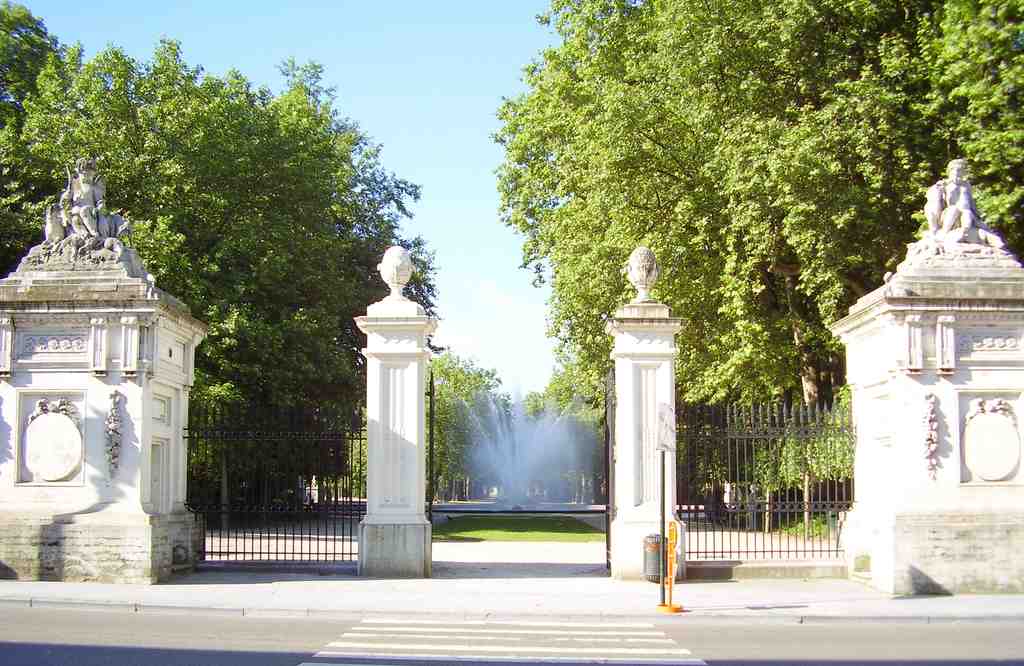
To spot Brussels Park, look for the tall white columns and ornamental gates nestled between thick green trees, with a grand fountain spraying in the distance straight ahead.
Welcome to Brussels Park, the city’s green heart and oldest public park! Take a moment to look through those impressive gates-you’re about to stroll where emperors and everyday folks alike have relaxed for centuries. If you close your eyes and let your imagination wander, you might just hear clinking hooves and bustling carriages rolling by, or the laughter of nobles and townsfolk mixed together under these leafy branches.
Long ago, this graceful park was actually part of the hunting grounds for the Dukes of Brabant, back when Brussels was ringed with forests and vineyards, not coffee shops and traffic. Fancy an orangery with exotic birds or a private labyrinth for a royal game of hide-and-seek? That’s what the gardens here once boasted! But all transformed on a bitter winter’s night in 1731, when the Palace of Coudenberg burned down, leaving only ruined walls and a tangle of overgrown paths. The once-glorious park turned wild and half-forgotten-its shimmering fountains, grottoes, and carefully trimmed hedges slowly being swallowed by the weeds.
Fast-forward to 1775, and suddenly, Brussels is abuzz with plans! Charles Alexander of Lorraine, ruling with a flair for celebrations, is about to get a statue in his honor. Diplomats and architects come together, deciding to turn these ruins into something grand and modern-a park fit not just for a duke, but for everyone. Soon, great trees were felled, new ones planted (over three thousand, to be precise!), and paths in neat rectangles traced through the grounds. The French architect Gilles-Barnabé Guimard and Austrian landscaper Joachim Zinner turned muddy leftovers into an elegant neoclassical oasis. Look around-the tree-lined avenues and open views are their legacy.
Over the years, Brussels Park became a stage for revolutionary drama and royal pageantry alike. In 1793, rowdy revolutionaries-sans-culottes, if you want the proper term-stormed through, smashing Roman busts and tossing statues into the bushes. The city rushed to repair the damages, enlisting patrons to finance the park’s rebirth-imagine a sort of “Adopt-a-Statue” campaign.
By 1830, when Belgium fought for independence, the park turned into a soldier’s refuge and a hiding spot amid chaos. Through all this, generations kept tending those plane trees, chestnuts, and linden avenues, rebuilding where vandals or revolutions left scars. The monumental railings you see by the gates were installed in 1849, declaring the park’s importance with every ornate twist of iron.
But the park isn’t all statues and memories-there’s always been a sense of fun here, too! In the early 20th century, Art Deco lamps glimmered along the paths, and a hidden bunker with secret tunnels was built underneath (yes, like something straight out of a spy novel, only with more squirrels). Bandstands-don’t miss the ornate, cast-iron one-hosted lively concerts, and the Royal Park Theatre and Vauxhall were alive with comedy, music, and even children’s pantomimes.
Today, Brussels Park is a leafy retreat packed with over sixty sculptures inspired by the wild world of Greco-Roman mythology, cheeky Hermes faces, and water basins where fountains bubble cheerfully in the sunshine. The double row of lime trees ringing the park still sets a perfect stage for quiet walks, dramatic entrances, and perhaps, the occasional squirrel revolution. And after centuries of change, drama, and restoration, it’s still the very best place in Brussels to picnic, ponder, or play at being a duke.
Eager to learn more about the buildings and monuments, sculptures or the remarkable trees? Simply drop your inquiries in the chat section and I'll provide the details you need.


