
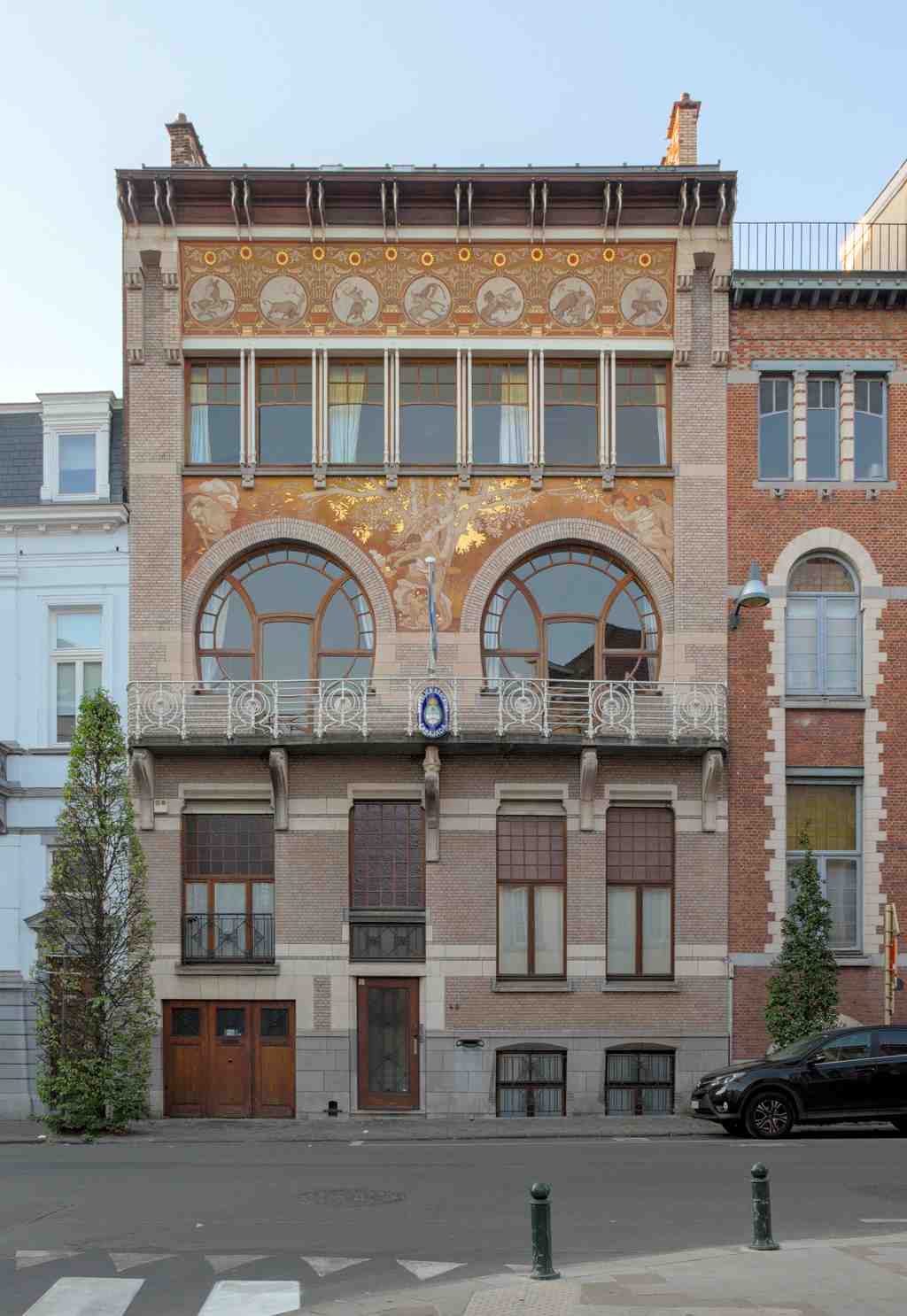
To spot the Hôtel Albert Ciamberlani, look for the striking building with grand horseshoe-shaped windows and a stunning upper façade painted with golden, flowing, symbolic figures and a ring of circular medallions just under the roof-it's right at number 48, where the street widens a little.
Now, let’s dive into the story behind this unforgettable house! Take in the sweet scent of fresh brick and the faint echo of footsteps from another era. Imagine standing here in 1897: Brussels is abuzz with innovation, and an artistic revolution is sweeping through the city. This house wasn’t built for just anyone-it was the dream home of the symbolist painter Albert Ciamberlani, lovingly commissioned by his devoted mother. And as if that’s not sentimental enough, the creative force behind its bold form was the celebrated architect Paul Hankar, who was practically the neighborhood’s own superstar of creativity (his own house is just steps away, so talk about having your work close to home!).
Of course, any good story has a bit of drama. The land for the house was unusually wide, much to Hankar’s frustration. He wrestled with sketches, tried massive windows, considered central bow windows, and then, in a final stroke of brilliance, created the layered, rhythmic façade you see now. The result? A place described by art historians as one of the most beautiful Art Nouveau façades in Belgium-imagine getting that in your yearbook!
Now look up at the building’s crown-the sgraffito artwork bursting with golden light. Albert Ciamberlani himself designed this masterpiece: in the center, a lush pear tree unfurls while delicate figures beneath it represent different stages of life. Just below the overhanging eaves, a lineup of medallions shows either scenes from the heroic Labors of Hercules or dynamic hunts-even the experts can’t always agree. There’s nothing stiff or stuffy here-it’s a living mural, full of energy and mystery, brought to sparkling life by artist Adolphe Crespin, and influenced by the likes of Walter Crane.
Hankar wasn’t too traditional with the exterior, but inside, things are a bit more down-to-earth: a layout with grand rooms on one side, cozy studies and stairwells on the other, bedrooms scattered across two floors, and an enormous salon gazing out over Rue Defacqz. What really sets this building apart, though, is its eclectic style: see those round openings in the railing? That’s a nod to Chinese moon gates. Horizontal bands across the façade? Inspired by medieval architecture. And all those flowing lines and natural forms-pure Art Nouveau, with a Belgian twist.
In the 1920s, modern living crept in: the lower façade changed, and even a garage appeared. The original furniture-Hankar-designed works of art-now lives in a museum in Ghent, but the soul of the place remains. Carefully restored in 2006, the Hôtel Ciamberlani is still dazzling, still mysterious, and still drawing admiration-just as it did when Ciamberlani painted the story of life in gold across its face. So take it all in and don’t be surprised if you feel just a little bit more artistic yourself!


