
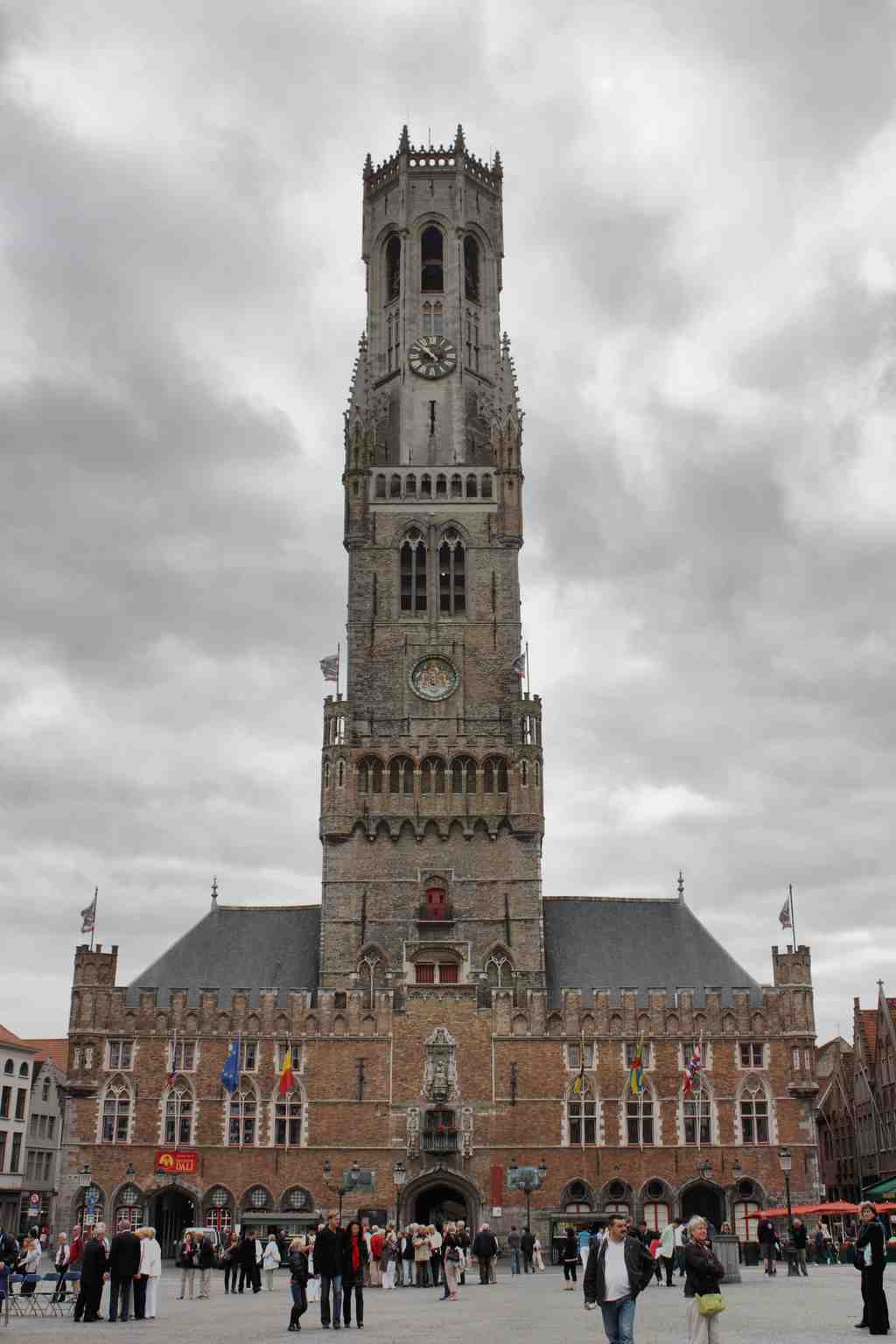
Look slightly to your right, and you will see an immense brick tower rising into the sky, featuring a distinct octagonal upper section and a large, gleaming clock face watching over the square. This is the Belfry of Bruges, a structure built in the thirteenth century to serve not just as a watchtower, but as an undeniable, soaring monument to the city's staggering commercial success. Originally, the halls beneath it were bustling indoor markets for the lucrative wool and cloth trade. The tower itself housed the city treasury, the official archives, and the powerful city magistrates.
But wherever extraordinary wealth is concentrated, deep divides inevitably follow. In the year twelve eighty, a bitter and bloody fight erupted between the everyday working class artisans and the wealthy ruling elite, an uprising so fierce it ultimately led to the heart of the city burning. The everyday workers, crushed by the heavy handed greed of the patricians, the wealthy aristocratic merchants who tightly controlled all city politics, launched a desperate rebellion known as the Moerlemaye.
It is said that the furious rioters, pushed to their absolute breaking point, deliberately set this very belfry ablaze. Picture the sheer terror and chaos in this square as flames roared through the tower's wooden spire, illuminating the night sky in a violent, furious red. The fire completely consumed the upper floors, and as the wooden beams collapsed into ash, so did the city's most precious documents. This devastating loss of the archives meant that countless historical records, literally every city document from before the year twelve eighty, were completely erased from history.
Crucially, the city's official charter of rights and privileges, known as the Keure, also went up in smoke. This was a catastrophic mistake for the rebels and the city elites alike. Without that physical document to prove their independence, the Count of Flanders swooped in to crush their political power. He forced the city to permanently separate its political administration from this commercial hub, leading to the construction of a completely separate City Hall. The physical landscape of Bruges was permanently fractured by this violent struggle for dominance.
Through the centuries, the tower survived lightning strikes and further fires, always being stubbornly rebuilt by a city that refused to surrender its pride. Even the tower's bells tell a story of relentless control. In the seventeenth century, the city leaders invited the world's most famous bell maker to craft a new carillon, a musical instrument made of dozens of tuned bronze bells played by a keyboard. But the city stubbornly demanded he cast the bells locally to protect their own guilds. The master craftsman refused and walked away, leaving Bruges without a masterpiece due to their own rigid protectionism.
Today, the tower stands eighty three meters tall, leaning just slightly under the weight of its own heavy history. It is a beautiful, imposing sight. But to truly understand the sheer scale of the money that financed this magnificent defiance, we need to look at how that wealth actually flowed into the city. Let us turn our attention to the site of the Waterhalle, just zero minutes away right here on the square, where the true financial engine of Bruges once roared.




